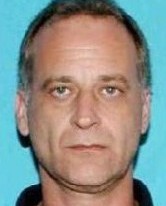
Gerald Bordelon
Murderer Robert Martines Perez
Murderer · USA · 1994
Name: Robert Martines Perez · Other name used in proceedings: Robert Martinez P…
15 victims
Robert Martines Perez
Murderer · USA · 1994
Name: Robert Martines Perez · Other name used in proceedings: Robert Martinez P…
15 victims
 Billy Frank Vickers
Murderer · USA · 1993
Billy Frank Vickers Vickers was executed by lethal injection in Texas on Januar…
14 victims
Billy Frank Vickers
Murderer · USA · 1993
Billy Frank Vickers Vickers was executed by lethal injection in Texas on Januar…
14 victims
 Adolfo de Jesús Constanzo
Serial killer · Mexico · 1986
Adolfo de Jesús Constanzo, nicknamed “The Godfather of Matamoros,” was a serial…
16 victims
Adolfo de Jesús Constanzo
Serial killer · Mexico · 1986
Adolfo de Jesús Constanzo, nicknamed “The Godfather of Matamoros,” was a serial…
16 victims
 Rebecca Sears
Murderer · USA · 2009
Rebecca Sears — defendant; mother of Christopher Sean Bowers. · Christopher Sea…
1 victim
Rebecca Sears
Murderer · USA · 2009
Rebecca Sears — defendant; mother of Christopher Sean Bowers. · Christopher Sea…
1 victim
 Juan Salvez Soria
Murderer · USA · 1985
June 28, 1985 — Allen Bolden disappeared; his body was later found in a wooded…
1 victim
Juan Salvez Soria
Murderer · USA · 1985
June 28, 1985 — Allen Bolden disappeared; his body was later found in a wooded…
1 victim
 Bunthawee Rimmer
Murderer · United Kingdom · 2011
Bunthawee Rimmer was a Thai woman who lived at Castle Lane in Haverhill. Rimmer…
1 victim
Bunthawee Rimmer
Murderer · United Kingdom · 2011
Bunthawee Rimmer was a Thai woman who lived at Castle Lane in Haverhill. Rimmer…
1 victim
 Herbert Mullin
Serial killer · USA · 1972
Herbert Mullin was a serial killer in California in the early 1970s. He was bor…
13 victims
Herbert Mullin
Serial killer · USA · 1972
Herbert Mullin was a serial killer in California in the early 1970s. He was bor…
13 victims
- Gender
- male
- Country
- USA
- Location
- East Baton Rouge Parish, Louisiana, USA
- Date of birth
- February 19, 1962
- Age at first offence
- 40
- Characteristics
- rape
- Victim profile
- Courtney LeBlanc, 12 (his stepdaughter )
- Method of murder
- Strangulation
- Date(s) of murder
- November 15, 2002
- Years active
- 2002
- Date of arrest
- —
- Status
-
Executed
Executed by lethal injection in Louisiana on January 7, 2010
Case summary
Gerald Bordelon was sentenced to 10 years in prison after pleading guilty in 1982 to sexual battery, and he was sentenced to 20 years in prison for his 1990 conviction for forcible rape and two counts of aggravated crime against nature.
While on parole, he met Jennifer Kocke over the Internet and married her a year later. They separated after 12-year-old Courtney LeBlanc and her sister told their mother that Bordelon touched them inappropriately, but Kocke remained in contact with Bordelon after the split. Kocke later was convicted of child abuse by a Mississippi jury for failing to keep Bordelon away from her children; she received a suspended five-year sentence with five years of probation.
Bordelon abducted LeBlanc in 2002 from his estranged wife’s trailer at knifepoint, took her to Mississippi where he forced her to perform oral sex on him, drove back to Louisiana, and strangled her. LeBlanc’s body was found 11 days later. Bordelon led police to her body in a wooded area by the Amite River in Livingston Parish, about 20 miles from Baton Rouge. When the body was found, LeBlanc was wearing only a pair of shorts and one tennis shoe.
A Louisiana Supreme Court opinion upholding Bordelon’s right to waive all appeals stated that Bordelon had a “diagnostic profile of sexual sadism” and that he told psychiatrists his crimes involved an escalating pattern of violence. The opinion dismissed his appeal and remanded the case for execution of the sentence.
Bordelon was executed by lethal injection on January 7, 2010, at the Louisiana State Penitentiary. Just before his execution, he apologized to LeBlanc’s mother, uncle, and sister, who witnessed the execution, and he asked for forgiveness. He also asked for their forgiveness in a statement that included: “I’m sorry. I don’t know if that brings any closure or peace. It should have never happened, but it did, and I’m sorry,” and later: “I’d like to apologize to my family and tell them that I love them.”
Timeline
- November 15, 2002 — Bordelon abducted Courtney LeBlanc at knifepoint from his estranged wife’s trailer.
- November 26, 2002 — Investigators found Courtney LeBlanc’s body after Bordelon led them to a wooded area by the Amite River.
- June 2006 — A jury convicted Bordelon of first-degree murder and returned a sentence of death after a brief penalty phase.
- January 7, 2010 — Bordelon was executed by lethal injection in Louisiana; he was pronounced dead at 6:32 p.m.
People
- Gerald Bordelon — defendant; convicted of first-degree murder and sentenced to death for the kidnapping, molesting, and killing of his 12-year-old stepdaughter, Courtney LeBlanc.
- Courtney LeBlanc — victim; 12-year-old stepdaughter of Gerald Bordelon; abducted in 2002 and strangled to death.
- Jennifer Kocke — Courtney LeBlanc’s mother; convicted of child abuse by a Mississippi jury.
- Brittany Boudreaux — Courtney LeBlanc’s sister; witnessed the execution.
- Damian Kocke — Courtney LeBlanc’s uncle; witnessed the execution.
- Jill Craft — Bordelon’s lawyer.
- Burl Cain — warden at the Louisiana State Penitentiary.
- Drs. Jose Artecona and Herbert W. LeBourgeois — psychiatrists appointed for a sanity commission.
- Dr. David Hales — psychologist who conducted neuropsychological testing.
- Dr. Marc Zimmerman — psychologist who had performed psychological testing prior to the sentencing stage.
- Melinda Deslatte — Associated Press reporter and execution witness who quoted Bordelon’s apology.
- Mike Dowty — execution witness.
- Pam Laborde — spokeswoman for the state Department of Corrections who described Bordelon’s last meal.
- ClarkProsecutor.org spokesperson/source name not provided — text includes the line “Murderer apologizes before his execution at Louisiana State Penitentiary” with publication details.
Background
Bordelon had previous felony convictions for sexual assault. He was sent to psychiatric treatment in 1979 after being accused of rape and kidnapping. He pleaded guilty to sexual battery in 1982 and received a 10-year sentence. In 1990, he was convicted of forcible rape and two counts of aggravated crime against nature and received a total sentence of 20 years at hard labor; he was on parole for those crimes at the time he killed Courtney LeBlanc.
Bordelon met Jennifer Kocke over the Internet while on parole and married her a year later. The couple separated after LeBlanc and her sister told their mother that Bordelon touched them inappropriately, but Kocke remained in contact with Bordelon after the split.
The offence
A Louisiana Supreme Court opinion described the state’s allegation and the events leading to the conviction. The state charged Bordelon by grand jury indictment returned on January 9, 2003, with first degree murder following discovery of Courtney LeBlanc’s body in a wooded area by the Amite River west of Denham Springs, Louisiana. The state alleged that LeBlanc died during the commission of an aggravated or forcible rape or second degree kidnapping.
Courtney LeBlanc disappeared from the trailer where she lived with her mother and a younger sister outside of Denham Springs, in Livingston Parish, on the morning of November 15, 2002. The police did not find her body until the late afternoon of November 26, 2002, when Bordelon led them to a riverside location across the parish line in East Baton Rouge Parish.
The opinion stated that Bordelon confessed in the Detective Unit of the East Baton Rouge Parish Sheriff’s Office that he entered the trailer on the morning of November 15, 2002, abducted Courtney with a knife he grabbed in the kitchen, transported her in his car to Mississippi where he forced her to have oral sex, then drove back to Louisiana and strangled her to death on the banks of the Amite River, concealing her body in heavy underbrush.
When the body was found 11 days later, the victim was wearing only a pair of shorts and one tennis shoe.
In his videotaped statement, Bordelon said: “I took Courtney and told her if she screamed or hollered or tried to get away, I was going to kill her.”
The circumstances of what happened during the drive and whether additional sexual assault occurred were described as disputed at trial. The state suggested that Bordelon had not been entirely forthcoming about the circumstances of the abduction and that a second sexual assault had occurred in the car, either vaginal penetration or a second act of oral sex in which he ejaculated into her mouth and she spat out the fluid onto the transmission hump of the vehicle.
Investigation
FBI agents joined the investigation into LeBlanc’s disappearance to determine whether it had any connection to serial killings attributed to Derrick Todd Lee.
Bordelon was placed under surveillance on November 22, 2002, following an analysis of a questionnaire he had filled out for the Behavior Analysis Unit. The opinion stated that officers followed him into Mississippi, where he visited a graveyard close to his parents’ property in Gloster, but lost contact with him in the darkness.
The opinion stated that on November 26, 2002, FBI Agent Glen Methvien asked Bordelon to come to the Denham Springs Police Department. Bordelon arrived in his own car, which was later impounded and searched after his arrest later that afternoon. Methvien also requested that Jennifer Kocke and Bordelon’s sister Cindy come to the station house to confront him according to a script. After the women followed the script, Bordelon met with Agent Methvien and FBI profiler Mary Ellen O’Toole.
The opinion stated that the agents placed Bordelon under arrest for the parole violation and transported him to the home of Cindy Landry. After about 20 minutes, Cindy Landry leaned inside the vehicle and hugged her brother goodbye. Bordelon then directed the agents to where the body of Courtney LeBlanc lay in thick underbrush along the banks of the Amite River, only minutes from his sister’s home.
When the body was found, police also found a partially buried tee-shirt in a tire track cut into the muddy access road leading to the riverbank, about four hundred feet from the body, and red panties clinging to weeds. The knife with a green handle that was found by Michael Cuchinelli was delivered to police that evening. The opinion stated that Kocke identified the knife as one that had been in a block of knives in the kitchen of the trailer.
Arrest
The opinion stated that the agents placed Bordelon under arrest for a parole violation and transported him to the home of Cindy Landry before directing them to the body’s location.
Trial
After trial by jury in June 2006, Bordelon was found guilty as charged of first-degree murder.
The penalty phase began with Bordelon waiving his right to present mitigating evidence, after defense counsel told the court that Bordelon had instructed him not to present a defense case in mitigation. Counsel expressed dismay and described the mitigation expert. The trial court conducted a colloquy explaining the right to present mitigating evidence and determined Bordelon made a knowing and intelligent waiver of that right. The jury heard only from the state’s witnesses during the sentencing phase.
The jury returned a sentence of death after deliberation of less than an hour. The jury found as an aggravating circumstance that the victim had died during the commission or attempted commission of aggravated rape and second degree kidnapping.
The opinion described disputed evidence and explanations, including time line disputes supported by climatological data and forensic entomology testimony, and defense theories that his wife Jennifer Kocke killed her own daughter and that Bordelon confessed to spare her. The opinion stated that jurors rationally rejected the defense theory in favor of the state’s case, which accounted for the evidence including seminal fluid in the victim’s cervix.
Sentencing
On November 6, 2006, the trial court formally sentenced Bordelon to death.
During formal sentencing, Bordelon filed his first of several motions to waive direct appeal. In a pro se motion, he asserted his right to waive direct appeal and subsequent post-conviction proceedings but acknowledged he could not waive the Louisiana Supreme Court’s Rule 28 review.
The opinion included the following statement from Bordelon to the court:
“I don't think I'm wrong according to what the Louisiana Code of Criminal Procedure states. The right of an appeal provided by the capital defendants in the Louisiana Code of Criminal Procedure, Article 912.1, it's just that. It's a right. Rights can be waave[d], just like I had the right to remain silent throughout the whole trial. Just like I had the right not to put up mitigating evidence at the sentencing phase of the trial. I had those rights. That's my right. And my right is also to waive any right of appeal. The Louisiana Criminal Code of Procedure clearly states that. Article 5, as I'm sure you're aware of, ‘shall,’ is mandatory, ‘may,’ is permissive. The word, ‘may,’ is used in article 912.1. It states, ‘The defendant may appeal to the Supreme Court from a judgement in a capital cases in which a sentence of death actually has been imposed. ‘Shall,’ is mandatory. ‘May,’ is not.... 905.9 and 905.9.1 require a review for excessive sentence of a death sentence by the Louisiana Supreme Court. That's mandatory, but it's mandatory that they review the excessive sentence, not an appeal. That's the only thing that's mandatory is for them to rule whether or not the sentence is excessive or not.... I don't think I'm wrong on that. I think I have a right to waive it, and that's what I'd like to do.”
The trial court denied a motion for a new trial filed and argued by the Capital Appeals Project of Louisiana over Bordelon’s objection, and then denied the motion to waive appeal, stating that Louisiana law required an appeal.
Appeals
The Louisiana Supreme Court addressed Bordelon’s motion to waive direct review in a per curiam decision in 2009. The opinion described that the Supreme Court had deferred action and remanded for a sanity commission to determine competency to waive appellate rights and to proceed to execution.
The opinion stated that after a hearing on July 3, 2007, the district court found Bordelon competent to waive his appellate rights and to proceed to execution. The Supreme Court then granted Bordelon’s motion and dismissed the appeal.
In its outcome, the Supreme Court held that: a capital defendant possessed the right to make a knowing and intelligent waiver of the right to direct appeal; the right to intelligently waive review did not discharge the Supreme Court’s independent duty to review every death sentence for excessiveness; clear and convincing evidence supported finding competency to make a knowing and intelligent waiver; and imposition of the death penalty was warranted. The Supreme Court’s final disposition was: “APPEAL DISMISSED; CASE REMANDED FOR EXECUTION OF SENTENCE.”
The opinion described that the sentencing was reviewed under Rule 28 and found not excessive. It specifically discussed aggravating circumstances, arbitrarily factors, proportionality, and competency to waive appeals.
Outcome
Bordelon was executed by lethal injection in Louisiana on January 7, 2010. He was pronounced dead at 6:32 p.m.
Just before his execution, Bordelon apologized to LeBlanc’s mother, uncle, and sister who witnessed the execution. Melinda Deslatte quoted him as saying:
“I'm sorry. I don't know if that brings any closure or peace. It should have never happened, but it did, and I'm sorry”
He also said:
“I'd like to apologize to my family and tell them that I love them.”
After the execution, Warden Burl Cain pronounced:
“We now pronounce Gerald Bordelon dead. We've sent his soul for final judgment.”
Aftermath / additional details
Bordelon’s last meal included fried sac-a-lait fish, crawfish étouffée, a peanut butter and jelly sandwich, and cookies.
He wore a gold cross on a chain given to him by his 19-year-old daughter. He also exchanged necklaces earlier in the day.
The Louisiana Supreme Court opinion included that Bordelon “fully understands he is to be executed for the murder of Courtney LeBlanc.” It also stated that the psychiatrists found he had a diagnostic profile of sexual sadism and an escalating pattern of violence.
The Supreme Court opinion described defendant as a white male born on February 19, 1962, and it stated that he attended Baton Rouge area schools through the ninth grade but was considered impaired and placed in special resource classes. It stated that his mother removed him from school on the advice of a principal, and he later attended trade school where he became an automotive mechanic specializing in diesel engines. It stated that he gained employment in a SAAB dealership and also worked as a gas station attendant. It stated that after release on parole in 2000 on his second felony conviction, he began working with Delta Concrete and was employed by Delta at the time of his arrest.
The opinion described psychiatric diagnoses of anti-social personality disorder and sexual sadism disorder, with IQ in the normal range and no organic brain impairments resulting in abnormal mental functioning.
The opinion included details of prior sexual assault convictions introduced at the sentencing stage, including testimony from Cynthia Renee Cullivan (Sustrom) and Kathryn Brown (Miller). It also included testimony from Jennifer Kocke as a victim-impact witness describing what LeBlanc’s death meant to her.
The text also described that Bordelon was part of a failed jail escape attempt in October 2003 and that he later was recaptured.
Spotted an error, or have more information about this case?