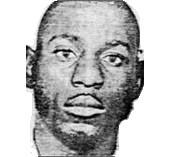
Jerome Bowden
Murderer Ervil LeBaron
Murderer · USA · 1972
Ervil Morrell LeBaron (1925 to August 16, 1981) was the leader of a polygamous…
35 victims
Ervil LeBaron
Murderer · USA · 1972
Ervil Morrell LeBaron (1925 to August 16, 1981) was the leader of a polygamous…
35 victims
 Brian Kevin Rosenfeld
Murderer · USA · 1985
Brian Kevin Rosenfeld Brian Kevin Rosenfeld was sentenced to three concurrent l…
23 victims
Brian Kevin Rosenfeld
Murderer · USA · 1985
Brian Kevin Rosenfeld Brian Kevin Rosenfeld was sentenced to three concurrent l…
23 victims
 Marvin Gray
Murderer · USA · 1975
Marvin Gray was convicted killer who claimed responsibility for 23 slayings and…
23 victims
Marvin Gray
Murderer · USA · 1975
Marvin Gray was convicted killer who claimed responsibility for 23 slayings and…
23 victims
 Yahweh ben Yahweh
Murderer · USA · 1980
Yahweh ben Yahweh was born and legally named Hulon Mitchell Jr. (October 27, 19…
23 victims
Yahweh ben Yahweh
Murderer · USA · 1980
Yahweh ben Yahweh was born and legally named Hulon Mitchell Jr. (October 27, 19…
23 victims
 Joseph Wesbecker
Mass murderer · USA · 1989
Joseph Wesbecker committed suicide by shooting himself on September 14, 1989, a…
8 victims
Joseph Wesbecker
Mass murderer · USA · 1989
Joseph Wesbecker committed suicide by shooting himself on September 14, 1989, a…
8 victims
 Maxim Petrov
Serial killer · Russia · 1999
Maxim Vladimirovich Petrov (born 1966) (Russian: Максим Петров) was a Russian d…
19 victims
Maxim Petrov
Serial killer · Russia · 1999
Maxim Vladimirovich Petrov (born 1966) (Russian: Максим Петров) was a Russian d…
19 victims
 James Erin McKinney
Murderer · USA · 1991
James Erin McKinney was a defendant described as Caucasian. His half-brother wa…
2 victims
James Erin McKinney
Murderer · USA · 1991
James Erin McKinney was a defendant described as Caucasian. His half-brother wa…
2 victims
 Steven Arthur Rios
Murderer · USA · 2004
Steven Arthur Rios was a police officer with the Columbia Police Department. A…
1 victim
Steven Arthur Rios
Murderer · USA · 2004
Steven Arthur Rios was a police officer with the Columbia Police Department. A…
1 victim
 Alfredo Stranieri
Murderer · France · 1997
Alfredo Stranieri (born July 30, 1956) was nicknamed "the killer ads." Alfredo…
4 victims
Alfredo Stranieri
Murderer · France · 1997
Alfredo Stranieri (born July 30, 1956) was nicknamed "the killer ads." Alfredo…
4 victims
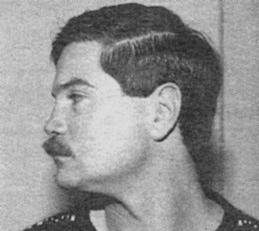 Thomas McIlvane
Mass murderer · USA · 1991
Thomas McIlvane was a former postal worker who committed suicide by shooting hi…
4 victims
Thomas McIlvane
Mass murderer · USA · 1991
Thomas McIlvane was a former postal worker who committed suicide by shooting hi…
4 victims
- Gender
- male
- Country
- USA
- Location
- Muscogee County, Georgia, USA
- Date of birth
- 1953
- Age at first offence
- 23
- Characteristics
- robbery, mentally ill, mentally retarded, attempted rape, abuse
- Victim profile
- Kathryn Stryker, 55, and her paralyzed, bedridden, mother, 76
- Method of murder
- St abbing with a butcher knife
- Date(s) of murder
- October 10, 1976
- Years active
- 1976
- Date of arrest
- 5 days after ( surrenders )
- Status
-
Executed
Executed by lethal injection in Georgia on June 25, 1986
Case information
Jerome Bowden was convicted of murder for which he received the death sentence, burglary, armed robbery, and aggravated assault for crimes committed on October 11, 1976, in a Columbus, Georgia residence burglary involving Mrs. Kathryn Stryker and her bedridden mother, Mrs. Wessie Bell Jenkins.
Timeline
- 8:30 a.m. on October 11, 1976 — Jerome Bowden (age 24) and James Lee Graves (age 16) broke into the Columbus, Georgia home of Mrs. Kathryn Stryker.
- October 14, 1976 — Deputy Sheriff Samuel Profitt first entered the house; he found ransacked rooms, heard labored breathing, found Mrs. Wessie Jenkins lying on a bed in a pool of dried blood still alive, and later discovered the body of Kathryn Stryker in the kitchen.
- October 15, 1976 — Bowden, informed that police were looking for him, turned himself in to an officer, was advised of his rights, and was taken into custody; a statement was made at police headquarters and admitted into evidence at trial following a Jackson-Denno hearing.
- October 17, 1976 — After having been repeatedly given Miranda warnings, Bowden confessed.
- December 7, 1976 — Bowden went to trial.
- December 9, 1976 — The jury found Bowden guilty as charged at the conclusion of the guilt phase; the jury recommended a death sentence after finding aggravating circumstances.
- January 10, 1979 — A Georgia Superior Court denied Bowden’s first state habeas corpus petition following an evidentiary hearing.
- August 13, 1980 — Bowden again petitioned the Superior Court of Butts County for a writ of habeas corpus.
- September 4, 1980 — The Superior Court considered the petition successive and summarily rejected it.
- October 27, 1982 — The Supreme Court of Georgia affirmed the denial of Bowden’s extraordinary motion for a new trial based on newly discovered evidence.
- December 10, 1982 — Bowden petitioned the district court for a writ of habeas corpus and moved for a stay of execution, which was granted.
- May 6, 1983 — The district court denied Bowden’s petition without an evidentiary hearing.
- June 10, 1983 — The district court granted Bowden’s application for a certificate of probable cause to appeal.
- May 14, 1984 — The United States Court of Appeals for the Eleventh Circuit affirmed the district court’s denial of habeas corpus relief.
- July 23, 1985 — On remand from the Supreme Court, the Eleventh Circuit affirmed, finding its earlier decision consistent with Ake v. Oklahoma.
- October 12, 1985 — The Eleventh Circuit affirmed the dismissal of a successive habeas petition and denied a certificate of probable cause and a stay of execution.
- June 17, 1986 — The Eleventh Circuit denied a certificate of probable cause and a stay of execution.
- June 25, 1986 — Bowden was executed by lethal injection in Georgia.
Background
Jerome Bowden was a Georgia death row inmate.
Bowden was described as a small, undernourished twenty-four-year-old when accused of robbing and murdering a fifty-five-year-old Georgia woman and badly beating her bedridden mother. Bowden’s I.Q. was measured at 59. His mental age was approximately nine. Neighbors described Bowden as “soft-spoken, pleasant, optimistic, and always smiling.” One neighbor said:
“Before I knew [Bowden], I heard boys talking about him in the neighborhood, calling him crazy and retarded. People used to tease him, but it didn't seem to bother him. He didn't understand. He thought they were paying him a compliment.... He would get lost and wander around for a long time.... One time he took some money from [his employer], but it seems like someone may have put him up to it, because he didn't seem to know what he was doing. He didn't try to hide it. I don't think he meant to keep it. I think maybe he just forgot to turn it in, because he was just standing around with it in his pocket when they came looking for it. This is why I don't think he made the decision by himself. He was easily influenced by others.”
Bowden’s sister, Josephine, recalled that “Jerome's mind just used to come and go.” Once, while mowing his sister’s lawn, the mower ran out of gas; Bowden filled the gas tank with water, then wandered off. When he was not working, Bowden would often just sit on his bed and rock himself back and forth for hours on end.
Bowden heard from his sister that the police had been looking for him and went to them to find out how he could help. He denied involvement, but eventually he broke down, confessed, and signed a written statement acknowledging his guilt.
The offence
Victims and locations
The crimes occurred in a Columbus, Georgia home of Mrs. Kathryn Stryker, with Mrs. Wessie Bell Jenkins (Kathryn Stryker’s mother) living there as a bedridden, paralyzed seventy-six-year-old.
Burglary and armed robbery plan
Bowden and James Lee Graves had been employed by Mrs. Stryker a week earlier, raking the fall leaves in her yard, where they formulated a plan to burglarize her home. Bowden had twice previously been convicted of burglary. Graves lived next door to Mrs. Stryker.
They entered the Stryker home armed with a pellet gun and disguised with wigs. Bowden and Graves broke into the home at approximately 8:30 a.m. on October 11, 1976. They used a screwdriver to open the door after Graves “popped the front lock with a screwdriver.”
Bowden and Graves surprised Mrs. Stryker in the kitchen. The pellet gun was used to hit her, causing her to fall.
They ransacked the house and stole a television set, jewelry, and coins. Jewelry taken during the crime was later found in Graves’ house. Coins were bought by a coin shop operator after being purchased from Graves on October 11.
Bowden later reported that they considered going to a shopping center to snatch purses, but Bowden advised that they should “lay low” for awhile.
Injuries and death
When Bowden discovered Mrs. Jenkins in her bed, Bowden beat her about the head. Mrs. Jenkins had suffered a stroke earlier in September, resulting in partial paralysis that left her bedridden.
An autopsy revealed that the base of the skull was fractured by the application of extreme force, such as is found in victims of car accidents and plane crashes. There was also a large open wound behind the ear through which the doctor could see the brain. A butcher knife was buried deep in Kathryn Stryker’s chest. The knife wound had caused no bleeding, indicating that Kathryn Stryker was already dead when stabbed. Death had occurred three to four days earlier. A blow of great force by a nonsharp object caused the injuries.
Mrs. Jenkins was removed to a hospital after she was found on October 14, became unconscious, and died several weeks later. After she was found, she had numerous injuries.
Investigation
Deputy Sheriff Samuel Profitt entered the house on October 14, 1976, noticed ransacked rooms, heard labored breathing, found Mrs. Wessie Jenkins lying on a bed in a pool of dried blood and still alive, and then discovered the body of Kathryn Stryker in the kitchen.
The police received information from one James Graves implicating appellant in the crime and obtained a warrant for appellant.
Forensics and physical items included:
- A wig allegedly used during the crime was found on a couch in James Graves’ house.
- A pellet gun used in the crime was found under Graves’ house.
- Jewelry taken during the crime was found in Graves’ house, including a piece with Mrs. Stryker’s name on it and a pin identified as having belonged to Mrs. Jenkins.
- Sammie Robertson testified he received a television set from Graves and gave him $10. This television was seized by police and the model and serial numbers were compared with numbers on an order form at a repair shop where Mrs. Stryker had ordered some knobs for her television; the numbers matched.
- A coin shop operator stated he bought some old coins from Graves on October 11.
- A strand of hair on the pellet gun was compared with Mrs. Stryker’s hair and found to be similar, with no dissimilar characteristics.
- There were no fingerprints of either defendant found in the house where the crime occurred.
Arrest and custody
Bowden learned police were looking for him and surrendered to an officer on October 15, 1976. When he turned himself in, he was informed that police were looking for him, was advised of his rights, and was taken into custody.
Bowden gave a statement at police headquarters that was admitted into evidence at trial following a Jackson-Denno hearing. The statement arose spontaneously from a conversation between Bowden and Detective Warren Myles while they sat in a police car while two other detectives were inside speaking to the girlfriend of James Graves, to whom they had been directed by Bowden. The other detectives, Hillhouse and Hardaway, returned to the car and drove Bowden back to headquarters.
Bowden exclaimed that jewelry the police had found in a stove on the back porch of Graves’ house was what he had hidden in the stove.
In his detailed statement, Bowden related that he and Graves, while raking Mrs. Stryker’s yard, talked about burglarizing her home; Graves lived next door and had seen valuable items. Bowden stated that on the following Monday they entered the house armed with a pellet gun to knock anyone out who might interfere and used a screwdriver to open the door. They surprised Mrs. Stryker in the kitchen; Graves hit her twice with the pellet gun, causing her to fall. Graves unplugged a television and took it to his yard. Meanwhile Bowden gathered several pieces of jewelry he found around the house. Bowden then asked Mrs. Jenkins the location of a gun; when she would not tell him, Bowden hit her “five or six times” in the face. Bowden stated that he and Graves searched the house, then left and went to Graves’ house, spent time “laughing and discussing” what they had done, and discussed going to a shopping center to snatch purses, but he advised them to “lay low” for awhile.
After making this statement, Bowden additionally stated that he hit Mrs. Stryker twice and then, to “put her out of her misery,” stabbed her once with a butcher knife from a drawer. When they returned to Graves’ house, they threw wigs they had worn into the trash can and hid the jewelry in the stove. Bowden said Graves later sold the television to Sammie Robertson and received a partial payment of $10. Graves also sold some coins belonging to the victims.
Bowden also testified at trial that he had turned himself in, but he did not participate in the crime. He testified he decided to confess because Detective Myles told him he could keep Bowden from getting a death sentence. Bowden knew about the crime because police read him a statement made by Graves while Bowden was interrogated. Bowden denied killing Mrs. Stryker and said he confessed because he was afraid. He testified he did smoke marijuana as he had said in his statement. When asked by the district attorney about smoking marijuana “on the Monday morning after you went in and killed that woman and beat her mother,” Bowden replied, “I guess it was.” The defense sought to show he misunderstood the question, and the state recalled witnesses to rebut appellant’s testimony that his confession was induced by promises.
Bowden’s confession also included statements about the interrogation:
“I tried”
Trial
Charges and indictment
Bowden and Graves were indicted by a Muscogee County, Georgia grand jury and charged with burglary, armed robbery, aggravated assault of Mrs. Jenkins, and the murder of Mrs. Stryker.
The case was severed for trial; Bowden was tried first.
Insanity plea and psychiatric evaluation request
Prior to trial, Bowden’s counsel filed a special plea of insanity and moved the Muscogee County Superior Court for the appointment of a psychiatrist to evaluate Bowden’s competence to stand trial and whether he was insane at the time of the crimes.
At an evidentiary hearing on counsel’s motion:
- Bowden’s sister and niece testified to bizarre behaviors they considered: he sat on the bed and rocked for hours; on other occasions he would “cuss out” the children in the family.
- Bowden’s sister testified that Bowden’s mother once attempted to have him examined by a psychiatrist after Bowden had gotten into trouble with the law.
- Bowden’s lead trial counsel, Samuel Oates, testified he had difficulty eliciting a coherent story from Bowden about the day of the crime, though counsel admitted Bowden was cooperating in other respects in preparation for trial.
The court denied the motion for psychiatric evaluation, and counsel withdrew Bowden’s special plea of insanity.
Bowden went to trial on December 7, 1976. On December 9, the jury found Bowden guilty as charged. During sentencing, the jury found the murder had been committed under aggravating circumstances and recommended that Bowden be sentenced to death. The court sentenced Bowden accordingly under Georgia law.
Evidence and impeachment involving Graves’ confession
Bowden’s confession and the statement dispute focused on whether Bowden’s detailed statement came from Graves’ statement or Bowden’s independent recollection.
The prosecutor questioned Bowden on cross-examination in a manner tied to Graves’ statement. Bowden’s counsel objected that Graves’ statement was not in evidence and was inadmissible. The court instructed the prosecutor not to read from Graves’ statement during questioning, but later overruled objections and permitted the prosecutor to continue with questions framed by references to Graves’ statement.
The prosecutor asked:
“If the statement of Graves should state that you snuck in and hit Mrs. Stryker on the back of the head while she was looking the other way, where did this part [in your signed statement] about her coming out and looking up and saying, "Oh my God, Jamie," where did that come from?”
“And if Jamie Lee Graves, in his statement, never mentioned anything about going in the house 8:00 or 8:30 in the morning, where did that [detail in your signed statement] come from?”
“That part about Graves' suggesting that you go to Columbus Square and snatch some purses and you saying, no, let's lay low because it is too hot or wait till things cool off, if that is not in his statement, where did that [detail in your signed statement] come from?”
Later, Bowden testified to claims about coercion by police and the source of details in his statement.
The record also indicates that the direct examination included the following colloquy:
Q “Tell us how the interrogation was conducted?”
A “Sir?”
Q “Did he ask you oral questions? Would he read from James Graves' statement?”
A “Yes, he would. He would read a paragraph from Graves' statement.”
Q “Which detective did this?”
A “Detective Hardaway.”
Q “Detective Hardaway? And you said Detective Hillhouse and Detective Myles were present?”
A “Right.”
Q “In the office at this time?”
Q “While they were giving your statement?”
Q “Okay. Go on, tell us what you told the detectives, now.”
A “Then I told the detectives that I had once again killed Mrs. Stryker and took--”
In the colloquy during cross-examination with the prosecutor, the court sustained objections regarding reading from the statement of Graves, overruled other objections, and continued questioning with hypotheticals that referred to Graves’ statement.
In closing argument, the prosecutor refrained from mentioning portions of the cross-examination where he referenced Graves’ statement.
Trial lawyers
Bowden’s lead trial counsel was Samuel Oates. Additional lawyers involved in preparation and trial included D.L. Collins, William S. Cain, Frank Martin, and Millard Farmer. Collins delivered Bowden’s closing argument at the conclusion of the guilt phase.
Sentencing
Bowden was sentenced to death just 56 days after his arrest. His conviction was based on a signed confession that was admitted after a Jackson-Denno hearing and was later challenged on competency and mitigation grounds in post-conviction proceedings.
During the stay of execution, Irwin Knopf, a psychologist from Emory University, gave Bowden another I.Q. test at the request of the State Board of Pardons and Paroles. Bowden scored 65, higher than on his previous tests but still within the definition of mental retardation. Knopf nonetheless concluded Bowden was not sufficiently disabled to merit clemency.
The State Board of Pardons and Paroles refused to grant clemency for Bowden. Bowden was executed in spite of a public outcry that led Georgia to prohibit the execution of people with mental retardation.
Appeals
Bowden appealed the denial of habeas corpus relief.
Federal habeas proceedings
Bowden petitioned for habeas corpus relief and raised federal constitutional claims including:
- failure to order a psychiatric examination to determine competence to stand trial;
- refusal to appoint a psychiatrist to examine him for presenting evidence of mental illness in mitigation;
- restriction of defense counsel’s ability to argue Bowden’s mental condition as mitigation;
- due process denial by failing to give clear notice of prior convictions planned to be used as aggravating circumstances;
- denial of right of confrontation by allowing introduction of James Graves’ confession without calling Graves;
- ineffective assistance of counsel for failing to interview prosecution witnesses and failing to unearth evidence of low intelligence for mitigation.
The United States Court of Appeals for the Eleventh Circuit affirmed the district court’s denial of habeas corpus relief, finding no constitutional error.
On remand after Ake v. Oklahoma, the Eleventh Circuit reconsidered in light of Ake and again affirmed, holding its previous decision consistent with Ake.
In a later successive petition context, the Eleventh Circuit denied a certificate of probable cause and a stay of execution, concluding the successive petition was an abuse of the writ.
Bowden also sought relief concerning the use of peremptory challenges to obtain an all-white jury; the court denied relief and denied both a certificate of probable cause and a stay of execution.
Outcome
Bowden was executed by lethal injection in Georgia on June 25, 1986.
Other details
Graves’ sentence
Graves received a life sentence. He was later found to be insane and sent to the state hospital for the criminally insane.
Confessions and handling of evidence
The record indicates Bowden confessed three times, including twice described as surrender-related confessions and one third confession suppressed on Bowden’s motion; validity of the third confession was not at issue in the referenced appeal.
Testimony about confessions and mental state
Bowden said he confessed because of fear and because Detective Myles told him he could keep him from getting a death sentence. He also said he “tried” when asked whether he had read his confession before signing it. Bowden further told lawyers:
“I tried real hard,” he told his lawyers. “I did the best I could.”
Bowden told an interviewer he was “going off to live on a little cloud,” and hoped a guard who had befriended him “would live on a cloud near him someday.”
Statements about marijuana
Bowden testified he did smoke marijuana as stated in his confession. When asked about smoking marijuana “on the Monday morning after you went in and killed that woman and beat her mother,” Bowden replied:
“I guess it was.”
The defense sought to show he misunderstood the question, and the state recalled witnesses to rebut claims the confession was induced by promises.
Execution scheduling and stays in post-conviction history
A scheduled execution date for September 3, 1982 was set and stayed pending appeal of an order denying a motion for a new trial. The Supreme Court of Georgia affirmed the order on October 27, 1982 and set a new execution date of December 16, 1982. The federal court’s stay of execution was granted on December 10, 1982 and the district court denied habeas corpus relief on May 6, 1983. Bowden’s execution was scheduled and carried out in June 1986.
Spotted an error, or have more information about this case?