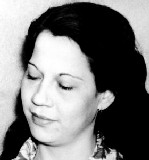
Toni Jo Henry
Murderer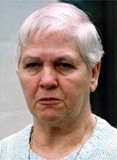 Marie Noe
Murderer · USA · 1949
Marie Noe was convicted in June 1999 of murdering eight of her children. Betwee…
8 victims
Marie Noe
Murderer · USA · 1949
Marie Noe was convicted in June 1999 of murdering eight of her children. Betwee…
8 victims
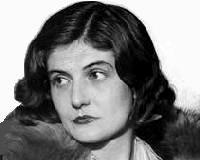 Winnie Ruth Judd
Murderer · USA · 1931
Winnie Ruth Judd (January 29, 1905 – October 23, 1998) was a Phoenix, Arizona m…
2 victims
Winnie Ruth Judd
Murderer · USA · 1931
Winnie Ruth Judd (January 29, 1905 – October 23, 1998) was a Phoenix, Arizona m…
2 victims
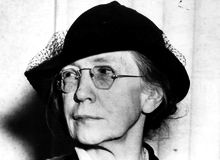 Alice Wynekoop
Murderer · USA · 1933
Name: Alice Wynekoop Alice Wynekoop was sentenced to 25 years in prison on Marc…
1 victim
Alice Wynekoop
Murderer · USA · 1933
Name: Alice Wynekoop Alice Wynekoop was sentenced to 25 years in prison on Marc…
1 victim
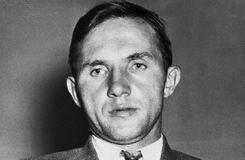 Bruno Hauptmann
Murderer? · USA · 1932
Bruno Hauptmann was a German carpenter and former criminal. He was sentenced to…
1 victim
Bruno Hauptmann
Murderer? · USA · 1932
Bruno Hauptmann was a German carpenter and former criminal. He was sentenced to…
1 victim
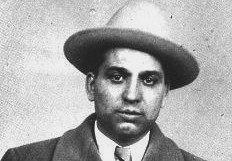 Harry Maione
Murderer · USA · 1937
Harry “Happy” Maione (1908 – February 19, 1942) was a New York mobster who serv…
12 victims
Harry Maione
Murderer · USA · 1937
Harry “Happy” Maione (1908 – February 19, 1942) was a New York mobster who serv…
12 victims
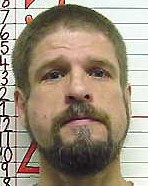 Jeffrey Tokar
Murderer · USA · 1992
March 11, 1992 — Jeffrey Tokar picked up his girlfriend, Sandra Stickley, share…
1 victim
Jeffrey Tokar
Murderer · USA · 1992
March 11, 1992 — Jeffrey Tokar picked up his girlfriend, Sandra Stickley, share…
1 victim
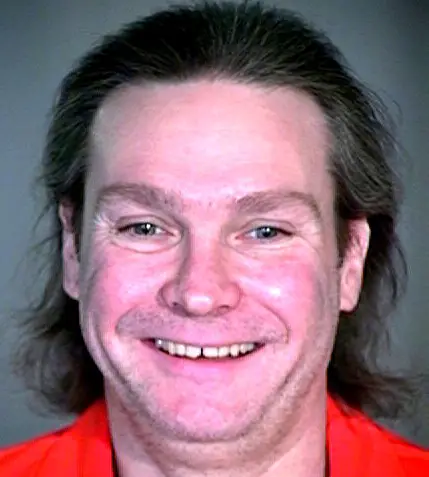 Anthony Spears
Murderer · USA · 1992
Defendant: Anthony Spears (Caucasian). He lived near San Diego. · Victim: Jeane…
1 victim
Anthony Spears
Murderer · USA · 1992
Defendant: Anthony Spears (Caucasian). He lived near San Diego. · Victim: Jeane…
1 victim
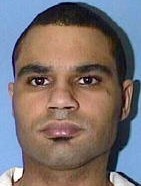 Marcus Bridger Cotton
Murderer · USA · 1996
Marcus Bridger Cotton was convicted of capital murder and sentenced to death fo…
1 victim
Marcus Bridger Cotton
Murderer · USA · 1996
Marcus Bridger Cotton was convicted of capital murder and sentenced to death fo…
1 victim
- Gender
- female
- Country
- USA
- Location
- Lake Charles, Calcasieu Parish, Louisiana, USA
- Date of birth
- January 3, 1916
- Age at first offence
- 24
- Characteristics
- robbery
- Victim profile
- Joseph P. Calloway, 41 (salesman)
- Method of murder
- Shooting ( .32 caliber revolver)
- Date(s) of murder
- February 14, 1940
- Years active
- 1940
- Date of arrest
- —
- Status
-
Executed
Executed by electrocution in Louisiana on November 28, 1942
Case details
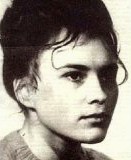
Toni Jo Henry (January 3, 1916 - November 28, 1942) was also known as Annie Beatrice McQuiston. She was executed by electrocution in Louisiana on November 28, 1942. She was the only woman executed in Louisiana's electric chair.
Timeline
- January 3, 1916 — Toni Jo Henry was born near Shreveport, Louisiana.
- November 25, 1939 — Claude “Cowboy” Henry and Toni Jo Henry married in Louisiana.
- January 1940 — Claude “Cowboy” Henry was sentenced in Texas to fifty years in the Texas State Penitentiary at Huntsville, Texas.
- March 27, 1940 — Toni Jo Henry’s first trial opened in Lake Charles; the jury convicted her and sentenced her to death.
- February 1941 — Toni Jo Henry’s second trial occurred; she was again convicted and sentenced to death.
- January 1942 — Toni Jo Henry’s third trial occurred; she was again convicted and sentenced to death.
- November 23, 1942 — Claude “Cowboy” Henry and an accomplice decided to break out of a Texas prison farm; he was recaptured and taken back to Huntsville.
- November 27, 1942 — Toni Jo Henry was allowed to phone Claude “Cowboy” Henry from the chief jailer’s office.
- November 28, 1942 — Toni Jo Henry was executed by electrocution in Louisiana.
Background
Toni Jo Henry was born near Shreveport, Louisiana, as the third of five children. Her mother died of tuberculosis when Henry was six years of age. Henry worked in a macaroni factory at thirteen and thereafter worked in a local brothel as a prostitute.
Henry became a regular user of alcohol, marijuana, and cocaine. She was arrested several times during her teens, including once for assaulting a man, but avoided prison by virtue of her age.
In 1939, Henry met Claude “Cowboy” Henry in the brothel where she worked. Claude Henry was a down-on-his-luck prize fighter.
The offence
Plan to obtain funds
Henry contemplated plans to break her husband out of Huntsville Prison. Henry and accomplice Harold “Arkie” Burks devised a plan to rob a bank to secure money to aid in breaking Claude Henry out of jail.
Joseph P. Calloway was delivering a Ford Coupe to a friend when he encountered Toni Jo Henry and Harold “Arkie” Burks. Unaware of their plan, he offered to give the two a ride. While driving past Jennings, Louisiana, Henry and Burks robbed Calloway at gunpoint. They locked Calloway in the trunk of his car and drove down a country road.
Killing of Joseph P. Calloway
The duo planned to use the Ford as a getaway vehicle; however they decided to pull the car over near a small paddock. Calloway was ordered out of the car and told to undress. He was ushered behind a haystack, told to kneel, and told to say his prayers. Calloway was shot once in the head with a .32 caliber revolver and died at the scene.
After a brief stop in Arkansas, Henry returned toward Shreveport, Louisiana to seek refuge with her aunt.
Investigation
Henry was interviewed by a Shreveport police officer, during which she revealed the murder and disclosed the location of the body. She revealed the location of the body after being interviewed.
A Shreveport police officer accompanied the aunt back to the aunt’s house and interviewed Henry. The officer was aware of Joseph P. Calloway being reported missing but was not prepared for the full confession Henry was about to hear. Henry gave the revolver with one fired and five live rounds still in it. The officer was disinclined to believe the confession because no murder had been reported and no body or the car had been found at that stage.
Henry was arrested and handed over to the Lake Charles police. Lake Charles police took Henry out to try to locate the body. They eventually located the correct spot and found Calloway’s body where Henry had left it. The bullet that killed Calloway was recovered at the autopsy and was found to match the gun the officer had taken from Henry.
The Ford coupe was later discovered abandoned in Arkansas and still containing Calloway’s clothing and cigarette ends with lipstick on them.
Henry was formally charged with murder but refused to provide details of her accomplice. She was later persuaded to talk, and Harold “Arkie” Burks was arrested and brought back to Louisiana and charged with the murder too. They were tried separately.
Trial
First trial (March 27–29, 1940)
Toni Jo Henry’s first trial was held from March 27–29, 1940 in Lake Charles. The trial gained large press coverage.
Henry claimed that Burks was the one who fired the fatal shot. After deliberating for six hours, the jury convicted Henry and sentenced her to death by hanging.
Accomplice trial
Harold “Arkie” Burks was later convicted and sentenced to death.
Second trial (February 1941)
Henry appealed and was granted a new trial. The second trial occurred in February 1941. Harold “Arkie” Burks took the stand and testified against Henry. After an hour of deliberations, Henry was again convicted and sentenced to death. Henry appealed again and was granted a new trial.
Third trial (January 1942)
Henry’s third trial occurred in January 1942. She was again convicted and sentenced to death. She appealed, but her appeal was denied.
Court and legal issue regarding execution method
While Henry was going through the courts, Louisiana changed its method of execution from hanging to death by electrocution. The court found that this was in line with constitution, and the state governor let it be known that there would be no reprieve.
Sentencing
Henry was sentenced to death by hanging at the first trial. At later trials she was again sentenced to death. Her appeal was denied, and she was executed by electrocution.
Appeals
Henry appealed multiple times and was granted a new trial after her first conviction. Her appeal was denied before execution.
Execution
Henry was incarcerated at Lake Charles Prison. During that time she was befriended by Father Wayne Richard, head of a local Catholic parish, who eventually baptized her.
Henry was executed on November 28, 1942.
Call to Claude “Cowboy” Henry (November 27, 1942)
Four days prior to her execution, Claude “Cowboy” Henry escaped from prison to see Henry one last time and was recaptured in Beaumont, Texas. He was later paroled due to ill health.
On Friday November 27, Henry was allowed to phone Claude “Cowboy” Henry from the chief jailer’s office. She was reported to have told him:
- “Get rid of that prison suit go out the front door. Go straight and try and make something of your life”
Events in the execution process (November 28, 1942)
Henry’s execution was set for Saturday November 28, 1942 at 12.05 p.m. She was to be executed within the basement of the Lake Charles prison in a portable electric chair brought from Angola the previous day.
Henry chose a plain black dress and black pumps and cried when her head was shaved. She requested and was allowed to wear a brightly colored scarf to hide her baldness.
Kenny Reid, the Deputy Sheriff, in charge of her, read her the death warrant and asked her if she had any final statement. Henry replied:
- “I think not”
She was led to the execution chamber holding Father Richard’s hand. She was strapped into the chair, the electrodes were applied to her shaven head and her calf, and a leather mask was put over her face. She was allowed to pray for a few moments. The executioner said:
- “Goodbye Toni Jo”
Henry mumbled a reply. A moment later 2000 volts hit her and at 12.12 p.m. she was certified dead by the prison doctor. Her body was removed a few minutes later.
Burial
Henry’s last request was that a crucifix be left in her hand when she was buried. Father Richard officiated at her burial in a cemetery in Lake Charles and designed the headstone for her grave.
Aftermath
Four months later, Harold “Arkie” Burks was executed in the same electric chair. No relatives came forward to claim his body, so he was buried in an unmarked grave.
After about two years, Claude “Cowboy” Henry was paroled due to ill health. He was killed by a café owner on July 15, 1945 in Dallas, while out on parole.
Other details
District attorney
The district attorney was Griffin T. Hawkins of Lake Charles.
Father Wayne Richard
Father Wayne Richard was present at Henry’s execution and officiated her burial.
Baptism and final statement in jail
Henry was baptized by Father Wayne Richard.
While awaiting execution, Henry admitted that she had lied about Burks and that she had been the killer.
Press interview and quotes
Henry made an interview to reporters while in the condemned cell and tried to explain her feelings towards Claude “Cowboy” Henry. She also made a sworn statement saying that she was the one who shot Joseph P. Calloway.
Henry told a news cameraman who took a picture of her in the condemned cell:
- “I've smiled twice, Mister. Have you any idea how much talent is being wasted here today?”
Cultural references included in the material
A novel titled A Savage Wisdom by Norman German was inspired by the life, crimes and legends of Toni Jo Henry, née Annie Beatrice McQuiston. Another work titled Stone Justice by Debi King McMartin and Lyn Morgan described the life of Toni Jo Henry.
The material also referenced a 2013 film titled The Pardon, shot on location in Shreveport, starring Jaime King as Toni Jo Henry, with John Hawkes playing Arkie Burks.
Spotted an error, or have more information about this case?