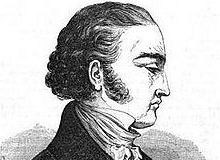
Dr. Edme-Samuel Castaing
Murderer Alexander Pearce
Murderer · Australia · 1822
1819 — Alexander Pearce was sentenced at Armagh in 1819 to penal transportation…
6 victims
Alexander Pearce
Murderer · Australia · 1822
1819 — Alexander Pearce was sentenced at Armagh in 1819 to penal transportation…
6 victims
 Mark Jefferies
Murderer · Australia · 1820
Mark Jefferies was an escaped convict who was described as a rapist and a canni…
5 victims
Mark Jefferies
Murderer · Australia · 1820
Mark Jefferies was an escaped convict who was described as a rapist and a canni…
5 victims
 Jereboam Beauchamp
Murderer · USA · 1825
Jereboam Orville Beauchamp was an American lawyer and convicted murderer who wa…
1 victim
Jereboam Beauchamp
Murderer · USA · 1825
Jereboam Orville Beauchamp was an American lawyer and convicted murderer who wa…
1 victim
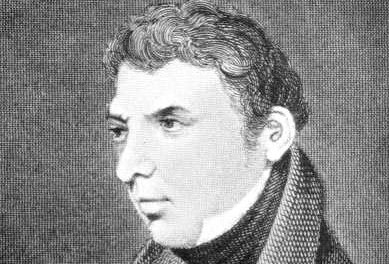 John Thurtell
Murderer · United Kingdom · 1823
John Thurtell (born December 21, 1794) was hanged at Hertford on January 9, 182…
1 victim
John Thurtell
Murderer · United Kingdom · 1823
John Thurtell (born December 21, 1794) was hanged at Hertford on January 9, 182…
1 victim
 Karl Ludwig Sand
Murderer · Germany · 1819
Karl Ludwig Sand was a German university student and a member of a liberal Burs…
1 victim
Karl Ludwig Sand
Murderer · Germany · 1819
Karl Ludwig Sand was a German university student and a member of a liberal Burs…
1 victim
 Errol Dehaney
Murderer · USA · 1995
Errol Dehaney was sentenced to life in prison on December 8, 1999. He was charg…
3 victims
Errol Dehaney
Murderer · USA · 1995
Errol Dehaney was sentenced to life in prison on December 8, 1999. He was charg…
3 victims
 Rutendra Raghunandan
Murderer · USA · 2003
Thursday, September 11, 2003 (11:50 PM) — Rutendra Raghunandan went to his wife…
3 victims
Rutendra Raghunandan
Murderer · USA · 2003
Thursday, September 11, 2003 (11:50 PM) — Rutendra Raghunandan went to his wife…
3 victims
 Robert Bayne
Murderer · United Kingdom · 2010
Robert Bayne was convicted in the High Court of Justiciary in Edinburgh of murd…
1 victim
Robert Bayne
Murderer · United Kingdom · 2010
Robert Bayne was convicted in the High Court of Justiciary in Edinburgh of murd…
1 victim
 Ronnie Cauthern
Murderer · USA · 1987
Ronnie M. Cauthern was convicted of the 1987 slayings of a husband and wife who…
2 victims
Ronnie Cauthern
Murderer · USA · 1987
Ronnie M. Cauthern was convicted of the 1987 slayings of a husband and wife who…
2 victims
 Marlon Legere
Murderer · USA · 2004
Marlon Legere was born October 10, 1975, and he was a Trinidadian-American from…
2 victims
Marlon Legere
Murderer · USA · 2004
Marlon Legere was born October 10, 1975, and he was a Trinidadian-American from…
2 victims
 Melissa Marvin
Homicide · USA · 1999
Melissa Lynn Marvin was a 29-year-old waitress and amateur surfer at the time o…
4 victims
Melissa Marvin
Homicide · USA · 1999
Melissa Lynn Marvin was a 29-year-old waitress and amateur surfer at the time o…
4 victims
- Gender
- male
- Country
- —
- Location
- —
- Date of birth
- 1796
- Age at first offence
- 26
- Characteristics
- poisoner, history of mental illness
- Victim profile
- Hippolyte Ballet / Auguste Ballet (two wealthy lawyer brothers)
- Method of murder
- Poisoning (morphine) Loca tion : Franc e
- Date(s) of murder
- October 5, 1822 / June 1, 1823
- Years active
- 1822–1823
- Date of arrest
- June 2, 1823
- Status
-
Executed
Executed by guillotine on December 4, 1823
Case identity
Edme-Samuel Castaing (1796–1823) was a French physician who was thought to have been the first person to use morphine to commit murder.
Timeline
- October 1822 — Hippolyte Ballet died from a sudden illness; Hippolyte’s death was treated with an autopsy conducted by Dr. Segalas and Castaing.
- September 18, 1822 — It was shown in court that Castaing had purchased 10 grains of acetate of morphia.
- October 7, 1822 — Auguste Ballet cashed 100,000 francs of stocks.
- October 10, 1822 — Castaing gave a stockbroker 66,000 francs to invest.
- October 11, 1822 — Castaing sent his mother 30,000 francs.
- October 14, 1822 — Castaing gave his mistress 4,000 francs.
- December 1, 1822 — Auguste made out a will with Castaing as sole legatee.
- May 29, 1823 — The will was deposited with Castaing’s cousin, a notary’s clerk; Castaing and Auguste went on holiday to the countryside near Saint Germain and spent the next day back in Paris in Saint Cloud where Auguste fell ill.
- Sunday June 1, 1823 — Auguste Ballet died.
- Monday June 2, 1823 — A post-mortem was performed in the hotel at Saint Cloud; Castaing was under provisional arrest and remained in the hotel during the post-mortem.
- November 10, 1823 — Castaing’s trial commenced before the Paris Assize Court.
- November 16, 1823 — M. Roussel concluded his speech at ten o’clock on Sunday night.
- December 4, 1823 — Castaing’s appeal was rejected; he was executed by guillotine.
- Two days later — He was executed after his appeal was rejected.
- December 6, 1823 — He was guillotined.
Background
Castaing was born in Alençon, France, the youngest of the three sons of an Inspector-General in the department of Woods and Forests. He studied at the College of Angers and carried off many prizes. At the age of nineteen, he began studies at the School of Medicine in Paris.
He became a qualified doctor in 1821. He formed a passionate attachment for the widow of a judge, with whom he later had children. By 1821, he had fathered two children with the widow, and the widow had three children. He later married the widow and had two more children with her.
Castaing entered into a financial crisis. In 1818, he backed a bill for a friend for 600 francs, and it became due in 1820. He and his mother attempted to put off the day of reckoning, but his father did nothing to help. He was under financial pressure, which was further exacerbated by the friend’s debt.
Among his friends were Hippolyte and Auguste Ballet. Hippolyte had consumption and his health worsened until, in August 1822, doctors recommended him to take the waters at Enghien. In September, Hippolyte returned to Paris apparently much better and had leeches applied to him by Castaing on October 1. Hippolyte then died after sudden illness.
Castaing later became subject to an investigation that lasted five months after Auguste’s death.
The offence
Castaing was charged with the murder of Hippolyte Ballet, the destruction of a document containing the final dispositions of Hippolyte’s property, and the murder of Auguste Ballet. The three charges were tried simultaneously.
The case involved the use of acetate of morphia (morphine) as a poison. Medical opinions differed as to the nature of the poison used in the murders, and there was a central issue in the trial concerning the lack of morphia in the bodies of the deceased.
Investigation
An investigation commenced in Paris and lasted five months. During the early part of his imprisonment, Castaing feigned insanity for three days and then stopped and turned to more practical means of defence.
Castaing was moved to Versailles prison after the initial phase of the investigation. In prison he got on friendly terms with another prisoner, Goupil, who was awaiting trial for an unimportant offence. Through Goupil, Castaing communicated with his mother in hopes that she would use her influence to stifle some serious evidence against him.
Castaing tried to get at the chemists from whom he had bought acetate of morphia and persuade them to say that the morphia he had purchased was harmless.
During the dying period of Hippolyte Ballet, a post-mortem was held. Drs. Segalas and Castaing stated that death was due to pleurisy aggravated by consumptive condition of Hippolyte, and concluded that it was not of itself likely to have been so rapidly fatal in its consequences.
After Auguste Ballet died, a post-mortem was held at Saint Cloud on Monday June 2, 1823. Medical men declared death to be due to an inflammation of the stomach attributed to natural causes, stating that the inflammation had subsided and been succeeded by cerebral inflammation that might be aggravated by exposure to the sun or over-indulgence.
Arrest
After Hippolyte’s death, Castaing was not released. After Auguste Ballet died, Castaing was arrested. He was initially in the hotel at Saint Cloud under provisional arrest during the post-mortem and then taken to Paris for further proceedings.
Trial
Court and charges
Castaing’s trial commenced before the Paris Assize Court on November 10, 1823, and lasted eight days. The Acte d’accusation (indictment) consisted of a hundred closely-printed pages.
The charges were tried simultaneously: murder of Hippolyte Ballet, destruction of a document containing the final dispositions of Hippolyte’s property, and murder of Auguste Ballet.
Castaing was defended by two advocates: Roussel and the famous Pierre-Antoine Berryer. Berryer’s speech was described as not one of his most successful ones.
Evidence and key disputes
Castaing admitted purchasing acetate of morphia before Hippolyte’s death. The prosecution abandoned the Hippolyte murder part before the end of the trial.
Regarding Hippolyte’s will, Castaing admitted he had seen a draft of a will executed by Hippolyte in favour of his sister, and he denied having told Auguste that Lebret had in his possession a copy prepared to be destroyed for 100,000 francs.
Mlle. Percillie, Auguste’s mistress, testified that statements were made in her presence by both Auguste Ballet and Castaing, that Castaing had procured the destruction of a will copy for Auguste’s sake. Castaing denied that he had been to Mlle. Percillie’s house and denied the truth of the statements.
Castaing denied that he had driven with Auguste to Lebret’s office on October 8. The judge questioned Castaing about his sudden possession of 100,000 francs despite his apparent lack of money, and Castaing repeated that Auguste had given him the capital sum as an equivalent for an income of 4,000 francs his brother had intended to leave him.
Castaing acknowledged he allowed evacuations of the sick man to be thrown away. He stated that he threw away morphia and antimony purchased in Paris in the closets of the hotel, believing that he would be suspected of murder. In response to a jury question, Castaing said he had mixed acetate of morphia and tartar emetic together before reaching Saint Cloud, but he could not explain why.
Orfila, a chemist, testified that symptoms might be attributed either to poisoning by acetate of morphia or some other vegetable poison, or equally to sudden illness of a natural kind. The liquids taken from the stomach of Ballet had yielded on analysis no trace of poison of any sort, and convulsive symptoms were described as characteristic of a severe dose of acetate of morphia.
There was testimony by Mlle. Percillie and also testimony by witnesses for the defence, including eighteen people who testified to his kindness and generosity, and witnesses attesting to his diligence and good conduct as a medical student. A witness, M. Chaussier, volunteered that the absence of any trace of poison in portions of Auguste Ballet’s body submitted to analysis constituted an absence of the corpus delicti. The president replied that this was a question of criminal law.
A key defence and prosecution contention involved corpus delicti. The Avocat-General quoted French lawyer d’Aguesseau:
"The corpus delicti is no other thing than the delictum itself; but the proofs of the delictum are infinitely variable according to the nature of things; they may be general or special, principal or accessory, direct or indirect; in a word, they form that general effect (ensemble) which goes to determine the conviction of an honest man."
The Avocat-General also addressed the jury about proof and inward conviction, citing:
"The Law does not ask you to give the reasons that have convinced you; it lays down no rules by which you are to decide as to the fullness or sufficiency of proof . . . it only asks you one question: `Have you an inward conviction?'"
The Avocat-General also delivered a passage addressing future poisoners:
"Since, however, vegetable poisons leave no trace, poisoning by such means may be committed with impunity.'"
and:
"Bunglers that you are, don't use arsenic or any mineral poison; they leave traces; you will be found out. Use vegetable poisons; poison your fathers, poison your mothers, poison all your families, and their inheritance will be yours-- fear nothing; you will go unpunished! You have committed murder by poisoning, it is true; but the corpus delicti will not be there because it can't be there!"
Roussel addressed the corpus delicti:
"The delictum," he said, "is the effect, the guilty man merely the cause; it is useless to deal with the cause if the effect is uncertain,"
Roussel quoted the concluding paragraph of Auguste Ballet’s will:
"It is only after careful reflection that I have made this final disposition of my property, in order to mark the sincere friendship which I have never for one moment ceased to feel for MM. Castaing, Briant and Leuchere, in order to recognise the faithful loyalty of my servants, and deprive M. and Mme. Martignon, my brother-in-law and sister, of all rights to which they might be legally entitled on my death, fully persuaded in soul and conscience that, in doing so, I am giving to each their just and proper due."
and asked:
"Is this," asked M. Roussel, "a document wrested by surprise from a weak man, extorted by trickery? Is he not acting in the full exercise of his faculties? He forgets no one, and justifies his conduct."
Roussel concluded that if Providence had permitted Auguste Ballet to enter court, he would cry:
"Save my friend's life! His heart is undefiled! He is innocent!"
Berryer testified about the taste of acetate of morphia and stated:
"He said that with the help of his own chemist he had put a quarter of a grain of the acetate into a large spoonful of milk, and had found it so insupportably bitter to the taste that he could not keep it in his mouth."
Berryer also quoted words attributed to one of the Kings of France:
"When God has not vouchsafed clear proof of a crime, it is a sign that He does not wish that man should determine it, but leaves its judgment to a higher tribunal."
The Avocat-General responded to Roussel:
"He has spoken of the drama of life, and of its ordinary everyday incidents. If there is drama in this case, it is of Castaing's making. As to the ordinary incidents of everyday life, a man buys poison, brings it to the bedside of his sick friend, saying it is for experiments on cats and dogs, the friend dies, the other, his sole heir, after foretelling his death, takes possession of his keys, and proceeds to gather up the spoils--are these ordinary incidents of every-day life?"
Verdict
The jury took two hours to decide the verdict. They found Castaing:
- innocent of the murder of Hippolyte Ballet
- guilty of destroying his will
- guilty by seven votes to five of the murder of Auguste Ballet
Sentencing
After the verdict, Castaing was condemned to death. He was ordered to pay 100,000 francs damages to the family of Auguste Ballet.
Before judgment was given, Castaing made a last statement in a loud voice:
"No; but I shall know how to die, though I am the victim of ill-fortune, of fatal circumstance. I shall go to meet my two friends. I am accused of having treacherously murdered them. There is a Providence above us! If there is such a thing as an immortal soul, I shall see Hippolyte and Auguste Ballet again. This is no empty declamation; I don't ask for human pity" (raising his hands to heaven), "I look to God's mercy, and shall go joyfully to the scaffold. My conscience is clear. It will not reproach me even when I feel" (putting his hands to his neck). "Alas! It is easier to feel what I am feeling than to express what I dare not express." (In a feeble voice): "You have desired my death; you have it!"
Appeals
Castaing appealed to the Court of Cassation for a revision of his trial, but his appeal was rejected.
Outcome
Edme-Samuel Castaing was executed by guillotine on December 4, 1823.
Before execution, he attempted suicide by poison concealed inside a watch, which one of his friends had brought to him in prison. After the failed attempt, his courage failed him at the last and he met his death in a state of collapse.
Aftermath
Castaing’s execution followed a failed appeal and a failed suicide attempt.
Other details
A report of the trial existed in two named accounts: "Proces Complet d'Edme Samuel Castaing," Paris, 1823, and "Affaire Castaing," Paris, 1823.
Castaing’s characteristics and conduct were described using phrases such as a “soft, humble, insinuating young man” who was “kind to his patients” and “fond of his children,” alongside the fact that he was a “double murderer” at twenty-six.
Hippolyte Ballet’s final illness and post-mortem
Hippolyte Ballet had sudden illness after taking leeches applied by Castaing and died after protracted suffering, and a post-mortem was held. Drs. Segalas and Castaing stated death was due to pleurisy aggravated by the consumptive condition.
Hippolyte had spoken to a notary, Lebret, about making a will. No trace of the will was found after his death, and he was presumed to have died intestate, with his fortune divided such that three-quarters went to his brother Auguste and the remaining quarter to his sister, Mme. Martignon.
A letter written by Auguste Ballet to Prignon on Hippolyte’s death day included:
"With great grief I have to tell you that I have just lost my brother; I write at the same time to say that I must have 100,000 francs to-day if possible. I have the greatest need of it. Destroy my letter, and reply at once. M. Sandrie will, I am sure, accommodate me. I am at my poor brother's house, from which I am writing."
Auguste Ballet’s final illness and post-mortem
A room at the Tete Noire Hotel at Saint Cloud was rented, and Castaing paid five francs in advance. A warmed wine mixed with lemon and sugar was ordered to the bedroom; both young men drank it. Auguste complained it was sour and thought too much lemon had been added.
Castaing left the hotel for some hours on Sunday June 1, 1823. A letter was left at Malassis’ house by a young man about twenty-five years of age, and it was a letter from Castaing stating:
"My dear friend, Ballet has just died, but do nothing before to-morrow, Monday. I will see you and tell you, yes or no, whether it is time to act. I expect that his brother-in-law, M. Martignon, whose face is pock-marked and who carries a decoration, will call and see you. I have said that I did not know what dispositions Ballet may have made, but that before his death he had told me to give you two little keys which I am going to deliver to you myself to-morrow, Monday. I have not said that we are cousins, but only that I had seen you once or twice at Ballet's, with whom you were friendly. So say nothing till I have seen you, but whatever you do, don't say you are a relative of mine."
After Auguste’s death, Castaing was regarded with suspicion due to circumstances including secrecy maintained about the illness and coincidences with Hippolyte’s death.
Statements made by witnesses during trial
Castaing made statements regarding the story of a friend and a proposed will to Mlle. Durand. During interrogation:
President: Castaing, did you tell this story to Mme. Durand?
Castaing: I don't recollect.
Avocat-General: But Mme. Durand says that you did.
President: You always say that you don't recollect; that is no answer. Have you, yes or no, made such a statement to Mme. Durand?
Castaing: I don't recollect; if I had said it, I should recollect it.
Quotation and statements at key medical moments (pre-trial narrative included in the record)
During Auguste’s dying period, Dr. Pigache asked about sudden change. The record described Pelleta, who was sent for to St. Cloud, being impressed by the suspicious nature of the case and pointing out the awkwardness of Castaing being heir to the dying man. Castaing replied:
"You're right," replied Castaing, "my position is dreadful, horrible. In my great grief I had never thought of it till now, but now you make me see it clearly. Do you think there will be an investigation?"
When asked for a post-mortem, Castaing said:
"Ah! You will be doing me the greatest service," said Castaing, "I beg you to insist on a post-mortem. You will be acting as a second father to me in doing so."
When the parish priest and clerk went away, the record included Castaing telling the parish clerk:
"I am losing a friend of my childhood,"
and those moments were accompanied in the record by the remark that both priest and clerk went away “greatly edified by the sincere sorrow and pious demeanour of the young doctor.”
During the trial’s public context, the record also included physical descriptions, including that Castaing was described as having a long face, fair hair brushed back, and that one witness said he looked more like a priest than a doctor.
Spotted an error, or have more information about this case?