
Jeremy Bamber
Mass murderer George Stephenson
Mass murderer · United Kingdom · 1986
George Stephenson — defendant · John Daly — co-defendant · George Daly — co-def…
5 victims
George Stephenson
Mass murderer · United Kingdom · 1986
George Stephenson — defendant · John Daly — co-defendant · George Daly — co-def…
5 victims
 Anthony Arkwright
Mass murderer · United Kingdom · 1988
Anthony Arkwright lived in children’s home and local authority care from a youn…
4 victims
Anthony Arkwright
Mass murderer · United Kingdom · 1988
Anthony Arkwright lived in children’s home and local authority care from a youn…
4 victims
 Thomas Hamilton
Mass murderer · United Kingdom · 1996
Thomas Hamilton committed suicide by shooting himself on 13 March 1996. · 13 Ma…
17 victims
Thomas Hamilton
Mass murderer · United Kingdom · 1996
Thomas Hamilton committed suicide by shooting himself on 13 March 1996. · 13 Ma…
17 victims
 Derrick Bird
Mass murderer · United Kingdom · 2010
Derrick Bird committed a killing spree on 2 June 2010 in the county of Cumbria,…
12 victims
Derrick Bird
Mass murderer · United Kingdom · 2010
Derrick Bird committed a killing spree on 2 June 2010 in the county of Cumbria,…
12 victims
 John Williams
Mass murderer · United Kingdom · 1811
John Williams (also known as Murphy) was a 27-year-old Scottish or Irish seaman…
7 victims
John Williams
Mass murderer · United Kingdom · 1811
John Williams (also known as Murphy) was a 27-year-old Scottish or Irish seaman…
7 victims
 James Earl Patterson
Murderer · USA · 1987
James Earl Patterson was convicted in Virginia of capital murder in the commiss…
1 victim
James Earl Patterson
Murderer · USA · 1987
James Earl Patterson was convicted in Virginia of capital murder in the commiss…
1 victim
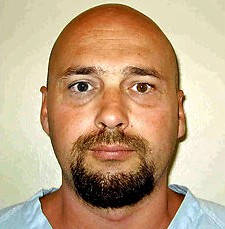 Christopher Scott Emmett
Murderer · USA · 2001
Name: Christopher Scott Emmett · Sex: Male · Race: White · Home: Not stated · A…
1 victim
Christopher Scott Emmett
Murderer · USA · 2001
Name: Christopher Scott Emmett · Sex: Male · Race: White · Home: Not stated · A…
1 victim
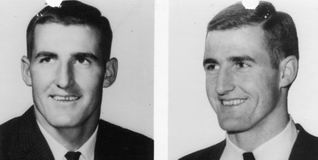 Duane Earl Pope
Murderer · USA · 1965
Duane Earl Pope (born 1943) was convicted in connection with a bank robbery at…
3 victims
Duane Earl Pope
Murderer · USA · 1965
Duane Earl Pope (born 1943) was convicted in connection with a bank robbery at…
3 victims
 David Attias
Homicide · USA · 2001
David Attias was described as an 18-year-old student at the University of Calif…
4 victims
David Attias
Homicide · USA · 2001
David Attias was described as an 18-year-old student at the University of Calif…
4 victims
 Raymond Lee Oyler
Murderer · USA · 2006
Raymond Lee Oyler was convicted for starting the 2006 Esperanza fire in Riversi…
5 victims
Raymond Lee Oyler
Murderer · USA · 2006
Raymond Lee Oyler was convicted for starting the 2006 Esperanza fire in Riversi…
5 victims
- Gender
- male
- Country
- United Kingdom
- Location
- Goldhanger, Essex, England, United Kingdom
- Date of birth
- January 13, 1961
- Age at first offence
- 24
- Characteristics
- parricide
- Victim profile
- Five members of his adoptive family—his father, Ralph Nevill Bamber, 61; mother, June, 61; sister, Sheila Caffell, 28, and her six-year-old twin sons Nicholas and Daniel
- Method of murder
- Shooting (.22 Anschütz semi-automatic rifle)
- Date(s) of murder
- August 7, 1985
- Years active
- 1985
- Date of arrest
- September 29, 1985
- Status
-
Life imprisonment
Sentenced to life in prison (minimum 25 years) on October 28, 1986
Case record: Jeremy Bamber
Background
Jeremy Bamber was jailed for life in 1986 for killing five members of his adopted family at their farmhouse in Essex.
Bamber was born 13 January 1961. He was the illegitimate son of a vicar's daughter and a married army sergeant, and he had been adopted at six weeks old by Neville Bamber, a former RAF pilot, and his wife June. Neville and June adopted another child, Sheila Caffell, whom they nicknamed Bambi. The Bambers farmed near the Essex village of Tolleshunt D'Arcy.
Bamber was sent to Gresham's School, a boarding school in Norfolk, then to college in Colchester. He spent time in Australia and New Zealand, then returned to England to work on his father's farm paying him £170 a week. The Bambers also ran a caravan site, though they would not let Bamber work there. Bamber set up home in a cottage at 9 Head Street, Goldhanger, three to three-and-a-half miles from his parents' farmhouse, and he lived there rent-free.
Sheila Jean Caffell was born in 1957 and was aged 28 when she died. She attended secretarial college, then worked in London as a model, living in a flat in Maida Vale that Neville and June paid for. Sheila married Colin Caffell in May 1977. Their twins Nicholas and Daniel were born in June 1979 and were aged six when they died. Colin and Sheila divorced in May 1982. Sheila’s mental health problems progressed into schizophrenia, and by some points she believed her children were from the devil. After her illness and the breakdown of her marriage, Sheila and the twins moved back to the farmhouse with her parents.
Bamber lived with his student-teacher girlfriend Julie Mugford. They shared a rent-free cottage at Goldhanger provided by his parents.
The offence
In the early hours of 7 August 1985, police were called to White House Farm, Tolleshunt D'Arcy, Essex. Bamber had telephoned police to report that his father had just phoned frantically to say Sheila was going berserk with a semi-automatic rifle. Police found five dead bodies at the farmhouse.
Nevill Bamber was found shot and bludgeoned downstairs. June Bamber’s bullet-riddled body was found in a bedroom. Sheila’s twin sons Nicholas and Daniel were each shot several times in the head while in their sleep. Sheila was found in a bedroom with a .22 rifle and a bible, and she had been shot in the throat.
The prosecution argued that Bamber shot five members of his family and then arranged the scene to make it appear that Sheila had committed the killings. The defence argued that Sheila had shot her family and then committed suicide.
Investigation
Concerns were raised about the investigation, described as not thorough. In 1989, Home Secretary Douglas Hurd tightened police procedures due to failings in the Bamber investigation.
The trial judge expressed concern about a “less than thorough investigation.” Evidence recording and preservation were criticized, including the burning of bloodstained bedding and carpet shortly after the killings. Police were said to have failed to examine key items properly, including a silencer in a cupboard and a bible found with Sheila.
Police initially believed they were dealing with a murder-suicide scenario. Later suspicion shifted due to Bamber’s behaviour and inconsistencies in the findings.
A central issue involved whether a silencer was attached to the rifle at the time of the shots and, if so, whether Sheila could have fired it to kill herself and then place it back.
Murder weapon and silencer
Nevill kept several guns at the farm. The murder weapon was a .22 Anschütz semi-automatic rifle, model 525, purchased by Nevill on 30 November 1984. Nevill purchased it along with a Parker Hale silencer, telescopic sights, and 500 rounds of ammunition. The rifle used cartridges loaded into a magazine holding ten cartridges. Twenty-five shots were fired.
A silencer was found in the gun cupboard in the farm’s ground floor office by David Boutflour, Bamber’s cousin. The silencer was found with traces of Sheila’s blood on it alongside a single grey hair, but the hair was lost before forensics could study it.
In 2010, Bamber’s legal team submitted evidence about markings on the kitchen mantelpiece and argued these marks were created after crime-scene photographs were taken.
Blood in and on the silencer was examined, including findings of blood group consistency with Sheila’s blood group, with later evidence also involving contamination and disputes over DNA interpretation.
Rifle and fingerprints
Fingerprints were found including:
- A print from Sheila’s right ring finger on the right side of the butt, pointing downwards.
- A print from Bamber’s right forefinger on the breech end of the barrel above the stock and pointing across the gun.
- Three further prints of insufficient detail to be identified.
Bamber stated he had used the gun to shoot rabbits.
Arrest
After Julie Mugford provided a statement to police, Bamber was arrested and charged.
Bamber was arrested on 8 September 1985. A friend Mugford said had been implicated was also arrested, but was released after having a solid alibi.
Bamber told police Mugford was lying because he had jilted her. He denied various allegations about the motives and his involvement.
Bamber was bailed from the police station on 13 September 1985, and he went on holiday to the south of France. Before leaving England, he returned to the farmhouse, gaining entry by the downstairs bathroom window. He said this was because he had left his keys in London and needed some papers for the trip to France; he said he did not borrow keys from the housekeeper who lived nearby.
When Bamber returned to England on 29 September, he was re-arrested and charged with the murders.
Timeline
- August 4, 1985 — Sheila took the boys to spend a week at the Bambers’ farm.
- August 7, 1985 (3.26 a.m.) — Bamber telephoned police and reported that Sheila was going berserk with a semi-automatic rifle after receiving a frantic call from his father.
- August 7, 1985 (3.35 a.m.) — A patrol car, Charlie Alpha 7 (CA7), was sent to the scene based on a police log.
- August 7, 1985 (3.36 a.m.) — A police log recorded a caller self-identified as Jeremy Bamber ringing Chelmsford Police Station.
- August 7, 1985 (4.30 a.m.) — A British Telecom operator checked the line to the farm; the phone was off the hook.
- August 7, 1985 (5 a.m.) — A tactical firearms group arrived.
- August 7, 1985 (7.34 a.m.) — Police entry time referenced for a witness statement about Sheila.
- August 7, 1985 (7.54 a.m.) — Police decided to enter through the back door.
- August 12, 1985 — Police collected the silencer.
- August 13, 1985 — The silencer was examined by police.
- September 8, 1985 — Bamber was arrested and charged with murder.
- October 14, 1986 — The trial commenced at Chelmsford Crown Court.
- October 18, 1986 — The jury returned a guilty verdict by ten to two.
- October 28, 1986 — Bamber was sentenced to life in prison (minimum 25 years).
- December 12, 2002 — The Court of Appeal dismissed Bamber’s appeal against conviction.
- 2004 — Bamber was attacked by a fellow prisoner with a knife and needed twenty stitches.
- May 2008 — Bamber lost a High Court appeal against the whole-life tariff.
- May 2009 — The Appeal Court upheld Tugendhat’s decision on the whole-life tariff.
- February 2011 — The Criminal Cases Review Commission provisionally rejected the latest submissions.
Trial
The trial commenced at Chelmsford Crown Court in October 1986 and lasted 19 days. It was heard before Mr Justice Drake (Sir Maurice Drake) and a jury.
The prosecution was led by Anthony Arlidge QC, and the defence was led by Geoffrey Rivlin QC, supported by Ed Lawson QC.
Bamber’s girlfriend Julie Mugford was a key witness for the prosecution. She alleged that Bamber made murderous threats against his father, and she described statements Bamber made about his “old” father, his “mad” mother, his sister, and the desire to hire a hit man and discuss arson.
Two explanations were presented for the killings:
- The prosecution said Bamber shot all five victims at night with a legally held rifle.
- The defence said Sheila shot four members of her family and then committed suicide, with Sheila having a history of psychiatric illness.
Jury verdict and sentencing
The jury delivered a guilty verdict by ten to two. Bamber was handed five life sentences with a recommendation that he stay in prison for at least 25 years without parole.
After sentencing, Mr Justice Drake said, “I find it difficult to foresee whether it will ever be safe to release someone who can shoot two little boys as they lie asleep in their beds.”
Mr Justice Drake also described investigation failures, and later stated concerns about police actions, including the clearing of the house shortly after the killings and the missed opportunities for examination of evidence.
Sentencing
Bamber was sentenced to five life terms with a recommendation he serve at least 25 years without parole.
Mr Justice Drake also described Bamber as “warped and evil beyond belief” and “warped, callous and evil.” The judge stated it was difficult to imagine anyone agreeing to release Bamber from jail in the future.
Appeals
Bamber’s conviction was repeatedly upheld, and leave to appeal was refused in 1989 and 1994.
He sought leave to appeal in June 1987, arguing that the judge’s summing up omitted important defence material and that the judge expressed strong views. Leave to appeal was refused on 20 March 1989 by Lord Chief Justice Lord Lane. Further petitions and judicial review actions were discussed, including expert evidence issues and subsequent court handling of submissions.
Criminal Cases Review Commission referral and Court of Appeal (2002)
The Criminal Cases Review Commission (CCRC) referred Bamber’s case to the Court of Appeal in March 2001. The appeal was heard from 17 October to 1 November 2002 and the decision was published on 12 December 2002.
Bamber brought multiple issues to the court, including issues about disclosure and challenges relating to the silencer and DNA testing. The referral reason included DNA on the silencer and testing results not available in 1986.
The judges issued a lengthy judgment dismissing the appeal, concluding that the conviction was not unsafe and dismissing arguments of police or prosecution conduct that would have adversely affected the jury’s verdict.
Whole-life tariff appeals (2008 and 2009)
On 15 December 1994, the Home Secretary decided Bamber should remain in prison for the rest of his life. In May 2008 he lost a High Court appeal against the whole-life tariff before Mr Justice Tugendhat. In May 2009, the Appeal Court upheld Tugendhat’s decision.
Bamber was one of 38 prisoners in the UK told they would never be released. He was described as protesting his innocence.
Outcome
Bamber was convicted in 1986 of murdering five members of his adopted family at White House Farm, Tolleshunt D'Arcy, Essex, and he was sentenced to life imprisonment with a minimum term.
His conviction remained upheld through later appeal processes, including dismissal of his appeal in December 2002 and rulings on the whole-life tariff in 2008 and 2009.
Aftermath
Bamber continued to protest his innocence after conviction.
In July 2001, a team of police officers were given four months to complete fresh enquiries into the case. The CCRC investigated possible miscarriages of justice, and a referral back to the Court of Appeal resulted in the conviction being upheld.
In 2002, Bamber offered £1m as a reward for information that would help quash his conviction.
In 2004, Bamber was attacked by a fellow prisoner with a knife while talking on the phone and needed twenty stitches.
Bamber’s campaigns included the establishment of multiple websites and public support from figures including journalist Bob Woffinden, former Respect MP George Galloway, crime writer Scott Lomax, and Andrew Hunter.
Bamber used later submissions to the CCRC, including requests based on photographs, police logs, and expert reports, including evidence about scratch marks and disputes about the timing of Sheila Caffell’s death. The CCRC provisionally rejected submissions in February 2011.
A lie detector test was referenced later, and Bamber continued to deny that he shot his family.
Other details
People connected to the case
- Nevill Bamber — adopted family father; described as aged 61 when he died; a farmer, local magistrate, and former RAF pilot. He was described in court as 6' 4" tall.
- June Bamber — adopted family mother; described as also aged 61 when she died; had depression and had been treated in a psychiatric hospital in 1982.
- Sheila Jean Caffell — adopted family sister; attended secretarial college; worked as a model; diagnosed with schizoaffective disorder; later discharged from hospital with treatment including Stelazine and Haloperidol injections referenced in her treatment history.
- Nicholas Caffell — twin son; aged six when he died.
- Daniel Caffell — twin son; aged six when he died.
- Julie Mugford — Bamber’s girlfriend and witness for the prosecution; described as starting dating Bamber in 1983 while she was a 19-year-old student at Goldsmith’s College in London; she later moved to Canada and married in 1991; she had made earlier admissions involving dishonesty and chequebook use, and she told police she later changed her statement.
- Anthony Arlidge QC — prosecutor at trial.
- Geoffrey Rivlin QC — defence counsel at trial.
- Ed Lawson, QC — supported the defence at trial.
- Mr Justice Drake — sentencing judge and trial judge.
- Douglas Hurd — Home Secretary who tightened procedures in 1989 due to investigation failings.
- Lord Lane — refused leave to appeal on 20 March 1989.
- Michael Howard — Home Secretary who decided on 15 December 1994 that Bamber should remain in prison for the rest of his life.
- Mr Justice Tugendhat — High Court judge for the May 2008 appeal against the whole-life tariff.
- Victor Temple QC and Michael Turner QC — representatives at the 2002 appeal hearing.
Quoted material
Mr Justice Drake said:
"I find it difficult to foresee whether it will ever be safe to release someone who can shoot two little boys as they lie asleep in their beds.”
Bamber’s girlfriend Julie Mugford was alleged to have stated that Bamber made references that included the “old” father, the “mad” mother, and his sister and the phrase “nothing to live for”.
A police log entry in a telephone log said:
"Mr Bamber, White House Farm, Tolleshunt d’Arcy—daughter Sheila Bamber, aged 26 years, has got hold of one of my guns."
A telephone log entry recorded the caller’s words:
"You've got to help me. My father has rang me and said, 'Please come over. Your sister has gone crazy and has got the gun.' Then the line went dead."
A radio message log recorded:
"0737: one dead male and one dead female in kitchen."
A telephone message log recorded:
"0738: one dead male and one dead female found on entry."
An incident log message included:
"Police entered premises. One male dead, one female dead."
Injuries to Bamber while imprisoned
Bamber stated he had many moves and cell moves and alleged indulgent treatment.
He attacked a prisoner with a broken bottle and was placed in solitary confinement after inmates were angered by his stories to journalists.
In May 2004, he was attacked by a fellow prisoner with a knife while talking on the phone and needed twenty stitches.


Spotted an error, or have more information about this case?