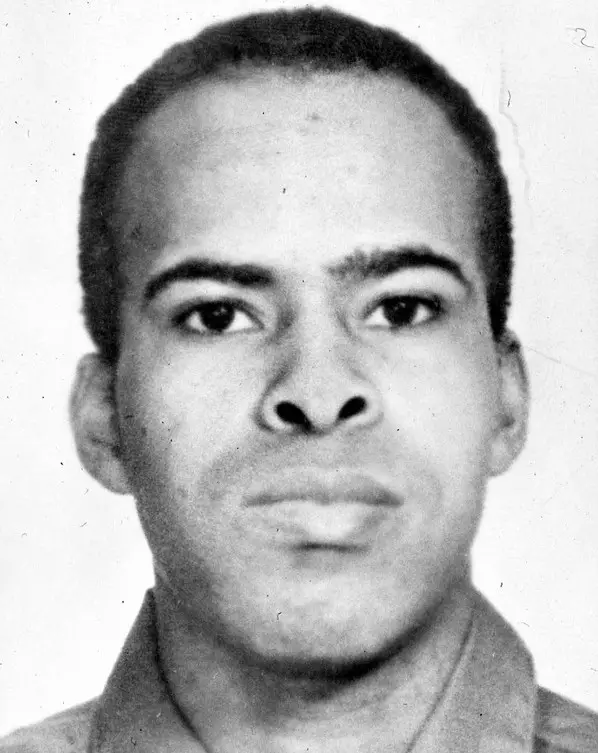
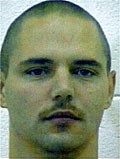
Daniel Morris Thomas
Murderer Ervil LeBaron
Murderer · USA · 1972
Ervil Morrell LeBaron (1925 to August 16, 1981) was the leader of a polygamous…
35 victims
Ervil LeBaron
Murderer · USA · 1972
Ervil Morrell LeBaron (1925 to August 16, 1981) was the leader of a polygamous…
35 victims
 Brian Kevin Rosenfeld
Murderer · USA · 1985
Brian Kevin Rosenfeld Brian Kevin Rosenfeld was sentenced to three concurrent l…
23 victims
Brian Kevin Rosenfeld
Murderer · USA · 1985
Brian Kevin Rosenfeld Brian Kevin Rosenfeld was sentenced to three concurrent l…
23 victims
 Marvin Gray
Murderer · USA · 1975
Marvin Gray was convicted killer who claimed responsibility for 23 slayings and…
23 victims
Marvin Gray
Murderer · USA · 1975
Marvin Gray was convicted killer who claimed responsibility for 23 slayings and…
23 victims
 Yahweh ben Yahweh
Murderer · USA · 1980
Yahweh ben Yahweh was born and legally named Hulon Mitchell Jr. (October 27, 19…
23 victims
Yahweh ben Yahweh
Murderer · USA · 1980
Yahweh ben Yahweh was born and legally named Hulon Mitchell Jr. (October 27, 19…
23 victims
 James Butler
Murderer · 2004
James Butler Jr. (born December 18, 1972 in Harlem, New York) was a former Amer…
1 victim
James Butler
Murderer · 2004
James Butler Jr. (born December 18, 1972 in Harlem, New York) was a former Amer…
1 victim
 Daryl Mack
Murderer · USA · 1988
Daryl Linnie Mack was executed in Nevada on April 26, 2006 for the rape and mur…
2 victims
Daryl Mack
Murderer · USA · 1988
Daryl Linnie Mack was executed in Nevada on April 26, 2006 for the rape and mur…
2 victims
 Lowell Amos
Serial killer · USA · 1979
Lowell Edwin Amos (January 4, 1943 – January 5, 2022) was an American former Ge…
4 victims
Lowell Amos
Serial killer · USA · 1979
Lowell Edwin Amos (January 4, 1943 – January 5, 2022) was an American former Ge…
4 victims
 Paul Augustus Howell
Murderer · USA · 1992
Paul Augustus Howell was a Florida death row prisoner identified as Black, male…
1 victim
Paul Augustus Howell
Murderer · USA · 1992
Paul Augustus Howell was a Florida death row prisoner identified as Black, male…
1 victim
 Elmer Carroll
Murderer · USA · 1990
April 16, 1992 — Elmer Carroll was sentenced to death for first-degree murder a…
1 victim
Elmer Carroll
Murderer · USA · 1990
April 16, 1992 — Elmer Carroll was sentenced to death for first-degree murder a…
1 victim
- Gender
- male
- Country
- USA
- Location
- Polk County, Florida, USA
- Date of birth
- 1948
- Age at first offence
- 28
- Characteristics
- rape, robbery
- Victim profile
- Charles Anderson (male)
- Method of murder
- Shooting ( rifle)
- Date(s) of murder
- January 1, 1976
- Years active
- 1976
- Date of arrest
- —
- Status
-
Executed
Executed by electrocution in Florida on April 15, 1986
Case record for Daniel Morris Thomas
Background
Daniel Morris Thomas was convicted and sentenced to death for the New Year's Day, 1976, murder of Charles Anderson in Polk County, Florida. He was also convicted of sexual battery, robbery, and burglary in connection with the events at the Anderson home.
The Florida Supreme Court proceedings involved:
- Docket #68526: Daniel Morris Thomas, Petitioner, vs. Louie L. Wainwright, Secretary of the Florida Department of Corrections, and R. L. Duggar, Superintendent of Florida State Prison, Respondents (486 So. 2d 574; April 7, 1986), concerning “opinion petition for extraordinary relief, for a writ of habeas corpus, etc.” and a response.
- Docket #68588: Daniel Morris Thomas, Appellant, vs. State of Florida, Appellee (486 So. 2d 577; April 14, 1986), concerning an opinion.
Thomas was executed on April 15, 1986.
The offence
On January 1, 1976, a black male wearing a ski mask and gloves and armed with a rifle broke into the home of Mr. and Mrs. Charles Anderson. The intruder shot and killed Mr. Anderson, committed sexual battery on Mrs. Anderson, and stole several items from the house.
The Andersons’ dog was shot by the intruder.
Investigation
Law enforcement officers and a paid informant testified that shortly after the Anderson murder, they purchased from Thomas and a neighbor, Lee O. Martin, a number of handguns, one of which had been stolen from the Andersons’ residence.
A search warrant was obtained, and the residences of both men were searched, turning up the murder weapon, ski masks, and several other items stolen from the Andersons’ home.
Arrest
A search warrant was obtained and the residences of both men were searched.
Trial
On December 21, 1976, Thomas was indicted and charged with first degree murder, sexual battery, robbery, and burglary in connection with the events at the Anderson home.
At trial, the jury found Thomas guilty on all counts and recommended the death penalty.
A paid informant and law enforcement officers testified about the purchase of handguns from Thomas and Lee O. Martin shortly after the Anderson murder.
The Florida Supreme Court later affirmed the conviction and sentence.
Sentencing
On April 15, 1977, the trial judge sentenced Thomas to death.
In addition to the circumstances at the Anderson home, the second warrant is referenced in the material, and Thomas was ultimately executed on April 15, 1986.
Appeals
Florida Supreme Court affirmance
Thomas v. State, 374 So.2d 508 (Fla.1979), cert. denied, 445 U.S. 972, 100 S.Ct. 1666, 64 L.Ed.2d 249 (1980).
Thomas v. State, 421 So.2d 160 (Fla.1982).
Federal habeas corpus (first federal habeas petition and appeal)
Thomas v. Wainwright, 767 F.2d 738 (11th Cir. 1985), cert. denied, --- U.S. ----, 106 S.Ct. 1241, 89 L.Ed.2d 349 (1986).
This material states that Thomas was convicted and sentenced to death for the murder of Charles Anderson. It describes that, after direct appeal and post-conviction proceedings in the Florida courts, the federal district court denied Thomas’ habeas corpus petition.
The Eleventh Circuit reviewed four issues on appeal:
- Whether Thomas was denied effective assistance of conflict free counsel.
- Whether Florida law at the time of his sentencing hearing discouraged his attorney from investigating and introducing evidence of nonstatutory mitigating circumstances, depriving him of either due process or effective assistance of counsel.
- Whether the Brown issue as decided in Ford v. Strickland, 696 F.2d 804 (11th Cir.) (en banc), cert. denied, --- U.S. ----, 104 S.Ct. 201, 78 L.Ed.2d 176 (1983), should be reconsidered.
- Whether the Florida death penalty is being administered in a racially or otherwise discriminatory manner.
The Eleventh Circuit “affirmed.”
Issue 1: Effective assistance of conflict free counsel
Thomas claimed he was deprived of his Sixth Amendment right to effective assistance of conflict free counsel.
An attorney from the Public Defender’s Office for the Tenth Judicial Circuit was appointed to represent Thomas, but Thomas refused to speak with the attorney concerning the case, forcing the attorney to investigate and defend without the defendant’s assistance.
At Thomas’ state post-conviction hearing, the court heard testimony from Dan Brawley, the public defender appointed to represent Thomas. Brawley testified that he visited Thomas on the day of his arraignment with Larry Whitten, chief investigator from the Tenth Judicial Circuit Public Defender’s Office. Thomas sat in complete silence for about ten minutes, then abruptly walked out of the meeting. Brawley continued to review the file, investigate, and prepare the case. About two weeks later, Whitten returned alone and was again unable to communicate with Thomas. Four or five weeks after the first meeting, Brawley visited Thomas again and could elicit no comment.
The record described that Thomas continued refusal to communicate throughout the trial after a refusal by the court to appoint other counsel.
Thomas alleged that the lack of communication deprived him of his right to effective counsel because other counsel could have communicated with him and discovered information that would have enabled them to present a better defense.
The district court described the claim as premised on Thomas’ absolute refusal to communicate and denied relief without merit. The district court concluded:
“[A] defendant cannot be allowed to refuse to cooperate with his attorney and the trial court and then attempt to create an issue of ineffective counsel on the basis of his own refusal,”
The Eleventh Circuit stated that the trial court could not be constitutionally faulted for refusing to appoint other counsel based on those facts.
The Eleventh Circuit discussed:
- The rule that an indigent criminal defendant has an absolute right to be represented by counsel, but does not have a right to have a particular lawyer represent him, and cannot demand a different appointed lawyer except for good cause (referencing Morris v. Slappy; United States v. Young).
- Good cause cannot be determined solely according to a subjective standard of what the defendant perceives (referencing McKee v. Harris).
- A general loss of confidence or trust in counsel, standing alone, is not sufficient (referencing McKee v. Harris).
- A defendant by unreasonable silence or intentional lack of cooperation cannot thwart the law as to appointment of counsel.
Discussion of Brown v. Craven distinction
Thomas relied on Brown v. Craven, 424 F.2d 1166 (9th Cir. 1970), which stated:
“to compel one charged with grievous crime to undergo a trial with the assistance of an attorney with whom he has become embroiled in irreconcilable conflict is to deprive him of the effective assistance of any counsel whatsoever.”
Id. at 1170.
The Eleventh Circuit described that Brown involved a defendant who actively sought to obtain new counsel and requested different counsel in motions and open court. The Eleventh Circuit contrasted Thomas’ conduct with Brown: Thomas never broke his silence.
The Eleventh Circuit concluded that Thomas’ intractable silence amounted to a waiver of any change in counsel that he may otherwise have been entitled to.
The Eleventh Circuit referenced Faretta v. California, 422 U.S. 806, 95 S.Ct. 2525, 45 L.Ed.2d 562 (1975) on waiver of counsel, and United States v. Moore on the functional equivalent of a knowing and voluntary waiver of counsel.
It also stated that even complete noncooperation did not free counsel to abdicate professional responsibility, and it applied Strickland v. Washington.
Issue 1 continued: Strickland analysis of counsel performance
The Eleventh Circuit discussed Strickland’s requirements and held Thomas did not establish ineffective assistance on the record. It summarized:
- Brawley filed pretrial motions to suppress statements and for change of venue, questioned potential jurors at voir dire, used 18 of his 28 available preemptory challenges, challenged jurors for cause, made objections at trial, and cross-examined several of the State’s witnesses.
- Brawley presented two defense witnesses, including an expert concerning potentially exculpatory scientific evidence.
- The Eleventh Circuit stated that the facts Thomas claimed counsel should have developed would have been additional circumstances and were not necessarily exculpatory.
It stated that Brawley filed a motion to withdraw as counsel shortly before trial, asserting two grounds: a prior criminal trial in which Thomas criticized his counsel from the witness stand, and Thomas’ absolute refusal to communicate with Brawley.
The material includes the trial judge’s questions during the hearing on the motion to withdraw, including the following verbatim statements:
THE COURT: Why don't you ask Mr. Thomas to come up? Mr. Thomas, come up to the bench, please? (The defendant approached the bench).
THE COURT: Mr. Thomas, the Public Defender has filed a motion to withdraw as your lawyer on the grounds that you have failed to cooperate with him. And it is also my understanding that you have been dissatisfied with all of the lawyers that have represented you in all of the cases here in the Tenth Circuit. Is there somebody that you wish to represent you or do you have some other plan about hiring a lawyer on your own to represent you? You are entitled to be represented by a lawyer. You are entitled to a court appointed lawyer. Obviously, you can't afford to hire your own, and we have done that. But you have expressed dissatisfaction with everybody that's tried to help you. Now what do you propose about somebody to represent you? You are not going to answer any of my questions, Mr. Thomas? Has Mr. Brawley been over to see you about the case? Do you want to represent yourself?OK. Show the defendant refused to answer any questions or any inquiry about court appointed counsel.
The prosecutor characterized Thomas’ conduct as “complete noncooperation,” and recommended denial of the motion to withdraw. The trial court denied the motion after receiving Brawley’s assurances that he would represent Thomas to the best of his ability.
Brawley characterized Thomas’ attitude as disinterest rather than hostility.
The Eleventh Circuit concluded that Thomas did not establish ineffective assistance of counsel.
Issue 2: Restriction of mitigating evidence
Thomas argued he was denied a fair and individualized capital sentencing due to preclusion of evidence of nonstatutory mitigating factors, either due to state law or counsel’s belief that Florida law barred such evidence.
The material described confusion in Florida regarding whether nonstatutory mitigating circumstances could be considered, referencing Hitchcock v. Wainwright, Proffitt v. Florida, Cooper v. State, and Songer v. State.
The Eleventh Circuit stated it had consistently denied relief under this claim where confusion in Florida law did not appreciably affect the capital sentencing proceeding.
The material states that Thomas’ sentencing hearing was held in April 1977 between Cooper and Lockett decisions. It states:
- The State presented law enforcement personnel who related Thomas’ convictions for prior offenses of armed robbery, assault, battery, and sexual battery.
- Thomas’ counsel presented only one witness, a police detective who had interrogated Thomas. Over the prosecutor’s objection that testimony covered matters not enumerated as mitigating circumstances in the death penalty statute, the detective related that Thomas had spoken for fifteen to twenty minutes about being beaten by a prison guard as a youth until he could not walk while being held at a juvenile detention facility. The detective testified Thomas had tears in his eyes when telling the story.
Thomas asserted that a more thorough investigation would have discovered evidence about hardships of his upbringing, which he described as mitigating, including:
- that he lived with his mother and nine brothers and sisters in a two-room house during his first six years;
- that he was forced to seek food wherever he could find it;
- that while looking through discarded items behind a grocery store he was arrested, kicked, and beaten by white policemen;
- that at age six he witnessed a white doctor rape his mother;
- that at age eight he and his younger brother were incarcerated at the county jail for not going to school;
- that between ages eight and thirteen he was kept in a foster home, where he worked from sunrise to sunset picking cotton and digging ditches and was frequently beaten when he failed to work as long or as hard as required;
- that at age fifteen he was sent to a reformatory school, ran away with a friend, and the friend was subsequently drowned by law enforcement officers;
- that psychological effects reduced his ability to cope rationally with stresses of life.
The Eleventh Circuit stated there was nothing in the record to show that the trial court would have excluded mitigating evidence proffered. It described that the lone defense witness testified about Thomas’ being severely beaten during youth. It stated that the court allowed the testimony over the prosecutor’s objection, admitting it “for the purpose of showing maybe he was under extreme mental emotional disturbance because of these acts.”
The material then recounts counsel’s strategic reasons for not introducing the background evidence, including verbatim trial argument and later testimony by counsel.
The material includes verbatim argument by defense counsel at sentencing:
I would submit you should not have any doubt about recommending death to just possibly an innocent man.
It also includes verbatim testimony at the post-conviction hearing from defense counsel:
The jury did not agree with my summation of the evidence and my view of the evidence and they found him guilty, therefore it seemed to me that since mitigation or sympathy would not really turn the tide for him, and to keep my credibility intact, I wanted to suggest to the jury that maybe you're convinced beyond a reasonable doubt, but you shouldn't be convinced beyond all doubt because there was no direct testimony against Mr. Thomas, there was no eyewitness testimony, no fingerprint testimony, there was positive scientific evidence that at least circumstantially indicated he was not the man.... And I, frankly, did not believe that changing horses and attempting to go the full route with mitigation or sympathy attack would help Mr. Thomas, and we had very little to work with anyway.
And it includes another verbatim statement from defense counsel:
My main pitch to the jury was that maybe you have made a mistake, if this man is allowed to live, maybe some day evidence will come to light showing he didn't do it; and are you so sure of your verdict that you have got to go that next awful step and recommend death.
The Eleventh Circuit concluded that counsel’s decision not to introduce background evidence was primarily strategy and did not fall below objective reasonableness under Strickland. It stated the district court properly held Thomas failed to demonstrate significant causal relationship between counsel’s reliance on Florida law and the decision not to introduce background evidence.
Issue 3: Brown issue / Ford v. Strickland
Thomas raised the Brown issue decided in Ford v. Strickland and suggested reconsideration. The material described the Brown issue involving allegations that the Florida Supreme Court had examined non-record information during appellate review.
The Eleventh Circuit stated Ford held that the Florida Supreme Court’s decision that material should not be used, its statement that it was not used, and rejection that the material affected the judges “ends the matter when addressed at the constitutional level.”
The material states:
- “Neither the district court nor this panel is at liberty to reconsider Ford, which establishes the controlling law on this issue.”
- It affirmed on this issue.
Issue 4: Arbitrariness / discrimination in death penalty administration
Thomas argued the Florida death penalty was unconstitutionally applied due to discrimination based on race, sex, and socioeconomic status, and applied arbitrarily based on geography. He claimed the district court erred in failing to grant an evidentiary hearing, specific discovery, and expenses for expert assistance and witnesses.
The material states the district court properly denied relief and the Eleventh Circuit affirmed.
Federal habeas corpus (second federal habeas petition and appeal)
Eleventh Circuit second petition proceedings (No. 86-3244)
The material includes a second Eleventh Circuit decision:
- Daniel Morris Thomas, Petitioner-Appellant, v. Louie L. Wainwright, as Secretary, Florida Department of Corrections, Respondent-Appellee (No. 86-3244).
- United States Court of Appeals, Eleventh Circuit. April 15, 1986.
- Before RONEY, FAY and JOHNSON, Circuit Judges.
- PER CURIAM.
The material states this was Thomas’ second habeas corpus appearance before the Eleventh Circuit.
It reiterates that Thomas was convicted and sentenced to death for the New Year’s Day, 1976 murder of Charles Anderson in Polk County, Florida, and also convicted of sexual battery, robbery, and burglary in connection with the Anderson home events. It references the Florida Supreme Court decision and the earlier federal habeas decision.
Timeline of warrant and petitions (dated events)
- A death warrant was signed on March 11, 1986.
- On April 1, 1986, 14 days before the scheduled execution on April 15, a petition for writ of habeas corpus was filed with the Florida Supreme Court asserting a single issue: that the process by which jurors are selected to sit on capital trial juries was unconstitutional, alleging impropriety in voir dire procedure used at trial.
- On April 7, the petition was denied with an opinion: Thomas v. Wainwright, 486 So.2d 574 (Fla. 1986).
- The United States Supreme Court denied a requested stay and denied a petition for writ of certiorari: Thomas v. Wainwright, --- U.S. ----, 106 S.Ct. 1623, 90 L.Ed.2d 173 1986).
- Counsel immediately filed another 3.850 petition for writ of habeas corpus in the Florida circuit court alleging seven issues.
- The court denied relief, and the Florida Supreme Court affirmed on the ground that certain claims should have been raised earlier, were presented and decided adversely, were raised and rejected in a previous collateral challenge, or were inexcusably omitted from the previous rule 3.850 motion, citing Adams v. State, [484 So.2d 1216] (Fla.1986).
- Thomas filed his second federal habeas corpus petition in the federal district court at 5:23 p.m. on April 14.
- A hearing was held at 7:30 p.m. on April 14; at approximately 9:45 p.m. an order dismissed the petition, denied a stay of execution, denied a certificate of probable cause, and dismissed with prejudice.
- An order denied certificate of probable cause and stay of execution at approximately 11:20 p.m., except to a limited extent to permit the petitioner to apply to the United States Supreme Court for a stay of execution.
Issues raised in the second federal habeas petition
The material states Thomas raised seven issues in his second federal habeas petition:
- Whether Thomas was competent to be tried.
- Whether the trial court was unconstitutionally restricted in its consideration of mitigating circumstances.
- Whether the trial court and jury were deprived of considering evidence in support of nonstatutory mitigating factors because of trial counsel’s belief that he was limited in investigation and presentation of mitigating circumstances.
- Whether the State failed to disclose material exculpatory evidence in violation of Brady v. Maryland, 373 U.S. 83, 83 S.Ct. 1194, 10 L.Ed.2d 215 (1963).
- Whether Thomas was denied his right to trial by a fair and impartial jury because of: (a) inflammatory pretrial publicity which saturated the community; (b) the process of death qualification and the exclusion of every juror who expressed reservations about capital punishment; and (c) the State’s exclusion of black prospective jurors by peremptory challenge.
- Whether the trial judge misinformed the jury about its responsibility for sentencing, in violation of Caldwell v. Mississippi, --- U.S. ----, 105 S.Ct. 2633, 86 L.Ed.2d 231 (1985).
- Whether the trial judge improperly relied on Thomas’ silence during pretrial psychiatric examination to find an absence of mitigating circumstances.
Dismissal and denial of certificate and stay
The material states:
- The district court dismissed the petition at approximately 9:45 p.m. on April 14, denied a stay, denied a certificate of probable cause, and dismissed with prejudice.
- The Eleventh Circuit denied certificate of probable cause and stay of execution at approximately 11:20 p.m., except to a limited extent to permit application to the United States Supreme Court for a stay.
Majority reasoning (PER CURIAM)
The material states that the “most troublesome issue” was the allegation that Thomas was incompetent to stand trial. It stated that competency cannot be waived or foreclosed by procedural default, citing Adams v. Wainwright, 764 F.2d 1356, 1359 (11th Cir.1985). The material then stated that, in this case, the public defender’s office raised the issue of competency at trial, the state court appointed a qualified psychiatrist, and it was determined Thomas was competent.
The material states the issue was not raised again until the latest state 3.850 proceeding and the present petition, and was not raised on direct appeal, the first state 3.850 proceeding, the federal habeas corpus petition, or in the petition filed with the Florida Supreme Court on April 1, 1986.
It discusses present counsel’s reasons for failure to present earlier and states:
- the first reason was belied by information available in the prior federal petition (referencing Thomas v. Wainwright, 767 F.2d 738, 745-47 (11th Cir.1985));
- the second reason was belied because a qualified expert was appointed before trial. It stated no other court was requested to appoint a psychiatrist to examine Thomas, and that experts concluded nine years after the fact on the eve of the scheduled execution that Thomas was incompetent to stand trial.
It states the district court properly denied:
- a hearing on whether this was an abuse of the writ,
- and a hearing on the allegation that Thomas was incompetent to stand trial,
- and that the district court found no sufficient reason for failure to raise the competency issue in the previous federal petition, citing Witt v. Wainwright, 755 F.2d 1396 (11th Cir.1985).
It states:
- the other issues concerning restriction on mitigation evidence and counsel’s belief were fully explored in the prior opinion at 767 F.2d at 744;
- Hitchcock and Songer did not change the law regarding these issues on the facts;
- the Brady argument was frivolous and an abuse of the writ;
- the issue concerning scars on the legs of Lee O. Martin was argued on direct appeal but never asserted to this Court;
- the evidence regarding fingerprints on the murder weapon was resolved and did not create reasonable doubt;
- the issues concerning a fair and impartial jury were meritless;
- it discusses Grigsby/Lockhart issues, including referenced precedent and reasoning that dismissal of successive petition was correct and requests for certificate and stay were without merit.
It also stated:
- the allegation of fact concerning excusal of black jurors by peremptory challenges did not rise to systematic recusal required by Swain v. Alabama, 380 U.S. 202, 85 S.Ct. 824, 13 L.Ed.2d 759 (1965);
- a black juror was on the jury which decided both guilt and the advisory death sentence;
- the pretrial prejudicial publicity claim fell short of Coleman v. Kemp requirements;
- it states the Caldwell claim was not supported by the allegations and cites Caldwell and the applicable standard;
- it states the final claim about reliance upon a pretrial competency report not subject to adversarial testing was barred by Wainwright v. Sykes.
The material states: “This Court declines to issue a Certificate of Probable Cause.”
Dissent (JOHNSON, Circuit Judge, dissenting)
The material includes a dissent by JOHNSON, Circuit Judge, which stated:
- “I would grant a stay of execution and an evidentiary hearing on petitioner's claim of incompetence to stand trial, and on his Caldwell and Brady claims.”
- “I would grant a stay of execution on petitioner's Grigsby claim until the Supreme Court decides Lockhart v. McCree, cert. granted, --- U.S. ----, 106 S.Ct. 59, 88 L.Ed.2d 48 (1985).”
The dissent argued in sections: I. Competence to stand trial II. Grigsby claim III. Other claims
It discussed that Thomas did not raise his competency claim in his first federal habeas petition, and it relied on precedent in the circuit and Supreme Court decisions, including Adams v. Wainwright and Pate v. Robinson, about the inability to waive competency determination and the necessity of hearing when there is a bona fide doubt.
The dissent referenced:
- Dr. Burt Kaplan;
- that Kaplan’s report was based on one interview during which the defendant never spoke;
- the availability of welfare documents from Thomas’ own hometown;
- the alleged contents of those welfare documents describing Thomas’ history of abandonment, abuse, malnutrition, retardation, psychological trouble, and silence withdrawal;
- affidavits from Thomas’ brothers and sisters indicating childhood behavior;
- a “distinguished psychiatrist” concluding Thomas’ silence indicated mental illness, described as “schizotypal personality disorder with psychotic-like features and paranoia.”
The dissent stated Thomas was legally entitled to a competency hearing and argued due process violations if tried while mentally incompetent.
The dissent also argued that the Caldwell claim should be considered and that on voir dire the judge and prosecutor repeatedly let jurors know sentencing recommendation was advisory, not binding on the court, and that this representation was misleading.
The dissent argued for an evidentiary hearing on the Brady claim regarding suppressed exculpatory FBI evidence and fingerprints, and suppressed prison and medical records about scars or welts on the legs.
It included further discussion of confusion and stay decisions in Grigsby cases and urged the court to pause.
Outcome
The Eleventh Circuit affirmed and declined to issue a Certificate of Probable Cause in the second federal habeas appeal. Thomas was executed by electrocution in Florida on April 15, 1986.
Other details
Florida direct appeal issues listed in the material (16 issues)
The material includes a list of issues raised before the Florida Supreme Court on direct appeal:
- whether the court erred in denying his motion to dismiss the indictment;
- whether the court erred in denying his motion for discharge under the speedy trial rule;
- whether the court erred in denying his motion for change of venue;
- whether the court erred in denying the confession of a selected juror that she was a relative of a victim of the ski mask gang entitled him to a mistrial;
- whether testimony by State witnesses concerning two unrelated burglaries committed in a different county entitled him to a mistrial;
- whether the trial court erred in denying his motion to suppress statements made following his arrest;
- whether the court erred in denying his motion to suppress evidence seized from his residence;
- whether the court erred in denying the public defender's motion to withdraw;
- whether the court erred in denying the proffered testimony of defense witness, Don Dowdy;
- whether the court erred in denying Thomas' motion for continuance during the penalty phase of the trial in order to obtain the testimony of Wilbert Lee;
- whether the court erred in denying his requested jury instruction on attempted first degree murder;
- whether the verdict is contrary to the law;
- whether the verdict is contrary to the weight and sufficiency of the evidence;
- whether the court erred in denying his motion for a new trial;
- whether the court erred in sentencing the defendant to death; and
- whether the court erred in denying a request for a pre-sentence investigation.
Florida Supreme Court issues discussed (subset of issues)
The material also lists the issues discussed by the Florida Supreme Court:
- whether the trial court erred in denying Thomas' motion for discharge under the speedy trial rule;
- the evidence produced at trial failed to identify Thomas as the ski mask intruder;
- whether the trial court erred in denying Thomas' motion for change of venue; and
- Fla.Stat.Ann. Sec. 775.082(1) (1975), requiring a person convicted of a capital felony who is not sentenced to death to be sentenced to life imprisonment without possibility of parole, is unconstitutional.
United States Supreme Court certiorari petition issues (first cert petition)
The first petition for certiorari to the United States Supreme Court raised these issues:
- whether the trial court erred in denying petitioner's motion for discharge under the speedy trial rule;
- whether the trial court erred in admitting in evidence petitioner's oral statements made at the time of his arrest;
- whether the trial court erred in rejecting evidence that was allegedly exculpatory;
- whether the trial court erred in refusing to grant a new trial; and
- whether the death sentence was unconstitutionally imposed upon petitioner.
Florida first post-conviction relief (motion for post-conviction relief)
The material states that Thomas’ first state motion for post-conviction relief, filed on October 6, 1982, raised seven claims:
- the Florida death penalty statute expressly restricts consideration of mitigating circumstances;
- the instructions to the jury during the penalty phase of the trial unconstitutionally shifted the burden of proof to Thomas;
- the Florida death penalty statute fails to provide for fully individualized sentencing and permits unguided re-sentencing by the Florida Supreme Court;
- Thomas' death sentence “shocks the conscience” as it is based on wholly circumstantial evidence;
- Thomas' confession was involuntarily obtained;
- the Florida death penalty statute is arbitrary and capricious as it is based on geographical differences, economic status of the defendant, sex of the defendant, and race of the victim; and
- Thomas was deprived of reasonably effective assistance of counsel at both the guilt and penalty phase of the trial.
It also states Thomas raised the issue of Martin’s scars and fingerprints.
The material states the trial judge summarily denied the first five claims, rejected the sixth on its merits, and set the ineffective assistance of counsel claim for evidentiary hearing.
Florida second post-conviction relief issues (as described)
The material states Thomas raised three issues before the Florida Supreme Court:
- whether defects in the present case were fundamental in nature, thus warranting an order setting aside Thomas’ conviction;
- whether Thomas was denied equal protection and due process by the resolution of his claim concerning the arbitrary application of the death penalty without first providing the expert assistance necessary for the full and fair consideration of this claim; and
- whether Thomas was denied effective assistance of counsel.
It also states Thomas filed a petition for writ of habeas corpus in the same court alleging ineffective assistance of appellate counsel, and that on October 21, 1982, the Florida Supreme Court declined to stay execution, affirmed denial of post-conviction relief, and denied the habeas corpus petition.
Federal first habeas petition issues listed (four issues)
The material lists the issues presented to the Eleventh Circuit on appeal in the first habeas corpus petition: 3. Strickland should be reconsidered; and
Grounds alleged in the latest state 3.850 petition (as referenced)
The material states Thomas alleged seven grounds in the later state 3.850 petition:
- incompetency at the time of trial;
- the trial court restricted its consideration of mitigating circumstances during the penalty phase of the trial;
- deprivation of an impartial jury due to the racial atmosphere existing in the community;
- the trial court diminished the jury’s sense of responsibility;
- failure to disclose the presence of welt-like marks on the legs of Lee O. Martin and failure to disclose the presence of Martin’s fingerprints on the murder weapon;
- death-qualified jury bias in favor of the prosecution; and
- impermissible reliance on a pretrial competency report not subject to adversarial testing.

Spotted an error, or have more information about this case?