
David Housler
Mass murderer?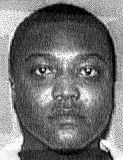 Anthony Graves
Mass murderer? · USA · 1992
Anthony Graves was convicted in 1994 of assisting Robert Carter in multiple mur…
6 victims
Anthony Graves
Mass murderer? · USA · 1992
Anthony Graves was convicted in 1994 of assisting Robert Carter in multiple mur…
6 victims
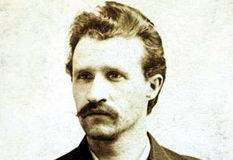 August Spies
Mass murderer? · USA · 1886
August Vincent Theodore Spies (December 10, 1855 – November 11, 1887) was an an…
7 victims
August Spies
Mass murderer? · USA · 1886
August Vincent Theodore Spies (December 10, 1855 – November 11, 1887) was an an…
7 victims
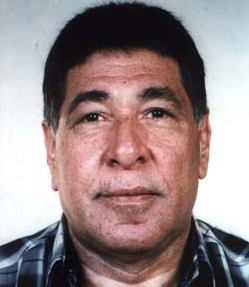 Gameel Al-Batouti
Mass murderer · USA · 1999
Gameel Al-Batouti (also rendered “Gamil ElBatouty” or “El Batouty” in U.S. offi…
216 victims
Gameel Al-Batouti
Mass murderer · USA · 1999
Gameel Al-Batouti (also rendered “Gamil ElBatouty” or “El Batouty” in U.S. offi…
216 victims
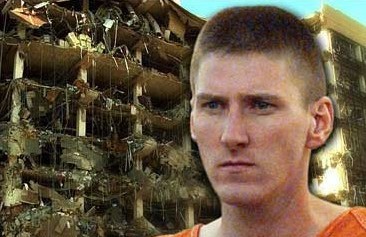 Timothy McVeigh
Mass murderer · USA · 1995
Timothy James McVeigh (April 23, 1968 – June 11, 2001) was a United States Army…
168 victims
Timothy McVeigh
Mass murderer · USA · 1995
Timothy James McVeigh (April 23, 1968 – June 11, 2001) was a United States Army…
168 victims
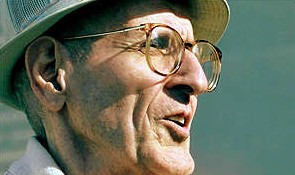 Jack Kevorkian
Homicide · USA · 1990
Jack Kevorkian (born May 26, 1928) was a controversial American pathologist. He…
130 victims
Jack Kevorkian
Homicide · USA · 1990
Jack Kevorkian (born May 26, 1928) was a controversial American pathologist. He…
130 victims
 Julio Gonzalez
Mass murderer · USA · 1990
Julio Gonzalez was sentenced to 174 twenty-five-year sentences (a total of 4,35…
87 victims
Julio Gonzalez
Mass murderer · USA · 1990
Julio Gonzalez was sentenced to 174 twenty-five-year sentences (a total of 4,35…
87 victims
 Dwaine Little
Homicide - Murderer · USA · 1964
Name: Dwaine Little (Dwain Lee Little) · Birth year: 1948 · Little raped and ki…
5 victims
Dwaine Little
Homicide - Murderer · USA · 1964
Name: Dwaine Little (Dwain Lee Little) · Birth year: 1948 · Little raped and ki…
5 victims
 Mary Jane Fonder
Murderer · USA · 2008
Mary Jane Fonder (born July 5, 1942) was an American criminal who murdered Rhon…
1 victim
Mary Jane Fonder
Murderer · USA · 2008
Mary Jane Fonder (born July 5, 1942) was an American criminal who murdered Rhon…
1 victim
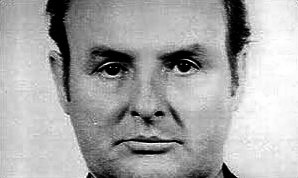 Roy Fontaine
Serial killer · United Kingdom · 1977
17 June 1924 — Archibald Thompson Hall was born in Glasgow. · 1941 — He receive…
5 victims
Roy Fontaine
Serial killer · United Kingdom · 1977
17 June 1924 — Archibald Thompson Hall was born in Glasgow. · 1941 — He receive…
5 victims
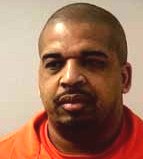 Robert Gattis
Murderer · USA · 1990
Robert Gattis (DOB: 11/18/1961) was a Black male. Gattis was convicted in Octob…
1 victim
Robert Gattis
Murderer · USA · 1990
Robert Gattis (DOB: 11/18/1961) was a Black male. Gattis was convicted in Octob…
1 victim
 Abdullah Hameen
Homicide - Murderer · USA · 1980
Abdullah Hameen was executed by lethal injection in Delaware on May 25, 2001. H…
2 victims
Abdullah Hameen
Homicide - Murderer · USA · 1980
Abdullah Hameen was executed by lethal injection in Delaware on May 25, 2001. H…
2 victims
 Burley Gilliam
Murderer · USA · 1982
Burley Gilliam, Jr. was born on 08/13/48. Joyce Marlowe was last seen alive on…
1 victim
Burley Gilliam
Murderer · USA · 1982
Burley Gilliam, Jr. was born on 08/13/48. Joyce Marlowe was last seen alive on…
1 victim
- Gender
- male
- Country
- USA
- Location
- Montgomery County, Tennessee, USA
- Date of birth
- March 7, 1994
- Characteristics
- murder for hire, robbery
- Victim profile
- Kevin Campbell, Angela Wyatt, Patricia Price, and Marcia Klopp (Taco Bell employees)
- Method of murder
- Shooting
- Date(s) of murder
- January 30, 1994
- Years active
- 1994
- Date of arrest
- Same
- Status
-
Released on October 4, 2010 after four life sentence convictions were overturned.
Parties and docket
- Court of Criminal Appeals of Tennessee: State of Tennessee v. David G. Housler
- Supreme Court of Tennessee: STATE v. HOUSLER; State of Tennessee v. David G. HOUSLER; No. M2003-03122-SC-R11-CD
- Circuit Court, Montgomery County, Tennessee: order granting petition for post-conviction relief
- Petition for post-conviction relief: Courtney Mathews & David Housler (4)
Timeline
- January 30, 1994 — Four Taco Bell employees were found shot to death inside a Clarksville Taco Bell restaurant.
- 1994 — A former soldier was convicted of murder for the deaths of four Taco Bell workers during a robbery.
- 1996 — Courtney Mathews was convicted as charged in connection with the 1994 deaths of four Taco Bell employees.
- June 1997 — The transcript of the Mathews trial was prepared in June 1997.
- November 1997 — David G. Housler’s trial was held; Housler was convicted as charged and sentenced to life imprisonment.
- 1997 — A jury sentenced Housler to four life sentences in prison for helping plan the crime.
- February 23, 2004 — State of Tennessee v. David G. Housler.
- February 27, 2004 — State of Tennessee v. David G. Housler.
- 2004 — The convictions were overturned; a judge later found ineffective counsel and ordered a new trial.
- July 15, 2005 — Opinion in STATE v. HOUSLER; Court held that the trial court properly supplemented the appellate record with the Mathews transcript and reversed the Court of Criminal Appeals’ refusal to consider it.
- October 4, 2010 — David Housler was released from prison after 15 years.
Background
David Housler was convicted in connection with the deaths of four Taco Bell employees during a 1994 robbery at a Clarksville, Tennessee Taco Bell restaurant. He had confessed to being the getaway driver and lookout man. The jury was informed by defense attorney Michael Terry: "You've just convicted an innocent 23-year-old man,".
Court of Criminal Appeals and Supreme Court proceedings addressed whether supplementation of the appellate record with the transcript of co-defendant Courtney Mathews’ trial was proper for consideration of Housler’s due process claim related to inconsistent theories.
The offence
Courtney Mathews, who had worked at the Taco Bell for 10 days as a part-time dishwasher and food handler, forced his co-workers to lie on the floor after the restaurant closed, then shot them. The safe and the cash register were cleaned out, but the amount taken was not disclosed.
Housler was not the gunman. He was convicted of helping gunman and fellow Fort Campbell soldier Courtney Mathews. The indictments included four counts of felony murder in connection with the 1994 deaths of four Taco Bell employees in Clarksville, Tennessee.
Housler later said he made up his confession to being an accomplice of Courtney Mathews in order to testify against Mathews to get leniency on an unrelated theft charge.
Investigation and evidence and trial issues
Housler and his co-defendant were indicted for four counts of felony murder. Their separate trials were held before the same judge.
In Housler’s appeal, he raised whether the State presented inconsistent theories in the trials of Housler and Mathews in violation of Housler’s due process rights. Housler argued that at Mathews’ trial the State argued Mathews acted alone in committing the murders, but at Housler’s trial the State argued Housler acted as Mathews’ look-out.
During the Mathews proceedings, discussion of the inconsistent theories issue occurred prior to and during Housler’s trial, and during the hearing on Housler’s motion for a new trial. The Mathews trial transcript was used by the defense, the prosecution, and the trial court (including defense counsel reading from portions of the Mathews transcript in questioning witnesses and presenting arguments), but the Mathews transcript was never entered into evidence and it was not attached to Housler’s motion for a new trial.
At the motion for a new trial, the State objected to the trial court’s consideration of any new evidence regarding the inconsistent theories issue, arguing that the trial court need only compare the Mathews transcripts and the transcript of Housler’s trial:
- "There's nothing in this motion six [concerning inconsistent theories] that's not covered by the transcripts. Everything the State presented is in the transcript; in the transcript for the first trial and in the transcript for the second trial."
During the hearing on the motion for a new trial, the trial judge remarked that he would "have to go back and read the transcription" of the Mathews trial to refresh recollection of a certain witness’ testimony.
In the hearing on the motion to supplement, the trial judge commented:
This Court has said-and I don't think it has really been objected to by the State, perhaps it-perhaps, but this Court has said repeatedly, and still now believes, that you cannot read the Matthews [sic] transcription, you could not have sat through the trial and believed any other thing than the State of Tennessee believed that Courtney B. Matthews [sic] acted alone in the robbery and killing of the people employed at the Taco Bell Restaurant. (Emphasis added).
In the order granting Housler’s motion to supplement the record, the trial court stated:
Mr. Housler raised issues pre-trial, at trial, and post-trial related to the two prosecutions, particularly the different prosecution theories. The Court denied Housler's legal arguments, in part, upon the Court's consideration, review, and comparison of the trial testimony of the State's prosecution of Courtney Mathews and the State's prosecution of David Housler. (Emphasis added).
The Supreme Court opinion stated that the trial court appropriately considered the Mathews transcript in ruling on the inconsistent theories issue, and that any matter appropriately considered by the trial court was properly includable in the appellate record and could be added under Rule 24(g) when necessary to convey a fair, accurate, and complete account of what transpired with respect to issues that were the bases of appeal.
Trial
David Housler was convicted as charged and sentenced to life imprisonment at his November 1997 trial.
Housler and Courtney Mathews were both convicted of four felony murder counts; Mathews was convicted as charged in 1996. The Supreme Court opinion stated that Housler’s trial was held in November 1997 and he was convicted as charged and sentenced to life imprisonment.
Sentencing
Housler received a mandatory sentence of life in prison for the deaths of four Taco Bell workers. In 1997, a jury sentenced him to four life sentences in prison for helping plan the crime.
The description of sentencing included that Mathews was also sentenced to four life sentences without the possibility of parole.
Appeals
Housler appealed his convictions to the Court of Criminal Appeals, raising several issues including the inconsistent theories/due process claim described above.
The Court of Criminal Appeals refused to consider the Mathews transcript attached to Housler’s appellate brief because it was not properly certified and was not part of the appellate record. Housler then sought supplementation, including requesting that the Court of Criminal Appeals direct the trial court to supplement the record with the Mathews transcript.
The trial court granted Housler’s motion to supplement, finding the record did not accurately disclose the factual basis for Housler’s due process claim of inconsistent theories and its decision regarding that issue.
The Court of Criminal Appeals granted extraordinary review and reversed the trial court’s order supplementing the record, holding supplementation was inappropriate because the Mathews transcript was not introduced in the trial court and was not properly certified.
The Supreme Court of Tennessee granted review to determine whether the Court of Criminal Appeals erred in reversing the trial court’s order supplementing the appellate record with the transcript of co-defendant Courtney Mathews’ trial.
Supreme Court opinion (STATE v. HOUSLER)
The Supreme Court opinion stated:
- "We granted review to determine whether the Court of Criminal Appeals erred in reversing the trial court's order supplementing the appellate record in the defendant's case with the transcript of co-defendant Courtney Mathews' trial."
- "We conclude that the trial court properly supplemented the record."
- "Accordingly, we reverse the judgment of the Court of Criminal Appeals."
- "We order supplementation of the appellate record with the Mathews transcript for consideration in the defendant's related Rule 11 appeal pending in this Court."
The Supreme Court opinion also recited:
- The defendants were indicted for four counts of felony murder for the 1994 deaths of four Taco Bell employees in Clarksville, Tennessee.
- "The same judge presided over their separate trials."
- "In 1996, Mathews was convicted as charged."
- "The transcript of the Mathews trial was prepared in June 1997."
- "Housler's trial was held in November 1997."
- "Housler was convicted as charged and sentenced to life imprisonment."
The Supreme Court concluded that the trial court properly supplemented the appellate record with the Mathews transcript and that no extraordinary circumstances existed justifying the Court of Criminal Appeals’ refusal to consider it.
The Supreme Court emphasized entering matters into evidence at trial and the risk of exclusion if procedure was not followed, while holding that the technical defect did not justify disregarding a portion of the record the trial court deemed necessary.
Outcome
After post-conviction relief, a judge ruled Housler’s attorneys should have challenged inconsistencies during the first trial and overturned the four life sentence convictions.
A Montgomery County judge ruled to lower a convicted killer’s bond after granting a new trial, and Housler was released from prison hours later.
Housler’s release involved supervision:
- He was to live with his parents.
- He was to be supervised over the phone while the district attorney decided whether to try him again.
- The district attorney’s office said it would review the case and decide if they would prosecute again.
When informed of the judge’s decision, Housler’s attorney, Paul Hemmersbaugh, said:
"We are very pleased with the judge's decision," said Housler's attorney, Paul Hemmersbaugh. "We think it will give David Housler an opportunity to try to get on with his life, to go back to his hometown and resume life where it was interrupted these 17 years ago."
Aftermath
After his release on October 4, 2010, Housler was described as being 36 at the time of the bond reduction ruling. He was to reside with his parents in Radcliff, Kentucky and be supervised via telephone. The district attorney’s office stated it would review and decide whether to prosecute again.


Spotted an error, or have more information about this case?