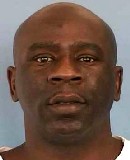
Anthony Carr
Mass murderer Gameel Al-Batouti
Mass murderer · USA · 1999
Gameel Al-Batouti (also rendered “Gamil ElBatouty” or “El Batouty” in U.S. offi…
216 victims
Gameel Al-Batouti
Mass murderer · USA · 1999
Gameel Al-Batouti (also rendered “Gamil ElBatouty” or “El Batouty” in U.S. offi…
216 victims
 Timothy McVeigh
Mass murderer · USA · 1995
Timothy James McVeigh (April 23, 1968 – June 11, 2001) was a United States Army…
168 victims
Timothy McVeigh
Mass murderer · USA · 1995
Timothy James McVeigh (April 23, 1968 – June 11, 2001) was a United States Army…
168 victims
 Julio Gonzalez
Mass murderer · USA · 1990
Julio Gonzalez was sentenced to 174 twenty-five-year sentences (a total of 4,35…
87 victims
Julio Gonzalez
Mass murderer · USA · 1990
Julio Gonzalez was sentenced to 174 twenty-five-year sentences (a total of 4,35…
87 victims
 David Burke
Mass murderer · USA · 1987
David Augustus Burke (May 18, 1952–December 7, 1987) was an employee of USAir,…
43 victims
David Burke
Mass murderer · USA · 1987
David Augustus Burke (May 18, 1952–December 7, 1987) was an employee of USAir,…
43 victims
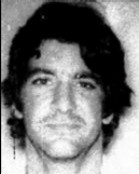 George Jo Hennard
Mass murderer · USA · 1991
George Jo Hennard carried out a mass killing at a Luby’s Cafeteria in Killeen,…
23 victims
George Jo Hennard
Mass murderer · USA · 1991
George Jo Hennard carried out a mass killing at a Luby’s Cafeteria in Killeen,…
23 victims
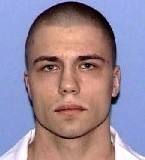 Clinton Lee Young
Murderer · USA
Clinton Lee Young (born July 19, 1983) was convicted of murdering two men in No…
2001 victims
Clinton Lee Young
Murderer · USA
Clinton Lee Young (born July 19, 1983) was convicted of murdering two men in No…
2001 victims
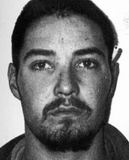 Lindsay Beckett
Murderer · Australia · 1997
Lindsay Hoani Beckett (born 27 March 1974) was convicted of the murders of scho…
2 victims
Lindsay Beckett
Murderer · Australia · 1997
Lindsay Hoani Beckett (born 27 March 1974) was convicted of the murders of scho…
2 victims
 Isaac Wood
Murderer · USA · 1855
Isaac L. Wood was a Livingston Republican mentioned in July 1858 execution cove…
2 victims
Isaac Wood
Murderer · USA · 1855
Isaac L. Wood was a Livingston Republican mentioned in July 1858 execution cove…
2 victims
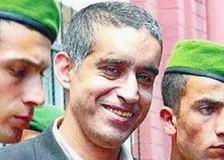 Yavuz Yapicioglu
Serial killer · Turkey · 1994
Yavuz Yapıcıoğlu (born 1967) was a Turkish serial killer and arsonist, nickname…
18 victims
Yavuz Yapicioglu
Serial killer · Turkey · 1994
Yavuz Yapıcıoğlu (born 1967) was a Turkish serial killer and arsonist, nickname…
18 victims
 Jimmy Lee Gray
Murderer · USA · 1976
1976 — Jimmy Lee Gray was convicted for the murder of three-year-old Deressa Je…
2 victims
Jimmy Lee Gray
Murderer · USA · 1976
1976 — Jimmy Lee Gray was convicted for the murder of three-year-old Deressa Je…
2 victims
- Gender
- male
- Country
- USA
- Location
- Alcorn County, Mississippi , USA
- Date of birth
- A ugust 22, 1965
- Age at first offence
- 25
- Characteristics
- rape, robbery, torture, arson
- Victim profile
- Carl and Bobbie Jo Parker, and their children, Gregory, 12, and Charlotte, 9
- Method of murder
- Shooting - Smoke inhalation
- Date(s) of murder
- February 2, 1990
- Years active
- 1990
- Date of arrest
- Next day
- Status
-
Sentenced to death
Sentenced to death on September 19, 1990
Case identifiers and parties
Anthony Carr v. State of Mississippi (Supreme Court of Mississippi; En Banc). No. 97-DR-01609-SCT. May 20, 2004.
The Mississippi Supreme Court considered Anthony Carr’s Application For Leave To File Petition For Post-Conviction Relief And Memorandum In Support Thereof filed by the Mississippi Office of Capital Post-Conviction Counsel. The Office of the Attorney General represented the State of Mississippi, with Marvin L. White, Jr., as attorney for appellee. Terri L. Marroquin and William Clayton were attorneys for appellant.
Timeline
- February 2, 1990 — Carl Parker, his wife Bobbie Jo, and their children, twelve year old Gregory and nine year old Charlotte, left the Riverside Baptist Church in Clarksdale to return to their home on Highway 322 in rural Quitman County, some fifteen miles from Clarksdale.
- 8:45 to 9:15 p.m., Friday, February 2, 1990 — The Parkers were last seen leaving the church.
- Around 11:00 p.m., Friday, February 2, 1990 — Billy King spotted a fire at the Parker home.
- Between 11:00 and 11:20 p.m., Friday, February 2, 1990 — Fireman Jerry Wages with the Lambert Volunteer Fire Department received the call reporting the Parkers’ fire.
- Around midnight, Saturday, February 3, 1990 (after midnight) — Eddie Lee Spralls looked out his back window after hearing a door slam and observed a red truck backing up between two abandoned houses.
- Around 12:30 a.m., Saturday, February 3, 1990 — Martha Simon was in her car when she saw Carr walking down the street.
- Early morning hours after the fire was finally extinguished, Saturday, February 3, 1990 — The body of Bobbie Jo Parker was found lying on some springs around 2:00 or 2:30 a.m.
- 3:30 p.m., Saturday, February 3, 1990 — Anthony Carr and Robert Simon, Jr., were arrested in Clarksdale.
- Early part of February, 1990 — According to Anthony Washington, Carr came in around midnight and was put into the cell next to his at the Tate County jail.
- December 13, 1991 — Anthony Washington’s plea hearing was held.
- May 20, 2004 — The Mississippi Supreme Court issued its decision granting leave on the Atkins issue and denying relief otherwise.
- September 19, 1990 — Carr was convicted and sentenced to death in Alcorn County on four counts of capital murder.
Background
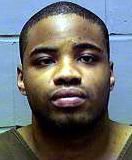
Anthony Carr was sentenced in Alcorn County, Mississippi, in September 1990 for the February 2, 1990, murders of the four-member Carl Parker family. Carr received sentences of death by lethal injection for each of four counts of capital murder.
Carr filed an application for post-conviction relief asserting that he was entitled to relief primarily on claims of prosecutorial misconduct and ineffective assistance of counsel, and also that he should be resentenced pursuant to Atkins v. Virginia, 536 U.S. 304, 122 S.Ct. 2242, 153 L.Ed.2d 335 (2002).
The court found the arguments regarding prosecutorial misconduct and ineffective counsel to be without merit, and denied the petition on that extent. The court granted Carr leave to proceed in the trial court on the question of his mental status under Atkins.
The offence
On Friday, February 2, 1990, Carl Parker, his wife Bobbie Jo, and their children, twelve year old Gregory and nine year old Charlotte, left the Riverside Baptist Church in Clarksdale to return to their home on Highway 322 in rural Quitman County, some fifteen miles from Clarksdale. The Parkers were last seen leaving the church between 8:45 and 9:15 p.m. that evening.
The bodies were discovered after a fire at the Parker home. Fireman Jerry Wages found Carl Parker’s body and recovered the bodies of Charlotte and Gregory. Wages recalled that Carl and Gregory were bound at their feet and ankles and their wrists were tied behind their backs. There was also a remnant of a binding on Charlotte’s wrist. Charlotte was undressed from the waist down beneath the dress she was wearing. Wages said Charlotte had a wound on her hip as well. Bobbie Jo Parker’s body was not discovered until the early morning hours after the fire was finally extinguished. Her body was found in the southwest corner of the house and was burned beyond recognition.
Quitman County Sheriff Jack Harrison arrived at the scene and notified authorities that Carl Parker’s red Silverado pick-up truck was missing. He saw the bodies and noticed the hands and feet of Carl and Gregory were bound. Charlotte had a red ribbon tied around her arm. Her knee high stockings were partially burned off, and she did not have on underclothes.
A shotgun was found in the back of the truck. A pillow case containing two revolvers and other items belonging to the Parkers was found near the truck.
A pathologist, Dr. Steven Hayne, testified to the cause of deaths. Carl and Gregory were shot twice and died of gunshot wounds. Bobbie Jo was burned beyond recognition and with one bullet retrieved and died of a gunshot wound. Charlotte was shot three times and died of smoke inhalation.
Dr. Hayne testified there was evidence of sexual battery, both vaginally and anally, to Charlotte. The fourth digit of Carl Parker’s left hand was missing.
Investigation
Billy King was driving east on Highway 322 when he spotted a fire at the Parker home around 11:00 p.m. King tried to open the unlocked carport door but was driven back by the fire. King left the Parkers’ house and went to the house of the nearest neighbor to call for help. King did not pass any vehicles on his way to the neighbor’s house, but when he looked back towards the Parkers’ house from the neighbor’s front door, he saw two vehicles leave the Parker house driving west on Highway 322.
Around the same time, Joe McCullough was driving east on Highway 322. McCullough testified he remembered meeting two vehicles that were tailgating closely and traveling very fast towards Clarksdale. He identified the lead vehicle as a Silverado pick-up truck.
Fireman Jerry Wages received the fire report between 11:00 and 11:20 p.m. It was raining heavily that evening. Wages was the first to arrive and found the southwest corner of the house on fire. The back door was unlocked, and he crawled into the house to recover bodies. He recovered Carl Parker first, then Charlotte and Gregory.
Quitman County Sheriff Jack Harrison notified authorities that the Parker red Silverado pick-up truck was missing.
Around midnight, Eddie Lee Spralls observed a red truck backing up between two abandoned houses after hearing a door slam and called the police. Upon arrival, the Clarksdale police put a spotlight on the truck. Two black males jumped out of the truck and ran toward Highway 61. The truck was identified by police as Carl Parker’s and was parked close to the home of Robert Simon’s mother-in-law. The truck contained household items, furniture, appliances, and other valuables belonging to the Parkers.
Martha Simon, Robert Simon’s wife, left Memphis and had driven to Clarksdale to see her mother on February 2, 1990. She said Carr had been living with her and Robert in their Memphis apartment for the previous three weeks.
Coahoma County Sheriff Andrew Thompson, Jr., received information from Martha Simon that led to the recovery of a pair of coveralls and a pair of work gloves from a locked dumpster near Simon’s mother-in-law’s house in Clarksdale. The coveralls were wet and smelled of smoke. The gloves were identified by Dean Parker, Carl Parker’s son, as the same type gloves he had given his father.
Ken Dickerson, an investigator with the Highway Patrol, and Sheriff Thompson, with Martha Simon’s permission and in her company, went to Memphis to search the apartment she shared with her husband, Robert Simon. Wet, black jogging suit material matching the suit Carr was wearing earlier that day was found. Other items including a man's and a woman's wedding rings, a money clip, and ammunition were also found in the apartment. Martha identified items in the apartment that had not been there earlier. Scott Parker and Dean Parker, Carl’s sons from a previous marriage, identified many of the items found in the truck, the pillow case, and the apartment in Memphis.
Carr’s fingerprint was found on the shotgun found in the truck.
Two arrest warrants were issued in Marks, Mississippi, on February 3, 1990. Anthony Carr and Robert Simon, Jr., were arrested around 3:30 p.m. that day in Clarksdale.
Anthony Washington, an inmate at the Tate County jail in early February 1990, testified that Carr came in around midnight and was put into the cell next to his. Washington asked who Carr was and what he was in for, and Carr told him. Washington said that he and Carr were playing cards when Carr stopped and said “we had a ball,” as he held his hand to his head like a gun. Carr was later taken for a blood test. Upon return, Carr asked Washington “are you straight?” and whether he could tell Washington something “brother to brother.” Carr asked Washington if they could tell if he raped that little girl, and Washington asked what happened. Carr told Washington that he and his partner had raped the little girl and that one of them had to burn the house down to destroy the evidence.
Arrest
on February 3, 1990, in Clarksdale.
Trial
A nine-day trial was held in Alcorn County. Carr was convicted on all four counts of capital murder.
The court sentenced Carr to death by lethal injection for each count.
Carr raised thirty issues claiming error was committed by the trial court. After consideration of each assignment of error, the Mississippi Supreme Court affirmed Carr’s conviction and sentence to death by lethal injection on each of the four counts.
Sentencing
On September 19, 1990, Carr was convicted and sentenced to death on four counts of capital murder. The sentences were by lethal injection for each count.
Appeals and post-conviction proceedings
Direct appeal history cited in the post-conviction ruling
The Supreme Court referenced its earlier opinion in Carr v. State, 655 So.2d 824 (Miss.1995) (Carr I), cert. denied, 516 U.S. 1076.
The court also stated that Carr had raised issues including the unreliability of prosecution witness Anthony Washington’s testimony on direct appeal, and that it found “no evidence to indicate that Washington was offered any kind of reduced sentence in exchange for his testimony.” The court found no merit to that assignment in Carr I based on the absence of evidence Washington stood to gain anything by his testimony.
Application for leave to file petition for post-conviction relief (May 20, 2004)
The Supreme Court described the purpose of post-conviction proceedings as bringing forward facts to the trial court that were not known at the time of judgment. The procedure was limited to facts and matters that could not or should not have been brought at trial or on direct appeal. The court discussed standards for newly discovered evidence and the four-part Brady test adopted in King v. State.
I. Whether the prosecution knowingly presented false testimony to the jury
Carr claimed the prosecution knowingly elicited false testimony from Anthony Washington. Carr asserted that Washington was a prosecution witness who recounted conversations shortly after Carr’s arrest.
Carr had not claimed on direct appeal that the prosecution elicited false testimony from Washington. Carr attached to his petition a transcript of Washington’s plea hearing held on December 13, 1991. The transcript showed Washington testified he was told by Bill Ellis and Mr. Mellen that they would work with him for being a State witness. Laurence Mellen was identified as the District Attorney, and Bill Ellis as an investigator on the case.
During Washington’s plea hearing, Mellen stated: “[he] intended to accept Bill Ellis's recommendation and request, and ask the Court to consider a suspended sentence as to Washington.”
Washington testified at trial that no one had offered him anything and that no promises of any kind were made. Mellen stated no promises were made to Washington. The court reproduced a portion of Washington’s trial testimony in which he stated:
“All I know is when I testified for that capital murder case, that the State was going to work with me with the case I got here. How much time I was going to get, I don't know. And, what time I was going to do, I don't know.”
Carr argued that Washington recanted his earlier testimony by stating the State would work with him. The court compared the issue to Williams v. State, where it had held that admission of perjured testimony mandates a new trial where there is a reasonable probability a different result will be reached in the new trial without perjured testimony. The Supreme Court in the case found no reasonable probability of a different result because Washington never explicitly stated he had a deal and only stated the prosecution said they would work with him. The court noted plea agreements are generally written documents and that Carr had not attached any plea agreement. The court also stated that it had previously addressed Washington’s testimony, criminal record, motivation, and that jury credibility determinations were for the jury.
The court found this issue to be without merit.
II. Whether the prosecution knowingly failed to provide trial counsel with exculpatory and impeachment material
Carr claimed Brady violations and other prosecutorial misconduct.
A. Redacted statements of co-defendant Simon Carr asserted that portions of statements made by his co-defendant Simon were withheld and that the withheld portions were favorable. In Simon’s first statement dated February 5, 1990 at 10:45 a.m., Simon said he saw Carr around 11:00 p.m. on the night of the murders and that he had two rings to sell, a man's and a woman's. Simon also stated: “[i]f I were to guess that someone who might have done it with [Carr], it might have been Willie Henderson.”
In Simon’s second statement dated February 5, 1990 at 11:20 a.m., the entire first paragraph was blacked out. The second paragraph had two items blacked out and implied someone hired him to kill the Parkers. The second statement included the following text as reproduced, with redactions:
“I came to Clarksdale and went to [redacted] on the weekend of January 27 and 28, 1990. [redacted] told me that he needed a job done and drew me a diagram of the Parker house․ I asked them why he wanted him killed, and they told me, ‘It was none of my business.’ He said he would pay me fifteen hundred dollars to do the job ․ Then, this week, Friday, February 2, 1990, I went to the Parker's around 8:30 p.m.․ I left, rushed to Clarksdale․ I went back to Clarksdale, I am not going to say who was with me ․ I killed [another man] with the guns that I used on the Parkers. ¶”
Carr obtained unredacted statements after a subpoena for Mississippi Highway Patrol Criminal Investigation Bureau records and reports. Trial counsel’s investigator submitted a sworn affidavit dated September 29, 2001 stating the defense was never made aware of the redacted portions of Simon’s statements.
The Supreme Court described that the redacted statements concealed information concerning the Parker murders and the possibility that one of the investigating officers was involved. It stated that an investigating officer, Officer Self, was the first officer to interrogate Carr, and that Kenneth Dickerson testified in a hearing that the redacted portions referred to other crimes rather than the Parker murders.
The court described that the first completely redacted paragraph contained the name of the person Simon said asked him to kill the Parkers, and that the second paragraph blacked out that person’s name again. It also stated that the first paragraph contained the name of a police officer, Charlie Payton, whom Simon claimed worked for the man who hired him to kill the Parkers. Any reference to Payton, Officer Self, and other Clarksdale police officers were redacted throughout the second statement.
Carr argued the redacted portions would be material to guilt and punishment and would have provided a different defense theory and impeachment opportunities. The Supreme Court quoted a sworn affidavit from J. Phillip Smith, Carr’s defense attorney:
“had they ‘known of Charlie Paden [sic] and Officer Self's involvement in the case, we would have pursued that to the best of our abilities. We would have made an issue about Officer Self's involvement in the murder had we known of it at the time, especially since he was one of the first people to obtain a statement from Anthony Carr regarding this matter.’”
The court reasoned that given the small number of law enforcement officers in Clarksdale, Carr could have obtained the names of all of them and pursued investigation with reasonable diligence, so the argument failed on the second part of the four-part Brady test. The court also found Carr did not show a reasonable probability of a different result had the statements been disclosed, citing Kyles.
The court found this Brady challenge to be without merit.
B. The fingerprint on the shotgun Carr claimed the prosecution failed to turn over an inventory list made as Parker’s truck contents were removed. Carr alleged the list would place the shotgun not on the bottom of the truck bed but somewhere in the middle of about 40 items removed, and that incorrect testimony about placement wrongfully put him at the scene.
The Supreme Court stated the inventory list showed the shotgun as item number 26 out of 42 items, and that items varied in size. The court stated it would be speculation to presume unloading was accomplished exactly in reverse order as loading.
Carr also claimed documents received by post-conviction counsel on September 11, 2001 were not part of the material given to post-conviction counsel by Carr’s trial counsel. Carr asserted the fingerprint was essential to the State’s case because, as the District Attorney stated, the gun would not have been at the bottom of the truck if Carr had not been there. Carr argued that if the evidence had been given to defense counsel, it could have rebutted the prosecution’s assertion. The court noted that the fingerprint on the gun was the only Carr fingerprint found on any item removed from the house, and that the inventory list potentially was exculpatory.
The Supreme Court stated Carr offered only a footnote stating the material was handed over on September 11, 2001, with no affidavits supporting the claim, and no claim that he requested inventory lists and they were not turned over. The court concluded the assignment of error was without merit because of lack of supporting proof and because the information was not shown to be unavailable before trial or on direct appeal.
C. Fruit of the poisonous tree Carr incorporated his redaction argument into his “fruit of the poisonous tree” argument. The Supreme Court found his broad, general, bare-bones allegation insufficient.
Carr alleged Officer Self was implicated in a conspiracy leading to the deaths of four people and called Self a “rogue cop.” The court stated there was no proof of what Carr would have done differently, or how a different approach would have altered the outcome, had he known Officer Self was implicated.
Carr also claimed his first statement after his arrest given to Officer Self was obtained unconstitutionally, so that every other statement was tainted as “fruit of the poisonous tree.” The Supreme Court stated Officer Self was not the only officer who interviewed Carr. It stated the first statement given by Carr was suppressed before trial along with five other statements, and described that nine statements were taken in all. The court stated that even though Carr mentioned Self “Mirandized” him, there was no indication Self was the only officer who gave Miranda warnings, or how many times Carr was warned.
The court found this assignment of error without merit.
D. Improper demonstrative evidence Carr claimed prosecutorial misconduct because District Attorney Mellen provided demonstrative evidence. Carr alleged that during trial, Mellen acted out the role of each corpse to assist Dr. Hayne in demonstrating wounds found on the victims. Defense counsel’s objections were overruled.
The Supreme Court found the assignment without merit, stating the information was available to Carr and his counsel before direct appeal. It explained that post-conviction relief was limited to facts and matters that could not or should not have been brought at trial or on direct appeal. The court concluded Carr had not shown a reasonable probability the trial outcome would have been different. The court also stated the claim was procedurally barred.
The Supreme Court further addressed res judicata and procedural bar arguments. It stated that the prosecutorial misconduct complained of in the petition did not include the specific prosecutorial misconduct complained of in Carr I, which had included perceived violations regarding court-ordered seal of discovery, statements not based on the whole story, and statements linking Carr to the crime without the “presumption of innocence.”
The Supreme Court concluded Carr failed to prove by a preponderance of the evidence that he was entitled to relief on prosecutorial misconduct for failing to provide trial counsel with exculpatory and impeachment material.
III. Whether trial counsel was ineffective at the penalty phase of Carr’s capital trial
The Supreme Court reviewed ineffective assistance claims under a two-part test requiring defective performance and resulting deprivation of a fair trial. It discussed the presumption that counsel’s conduct fell within the wide range of reasonable professional assistance and cited burdens of proof under Strickland v. Washington and related cases.
Carr claimed his trial counsel was ineffective because: (1) counsel did not adequately present evidence of his mental retardation; (2) counsel did not begin to prepare for the sentencing phase until guilt had been decided; and (3) counsel failed to make a record of all “off-the-record” discussions. Carr also argued counsel failed to present evidence of an abusive childhood.
A. Failure to adequately present evidence of mental retardation Carr’s trial counsel, Ron Lewis, made an oral motion to the trial court asserting Carr’s constitutional rights would be violated under “the 8th Amendment and 14th Amendment as well as Article 3, Section 14 and 28 of the Mississippi Constitution” if the death penalty was imposed because of Carr’s mental retardation. Lewis proffered Dr. William Kallman’s testimony to corroborate Carr’s mental retardation and called Carr’s elementary school principal, who described Carr’s school attendance, family life, and grades.
The school counselor, Mr. Rencher, testified about Carr’s family life, grades, and standardized test scores. Rencher testified Carr had very few disciplinary problems and that his problems stemmed from lack of attendance and poor grades.
Dr. Kallman testified for the defense during sentencing. He described his evaluation of Carr’s mental functioning level and placed Carr in the mildly mentally retarded range. The Supreme Court stated Dr. Kallman testified his opinion was that Carr had a serious underlying psychotic condition. Carr I was cited for that point. Dr. Kallman responded to a question about how a person with that level of retardation would function at the age of twenty-five:
“Well, this person would have great difficulty functioning independently in the world unless it was a fairly simple task that did not require a lot of intellectual understanding and activity.”
The Supreme Court stated trial counsel had no duty to present mitigating evidence and had a duty to make reasonable investigations or decide that particular investigations were unnecessary. It found counsel presented significant mitigating evidence and held it could not say counsel’s decisions were unreasonable.
The court found this assignment of error to be without merit.
B. Counsel did not begin to prepare for sentencing until guilt was decided The Supreme Court stated trial counsel called witnesses and presented significant mitigating evidence during sentencing, concluding there was preparation.
The court found no merit.
C. Counsel failed to make a record of off-the-record discussions Carr admitted his petition that defense counsel filed a motion to require the court reporter to transcribe the entire proceedings. Carr also contended counsel failed to object to off-the-record discussions. The Supreme Court stated counsel had to object to preserve an issue for appeal and failure to object waived the issue. It also stated this issue was known before direct appeal and it was not proper to bring it now under Miss. Code Ann. § 99-39-21(1).
The court found the assignment barred and without merit.
D. Counsel failed to present evidence of an abusive childhood Carr offered the hearsay affidavit of an investigator asserting preliminary background investigation revealed claims of child abuse Carr purportedly suffered. The Supreme Court stated failure to call available witnesses on critical issues could be a factor but that without an affidavit from a potential witness, it was speculative what testimony would have shown and whether it would have more likely than not altered the sentence.
The court found Carr failed to prove trial counsel was ineffective.
IV. Whether Carr’s conviction for the murder of Bobbie Jo Parker was supported by sufficient evidence
Carr argued the prosecution failed to establish that he killed Mrs. Parker or that the charred remains were hers. The Supreme Court stated that on direct appeal, in issue VII, Carr argued evidence was insufficient to support the verdicts, and Carr I recited specific evidence and concluded there was substantial evidence supporting the verdict. The Supreme Court stated this general insufficiency claim was procedurally barred.
For the new argument raised first in post-conviction proceedings—that the unidentified charred body found in the Parker home was not proven to be Bobbie Jo Parker—the Supreme Court rejected Carr’s argument as specious. It stated that while the medical examiner testified he was unable to determine age, race, or sex, there was testimony Mrs. Parker was missing and that the remains were found in her bedroom. It also stated her engagement and wedding rings were positively identified after being found in Carr’s co-defendant’s apartment. The Supreme Court cited Dooley v. State regarding when circumstantial evidence can show the person named in the indictment is the same person killed.
The Supreme Court concluded there was no room for reasonable doubt the fourth body found in the Parker home was that of Bobbie Jo Parker. It found the issue without merit.
V. Whether the jury was impermissibly influenced by extraneous matters
Carr argued that during sequestration bailiffs fraternized at card games with jurors and let it be known that Anthony Carr had allegedly threatened to “come after the jurors' with the bailiffs' guns if he were found guilty.” Carr also alleged the bailiffs told jurors about a sexual predator staying at the same hotel who had victimized a pair of children whose ages were close to those of the Parker children. Carr asserted these matters came to light after interviews of jurors.
The Supreme Court discussed M.R.E. 606(b), juror impeachment rules, and the process for investigating juror misconduct. It required adequate showing to overcome presumptions of jury impartiality and considered affidavits and whether good cause existed for improper outside influence or extraneous prejudicial information.
Carr submitted affidavits of eight jurors regarding bailiffs’ actions and also referenced carpet fibers from the Parker home found on Carr’s boots being considered. After learning of the affidavits, the State contacted jurors interviewed by Carr’s counsel and found that the affiants felt affidavits obtained by Carr’s counsel were obtained under false pretenses. The State obtained new affidavits from six jurors who signed the original affidavits for defense counsel. The “counter-affidavits” stated, in essence, that Carr’s counsel or her investigator implied they worked for the prosecution, that jurors were deceived in how interviews and original affidavits were presented, and that the jurors would not have signed had they known the affidavits would be used to overturn the conviction. The counter-affidavits indicated jurors were led to believe the original affidavits were prepared by Carr’s counsel; jurors were asked to sign them as documentation that interviews were conducted rather than declarations of fact.
The Supreme Court stated that given contradictory affidavits and recantation, it could not say good cause existed to believe the jury was improperly tainted by outside influences or matters not in evidence. It found Carr presented no factual evidence to support the claim and found the issue without merit.
VI. Whether Carr was eligible for the death penalty pursuant to Atkins v. Virginia
The Supreme Court summarized Atkins v. Virginia: the United States Supreme Court determined imposition of the death penalty on mentally retarded inmates constituted cruel and unusual punishment in violation of the Eighth Amendment, and that Atkins left states to develop ways to enforce the restriction.
The Supreme Court stated Carr was sentenced pre-Atkins and therefore the issue of mental retardation was not scrutinized under Atkins, nor under standards adopted later in Chase v. State. It stated Carr’s counsel argued Carr was entitled to a jury trial to determine mental retardation, but the Supreme Court disagreed. It noted Carr relied on Ring v. Arizona, which held unconstitutional a sentencing scheme where a judge determined sufficient aggravating circumstances. The Supreme Court stated that in the present case the death penalty was already imposed by a jury after weighing mitigating and aggravating evidence pursuant to Miss. Code Ann. § 99-39-101. The Supreme Court cited Foster that the issue of whether a defendant is mentally retarded such that he may not be executed under Atkins would be considered and decided by the circuit court without a jury, citing Foster and Russell.
The Supreme Court stated the issue before it was whether Carr was ineligible for a death sentence already imposed by a jury, and that neither the trial court nor the Supreme Court had acknowledged Carr to be mentally retarded. It stated that Dr. Kallman’s report was compelling but left unanswered questions raised by Atkins. It then held that under Atkins and the new standards in Chase v. State, it could not constitutionally deny Carr the opportunity to present the issue to the trial court.
The Supreme Court determined that the trial court should hold an evidentiary hearing and decide whether Carr was mentally retarded and thus ineligible for the death penalty under the standards and procedures in Chase. It stated evidence from Dr. Kallman’s prior evaluation could be utilized in addition to new evidence. If Carr was determined to meet Atkins and Chase criteria, the trial court should vacate the death penalty and resentence accordingly.
The Supreme Court granted leave to proceed in the trial court for an evidentiary hearing to determine whether Carr was still eligible for the death penalty.
VII. Whether alleged errors taken together were cause for post-conviction relief
The Supreme Court stated that it recognized several errors taken together may warrant reversal even if separately they would not. It cited Flowers v. State and Byrom v. State. The Supreme Court found only the Atkins claim warranted an evidentiary hearing and found no other alleged errors that warranted post-conviction relief.
Outcome
The Supreme Court granted Carr’s application in part to the extent that he was granted leave to seek post-conviction relief in the trial court on his Atkins claim in accordance with Atkins and Chase. The court denied Carr’s application in all other respects.
The application for leave to seek post-conviction relief was granted in part and denied in part.
Aftermath
The Supreme Court’s decision resulted in leave for an evidentiary hearing in the trial court to determine whether Carr was mentally retarded and therefore ineligible for the death penalty under Atkins and Chase. The court stated that evidence from Dr. Kallman’s prior evaluation could be utilized and that, if Carr met criteria, the trial court should vacate the death penalty and resentence him accordingly.
Other details
Facts recited from Carr v. State, 655 So.2d 824 (1995)
The Supreme Court’s post-conviction ruling included the earlier factual recitation and detailed events described above.
Notes on Simon’s statements (procedural background included in footnote)
A footnote summarized that trial court rulings had addressed Simon’s statements, including Carr’s motion to exclude all statements made by Simon. The State announced it would not introduce Simon’s statements, and the trial court ruled Simon’s statements would not be admissible against Carr. During the guilt phase, Carr moved to introduce a portion of Simon’s statement in which Simon alleged that he had killed “the Parkers.” The trial court found the statement inadmissible “at this time.” After the State rested, Carr made an offer of proof that criminal investigator Bill Ellis would testify that Simon said he killed the Parkers with his weapons. The trial court found the statement inadmissible because it lacked corroboration and trustworthiness and because it was not offered to exculpate Carr, stating the statements were not exculpatory because Simon first said that Carr and another person killed the Parkers and later said that he killed the Parkers.
Evidentiary and legal discussion citations
The ruling cited Brady v. Maryland, Kyles v. Whitley, United States v. Bagley, King v. State, Williams v. State, Smith v. State, Neal v. State, Wiggins v. Smith, Strickland v. Washington, Wiley v. State, Hiter v. State, Cole v. State, Oates v. State, O’Keefe, Gladney v. Clarksdale Beverage Co., Atkins v. Virginia, Ring v. Arizona, Chase v. State, Foster, Russell v. State, Dooley v. State, Flowers v. State, Byrom v. State, M.R.E. 606(b), Leatherwood v. State, Boyd v. Estelle, Brown v. State, and other authorities within the discussion sections.
Spotted an error, or have more information about this case?