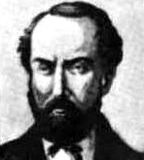
Henry Wirz
Murderer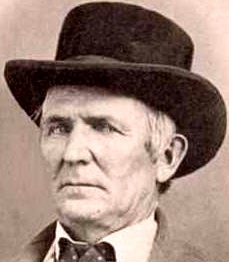 John Doyle Lee
Murderer · USA · 1857
Name: John Doyle Lee Lifespan: September 12, 1812 - March 23, 1877 Legal outcom…
120 victims
John Doyle Lee
Murderer · USA · 1857
Name: John Doyle Lee Lifespan: September 12, 1812 - March 23, 1877 Legal outcom…
120 victims
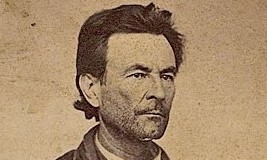 Champ Ferguson
Murderer · USA · 1861
Champ Ferguson was born November 29, 1821 in Clinton County, Kentucky, near the…
100 victims
Champ Ferguson
Murderer · USA · 1861
Champ Ferguson was born November 29, 1821 in Clinton County, Kentucky, near the…
100 victims
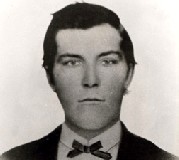 John Wesley Hardin
Murderer · USA · 1867
John Wesley (Wes) Hardin (1853-1895) was an American outlaw, gunfighter, and co…
42 victims
John Wesley Hardin
Murderer · USA · 1867
John Wesley (Wes) Hardin (1853-1895) was an American outlaw, gunfighter, and co…
42 victims
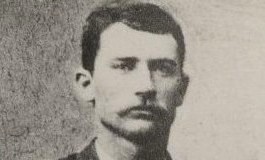 Henry Newton Brown
Murderer · USA · 1870
Henry Newton Brown — 19th century gunman; orphan; raised by relatives in Rolla,…
6 victims
Henry Newton Brown
Murderer · USA · 1870
Henry Newton Brown — 19th century gunman; orphan; raised by relatives in Rolla,…
6 victims
 Isaac Wood
Murderer · USA · 1855
Isaac L. Wood was a Livingston Republican mentioned in July 1858 execution cove…
2 victims
Isaac Wood
Murderer · USA · 1855
Isaac L. Wood was a Livingston Republican mentioned in July 1858 execution cove…
2 victims
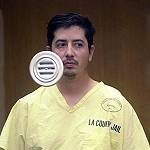 Adair Javier Garcia
Mass murderer · USA · 2002
February 19, 2002 — Adair Javier Garcia killed five of his children in their li…
5 victims
Adair Javier Garcia
Mass murderer · USA · 2002
February 19, 2002 — Adair Javier Garcia killed five of his children in their li…
5 victims
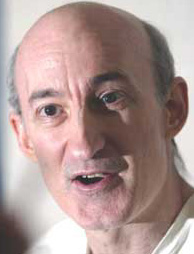 Stephen Vrabel
Homicide · USA · 1989
Stephen Allen Vrabel was a white male who lived in an apartment in Struthers, O…
2 victims
Stephen Vrabel
Homicide · USA · 1989
Stephen Allen Vrabel was a white male who lived in an apartment in Struthers, O…
2 victims
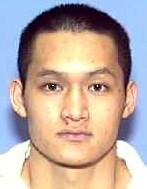 Chuong Duong Tong
Murderer · USA · 1997
Name: Chuong Duong Tong · TDCJ Number: 999260 · Date of Birth: 10/21/76 · Date…
1 victim
Chuong Duong Tong
Murderer · USA · 1997
Name: Chuong Duong Tong · TDCJ Number: 999260 · Date of Birth: 10/21/76 · Date…
1 victim
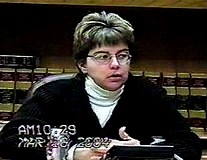 Coleen Thompson
Homicide · USA · 2002
Coleen Thompson was a former intensive care nurse at Shady Grove Adventist Hosp…
5 victims
Coleen Thompson
Homicide · USA · 2002
Coleen Thompson was a former intensive care nurse at Shady Grove Adventist Hosp…
5 victims
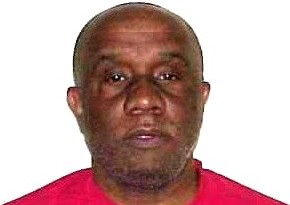 Charles Bussell
Murderer · USA · 1990
Charles Bussell (DOB 3-11-55) was sentenced to death on January 17, 1992. Busse…
1 victim
Charles Bussell
Murderer · USA · 1990
Charles Bussell (DOB 3-11-55) was sentenced to death on January 17, 1992. Busse…
1 victim
- Gender
- male
- Country
- USA
- Location
- Andersonville, Georgia, USA
- Date of birth
- November 1822
- Age at first offence
- 42
- Characteristics
- rape, abuse, torture
- Victim profile
- Union prisoners of war
- Method of murder
- —
- Date(s) of murder
- 1864 - 1865
- Years active
- 1864–1865
- Date of arrest
- May 1865
- Status
-
Executed
Found guilty of conspiracy and of 11 counts of murder; executed by hanging in Washington, D.C., on November 10, 1865
Case identification
Henry Wirz (also known as Heinrich Hartmann Wirz) (November 25, 1823 – November 10, 1865) was a Confederate officer. He was tried and executed in the aftermath of the American Civil War for conspiracy and murder relating to his command of Camp Sumter, the Confederate prisoner of war camp near Andersonville, Georgia.
Timeline
- February 1864 — The Confederate government established Camp Sumter in Georgia near the railroad depot of Andersonville (as it was called then) to house Union prisoners of war.
- March 1864 — Wirz took command of Camp Sumter and remained in command for over a year.
- May 1865 — Wirz was arrested by a contingent of federal cavalry and taken by rail to Washington, D.C.
- August 23, 1865 — A military commission convened at Washington, D.C., for Wirz’s trial.
- July 1865 — The trial convened in the Capitol building and lasted for two months.
- November 6, 1865 — War Department Adjutant-General’s Office issued General Court Martial Orders No. 607.
- Early November 1865 — The commission announced that it had found Wirz guilty of conspiracy as charged, along with 11 of 13 counts of murder.
- November 10, 1865 — Wirz was executed by hanging in Washington, D.C.
Background
Wirz was born in Zürich, Switzerland. He attended the University of Zurich, but there is no evidence he obtained a degree. He practiced medicine for a time before he emigrated to the U.S. in 1849.
Wirz married in 1845 and had two children. He was imprisoned briefly in the late 1840s for unknown reasons. He established a medical practice in Kentucky and married a Methodist widow named Wolfe. Along with her two daughters, they moved to Louisiana. In 1855, his wife gave birth to their daughter Cora. By 1861, he had a successful medical practice.
When the Civil War broke out in 1861, Wirz claimed to have enlisted as a private in Company A, Fourth-Battalion, Louisiana Volunteers of the Confederate States Army.
It was rumored that he took part in the Battle of Seven Pines in May 1862, and that he was severely wounded by a minie ball and lost the use of his right arm. No official record existed to confirm involvement in that or any other military affair before he became director of Andersonville. Wirz allegedly served on detached duty as a prison guard in Alabama, then transferred to help guard Federal prisoners incarcerated at Richmond, Virginia.
Because of his injury, Wirz was assigned to the staff of General John H. Winder, who was in charge of Confederate prisoner of war camps.
The offence
Wirz was tried before a military commission for conspiracy and murder in violation of the laws and customs of war, relating to the treatment and deaths of Union prisoners of war held at Andersonville.
Charge I: conspiracy (as amended by the court)
The charge alleged that on or before “the let day of March, A.D. 1864” and on divers other days between that day and the 10th day of April, 1865, Wirz combined, confederated, and conspired with named co-conspirators and others unknown to injure the health and destroy the lives of soldiers held as prisoners of war within the lines of the so-called Confederate States, so that the armies of the United States might be weakened and impaired.
The specification alleged that Wirz, an officer and commandant of a military prison at Andersonville, was “fully clothed with authority” and was bound “to treat, care, and provide for such prisoners.” It alleged that, in furtherance of the conspiracy, he:
- confined large numbers of prisoners in unhealthy and unwholesome quarters in a close and small area of ground “wholly inadequate to their wants and destructive to their health,”
- willfully neglected to furnish tents, barracks, or other shelter sufficient for protection from “the inclemency of winter and the dews and burning sun of summer,”
- took and caused to be taken prisoners’ clothing, blankets, camp equipage, and other property,
- refused or neglected to furnish food of sufficient quality or quantity to preserve health and sustain life,
- refused or neglected to furnish wood sufficient for cooking in summer and to keep prisoners warm in winter,
- compelled prisoners to subsist upon unwholesome food in limited quantities inadequate to sustain health,
- compelled prisoners to use unwholesome water “reeking with the filth and garbage of the prison and prison guard” and prison offal and drainage,
- refused or neglected to provide proper lodgings, food, nourishment for the sick, and necessary medicine and medical attendance,
- permitted prisoners to languish and die from want of care and proper treatment,
- permitted the bodies of the dead to remain among the sick until they became corrupt and loathsome and increased the unwholesomeness of the prison,
- subjected prisoners to cruel, unusual, and infamous punishment by fastening large balls of iron to their feet and binding prisoners with large chains around their necks and feet, subjecting them to burning sun often without food or drink for hours and days,
- confined prisoners in “the stocks,” depriving them of the use of their limbs and forcing them to lie, sit, and stand for many hours without changing position and without food or drink,
- established and caused designation within the prison inclosure of a “dead-line” and instructed the prison guard to fire upon and kill any prisoners who might touch, fall upon, pass over or under or across it,
- used and kept bloodhounds to hunt down prisoners who escaped and suffered them to seize, tear, mangle, and maim bodies and limbs, and
- used impure and poisonous vaccine matter for pretended purposes of vaccination, depositing it in the arms of prisoners, injuring them and causing deaths.
The court’s finding amended Charge I to incorporate additional named co-conspirators and additional quantities stated in the charge as amended.
Charge II: murder (in violation of the laws and customs of war)
The court charged Wirz with multiple specifications of murder, including assaults and shootings with a revolver, stamping and kicking with heels of boots, confinement in “the stocks,” chaining and ball attachments, ordering sentinel guards to fire upon prisoners, and causing bloodhounds (charged initially as “bloodhounds,” later reflected in amendments to “dogs”) to pursue and mortally wound a prisoner.
Wirz pleaded not guilty to the charges.
Investigation
After the end of hostilities, Wirz was arrested by a contingent of federal cavalry and taken by rail to Washington, D.C., where the federal government intended to place him on trial for conspiring to impair the lives of Union prisoners of war.
The military tribunal convened with Major General Lew Wallace presiding. The other members were Gershom Mott, John W. Geary, Lorenzo Thomas, Francis Fessenden, Edward S. Bragg, John F. Ballier, T. Allcock, and John H. Stibbs. Norton P. Chipman served as prosecutor.
The trial heard testimony of former inmates, ex-Confederate officers, and nearby residents of Andersonville.
Felix de la Baume testified and claimed to be a descendant of Lafayette and that he was able to name a victim killed directly by Wirz. The testimony was acknowledged as having received written commendation signed by all members of the commission and Felix de la Baume was given a written commendation signed by all the members of the commission for his part in the trial. Felix de la Baume was also rewarded a position in the department of the Interior while the trial was still in progress.
Eleven days after the execution of Wirz, it was revealed that the star witness had perjured himself and that he was not Felix de la Baume from France, but Felix Oeser, born in Saxony, Prussia, and that he was actually a deserter from the 7th New York Volunteers. With his real identity revealed, he quickly disappeared.
Arrest
Wirz was arrested in May 1865 by a contingent of federal cavalry and taken by rail to Washington, D.C.
Trial
The trial convened in the Capitol building in July 1865 and lasted two months, dominating front pages of newspapers across the United States.
In early November 1865, the commission announced it had found Wirz guilty of conspiracy as charged and of 11 of 13 counts of murder.
Wirz pleaded not guilty.
Court findings
Charge I (conspiracy) — The court found Wirz guilty after amending the specification.
Charge II (murder) — The court found Wirz guilty on multiple specifications after amendments and dismissals of some specifications. Specifically, the court:
- found the first specification guilty (adding “or about” immediately before “the 9th day of July”),
- found the second specification guilty,
- found the third specification guilty (striking out “June” and inserting “September”),
- found the fourth specification not guilty,
- found the 5th specification guilty (striking out “on the 30th day” and inserting “on or about the 25th day”),
- found the 6th specification guilty (striking out “1st” and inserting “15th,” and striking out “on the 6th day” and inserting “on or about the 16th day”),
- found the 7th specification guilty (striking out “20th” and inserting “1st,” and adding “or about” immediately before “the 25th day”),
- found the eighth specification guilty,
- found the ninth specification guilty,
- found the tenth specification not guilty,
- found the eleventh specification guilty (after striking out “1st” and inserting “6th,” amending phrasing, striking out “incite and urge” and replacing with “encouragement and instigation,” replacing “animals called bloodhounds” with “dogs,” replacing occurrences of “bloodhounds” with “dogs,” and striking out “given by him”),
- found the twelfth specification guilty,
- found the thirteenth specification not guilty.
The court also found the charge (Charge II) guilty after amendments.
Sentencing
The court sentenced Henry Wirz to be hanged by the neck “till he be dead” at such time and place as the President of the United States may direct, with “two-thirds of the members of the court concurring herein.”
The court also found Wirz guilty of having caused the death (in the manner alleged in specification 11 of Charge II) by means of dogs, of three prisoners of war and soldiers of the United States, with occurrences on or about the 15th day of May, 1864; another occurring on or about the 11th day of July, 1864; and another occurring on or about the 1st day of September, 1864. The finding was stated as not and did not enter into the sentence of the court.
Presidential approval and execution order
EXECUTIVE MANSION, November 3, 1865. “The proceedings, finding, and sentence of the court in the within case are approved, and it is ordered that the sentence be carried into execution by the officer commanding the Department of Washington on Friday the 10th day of November, 1865, between the hours of 6 o'clock a.m. and 12 o'clock noon.”
ANDREW JOHNSON, President.
Maj. Gen. C. C. Augur, commanding the Department of Washington, was commanded to cause the sentence in the case of Henry Wirz to be duly executed in accordance with the President’s order. The military commission headed by Maj. Gen. Lewis Wallace was dissolved.
Outcome
Wirz was executed on November 10, 1865.
His execution took place in Washington, D.C., at One First Street, Northeast, Washington, D.C., identified as the present-day site of the Supreme Court of the United States.
It was stated that his neck did not break from the fall and that the crowd watched him writhe and slowly suffocate.
Wirz was later buried in the Mount Olivet Cemetery in Washington, D.C.
He was survived by his wife and one daughter.
Other details
Legal and historical controversy and legacy
Wirz was one of two men tried, convicted, and executed for war crimes during the Civil War, the other being Confederate guerrilla Champ Ferguson. His conviction remained controversial.
Residents of the town of Andersonville annually marched to a Wirz memorial along with supporters of a congressional pardon for Wirz.
Some writers said Wirz was unfairly tried and convicted because the South had low food rations and there was a Northern blockade of all medicines, both described as out of Wirz’s control. His conviction and trial were described as creating enduring moral and legal notions and establishing a precedent that certain wartime behavior was unacceptable regardless of whether committed under orders of superiors or on one’s own.
A 1980 study by historian Morgan D. Peoples referred to Wirz as a “scapegoat.”
Prison conditions as described in the case background
Camp Sumter at Andersonville was described as having an extreme lack of food, tools, and medical supplies, severe overcrowding, poor sanitary conditions, and a lack of potable water. At its peak in August 1864, it held approximately 32,000 Union prisoners and the monthly mortality rate from disease and malnutrition reached 3,000. Around 45,000 prisoners were incarcerated during the camp’s 14-month existence, with 13,000 (28%) dying.
Statements and testimony (verbatim excerpts)
“Mr. Schade, you know that I have always told you that I do not know anything about Jefferson Davis. He had no connection with me as to what was done at Andersonville. If I knew anything about him, I would not become a traitor against him or anybody else even to save my life.”
“I know what orders are, Major. And I am being hanged for obeying them.”
“God damn it! Couldn't you stay in the ranks where you were put?”
Witness testimony and trial statements (selected verbatim excerpts)
The case record included extended testimony describing prison life and events, including statements about being ordered by Wirz to be put in the stocks for four days with his feet placed in a block and another lever placed over his legs, with his arms thrown back, and a chain running across his arms. It also included descriptions of punishment after trying to get away from the prison and an account of a young man placed in the stocks who died there, with “I do not know his name; if I heard it, I have forgotten it. I am certain he died.”
The record also included descriptions attributed to a witness of Wirz shooting a private named William Stewart, and the witness’s description of events involving guards, bodies, and shootings of prisoners at or near the dead-line. It included additional descriptions of “Chickamauga,” and of how the witness saw sentries raise guns and prisoners being shot.
The record also included detailed medical testimony about scurvy and limb conditions, with descriptions of prisoners “go on crutches sideways, or crawl upon their hands and knees or on their haunches and feet,” and about issues with eating and dental and gum bleeding. It included discussion of amputations and rations, including “I regard that lack of shelter as a source of disease” and “Rice, peas, and potatoes were the common issue from the Confederate government,” as well as references to green corn and anti-scorbutic value.
The record included the following statute-like header and court-martial order language, including dates and organization: THE COURT MARTIAL OF HENRY WIRZ GENERAL COURT MARTIAL ORDERS No. 607. WAR DEPARTMENT, ADJUTANT-GENERAL'S OFFICE, Washington, November 6 , 1865 .
Charges and specifications detail (as contained in the record)
The case record included the full text of Charge I and Charge II and their specifications, including detailed allegations of prisoner treatment, conditions, and killings, with numerous dates and quantities such as “30,000 soldiers,” “about 45,000 soldiers,” “about 10,000,” “1,000,” “100,” “30,” “about 300,” “about fifty,” and “100” and “about 200” in the vaccination allegation.
Additional contextual items
The case record included references to popular culture depictions:
- The 1970 television film The Andersonville Trial, directed by George C. Scott, featured Richard Basehart as Wirz and William Shatner as chief government prosecutor Lieutenant Colonel Norton P. Chipman.
- TNT’s 1996 film Andersonville, with Jan Triska playing Wirz.
The record also listed references including:
- Frank Harper, Andersonville: The Trial of Captain Henry Wirz, MA Thesis, University of Northern Colorado, 1986.
- Ovid Futch, History of Andersonville Prison, Gainesville: University of Florida Press, 1968.
Related individuals named in the record
The record named multiple individuals in relation to the commission, trial administration, and allegations, including Major General Lew Wallace, Gershom Mott, John W. Bragg, John F. Ballier, T. Allcock, John H. Stibbs, Norton P. Chipman, Louis Schade, Andrew Johnson, Maj. Gen. C. C. Augur, and E. D. Townsend. It also named additional individuals in the conspiracy allegation and amended specification, including Jefferson Davis, James A. Seddon, Howell Cobb, John H. Winder, Richard B. Winder, Joseph [Isaiah H.] White, W. S. Winder, W. Shelby Reed, R. R. Stevenson, S. P. Moore, [W. J. W.] Kerr, James W. Duncan, Wesley W. Turner, Benjamin Harris, and others unknown. It included names of other persons referenced within the record’s extended witness testimony, including William Stewart and “Chickamauga.”
Spotted an error, or have more information about this case?