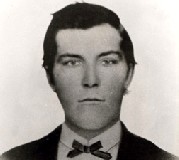
John Wesley Hardin
Murderer John Doyle Lee
Murderer · USA · 1857
Name: John Doyle Lee Lifespan: September 12, 1812 - March 23, 1877 Legal outcom…
120 victims
John Doyle Lee
Murderer · USA · 1857
Name: John Doyle Lee Lifespan: September 12, 1812 - March 23, 1877 Legal outcom…
120 victims
 Champ Ferguson
Murderer · USA · 1861
Champ Ferguson was born November 29, 1821 in Clinton County, Kentucky, near the…
100 victims
Champ Ferguson
Murderer · USA · 1861
Champ Ferguson was born November 29, 1821 in Clinton County, Kentucky, near the…
100 victims
 Henry Wirz
Murderer · USA · 1864
Henry Wirz (also known as Heinrich Hartmann Wirz) (November 25, 1823 – November…
11 victims
Henry Wirz
Murderer · USA · 1864
Henry Wirz (also known as Heinrich Hartmann Wirz) (November 25, 1823 – November…
11 victims
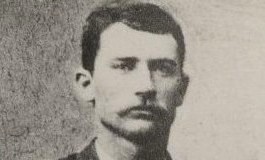 Henry Newton Brown
Murderer · USA · 1870
Henry Newton Brown — 19th century gunman; orphan; raised by relatives in Rolla,…
6 victims
Henry Newton Brown
Murderer · USA · 1870
Henry Newton Brown — 19th century gunman; orphan; raised by relatives in Rolla,…
6 victims
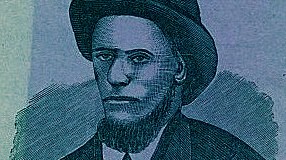 Joseph LaPage
Murderer · USA · 1874
Joseph LaPage was described as a French-Canadian trapper who donned a bearskin…
2 victims
Joseph LaPage
Murderer · USA · 1874
Joseph LaPage was described as a French-Canadian trapper who donned a bearskin…
2 victims
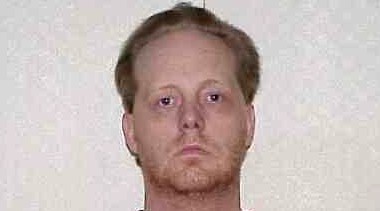 Donald Herb Johnson
Murderer · USA · 1989
Donald Herb Johnson was sentenced to death on October 1, 1997. Donald Herb John…
1 victim
Donald Herb Johnson
Murderer · USA · 1989
Donald Herb Johnson was sentenced to death on October 1, 1997. Donald Herb John…
1 victim
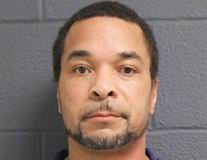 Gregory Green
Murderer · USA · 1991
Gregory Green stabbed his wife in the face and chest, killing her and their unb…
5 victims
Gregory Green
Murderer · USA · 1991
Gregory Green stabbed his wife in the face and chest, killing her and their unb…
5 victims
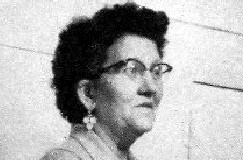 Rhonda Bell Martin
Serial killer · USA · 1937
Rhonda Bell Martin was an American serial killer known for poisoning multiple f…
6 victims
Rhonda Bell Martin
Serial killer · USA · 1937
Rhonda Bell Martin was an American serial killer known for poisoning multiple f…
6 victims
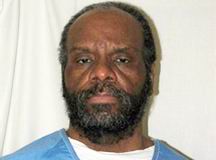 Albert G. Brown
Murderer · USA · 1980
Albert Greenwood Brown, Jr. (born August 18, 1954) Albert Greenwood Brown, Jr.…
1 victim
Albert G. Brown
Murderer · USA · 1980
Albert Greenwood Brown, Jr. (born August 18, 1954) Albert Greenwood Brown, Jr.…
1 victim
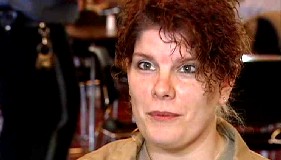 Kristine Bunch
Murderer? · USA · 1995
Kristine Bunch was the defendant in a case involving the 1996 arson and murder…
1 victim
Kristine Bunch
Murderer? · USA · 1995
Kristine Bunch was the defendant in a case involving the 1996 arson and murder…
1 victim
- Gender
- male
- Country
- USA
- Location
- Texas/Kansas/Florida, USA
- Date of birth
- May 26, 1853
- Age at first offence
- 14
- Characteristics
- fugitive
- Victim profile
- Men
- Method of murder
- Shooting
- Date(s) of murder
- 1867-77 / 1894-95
- Years active
- 1867–1894
- Date of arrest
- August 24, 1877
- Status
-
Released
Sentenced to 25 years in prison on September 28, 1878; released from prison on February 17, 1894, after serving 17 years; shot and killed on August 19, 1895 by John Henry Selman in El Paso’s Acme Saloon
Overview
John Wesley (Wes) Hardin (1853-1895) was an American outlaw, gunfighter, and controversial folk hero of the Old West. He was known as Texas’ most deadly gunman.
Hardin killed over thirty people. He was captured by Texas Rangers John Armstrong and John Riley Duncan in 1877 and was released in 1894 after eighteen years in prison. One year later, he was shot and killed on August 19, 1895 by John Henry Selman in El Paso’s Acme Saloon.
Hardin was buried at the Concordia Cemetery in El Paso, Texas. His killer, John Selman, was buried just a few feet away.
Timeline
- September 28, 1878 — Hardin was sentenced to 25 years in prison.
- February 17, 1894 — Hardin was released from prison after serving seventeen years of his twenty-five year sentence.
- August 19, 1895 — Hardin was shot and killed in the Acme Saloon in El Paso, Texas.
- August 27, 1995 — A graveside confrontation occurred between two groups regarding Hardin’s body relocation.
Background
Hardin was born in Bonham, Texas. Hardin was named after John Wesley, the founder of the Methodist faith.
Hardin was born in Bonham, Fannin County, Texas in 1853 to Methodist preacher and circuit rider, James "Gip" Hardin, and Mary Elizabeth Dixson. Hardin described his mother as " blond, highly cultured... charity predominated in her disposition .
Hardin’s father traveled over much of central Texas on his preaching circuit until, in 1859, he and his family settled in Sumpter, Trinity County, Texas. There, Joseph Hardin taught school and established a learning institution that John Wesley and his siblings attended.
Hardin was a direct descendant of Revolutionary War hero, Col. Joseph Hardin, who was a legislator from North Carolina, the "lost" State of Franklin, and the Southwest Territory.
Hardin was the second surviving son of 10 children. His brother, Joseph Gibson Hardin, was three years his senior.
Hardin often used residences of family and friends to hideout from the law. He was known to have had at least one encounter with the lawman "Wild Bill" Hickok.
While in prison, Hardin wrote his autobiography and studied law, attempting to make a living as an attorney after his release.
The offence
Hardin was tried and imprisoned for the killing of Deputy Charles Webb.
Hardin was also killed after an argument and confrontation involving Sheriff/Constable John Selman, Sr.
Investigation
On January 20, 1875, the Texas Legislature authorized Governor Richard B. Hubbard to offer a $4,000 reward for the apprehension of John Wesley Hardin.
The Texas Rangers caught up with Hardin when an undercover ranger, Jack Duncan, intercepted a letter sent to Hardin’s father-in-law by his brother-in-law, outlaw Joshua Robert "Brown" Bowen. The letter mentioned Hardin’s whereabouts as being on the Alabama/Florida border under the assumed name of "James W. Swain".
Arrest
On August 24, 1877, Hardin was arrested on a train in Pensacola, Florida, by rangers and local authorities. The lawmen boarded the train to arrest Hardin.
When Hardin realized what was going on, he attempted to draw a gun but got it caught in his suspenders. Hardin was knocked out and two others were arrested.
During the event, Texas Ranger John B. Armstrong shot and killed one of Hardin’s companions, named Mann.
Just prior to his capture, two black men, and former slaves of his father, "Jake" Menzel and Robert Borup, had tried to capture Hardin in Gainsville, Florida. Hardin killed one and blinded the other.
Hardin was arrested in January 1871 for the murder of Waco, Texas, city marshal, Laban John Hoffman, which he denied having committed.
Hardin was held temporarily in a log jail in the town of Marshall, awaiting transfer to Waco for trial. While locked up, he bought a revolver from another prisoner.
Texas State Policemen, Captain Edward T. Stakes and officer Jim Smalley, were assigned to escort Hardin to Waco for trial. Hardin escaped during the transfer and later forced a blacksmith to remove his shackles.
Hardin was wounded by a shotgun blast in a Trinity, Texas gambling dispute on August 7, 1872, and later made a sick-bed surrender to law authorities, handing over his guns to Sheriff Reagan of Cherokee County, Texas and asking to be tried for his past crimes "to clear the slate." When Hardin learned of how many murders Reagan was going to charge him with, he escaped after cutting through the bars of a prison window.
Hardin was arrested in November 1876 under the alias of "Swain" along with Gus Kennedy in Mobile, Alabama and was ordered to leave town.
In July 1895, Hardin was fined $25.00 for gaming after using a pistol to get back money after losing $100.00 at the Gem saloon some weeks before. His gun was confiscated.
Trial
Hardin was tried for the killing of Deputy Charles Webb and was sentenced to Huntsville Prison for 25 years.
Hardin made several attempts to escape early on but eventually adapted to prison life.
Hardin’s trial and sentencing were tied to his actions connected with the Sutton-Taylor feud, including his killing of Deputy Sheriff Charles Webb.
Hardin’s autobiography-writing and law studies occurred during his imprisonment.
Sentencing
Hardin was sentenced to 25 years in prison on September 28, 1878.
He served seventeen years of his twenty-five year sentence.
Appeals
No appeals were described.
Outcome
Hardin was released from prison on February 17, 1894, after serving seventeen years.
After his release, on March 16, Hardin was pardoned.
Hardin passed the Texas state bar examination on July 21 and obtained his license to practice law.
In 1900, a newspaper article described Hardin committing negligent homicide when he made a $5 bet that he could "at the first shot" knock a Mexican man off the soap box he was "sunning" himself. The bet was described as being won, and the man was described as leaving the man dead from the fall and not the gunshot.
Hardin was fined and had his gun confiscated after the Gem saloon gaming matter in July 1895.
On August 19, 1895, Hardin went to the Acme Saloon and began playing dice. Shortly before midnight, Selman Sr. walked into the saloon.
In the ensuing confrontation, Selman Sr. shot Hardin in the head, killing him instantly and before he could return fire. Selman fired three more shots into Hardin as he lay on the floor.
Selman Sr. was arrested for murder and stood trial. Selman Sr. claimed he had fired in self defense, and a hung jury resulted in his being released on bond, pending retrial.
Before the retrial could be organized, Selman was killed in a shootout with US Marshal George Scarborough on April 6, 1896 following a dispute during a card game.
Aftermath
Hardin returned to Gonzales, Texas after being released from prison on February 17, 1894.
Hardin moved to El Paso after his marriage and after pardoning and passing the bar examination.
Hardin was buried in Concordia Cemetery in El Paso, Texas.
Cemetery controversy
On August 27, 1995, there was a graveside confrontation between two groups. One group represented the great-grandchildren of Hardin and sought to relocate the body to Nixon, TX to be interred next to the grave of Hardin’s first wife. A group of El Pasoans sought to prevent the move.
At the cemetery, the group representing the descendants of John Wesley Hardin presented a disinterment permit for the body. The El Pasoans presented a court order prohibiting the removal of the body.
Both sides accused the other parties of seeking the tourist revenue generated by the location of the body.
A subsequent lawsuit ruled in favor of keeping the body in El Paso.
Other details
Early life and family
Hardin’s mother, Mary Elizabeth Dixson, was described as " blond, highly cultured...
Hardin’s father, James "Gip" Hardin, established an educational learning institution in Sumpter, Trinity County, Texas where Hardin and siblings attended.
Hardin was described as the second surviving son of 10 children, and his brother Joseph Gibson Hardin was three years his senior.
Trouble at school
While attending his father’s school, Hardin was taunted by another student, Charles Sloter. Sloter accused Hardin of being the author of graffito on the schoolhouse wall that insulted a girl in his class.
Hardin denied writing the poetry, claiming Sloter was the author. Sloter charged at Hardin with a knife and Hardin stabbed him, almost killing him.
Hardin was nearly expelled over the incident.
First killing
At age 15, Hardin challenged his uncle Holshousen’s former slave, Mage, to a wrestling match, which Hardin won.
According to Hardin, the following day Mage hid by a path and attacked him as he rode past. Hardin drew his revolver and fired five shots into Mage.
Hardin claimed he then rode to get help for the wounded ex-slave, who died three days later.
Hardin’s father ordered his son into hiding because he did not believe his son would receive a fair hearing in the Union-occupied state.
Hardin claimed that authorities eventually discovered his location and sent three Union soldiers to arrest him. Hardin said he chose to confront his pursuers despite warnings from older brother Joe.
Hardin’s statement included:
I waylaid them, as I had no mercy on men whom I knew only wanted to get my body to torture and kill. It was war to the knife for me, and I brought it on by opening the fight with a double-barreled shotgun and ended it with a cap and ball six-shooter. Thus it was by the fall of 1868 I had killed four men and was myself wounded in the arm.
Fugitive life
As a fugitive from justice, Hardin traveled initially with outlaw Frank Polk in the Pisgah, Navarro County, Texas area.
Polk had killed a man named Tom Brady. A detachment of soldiers sent from Corsicana pursued the duo. Hardin escaped the troops and Polk was captured.
At Pisgah, Hardin briefly taught school. Hardin claimed that to win a bottle of whiskey in a bet, he shot a man’s eye out.
On January 5, 1870, Hardin was playing cards with Benjamin Bradley in Towash, Hill County, Texas. Hardin was winning almost every hand, angering Bradley, who threatened to " cut out his liver " if he won again.
Bradley drew a knife and a six-shooter. Hardin, who was unarmed, excused himself and left. Later that night, Bradley went looking for Hardin. Seeing him on Towash Street, Bradley allegedly fired a shot at Hardin, which missed.
Hardin drew both pistols and returned fire—one shot striking Bradley’s head and the other his chest.
A month later, on January 20, 1870 in Horn Hill, Limestone County, Texas, Hardin reportedly killed a man in a gunfight after an argument at the circus.
Less than a week after this incident, in nearby Kosse, Texas, Hardin was escorting a saloon girl home when they were accosted by a man demanding money. Hardin threw his money on the ground and shot the would-be thief when he bent to pick it up.
Involvement with cattle and gunfights
Hardin’s refuge with his Clements cousins included working with them and getting into the cattle market to get out of Texas long enough for pursuers to lose interest.
Hardin worked rustling cattle for Jake Johnson and Columbus Carol and was made trail boss.
In February 1871 while the herd was being formed up for the drive to Kansas, a freedman, Bob King, attempted to cut a beef cow out of the herd. When King refused to obey Hardin’s demand to stop, Hardin hit him over the head with his pistol.
That same month, Hardin wounded three Mexicans in an argument over a Three-card Monte card game.
On the Chisholm Trail to Abilene, Kansas, Hardin was reputed to have fought Mexican vaqueros and cattle rustlers.
A Mexican herd crowded in behind Hardin’s herd and there was trouble keeping the two herds apart. Hardin exchanged words with the man in charge of the other herd. The Mexican fired his gun at Hardin, putting a hole through Hardin’s hat. Hardin’s weapon was described as a worn-out cap-and-ball pistol with a loose cylinder, which would not fire. Hardin dismounted and managed to discharge the gun by steadying the cylinder with one hand while pulling the trigger with the other. Hardin hit the Mexican in the thigh.
A truce was declared and both parties went their separate ways. Hardin borrowed a pistol from a friend and went looking for the Mexican, fatally shooting him through the head. A fire fight between the rival camps ensued.
Hardin claimed six vaqueros died in the exchanges, five reportedly shot by him, and the claim was described as possibly exaggerated.
Hardin also claimed to have killed two Indians in separate gunfights on the same cattle drive.
Cottonwood Trail and Sumner City
On July 4, 1871, a Texas trail Boss named William Cohron was killed on the Cottonwood Trail (40 miles south of Abilene) by an unnamed Mexican who “fled south.”
The Mexican was subsequently killed by two cowboys in a Sumner City, Sumner County Kansas restaurant on July 20, 1871.
Hardin admitted to being involved in the shooting of the Mexican.
Bull’s Head Tavern and "Wild Bill" Hickok
The Bull’s Head Tavern in Abilene had been established by gambler Ben Thompson along with businessman and gambler Phil Coe.
The two entrepreneurs painted a picture of a bull with a large erect penis on the side of their establishment as an advertisement.
Citizens complained to town marshal "Wild Bill" Hickok. When Thompson and Coe refused to remove the bull, Hickok altered it himself.
Infuriated, Thompson tried to incite Hardin by exclaiming to him: "He's a damn Yankee. Picks on Rebels, especially Texans, to kill."
Hardin, under the assumed name "Wesley Clemmons" and alias "Little Arkansas", replied: "If Wild Bill needs killin', why don't you kill him yourself?"
Later that night, Hardin was confronted by Hickok, who told him to hand over his guns, which he did.
Hickok advised Hardin to avoid problems while in Abilene.
Second Abilene encounter and killing of Charles Cougar
Hardin met up again with Marshal Hickok while on a cattle drive in August 1871. Hickok allowed Hardin to carry his pistols in Abilene.
Hardin was fascinated by Wild Bill.
Hardin and several fellow cowherders had put up for the night at the "American House Hotel". During the evening, Hardin and at least one other cow hand began firing bullets through the bedroom wall and ceiling to stop snoring coming from the next room.
A sleeping stranger, Charles Cougar, was killed.
Hardin claimed in his autobiography that he was shooting at a man in his room to rob or kill him and did not realize they had accidentally killed a man in the other room until much later.
Hardin realized he would be in trouble with Hickok for firing his gun within city limits. Half-dressed, Hardin and men exited through a second-story window and ran onto the roof of the hotel, just in time to see Hickok arriving with four policemen.
Hardin wrote later:
I believe," Hardin wrote later, "that if Wild Bill found me in a defenseless condition, he would take no explanation, but would kill me to add to his reputation".
A contemporary newspaper report noted:
"A man was killed in his bed at a hotel in Abilene, Monday night, by a desperado called "Arkansas". The murderer escaped. This was his sixth murder."
Hardin leaped from the roof into the street and hid in a haystack for the rest of the night. He stole a horse and made his way back to the cow camp outside town.
The next day, he left for Texas, never to return to Abilene.
Years later, Hardin complained:
"They tell lots of lies about me," he complained, "They say I killed six or seven men for snoring. Well, it ain't true. I only killed one man for snoring."
In his autobiography, Hardin claimed that following this shooting, he ambushed lawman Tom Carson and two other deputies at a cowboy camp 35 miles outside of Abilene, but did not kill them, only forcing them to remove all their clothing and walk back to Abilene.
Other clashes with law and prison history
In October 1871, Hardin was involved in a gunfight with Texas State Policemen Green Paramore and John Lackey, in which Paramore was fatally wounded.
Hardin claimed that about 45 miles outside Corpus Christi, Texas, he was being followed by two Mexicans and shot one off his horse while the other "quit the fight,".
In early 1872, Hardin reunited with some of his Clements cousins allied with the local Taylor family during the feud with the rival Sutton family.
In June 1872 at Willis, Texas, Hardin claimed that some men tried to arrest him for carrying a pistol "...but they got the contents instead."
Hardin was shot by Phil Sublett after he had lost money to Hardin in a poker game on August 7, 1872. Two buckshot pellets injured Hardin’s kidney, and for a time it looked like he would die.
While recuperating, Hardin made a sick-bed surrender to Sheriff Reagan of Cherokee County, Texas and asked to be tried for his past crimes "to clear the slate." Hardin escaped after learning how many murders Reagan was going to charge him with, cutting through the bars of a prison window.
Hardin admitted reports that he had led fights in which Jim Cox and Jake Christman were killed by the Taylor faction at Tomlinson Creek on May 15, 1873, and said:
"...but as I have never pleaded to that case, I will at this time have little to say."
In Cuero, Texas in May 1873, Hardin killed Dewitt County Deputy Sheriff, J.B. Morgan, who served under County Sheriff, Jack Helms, a former captain in the Texas State Police.
Hardin’s part in the assassination included the afternoon of May 17, 1873 in Albuquerque, Texas of Sheriff Helms.
The feud culminated with Jim and Bill Taylor gunning down Billy Sutton and Gabriel Slaughter as they waited on a steamboat platform, in Indianola, Texas on March 11, 1874.
Hardin admitted in his biography that he and his brother Joseph had been involved along with both Taylors in Sutton’s killing.
Hardin resettled his family under the assumed name of "Swain" in Florida.
Hardin later admitted he knocked a black man down and shot another during a disturbance outside the Alachua County jail on May 1, 1874, while in Gainesville, Florida.
A black prisoner named "Eli", held on a charge of attempted assault of a white woman, was killed when the jail was burned down by a mob. Hardin claimed to have been part of the mob.
Hardin returned to Texas and celebrated his upcoming 21st birthday on May 26, 1874 in a Comanche saloon with his gang.
Hardin spotted Brown County Deputy Sheriff, Charles Webb, entering the premises and asked Webb if he had come to arrest him. When Webb replied he had not, Hardin invited him into the hotel for a drink.
Hardin claimed Webb drew his gun, and one of Hardin’s men yelled a warning. The report at the time described Webb being shot as he was pulling out an arrest warrant for one of Hardin’s group.
In the ensuing gunfight, Webb was shot dead.
Two of Hardin’s accomplices were a cousin, Bud Dixson, and Jim Taylor.
A lynch mob formed quickly after Webb’s death. Hardin’s parents and wife were taken into protective custody. Hardin’s brother Joe and two cousins, brothers Bud and Tom Dixson, were arrested on outstanding warrants.
Local men broke into the jail in July 1874 and hanged Joe, Bud, and Tom. It was claimed that the hanging ropes were deliberately cut too long, as grass was found between their toes.
After this, Hardin and Jim Taylor parted ways for good. After his brother’s lynching, Hardin claimed he twice drove away men who came after him after killing a man in both encounters.
Shortly afterward, Hardin and a new companion, Mac Young, were suspected of horse thievery and were pursued by a posse near Bellville, in Austin County, Texas. Hardin pulled his pistols on Austin County Sheriff, Gustave Langhammer, but did not shoot him. Young was arrested and fined $100 for carrying a pistol.
Capture and escape accounts
Hubbard to offer a $4,000 reward for Hardin.
The undercover ranger Jack Duncan intercepted a letter sent by Hardin’s brother-in-law Joshua Robert "Brown" Bowen.
Hardin was arrested on August 24, 1877 in Pensacola, Florida and was transported in the attempt to arrest him on the train.
Hardin had earlier been arrested in January 1871 for murder of Waco, Texas city marshal Laban John Hoffman and escaped from custody while awaiting transfer to Waco.
Hardin was held in a log jail in Marshall awaiting transfer, and he escaped after Stakes went to procure fodder and after being left alone with Smalley, who began to taunt and beat Hardin with the butt of a pistol.
After release and death-related events
Hardin married on January 9, 1895 a 15-year-old girl named Callie Lewis. The marriage ended quickly and was never legally dissolved.
Hardin moved to El Paso.
Dead El Paso lawman John Selman Jr. arrested Hardin’s friend and part-time prostitute, the "widow" M'Rose (or Mroz), for "brandishing a gun in public."
Hardin confronted Selman and the two men argued.
Selman’s 56-year-old father, Constable John Selman, Sr. (a well-known gunman), approached Hardin on the afternoon of August 19, 1895 and the two men exchanged heated words.
That night, Hardin went to the Acme Saloon and began playing dice.
Known contacts with the law and other documented events
Hardin was arrested by Constable E.T. Stakes and 12 citizens in Harrison County, Texas on January 9, 1871 on a charge of four murders and one horse theft.
Hardin killed Texas State Police officer Jim Smalley and escaped on January 22, 1871.
Up to November 13, 1872, the Grand Jury of Freestone County, Texas had not filed an indictment against Hardin for the killing of Smalley.
Charles Cougar was killed in the American House Hotel on August 6, 1871 in Abilene, Dickinson County, Kansas. Hardin, also known as "Wesley Clemens", was found guilty by a coroner’s jury of the killing.
On October 6, 1871 in Gonzales County, Texas, Texas State Policemen Green Paramore and John Lackey tried to arrest Hardin. Paramore was killed and Lackey wounded.
On July 26, 1872, Texas State Policeman Sonny Speights was wounded in the shoulder by Hardin in Hemphill, Texas.
In September 1872, Hardin surrendered to Sheriff Reagan, but escaped in October 1872.
On November 19, 1872, Hardin escaped from the sheriff of Gonzales County, Texas despite a guard of six men. A reward of $100.00 was offered for his re-capture.
In May 1873, Hardin was involved in the killing of Deputy Sheriff J.B. Morgan of Cuero, Texas.
On August 1, 1873, Hardin killed Dewitt County Sheriff John Helms.
Outlaw Joshua "Brown" Bowen was broken out of Gonzales County jail by Hardin on June 17, 1873. Bowen had been charged with the killing on December 17, 1872 of Thomas Holderman, and Hardin was implicated in Holderman’s death as well.
In October 1873, Hardin was indicted in Hill County, Texas, for the 1870 death of Benjamin Bradley, but was never tried.
In November 1876, Hardin and Gus Kennedy were arrested in Mobile, Alabama and ordered to leave town.
In August 1877, Hardin was reported to have been under indictments in five Texas counties on three separate murder charges and two separate charges of assault with intent to murder.
Unconfirmed claims and legacy material (kept as stated)
Hardin made several claims in his autobiography that could not be confirmed or were described as unreliable, including claims to have shot three Union soldiers of the US 4th Cavalry in 1868, and other events including circus hand killings at Horn Hill, additional killings in Bell County, and forced possey events.
Hardin claimed he had killed circus "canvasmen" opponents and claimed other events without confirmation, including claims involving Texas State Police members after his wound by Sublett, claims about driving off 17 Texas Rangers and killing one, claims involving the killing of two Pinkerton agents, and claims about a gunfight in Mobile, Alabama on election night of November 1876.
Guns and effects and later references
Court records showed Hardin was carrying a Colt "Lightning" revolver and an Elgin watch when he was shot and killed on August 19, 1895.
The revolver and the watch were described as having been presented to Hardin in appreciation for his legal efforts on behalf of Jim Miller at his trial for the killing of ex-sheriff, George "Bud" Frazer.
A description of the Colt was included: a .38 caliber 2½" barrel, nickel-plated with blued hammer, trigger and screws; a back-strap hand-engraved: "J.B.M. TO J.W.H."; mother-of-pearl grips.
It was stated that this gun and its holster were sold at auction for $168,000.
Another Colt revolver, known as a .41 caliber "Thunderer", owned by Hardin and used to rob the Gem Saloon, was sold at the same auction for $100,000.
In 2002, an auction house in San Francisco, California auctioned three lots of Hardin’s personal effects. The lot containing a deck of playing cards, one business card, and a contemporary newspaper account of his death sold for $15,250. The bullet that killed Hardin sold for $80,000.
Hardin’s autobiography was published posthumously in 1925 by J. Marvin Hunter.
Hardin was portrayed on film including:
- John Dehner in the 1951 film The Texas Rangers
- Rock Hudson in the 1953 film The Lawless Breed
- Jack Elam in the 1970 film Dirty Dingus Magee
- Max Perlich in the 1994 film Maverick
- Mention in the John Wayne film The Shootist
Hardin was also played in television, including:
- Richard Webb in a 1954 episode of Stories of the Century
- Randy Quaid in the 1995 TV mini-series Streets of Laredo
- In 2008 book The Book with No Name, among other fictional works and references
- A 1959 episode of Maverick, "Duel at Sundown"
Music references included:
- Johnny Cash wrote and recorded a song about Hardin entitled "Hardin Wouldn't Run," released on his 1965 album Johnny Cash Sings the Ballads of the True West
- Bob Dylan named his 1967 album John Wesley Harding after the outlaw, spelled differently
- A 1979 song "Here's to John Wesley Hardin" composed by Moondog
- Wesley Stace used the stage name John Wesley Harding
- A reference among outlaws in "Rhymes of the Renegades" by Michael Martin Murphey
Spotted an error, or have more information about this case?