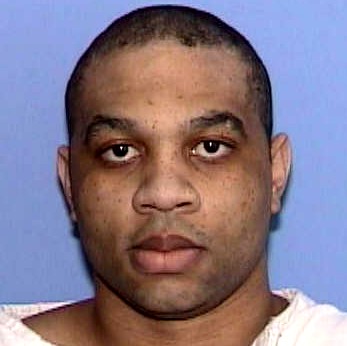
Tilon Lashon Carter
Murderer Robert Martines Perez
Murderer · USA · 1994
Name: Robert Martines Perez · Other name used in proceedings: Robert Martinez P…
15 victims
Robert Martines Perez
Murderer · USA · 1994
Name: Robert Martines Perez · Other name used in proceedings: Robert Martinez P…
15 victims
 Robert Glen Jones
Murderer · USA · 1996
Defendant: Robert Glenn Jones (ADC#070566) · Co-defendant: Scott Nordstrom (ADC…
7 victims
Robert Glen Jones
Murderer · USA · 1996
Defendant: Robert Glenn Jones (ADC#070566) · Co-defendant: Scott Nordstrom (ADC…
7 victims
 Joshua Wayne Andrews
Murderer · USA · 2000
Joshua Wayne Andrews was a serial killer accused of killing several people in V…
5 victims
Joshua Wayne Andrews
Murderer · USA · 2000
Joshua Wayne Andrews was a serial killer accused of killing several people in V…
5 victims
 Juan Carlos Alvarez
Murderer · USA · 1998
Juan Carlos Alvarez, born on March 9, 1977, in San Luis, Mexico, was a Hispanic…
5 victims
Juan Carlos Alvarez
Murderer · USA · 1998
Juan Carlos Alvarez, born on March 9, 1977, in San Luis, Mexico, was a Hispanic…
5 victims
 Brenda Andrew
Murderer · USA · 2001
Brenda Evers Andrew was a white female who appeared as 5 ft. 3 in. tall and 110…
1 victim
Brenda Andrew
Murderer · USA · 2001
Brenda Evers Andrew was a white female who appeared as 5 ft. 3 in. tall and 110…
1 victim
 Jerry Ray Davidson
Murderer · USA · 1995
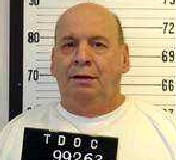
Jerry Ray Davidson was convicted of premeditated murder and aggravated kidnappi…
1 victim
Jerry Ray Davidson
Murderer · USA · 1995
Jerry Ray Davidson was convicted of premeditated murder and aggravated kidnappi…
1 victim
 Tianle Li
Murderer · USA · 2011
Tianle Li was convicted of fatally poisoning her husband, Xiaoye Wang, with tha…
1 victim
Tianle Li
Murderer · USA · 2011
Tianle Li was convicted of fatally poisoning her husband, Xiaoye Wang, with tha…
1 victim
 Zhang Yongming
Serial killer · China · 1979
Zhang Yongming (1956 – January 10, 2013) was a Chinese serial killer. Little wa…
12 victims
Zhang Yongming
Serial killer · China · 1979
Zhang Yongming (1956 – January 10, 2013) was a Chinese serial killer. Little wa…
12 victims
 Christopher Lee Simmons
Homicide · USA · 1993
Christopher Lee Simmons was 17 years old at the time of his arrest for the Sept…
1 victim
Christopher Lee Simmons
Homicide · USA · 1993
Christopher Lee Simmons was 17 years old at the time of his arrest for the Sept…
1 victim
 Edwin Hart Turner
Murderer · USA · 1995
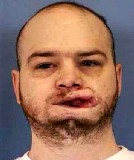
Edwin Hart Turner was convicted of capital murder in the deaths of Eddie Brooks…
2 victims
Edwin Hart Turner
Murderer · USA · 1995
Edwin Hart Turner was convicted of capital murder in the deaths of Eddie Brooks…
2 victims
- Gender
- male
- Country
- USA
- Location
- Tarrant County, Texas, USA
- Date of birth
- December 7, 1979
- Age at first offence
- 25
- Characteristics
- robbery
- Victim profile
- James Tomlin (male, 89)
- Method of murder
- Beating (smothering with positional asphyxia)
- Date(s) of murder
- April 28, 2004
- Years active
- 2004
- Date of arrest
- —
- Status
-
Sentenced to death
Sentenced to death on December 12, 2006
Background
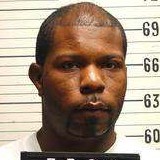
Tilon Lashon Carter was convicted in November 2006 of capital murder under Tex. Penal Code Ann. § 19.03(a)(2). The direct appeal was automatic under Art. 37.071, § 2(h). The trial judge sentenced Carter to death based on the jury’s answers to the special issues set forth in the Texas Code of Criminal Procedure, Article 37.071, sections 2(b) and 2(e), and a mental-retardation special issue (Art. 37.071, § 2(g)).
Carter’s ex-girlfriend testified that Carter told her that he and Leketha Allen had killed an old man during a robbery at a house on Mims Street.
Carter’s former cell-mate testified that Carter tried to intimidate him by boasting that he and his girlfriend had killed an old man during a robbery.
At his trial, prosecutors portrayed Carter as a longtime criminal. Prosecutors said that at age 16, he robbed a married couple at gunpoint and stole their car to pay off a drug debt, and that he led a prison riot while serving his five-year sentence. Prosecutors said his other crimes included misdemeanor indecent exposure and misdemeanor assault for biting and striking his girlfriend. Prosecutors also said Carter was accused of fatally shooting one of several people he forced into a closet in a drug house.
Defense attorneys urged jurors to impose a life sentence, saying Carter was mentally retarded and had a dysfunctional family and poor upbringing. Carter claimed he tied his victim up with duct tape; the victim then died of asphyxiation after Carter had left the home.
The offence
Carter was charged with intentionally causing the death of James Eldon Tomlin by restraining him and causing him to lie face down, and by smothering him by exerting pressure on his head or face with an object unknown to the grand jury, during the course of robbery.
The jury found that Carter committed capital murder during a robbery, based on the special issues under Article 37.071, sections 2(b) and 2(e), along with a mental-retardation special issue (Art. 37.071, § 2(g)). The appeals court later affirmed the conviction and sentence of death.
Tomlin was found bound with duct tape around his hands and ankles and a piece of duct tape on his mouth area. Tomlin had wounds to his head, and a bloody hammer was found nearby. Tomlin’s body was found lying face down on the floor just inside the back door, with his feet blocking the doorway. His hands were bound behind his back by duct tape wound around his wrists. Duct tape was also wound around his ankles. There was tape residue on his shirt and socks consistent with him having moved his arms and legs after they had been bound. His face was turned to the side. A piece of duct tape, partially folded over, was stuck to the side of his mouth area.
A medical examiner testified that Tomlin’s flesh at both his wrists and ankles had been compressed and his skin had been damaged by duct tape. The lacerations on Tomlin’s face and head resulted from blunt-force trauma that might have caused a temporary loss of consciousness but no significant injury to the skull or brain. The inside of Tomlin’s upper lip had been pressed hard against his teeth, resulting in a hemorrhaging injury. The medical examiner testified that the nature of this injury indicated it resulted from applying profound and sustained pressure against Tomlin’s mouth for at least thirty seconds while he was still alive. The injury was typical of smothering and would not have resulted from the impact of a fall or from the weight of Tomlin’s head as he lay on the floor. The medical examiner also testified that, given the position of Tomlin’s body when it was found and the evidence seen, Tomlin was bound while lying face down on the floor and it would have been impossible for him to sit up and talk to anybody. The medical examiner acknowledged that most people probably would not understand the risk of death involved in binding someone in that position, but emphasized that he could not exclude smothering because the markings observed were “very consistent” with smothering. He ruled that the cause of death was “smothering with positional asphyxia.”
Carter claimed he tied Tomlin up with duct tape, and that Tomlin died of asphyxiation after Carter had left the home. Police statements showed Carter had no intention of leaving his victim alive.
Investigation
Carter gave two statements to Detective Cheryl Johnson. Carter’s statements were admitted at trial after the court found that Carter had knowingly, intelligently, and voluntarily waived his right to counsel and his right to remain silent.
In Carter’s first statement, he told police that he and his girlfriend, Leketha Allen, had been talking about needing money when Leketha’s mother suggested that they rob Tomlin, an elderly man who lived alone and kept large amounts of cash in his house. Leketha’s mother drove them to Mims Street and pointed out Tomlin’s house. The next day, Carter and Leketha drove back to Tomlin’s house. Carter waited in the car while Leketha, who was acquainted with Tomlin, knocked on the back door. After Tomlin opened the door, Carter walked up and told Leketha to get back in the car. Tomlin swung a hammer at Carter, but Carter dodged it and ordered Tomlin to lie down. Tomlin complied. Carter started looking around the house. Leketha then walked into the house, and they both searched it. Leketha told Carter that Tomlin was going to get up and move, so Carter bound Tomlin’s hands with duct tape. Carter used a sock to hold the tape and tore the tape with his teeth. Leketha took two jars of coins from the kitchen, and Carter took an old, long gun from the bedroom. Leketha went back to the car. Carter came out last, and they drove back to Leketha’s mother’s house.
In Carter’s second statement, Carter indicated that he had borrowed a gun in preparation for the robbery and that he was holding it when he entered Tomlin’s house. He stated that after Tomlin swung the hammer at him, Carter grabbed Tomlin’s arm and made him sit down on the floor. When Leketha walked into the house, Carter gave her the gun to hold while he bound Tomlin’s hands and feet with duct tape. After they finished searching the house and Leketha went back to the car, Carter watched Tomlin for a minute to make sure he was all right. Carter stated that Tomlin was sitting up with his legs straight out in front of him. Carter told Tomlin they were leaving, and Tomlin said, “Okay.”
Trial
Carter’s case proceeded as a capital murder trial with a guilt phase and a punishment phase that included special issues under Article 37.071.
Disjunctive language in the jury instruction
In Carter’s first point of error, he claimed the trial court erred in providing a jury instruction at the guilt phase that permitted the jury to convict Carter of capital murder if it determined that Carter intentionally caused Tomlin’s death “by restraining him and causing him to lie face down or by smothering him by exerting pressure on his head or face,” in the course of committing or attempting to commit a robbery, when the indictment had charged the acts of “restraining him” and “causing him to lie face down” in the conjunctive.
Carter acknowledged the general rule that the jury properly may be charged in the disjunctive with multiple means of committing the offense when the indictment alleged them in the conjunctive. He argued that this case presented an exception because the acts of restraining Tomlin and causing him to lie face down were necessary parts of a single means of causing death by positional asphyxiation. He urged that charging these acts in the disjunctive improperly allowed a conviction if the jury found Carter had just restrained Tomlin without requiring the jury to find that Carter had also caused Tomlin to be in the prone position that caused his death from positional asphyxiation. He reasoned the disjunctive language allowed conviction under a theory not contained in the indictment.
The court ruled that it was not persuaded that charging the acts in the disjunctive impermissibly allowed conviction under a theory not contained in the indictment, citing examples including Zanghetti v. State and Medina v. State. The court also determined that, even if it assumed error, the record did not show egregious harm. The court also stated that, when a jury returns a guilty verdict on an indictment charging several acts in the conjunctive, the verdict stands if the evidence is sufficient with respect to any of the acts charged. The court stated that Carter did not complain about insufficient evidence that he intentionally caused Tomlin’s death by positional asphyxiation or smothering, and that the evidence presented at trial was sufficient. The court concluded that charging the acts in the disjunctive was not error, much less egregious error, and overruled point of error one.
Sentencing-related and constitutional challenges
In point of error two, Carter claimed the trial court erred in overruling motions to preclude the death penalty as a sentencing option and declare Article 37.071 unconstitutional on the ground that Texas law allows for a death sentence without grand-jury review of the special issues. Carter argued that the special issues were “aggravated factors” that, as elements of the offense, must be pleaded in the indictment and proven beyond a reasonable doubt. He also asserted that the statutory scheme violated due process because it allowed the state to bypass the grand jury and arbitrarily determine who was “death worthy.” The court stated it had rejected these arguments in previous cases including Joubert v. State and Renteria v. State, declined to revisit them, and overruled point of error two.
Motion to suppress appellant’s statement
In point of error three, Carter claimed the trial court erred in overruling a motion to suppress the second written statement obtained by police because it was given after the appointment of counsel, and the state did not meet its burden to show Carter voluntarily waived the presence of counsel. Carter argued that because he had requested counsel at the arraignment, the state’s showing that he later re-initiated communication with Detective Johnson, and that Detective Johnson read him Miranda rights and obtained an acknowledgment and waiver, was insufficient to establish a voluntary waiver of the right to counsel.
The court stated that Carter’s grounds at trial did not correspond to his ground on appeal. The court described that, in pre-trial motions to suppress, Carter asserted his statements were products of an illegal arrest and/or an illegal search and seizure; counsel did not argue a right-to-counsel violation then. The court noted that in closing, Carter objected that the statements were not voluntary. After the motions to suppress were denied and during voir dire of Detective Johnson, counsel objected for the first time that the second statement was inadmissible because Carter had invoked his right to counsel by signing a request for the appointment of counsel at the arraignment. The prosecutor responded that Carter had re-initiated communication with Detective Johnson. The trial court admitted the second statement, finding Carter knowingly, intelligently, and voluntarily waived his right to counsel and his right to remain silent.
The court held that Carter validly waived his right to counsel when he re-initiated communication with Detective Johnson and concluded the trial court did not err in admitting the second statement, overruling point of error three.
“10-12 Rule” challenges
In points of error four and seven, Carter claimed the trial court erred in overruling his federal constitution based objection to the “10-12 Rule,” and erred in failing to instruct the jury that if a single juror “holds out” for life, the appellant would receive a sentence of life imprisonment by operation of law. Carter asserted that the 10-12 Rule violated the Fifth, Sixth, Eighth, and Fourteenth Amendments because it invaded the province of the jury and unduly pressured jurors to change their votes to reach a result. The court stated it had rejected these arguments in previous cases including Druery v. State and Prystash v. State, declined to revisit them, and overruled points of error four and seven.
Mitigation special issue challenges
In point of error five, Carter claimed the trial court erred in overruling defense counsel’s objection to the submission of the mitigation special issue because it failed to place the burden of proof on the state, in violation of the Fifth and Sixth Amendments. Carter argued that failing to instruct the jury that the state had the burden of proof deprived him of the right to trial by jury and the right to have all elements proven beyond a reasonable doubt. The court stated it had rejected this argument before in Ladd v. State and overruled point of error five.
In point of error six, Carter claimed the trial court erred in overruling his objection to the failure of the mitigation instruction to require jurors to find aggravating circumstances outweighed mitigating circumstances before returning a verdict requiring imposition of death. Carter asserted that the jury should have been instructed that if it had a reasonable doubt as to whether the aggravating factors outweighed the mitigating factors, then it should have answered the mitigation special issue in the affirmative. The court stated it had rejected similar arguments before in Hankins v. State and Blue v. State, declined to reconsider, and overruled point of error six.
In point of error ten, Carter claimed the mitigation special issue provided by Article 37.071 was unconstitutionally vague and indefinite in violation of the Fourteenth Amendment of the United States Constitution and Article I, section 19, of the Texas Constitution. Carter admitted the court had rejected similar arguments before in cases including Feldman v. State and Ladd, and invited reconsideration because the record “clearly rebuts” a presumption that jurors understand the terms used in the special issues and reflected “the public’s confusion” on what properly constituted mitigating evidence in a capital case. The court stated he had not persuaded it to revisit the issue and overruled point of error ten.
Appeals
Carter brought a direct appeal with ten points of error. After reviewing the points of error, the appeals court found them to be without merit and affirmed the trial court’s judgment and sentence of death.
The court’s delivered opinion was authored by Holcomb, J., joined by Meyers, Price, Womack, Johnson, and Cochran, JJ. Keller, P.J., and Keasler and Hervey, JJ., concurred in the result. The court affirmed the judgment and sentence of death, delivered January 14, 2009.
Outcome
The Texas Court of Criminal Appeals upheld the conviction of a Fort Worth man condemned for smothering an 89-year-old man and robbing him of some $6,000. The court upheld the sentence of death.
Carter was condemned for the 2004 slaying of James Eldon Tomlin, a retired Bell Helicopter employee.
The appeals court rejected Carter’s challenge to the jury instructions and rejected constitutional arguments related to the death penalty, as well as his challenge to admissibility of a written statement given to police following his arrest.
Carter did not have an execution date.
Carter’s girlfriend, Leketha Allen, was awaiting trial for the same crimes.
Other details
The appeals court opinion stated the case number as “No. AP-75,603” and that the appeal was from cause no. 94-9973D in the 371st District Court, Tarrant County.
Spotted an error, or have more information about this case?