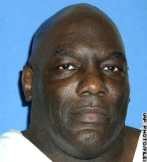
Ronald Curtis Chambers
Murderer Ervil LeBaron
Murderer · USA · 1972
Ervil Morrell LeBaron (1925 to August 16, 1981) was the leader of a polygamous…
35 victims
Ervil LeBaron
Murderer · USA · 1972
Ervil Morrell LeBaron (1925 to August 16, 1981) was the leader of a polygamous…
35 victims
 Brian Kevin Rosenfeld
Murderer · USA · 1985
Brian Kevin Rosenfeld Brian Kevin Rosenfeld was sentenced to three concurrent l…
23 victims
Brian Kevin Rosenfeld
Murderer · USA · 1985
Brian Kevin Rosenfeld Brian Kevin Rosenfeld was sentenced to three concurrent l…
23 victims
 Marvin Gray
Murderer · USA · 1975
Marvin Gray was convicted killer who claimed responsibility for 23 slayings and…
23 victims
Marvin Gray
Murderer · USA · 1975
Marvin Gray was convicted killer who claimed responsibility for 23 slayings and…
23 victims
 Yahweh ben Yahweh
Murderer · USA · 1980
Yahweh ben Yahweh was born and legally named Hulon Mitchell Jr. (October 27, 19…
23 victims
Yahweh ben Yahweh
Murderer · USA · 1980
Yahweh ben Yahweh was born and legally named Hulon Mitchell Jr. (October 27, 19…
23 victims
 Gwendolyn Graham
Serial killer · USA · 1987
Gwendolyn Graham worked as a nurse’s aide at the Alpine Manor Nursing Home in W…
5 victims
Gwendolyn Graham
Serial killer · USA · 1987
Gwendolyn Graham worked as a nurse’s aide at the Alpine Manor Nursing Home in W…
5 victims
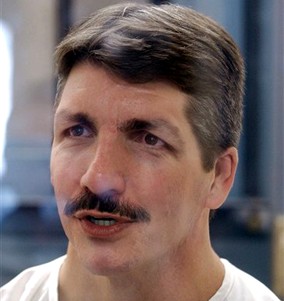 Paul Dennis Reid
Spree killer · USA · 1997
Paul Dennis Reid, Jr. was an American serial killer. He was born November 12, 1…
7 victims
Paul Dennis Reid
Spree killer · USA · 1997
Paul Dennis Reid, Jr. was an American serial killer. He was born November 12, 1…
7 victims
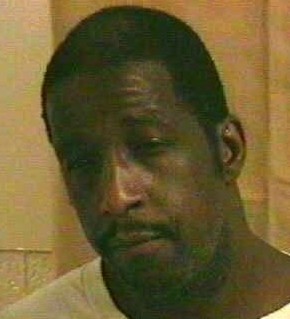 Larry Darnell Williams
Murderer · USA · 1979
Larry Darnell Williams was an inmate on death row. He was convicted in Gaston C…
2 victims
Larry Darnell Williams
Murderer · USA · 1979
Larry Darnell Williams was an inmate on death row. He was convicted in Gaston C…
2 victims
 Lisa Jo Chamberlin
Murderer · USA · 2004
Lisa Jo Chamberlin was convicted and sentenced to die by lethal injection for t…
2 victims
Lisa Jo Chamberlin
Murderer · USA · 2004
Lisa Jo Chamberlin was convicted and sentenced to die by lethal injection for t…
2 victims
- Gender
- male
- Country
- USA
- Location
- Dallas County, Texas, USA
- Date of birth
- January 11, 1955
- Age at first offence
- 20
- Characteristics
- abduction, domestic violence, torture, drugs
- Victim profile
- Mike McMahan, 22
- Method of murder
- S truck in the head with the barrel of the shotgun
- Date(s) of murder
- March 9, 1975
- Years active
- 1975
- Date of arrest
- —
- Status
-
Sentenced to death
Sentenced to death on January 8, 1976; on January 22, 2007, the United States Supreme Court granted an indefinite stay of execution
Case overview
Ronald Curtis Chambers was sentenced to death on January 8, 1976. On January 22, 2007, the United States Supreme Court granted an indefinite stay of execution.
Chambers was convicted in relation to the 1975 murder of Mike McMahan and the assault of Deia Sutton, who later went by her married name Deia Sutton Roberts. The case resulted in multiple capital murder sentencing trials and multiple reversals and remands.
Timeline
- Apr. 21, 1975 — A Dallas County grand jury indicted Chambers for capital murder in the death of Mike McMahan.
- Dec. 18, 1975 — Judgment was entered after a jury found Chambers guilty of capital murder and following a separate punishment hearing, the court assessed a sentence of death.
- Jan. 8, 1976 — Chambers was sentenced to death.
- May 24, 1978 — The Texas Court of Criminal Appeals affirmed Chambers’ conviction and sentence on direct appeal.
- Dec. 5, 1984 — The Court of Criminal Appeals granted Chambers’ successive application for state habeas relief and set aside Chambers’ conviction based on the State’s failure to mirandize him before having him interviewed by a State psychiatrist.
- Nov. 1, 1985 — Chambers was reindicted on capital murder charges.
- Dec. 20, 1985 — Judgment was entered after a jury found Chambers guilty of capital murder and following a separate punishment hearing, the court assessed a sentence of death.
- Oct. 25, 1989 — The Texas Court of Criminal Appeals reversed Chambers’ second conviction for Batson v. Estelle error.
- June 26, 1992 — Judgment was again entered after a jury found Chambers guilty of capital murder and following a separate punishment hearing, the court assessed a sentence of death.
- June 28, 1995 — The Texas Court of Criminal Appeals affirmed Chambers’ conviction and sentence on direct appeal.
- Mar. 24, 1999 — The Court of Criminal Appeals denied Chambers’ application for state habeas relief and adopted the findings of the trial court.
- Oct. 26, 1999 — Chambers filed a petition for writ of habeas corpus in a U.S. district court.
- Aug. 26, 2003 — The federal district court denied Chambers federal habeas relief.
- Jul. 21, 2006 — The 5th U.S. Circuit Court of Appeals affirmed the lower court’s denial of relief.
- Oct. 17, 2006 — Chambers petitioned the U.S. Supreme Court for certiorari review.
- Jan. 18, 2007 — The Texas Attorney General issued a media advisory stating that Chambers was scheduled to be executed after 6 p.m. Thursday, January 25, 2007.
- Jan. 22, 2007 — The United States Supreme Court granted an indefinite stay of execution.
- Jan. 25, 2007 — Chambers was scheduled to be executed.
The offence
On the night of April 10, 1975, Chambers and codefendant Clarence Ray Williams kidnapped Mike McMahan and his date Deia Sutton from the parking lot of a Dallas nightclub. The kidnapers robbed the couple and took them to the levee on the Trinity River, where Chambers forced Sutton and McMahan from the car and ordered them down the embankment.
Sutton saw Chambers with a shotgun and a pistol. She heard five gunshots, and a bullet struck her in the back of the neck; she fell. McMahan was also struck and rolled down the hill.
After Chambers and Williams retreated up the hill, McMahan called out to Deia to see if she was alright. Sutton heard Williams say, “Hey, man, they’re not dead,” and Chambers respond, “They gotta be dead. I shot 'em in the head.”
Both Williams and Chambers came back down the hill. Chambers struck McMahan ten to twenty times in the head with the barrel of the shotgun, and ordered Williams to take the woman into the water. Williams pulled Deia to the water and attempted to choke and drown her.
When Chambers finished beating McMahan, he walked toward Deia. As she begged him not to kill her, he raised his shotgun over his head and struck her three times. Chambers and Williams left both victims for dead, but Deia survived.
McMahan died as a result of multiple blows to the head; he also suffered a punctured lung and two gunshot wounds.
People involved
- Ronald Curtis Chambers — capital murder defendant; sentenced to death multiple times; stayed by the United States Supreme Court on January 22, 2007.
- Clarence Ray Williams — codefendant; pleaded guilty and received two concurrent life sentences.
- Mike McMahan — victim; died after multiple blows to the head and suffered a punctured lung and two gunshot wounds.
- Deia Sutton — victim/surviving witness; later went by her married name Deia Sutton Roberts; she survived being robbed, shot, choked, beaten, and struck with a shotgun.
- Jordan Steiker — attorney and law professor at the University of Texas; discussed Chambers’ age and expense of seeking another death verdict.
- James W. Volberding — attorney for Chambers; addressed concerns about putting the victim in another trial.
- Craig Watkins — Dallas County District Attorney; stated he would pursue the death penalty again if a new sentencing trial were ordered.
- Jamille Bradfield — spokeswoman for Dallas County District Attorney Craig Watkins; stated it was “premature for us to comment at this point.”
- Justice Scalia — issued a one-line order granting an indefinite stay of execution.
- Brad Roberts — husband of Deia Sutton Roberts; discussed efforts to overcome “gamesmanship between the lawyers.”
- Janna McMahan — sister of Mike McMahan.
- Richard Dieter — executive director of the Death Penalty Information Center; commented on the issue of extended time on death row.
- Dan Hagood — former prosecutor who handled the Chambers case in 1992.
Verbatim statements and quotations
- Jordan Steiker said: “The important thing to consider is Mr. Chambers' age, as well as the extraordinary expense of seeking another death verdict,”
- Jordan Steiker said: “It's hard to imagine that the Dallas taxpayers would want to spend millions more,”
- James W. Volberding said: “It seems unfair to put the victim in this case through another trial.”
- Deia Sutton Roberts said: “I never will be done,” and “I'm still holding out for the death penalty.”
- Jamille Bradfield said it was “premature for us to comment at this point.”
- Clarence Ray Williams, as quoted by Sutton: “Hey, man, they’re not dead,”
- Ronald Curtis Chambers, as quoted by Sutton: “They gotta be dead. I shot 'em in the head.”
- Deia Sutton Roberts (on planning and abduction) said: “We did everything 'right,' “
- Deia Sutton Roberts said: “We left at a reasonable time, when people were still there. And when they abducted us, everything they asked for, whatever they asked for, we gave it to them. We didn't resist when they said, 'Get out of the car.' ”
- Deia Sutton Roberts said: “There is not a week goes by, I don't think or dream about it,”
- Deia Sutton Roberts said: “They are images that just don't go away even after all these years.”
- Deia Sutton Roberts said: “I do believe in the death penalty, because I experienced something so horrible that I can't imagine that this was an 'oops, I made a mistake and killed someone,' “
- Deia Sutton Roberts said: “At some point, I don't care what your upbringing is or the circumstances you're in, you are responsible for your actions ... when you take somebody's life, you have to know there are consequences.”
- Deia Sutton Roberts said: “I think things should be more swift. ... He was guilty in '75 and he was guilty in '85 and he was guilty in '92 and he's guilty in 2007.”
- Brad Roberts said: “We're trying to constantly overcome the gamesmanship between the lawyers,”
- Brad Roberts said: “They're not arguing his innocence – they're trying to find some little technicality they can violate the system with.”
- Janna McMahan said: “Everybody does deserve a fair trial,”
- Janna McMahan said: “Some of the things have been retroactive, so to me, I don't think that's fair. ... You go by the rules that you have at that time, and that's what they did.”
- Dan Hagood said: “That's part of the system. ... You have to accept that if we're going to live in a country that ultimately all constitutional decisions are decided by a Supreme Court. ... That's much better than living in the land of Saddam Hussein, where the death penalty is enacted within days.”
- Ronald Curtis Chambers said: “They are following the law.”
- Ronald Curtis Chambers said: “They are not doing me any favors,”
- Ronald Curtis Chambers said: “I don't care what they did. ... There is always hope.”
- Ronald Curtis Chambers said in an interview before the stay: “Everybody has survival instincts,” and “I'm not a person who believes in suicide or self-destruction.”
- Ronald Curtis Chambers said: “I believe in God. Because I've asked for forgiveness, I don't have to keep asking.”
- Ronald Curtis Chambers said: “Ain't nobody died and come back [to] say it's painful or not,”
- Ronald Curtis Chambers said: “There's no humane way to kill somebody.”
- Ronald Curtis Chambers said: “That's all about vengeance,”
- Ronald Curtis Chambers said: “I don't feel any peaceful closure about that. I think that's kind of mixed up.”
- Janna McMahan said: “Do you think it matters to him the pain that he put my brother through, which was probably a heck of a lot more?”
- Deia Sutton Roberts said: “I don't need to see it to have closure,”
- Deia Sutton Roberts said: “If I get the phone call that it has taken place, that's enough.”
- Deia Sutton Roberts said: “I've already seen someone die,”
- Deia Sutton Roberts said: “I don't need to see someone else die.”
- Deia Sutton Roberts said: “Never,”
- Deia Sutton Roberts said: “No way in hell,”
- Ronald Curtis Chambers said: “Go to school, get an education, respect your elders,”
- Ronald Curtis Chambers said: “Be responsible.”
- Attorney Volberding said: “it's cruel and unusual for him to be sitting on death row for 32 years because of mistakes by the state,”
- Richard Dieter said: “the Supreme Court may take this issue at some time.”
- Richard Dieter said: “there is a danger that executions could be sped up”
Investigation
A psychiatric interview occurred prior to Chambers being interviewed by a State psychiatrist. Chambers’ successive application for state habeas relief was later granted based on the State’s failure to mirandize him before the interview.
Arrest
No specific arrest date was included, but the procedural history identified Chambers’ failure-to-mirandize issue before his interview by a State psychiatrist.
Trial
1975 capital murder trial
Chambers was convicted and sentenced to death after a jury found him guilty of capital murder and, following a separate punishment hearing, the court assessed a sentence of death.
Chambers was 20 when he committed the crime and was indicted on Apr. 21, 1975.
1985 capital murder trial (after state habeas relief)
After the Court of Criminal Appeals granted Chambers’ successive application for state habeas relief on Dec. 5, 1984 and set aside his conviction, Chambers was reindicted on capital murder charges on Nov. 1, 1985. On Dec. 20, 1985, a jury again found Chambers guilty of capital murder and the court again assessed a sentence of death.
1992 capital murder trial (after Batson reversal and further proceedings)
After the Texas Court of Criminal Appeals reversed Chambers’ second conviction on Oct. 25, 1989 for Batson v. Estelle error, a further capital murder trial was held. On June 26, 1992, a jury again found Chambers guilty of capital murder and, following a separate punishment hearing, the court assessed a sentence of death.
Separate from Batson error, later review identified issues with the jury’s ability to consider mitigating factors. The mitigating factors included “his exposure to violence and drugs, his lack of role models, and his lack of economic opportunity while being raised in the projects of west Dallas.”
Sentencing
Chambers was assessed a sentence of death after each capital murder conviction at each sentencing trial reflected in the procedural history:
- Dec. 18, 1975 — death sentence after conviction and punishment hearing
- Dec. 20, 1985 — death sentence after conviction and punishment hearing
- June 26, 1992 — death sentence after conviction and punishment hearing
Appeals and post-conviction proceedings
- Dec. 5, 1984 — The Texas Court of Criminal Appeals granted successive application for state habeas relief and set aside Chambers’ conviction because the State failed to mirandize him before a State psychiatrist interview.
- **Oct. Estelle error.
- **Mar.
- **Oct. district court.
- **Aug.
- Jul. 21, 2006 — The 5th U.S. Circuit Court of Appeals affirmed the denial.
- **Oct. Supreme Court for certiorari review; this action remained pending.
- Jan. 22, 2007 — The United States Supreme Court granted an indefinite stay of execution through a one-line order written by Justice Scalia; the order did not specify the reason for or duration of the stay.
Mitigating factors issue in the 1992 sentencing
The case was sent back for review because jury instructions in the 1992 trial did not allow jurors to properly consider mitigating factors that might have made the death penalty inappropriate. The factors included “his exposure to violence and drugs, his lack of role models, and his lack of economic opportunity while being raised in the projects of west Dallas.”
Outcome
Chambers remained on death row and received an indefinite stay of execution on Jan. 22, 2007.
The United States Supreme Court had previously ordered the lower court to review the case because the jury in Chambers’ third death penalty trial may have received faulty instructions before rendering the sentence. The U.S. 5th Circuit Court of Appeals later issued an order for another sentencing trial, described as Chambers’ fourth.
Aftermath
The case was set for continued litigation after the stay.
In 1992, the victim-survivor Deia Sutton Roberts testified against Chambers in each of his prior trials and expressed continued resolve regarding the death penalty. She stated: “I never will be done,” and “I'm still holding out for the death penalty.”
Dallas County District Attorney Craig Watkins indicated he would seek the death penalty again if a new sentencing trial were ordered, while a spokeswoman for the district attorney declined to comment further, stating it was “premature for us to comment at this point.”
Clarence Ray Williams later pleaded guilty and received two concurrent life sentences, and parole hearings occurred for him during the years of ongoing litigation.
Other details
Grand jury indictment and evidence described
The Texas Attorney General media advisory stated that in 1992, Chambers was convicted and sentenced to death for the third time for the 1975 Dallas County capital murder of Mike McMahan, and it provided a summary of evidence presented at trial.
Physical evidence described included Sutton’s purse and the shotgun found in Chambers’ possession.
Chambers’ background and confinement
Chambers was described as having no prior convictions and being 20 at the time of the crime. He had lived on death row since just after the modern death penalty was reinstated.
Chambers lived alone in a 60-square-foot cell on death row for more than 31 years, and death row had been moved to Livingston in 1999, where inmates were confined to their cells 23 hours a day. The unit had previously been housed in Huntsville. After an escape attempt, a work program was canceled.
Chambers described reading and following sports by radio and corresponded with European pen pals who visited occasionally. He also described counseling schoolchildren by mail.
Execution method changes
When Chambers was sentenced, he was to die in the electric chair. In 1977, lethal injection was adopted as a more humane method. Chambers commented on lethal injection when asked about possible pain, saying: “Ain't nobody died and come back [to] say it's painful or not,” and “There's no humane way to kill somebody.”
Views on witnessing executions
Chambers appeared bothered by a 1996 law allowing the victim’s friends and families to witness the execution. Deia Sutton Roberts declined to be present, stating: “I don't need to see it to have closure,” and “If I get the phone call that it has taken place, that's enough.” She also said: “I've already seen someone die,” and “I don't need to see someone else die.” Mike McMahan’s sister said she would attend if the execution occurred.

Spotted an error, or have more information about this case?