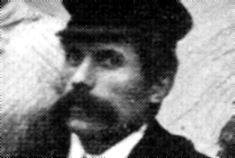
George Chapman
Serial killer Bruce Lee
Serial killer · United Kingdom · 1973
Bruce Lee was born Peter George Dinsdale in 1960. He later changed his name to…
26 victims
Bruce Lee
Serial killer · United Kingdom · 1973
Bruce Lee was born Peter George Dinsdale in 1960. He later changed his name to…
26 victims
 William Burke
Serial killer · United Kingdom · 1827
William Burke (1792 – 28 January 1829) was born in Urney, near Strabane, in the…
17 victims
William Burke
Serial killer · United Kingdom · 1827
William Burke (1792 – 28 January 1829) was born in Urney, near Strabane, in the…
17 victims
 William Hare
Serial killer · United Kingdom · 1827
William Hare and Brendan “Dynes” Burke committed serial murders in Edinburgh, S…
17 victims
William Hare
Serial killer · United Kingdom · 1827
William Hare and Brendan “Dynes” Burke committed serial murders in Edinburgh, S…
17 victims
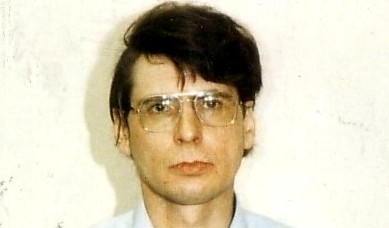 Dennis Nilsen
Serial killer · United Kingdom · 1978
Dennis Andrew Nilsen was born on November 23, 1945. He lived in London. He was…
16 victims
Dennis Nilsen
Serial killer · United Kingdom · 1978
Dennis Andrew Nilsen was born on November 23, 1945. He lived in London. He was…
16 victims
 Dr. Harold Shipman
Serial killer · United Kingdom · 1974
Harold Fredrick Shipman was an English doctor who was convicted as a serial kil…
15 victims
Dr. Harold Shipman
Serial killer · United Kingdom · 1974
Harold Fredrick Shipman was an English doctor who was convicted as a serial kil…
15 victims
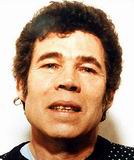 Frederick West
Serial killer · United Kingdom · 1967
Frederick West (29 September 1941 – 1 January 1995) was an English serial kille…
13 victims
Frederick West
Serial killer · United Kingdom · 1967
Frederick West (29 September 1941 – 1 January 1995) was an English serial kille…
13 victims
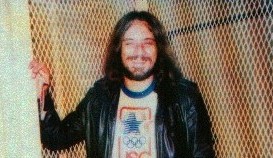 John Plath
Murderer · USA · 1978
John Plath John Plath was executed by lethal injection in South Carolina on Jul…
1 victim
John Plath
Murderer · USA · 1978
John Plath John Plath was executed by lethal injection in South Carolina on Jul…
1 victim
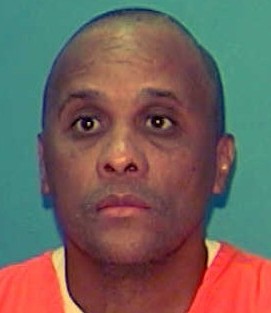 Frederick Cumming-El
Murderer · USA · 1991
Frederick Cumming-El (also known as Frederick Wooden) was born on 01/11/58. He…
1 victim
Frederick Cumming-El
Murderer · USA · 1991
Frederick Cumming-El (also known as Frederick Wooden) was born on 01/11/58. He…
1 victim
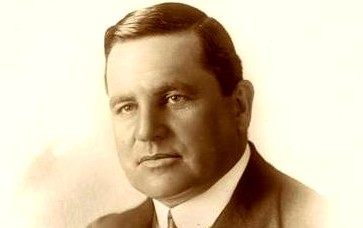 Thomas John Ley
Murderer · Australia/United Kingdom · 1946
Thomas John Ley (28 October 1880 — 29 July 1947) was an Australian politician w…
1 victim
Thomas John Ley
Murderer · Australia/United Kingdom · 1946
Thomas John Ley (28 October 1880 — 29 July 1947) was an Australian politician w…
1 victim
 Walter James Bolton
Murderer · New Zealand · 1956
Walter James Bolton (13 August 1888 - 18 February 1957) was a New Zealand farme…
1 victim
Walter James Bolton
Murderer · New Zealand · 1956
Walter James Bolton (13 August 1888 - 18 February 1957) was a New Zealand farme…
1 victim
 Heather Trujillo
Homicide · USA · 2007
Heather Trujillo was a 16-year-old Johnstown girl accused of beating to death h…
1 victim
Heather Trujillo
Homicide · USA · 2007
Heather Trujillo was a 16-year-old Johnstown girl accused of beating to death h…
1 victim
 Theresa Knorr
Murderer · USA · 1984
Theresa Knorr (née Cross) was convicted of torturing and murdering two of her c…
2 victims
Theresa Knorr
Murderer · USA · 1984
Theresa Knorr (née Cross) was convicted of torturing and murdering two of her c…
2 victims
- Gender
- male
- Country
- United Kingdom
- Location
- London, England, United Kingdom
- Date of birth
- December 14, 1865
- Age at first offence
- 32
- Characteristics
- poisoner
- Victim profile
- Mary Spink / Elizabeth Taylor / Maud Marsh (his mistresses)
- Method of murder
- Poisoning ( antimony)
- Date(s) of murder
- 1897 - 1902
- Years active
- 1897–1902
- Date of arrest
- October 25, 1902
- Status
-
Executed
Executed by hanging at Wandsworth Prison on April 7, 1903
Identification
George Chapman was the English name taken by serial killer Seweryn Antonowicz Kłosowski.
Klosowski, Severin Antoniovitch (1865-1903) was also known as George Chapman.
Background
George Chapman was born in 1865 in the village of Nargornak, occupied Poland. He trained as a surgeon from 1880 to 1887.
Chapman moved to London sometime in 1887 and, because he failed to fully qualify as a doctor, he started working at a barber's shop. He eventually ran his own hairdressers by 1889.
He married a fellow Pole, Lucy Baderski. Chapman already had a wife in Poland. Although she came to England to try to reclaim her husband, she gave up and returned home after Chapman and his new bride had a baby, who subsequently died in infancy.
George and Lucy Chapman briefly lived in New Jersey, and they returned sometime in 1892.
After moving to England, in 1888, he took up employment as a barber's assistant in the East End of London.
In 1889 he got married and moved to America, but it did not work out. He separated from his wife and moved back to London in 1895 where he lived with a married woman named Isabella Spink.
He used Mrs Spink's money to buy himself a pub in the City Road.
In 1898 one of his barmaids, Bessie Taylor, became his mistress.
The offence
Chapman took several mistresses, who often posed as his wife, and three of them were poisoned to death.
The women who died were:
- Mary Spink (died December 25, 1897)
- Elizabeth Taylor (died 14 February 1901)
- Maud Marsh (died 22 October 1902)
He used a substance called antimony. It causes a painful death with symptoms similar to those of arsenic poisoning.
In one case he stood to inherit £500. There was no inheritance from the other two.
His motives for the murders were unclear.
As he was never legally married to his "wives", he could have got rid of them without murdering them.
Investigation
Suspicions surrounding the death of Maud Marsh lead to a police investigation. It was found that Maud Marsh had been poisoned, as had the other two women whose bodies were subsequently exhumed.
Chapman was charged only with the murder of his final victim, Maud Marsh.
In the other account, Mrs Spink died in December 1897 after an illness with symptoms that included abdominal pains and vomiting. In February 1901, Bessie Taylor developed similar symptoms to Mrs Spink and died. Soon another barmaid, Maud Marsh, was employed. She developed abdominal pains and vomiting and she died on 22 October 1902.
Her mother was highly suspicious and told the doctors that she thought poisoning might be involved. With this accusation the doctor refused to issue a death certificate and ordered a post-mortem. The post-mortem revealed antimony poisoning. The bodies of the other two women were exhumed and examined, and they were found to have died from antimony poisoning.
Trial
Chapman was tried at the Old Bailey.
The jury took only 11 minutes to find him guilty after it was shown that he had purchased tartar emetic from a local chemist.
He was convicted on March 20, 1903.
When the death sentence was passed on him, he almost collapsed in court.
His final moment arrived and he had to be partly carried to the gallows and held in place until the job was done.
Sentencing
Chapman received a death sentence.
Execution
Chapman was executed on 7 April 1903 by William Billington.
He was hanged at Wandsworth Prison on April 7 that same year.
Suspected Jack the Ripper connection
Chapman was mainly known because some authorities suspected him of having been the notorious serial killer Jack the Ripper.
One detective at Scotland Yard, Frederick Abberline, is reported to have told the policeman who arrested Chapman: "You've got Jack the Ripper at last!"
Speculation in contemporary newspaper accounts and books led to Chapman, like fellow killer Dr. Thomas Neill Cream, becoming one of many individuals cited as a possible suspect in the infamous Jack the Ripper murders of 1888.
He was at one time Abberline's favored suspect.
One recent writer, Philip Sugden, considered that Chapman was the most likely candidate among known Ripper suspects, but the case against him was far from proven.
The case against Chapman rests mainly on the point that he undoubtedly was a violent man with a misogynistic streak, capable of carrying out the apparently motiveless murders of women.
Although he is known as a poisoner and not a mutilator, Chapman was known to beat his "wives" and was prone to other violent behavior. Once during a fight with his actual wife, Lucy Klosowski, he forced her down on their bed and began to strangle her, only stopping to attend to a customer who walked into the adjoined shop he owned. When he left, she found a knife under the pillow. He later told her that he had planned to kill her, even pointing out the spot where he would have buried her and reciting what he would have said to their neighbors.
In some other points he does fit the likely profile of the Ripper: he was living in Whitechapel at the time of the murders, and he probably did have some medical knowledge.
It was even suggested that he may have carried out a Ripper-style killing in New York City, the murder of Carrie Brown, but recent research suggests he did not reach the United States until after this case.
There was a lack of hard evidence against Chapman.
Some criminologists doubted his potential as a Ripper suspect on the basis of the known psychological motivations and behaviour of serial killers.
It was generally considered unlikely that a serial killer would go from butchering and disembowelling victims to the less physical method of poisoning.
Most scholars believed that Jack the Ripper selected victims who were previously unknown to him, while Chapman killed acquaintances.
Other details
Chapman was originally from Poland but later relocated to England, where he committed his crimes.
Klosowski, Severin Antoniovitch (1865-1903) was described as the son of a Polish carpenter.
The jury finding is reflected as a guilty verdict following proof he had purchased tartar emetic from a local chemist.
Reference The Complete History of Jack the Ripper by Philip Sugden, ISBN 0786702761.
RACE: W, SEX: M, TYPE: N, MOTIVE: CE, DATE(S): 1897-1902, MO: Profit-motivated poisoner of common-law wives; suspect in 1888 "JACK THE RIPPER" case. DISPOSITION: Hanged April 7, 1903.
Spotted an error, or have more information about this case?