
Saeed Hanaei
Serial killer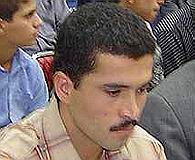 Mohammed Bijeh
Serial killer · Iran · 2004
Mohammed Bijeh (Persian: محمد بيجه ) was an Iranian serial killer. He confessed…
20 victims
Mohammed Bijeh
Serial killer · Iran · 2004
Mohammed Bijeh (Persian: محمد بيجه ) was an Iranian serial killer. He confessed…
20 victims
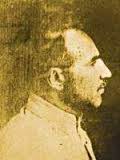 Ali Asghar Borujerdi
Serial killer · Iran · 1908
Ali Asghar Borujerdi (Persian: عَلی اَصغَر بروجردی) was known in Iran as اصغر ق…
33 victims
Ali Asghar Borujerdi
Serial killer · Iran · 1908
Ali Asghar Borujerdi (Persian: عَلی اَصغَر بروجردی) was known in Iran as اصغر ق…
33 victims
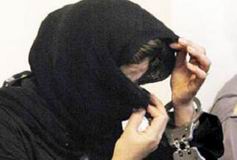 Mahin Qadiri
Serial killer · Iran · 2008
Mahin Qadiri was an Iranian woman convicted as a serial killer. A Guardian repo…
5 victims
Mahin Qadiri
Serial killer · Iran · 2008
Mahin Qadiri was an Iranian woman convicted as a serial killer. A Guardian repo…
5 victims
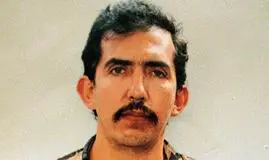 Luis Alfredo Garavito
Serial killer · Colombia/Ecuador · 1992
Luis Alfredo Garavito Cubillos, also known as "La Bestia" ("The Beast") or "Tri…
192 victims
Luis Alfredo Garavito
Serial killer · Colombia/Ecuador · 1992
Luis Alfredo Garavito Cubillos, also known as "La Bestia" ("The Beast") or "Tri…
192 victims
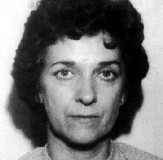 Audrey Hilley
Murderer · USA · 1975
Audrey Marie Hilley (June 4, 1933 - February 26, 1987) was an American murderer…
1 victim
Audrey Hilley
Murderer · USA · 1975
Audrey Marie Hilley (June 4, 1933 - February 26, 1987) was an American murderer…
1 victim
 Philip Ray Workman
Murderer · USA · 1981
Name: Philip Ray Workman · Status: Executed by lethal injection in Tennessee on…
1 victim
Philip Ray Workman
Murderer · USA · 1981
Name: Philip Ray Workman · Status: Executed by lethal injection in Tennessee on…
1 victim
 Ronald Fluke
Murderer · USA · 1997
Ronald Dunaway Fluke was convicted of three counts of First Degree Murder in vi…
3 victims
Ronald Fluke
Murderer · USA · 1997
Ronald Dunaway Fluke was convicted of three counts of First Degree Murder in vi…
3 victims
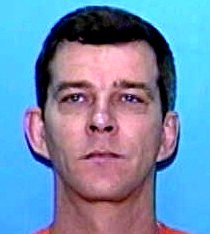 Victor Marcus Farr
Murderer · USA · 1990
Victor Marcus Farr (born 07/03/61) was convicted in the Third Judicial Circuit,…
1 victim
Victor Marcus Farr
Murderer · USA · 1990
Victor Marcus Farr (born 07/03/61) was convicted in the Third Judicial Circuit,…
1 victim
 Wayne Tompkins
Murderer · USA · 1983
Wayne Tompkins was convicted of the strangulation murder of Lisa Lea DeCarr, ag…
1 victim
Wayne Tompkins
Murderer · USA · 1983
Wayne Tompkins was convicted of the strangulation murder of Lisa Lea DeCarr, ag…
1 victim
 Paul Geidel
Murderer · USA · 1911
Paul Geidel (April 21, 1894 - May, 1987) was an American prison inmate whose se…
1 victim
Paul Geidel
Murderer · USA · 1911
Paul Geidel (April 21, 1894 - May, 1987) was an American prison inmate whose se…
1 victim
- Gender
- male
- Country
- Iran
- Location
- Mashhad, Razavi Khorasan, Iran
- Date of birth
- 1962
- Age at first offence
- 38
- Characteristics
- rape, domestic violence
- Victim profile
- Women aged between 25 and 50 years (prostitutes)
- Method of murder
- Strangulation with their own headscarves
- Date(s) of murder
- 2000 - 2001
- Years active
- 2000–2001
- Date of arrest
- J uly 2001
- Status
-
Executed
Executed by hanging in Mashhad Prison on April 8, 2002
Name
Saeed Hanaei
Legal status
Saeed Hanaei was found guilty and was hanged at dawn in Mashhad Prison on April 8, 2002.
Timeline
- 2000 — Hanai admitted in court to killing 16 women in the eastern city of Mashhad across 2000 and 2001.
- 2001 — The arrest of Saeed Hanaei occurred after one intended victim became suspicious and managed to punch him in the stomach and run away.
- July 25, 2001 — A 39-year-old builder was arrested in connection with the murder of several prostitutes in Mashhad; authorities said the suspect was being interrogated.
- July 28, 2001 — Saeed Hanaie reportedly confessed to murdering 16 of the 19 women; he said he would have killed as many as 150 women if he had not been caught.
- August 18, 2003 — A documentary and related discussion described the case and repeated that Hanaei was hanged after his death sentence.
- April 8, 2002 — Saeed Hanaei was executed by hanging in Mashhad Prison.
People
- Saeed Hanaei — construction worker; defendant; confessed to strangling women with their own headscarves; sentenced to death and executed.
- Unnamed wife — propositioned by a driver at a street near the home that was a hangout for prostitutes; later central to Hanaei’s stated motive.
- Ali Zafarzadeh — MP who believed a sophisticated network was behind the killings.
- Ali Tajernia — parliamentarian from Mashhad who demanded the removal of “incompetent” officials in charge of the case.
- Brigadier-General Mohammad Baqer Qalibaf — governor; said the suspect was arrested after a two-day operation and described a religious-motive theory.
- Eskandar Momeni — police chief of Khorasan province; said the killings began after Hanaei’s wife was propositioned by a driver at a street near their home.
- Maziar Bahari — director of a documentary; discussed how Hanaei was viewed and quoted as saying Hanaei could justify his killings through ideological slogans.
- Roya Karimi — journalist quoted describing Hanaei turning to people without power to fight back.
- Nichole Edwards — not present in the provided material (no facts to extract).
- Sahar — 10-year-old daughter interviewed; described a mother’s death after her mother went to buy opium.
- Sara — 8-year-old child interviewed; a drawing showed Hanaei in handcuffs with the mother lying dead.
- Firoozeh — identified as the 14th victim; her daughter described her going out to buy opium.
- Hanaei’s son, Ali — described Hanaei’s actions as cleansing and said “dozens will replace him.”
- Mr. Hanai — referenced as Saeed Hanai in quotations and narrative.
Background
Saeed Hanaei was a construction worker in the city of Mashhad. The killings were dubbed the “spider murders” or “spider killings” because people believed the killer used headscarves to ensnare victims the way a spider uses a web to trap its victims. After the first body of a strangled woman was found, the case remained unsolved for more than two years, and some Iranians speculated that police were intentionally lax in finding the killer because the victims were drug abusers and prostitutes. Mashhad was described as a holy city and home to a major Shiite Muslim shrine, and the murders received widespread coverage in Iranian media.
The offence
Saeed Hanaei admitted in court to killing 16 women. He targeted prostitutes, stating they had corrupted his neighborhood and made his wife look like a streetwalker. He strangled victims aged 20 to 50 with their own headscarves. He wrapped bodies in head-to-toe black chadors and dumped them in the streets. He was suspected of murdering 19 women, and the bodies of 19 women were said to have been found in Mashhad in the two years since the first death; Hanaei confessed to 16.
Hanaei told the court that he selected victims while riding in his car or on his motorbike and took them to his home when his wife and three children were away. After the third killing, he told the court that he dumped the body on a street, waited for the police to come, and then helped them load the corpse into an ambulance. Police said three of the murders were believed to have been carried out by other killers who had already been arrested.
In later discussion of the case, it was also stated that some ideologues sympathised with Hanaei and that he had intercourse with 13 victims before killing them. It was also stated that Hanaei confessed to “improper relations” with his victims.
Investigation
The arrest was tied to the escape of an intended victim who became suspicious, punched him in the stomach, and ran away. She reported the incident a few days later after overcoming fear of what police would do to her. After Hanaei’s arrest, it was described that hard-liners began a campaign in his support.
The Iranian press used the term “spider killings” to describe the ruthlessness and methodology of the killings. After the latest victim was found, Iranian police began rounding up about 500 prostitutes in Mashhad to protect them from the killer. Following Parliament taking up the case with the highest provincial authorities, deputies summoned security and intelligence chiefs and eventually a special squad was sent from Tehran to Mashhad.
Brigadier-General Mohammad Baqer Qalibaf said the suspect was arrested in Mashhad after a two-day operation. Ali Zafarzadeh believed a sophisticated network was behind the killings and said the murders were similar to 1998 serial killings of intellectuals and political dissidents by rogue elements in the intelligence ministry. Ali Tajernia demanded removal of “incompetent” officials in charge of the case, saying: “If these murders had taken place anywhere else in the world, officials investigating them would have been sacked,” newspapers quoted Mr Tajernia as saying on Tuesday.
Arrest
Saeed Hanaei was arrested after an intended victim became suspicious and managed to punch him in the stomach and run away. The report described him as a builder aged 39 at the time of the arrest and later referenced him as 40-year-old in another account. He was found guilty and executed after his trial and death sentence.
Trial
Saeed Hanaei confessed to killing the women. He told the court that he began killing prostitutes after his wife was mistaken for a prostitute and he believed killing the women was a religious obligation. He told the court he chose victims while he was riding in his car or on his motorbike and took them to his home when his wife and three children were away.
He showed no remorse in a final interview and said that for him killing the women was like stepping on cockroaches. He stated he was on a divine mission to clean up the area around the holy shrine of Mashhad and that he believed God approved of his actions. He also told the court that he used forged papers that helped him introduce himself as a member of the so-called morality police working for the office for promotion of virtue and prevention of vice. He said he used the papers to harass people he thought were engaged in deviant acts, including unmarried couples in public together or women not properly covered, and he said 80 more were on what he called his hit list.
Hanaei was sentenced to death after he confessed that he had strangled 16 women.
Verbatim quotations from Hanaei
Saeed Hanaei was quoted as saying:
- “They were as worthless as cockroaches to me”
- “Toward the end, I could not sleep at night if I had not killed one of them that day, as though I had become addicted to killing them”
- “I killed the women for the sake of God, and for the protection of my religion because they were prostitutes and were corrupting other people”
- “I wouldn't have been bothered even if I had killed 150 women because I wanted to clean the holy city of Mashhad from corrupt women and prostitutes”
- “After every single murder, I went back to the scene of the crime and helped the police to remove the body”
- “She hurt my hands, [and] punched me in the abdomen before fleeing”
- “Divine mission” — “Hanaie was on a divine mission to clean up the area around the holy shrine of Mashhad”
- “I realised God looked favourably on me. That he had taken notice of my work”
- “I think they are in the minority, and their numbers are decreasing,” was attributed to another speaker in the narrative, not directly to Hanaei.
Sentencing
Saeed Hanaei was sentenced to death after the court accepted his confession that he had strangled 16 women. Another account stated that the Iranian Supreme Court confirmed his death sentence and he was hanged after that confirmation.
Appeals
The provided material stated that the Iranian Supreme Court confirmed his death sentence, but it did not describe an appeal process.
Outcome
Saeed Hanaei was found guilty and was executed by hanging in Mashhad Prison.
Execution details
He was hanged at dawn in a small inner courtyard of the Mashhad prison. Contrary to the custom under Islamic law, neither his family nor relatives of the victims were present. Reporters and photographers were later allowed to see the body. He was executed on April 8, 2002.
Aftermath
Hard-liners were described as campaigning in support of Hanaei, arguing that he had tried to clean the country of corruption. A report said a lawyer had volunteered to defend him.
The case prompted debate, with some reformers condemning authorities for failing to catch him earlier and some conservatives sharing the killer’s disgust with a rise in prostitution. A conservative newspaper, Jomhuri Islami, was quoted:
- “Who is to be judged?”
- “Those who look to eradicate the sickness or those who stand at the root of the corruption?”
A hardline paramilitary group, Ansar-e Hizbollah, warned in its weekly publication that declining morality among women could lead to more killings, quoting: “It is likely that what happened in Mashhad and Kerman could be repeated in Tehran.”
Other details
Saeed Hanaei served as a volunteer in the 1980-88 Iran-Iraq war. He described his murders as a “continuation of the war effort”.
It was stated that his wife was mistaken for a prostitute by a taxi driver and that he became obsessed with “street women” after this incident. A journalist, Roya Karimi, was quoted:
- “So he turns to the people who don't have the power to fight back,” says the journalist, Roya Karimi.
In discussion of victims, Firoozeh was described as the 14th victim. Her daughter, Sahar, said:
- “We were all waiting for her but she never came home.”
A drawing by Sara showed “a bearded Hanaei in handcuffs, her mother lying dead and a little girl kneeling in despair.” Sahar said she wanted to be a journalist when she grew up because she hoped to document what happened to her mother.
Hanaei’s son, Ali, was quoted:
- “If they kill him tomorrow, dozens will replace him,”
- “Since his arrest, 10 or 20 people have asked me to continue what my Dad was doing. I say, 'Let's wait and see.' ”
Maziar Bahari was quoted:
- “Hanaei was living in a very claustrophobic environment and he could somehow justify his killings through ideological slogans that are acceptable in that environment,”
- “He is basically a terrorist. He's not as technologically advanced as some, but the result is the same.”
The Keyhan daily reported that many in Mashhad had been happy with the killings. One report said that hard-liners were silent after it became clear Hanaei had taken many more prostitutes to his home and had intercourse with 13 victims before killing them.
A journalist interview narrative also stated that Hanaei had plenty of opportunities to prey on the powerless in Mashhad, with factors described as opium transported through the city, growing levels of poverty and unemployment, and rural families migrating to cities, feeding an increase in “street women.” It also stated that Bahari’s documentary had been shown throughout Europe but had not been broadcast in Iran.
Spotted an error, or have more information about this case?