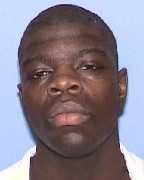
Derrick Charles
Murderer Robert Martines Perez
Murderer · USA · 1994
Name: Robert Martines Perez · Other name used in proceedings: Robert Martinez P…
15 victims
Robert Martines Perez
Murderer · USA · 1994
Name: Robert Martines Perez · Other name used in proceedings: Robert Martinez P…
15 victims
 Billy Frank Vickers
Murderer · USA · 1993
Billy Frank Vickers Vickers was executed by lethal injection in Texas on Januar…
14 victims
Billy Frank Vickers
Murderer · USA · 1993
Billy Frank Vickers Vickers was executed by lethal injection in Texas on Januar…
14 victims
 William Kendrick Burns
Murderer · USA · 1980
William Kendrick Burns was executed by lethal injection in Texas on April 11, 2…
2 victims
William Kendrick Burns
Murderer · USA · 1980
William Kendrick Burns was executed by lethal injection in Texas on April 11, 2…
2 victims
 Ronald Lott
Murderer · USA · 1986
Ronald Clinton Lott was the petitioner-appellant in Lott v. Trammell before the…
2 victims
Ronald Lott
Murderer · USA · 1986
Ronald Clinton Lott was the petitioner-appellant in Lott v. Trammell before the…
2 victims
 Ronald Taylor
Murderer · USA · 2000
Ronald Taylor was a 39-year-old man from Wilkinsburg who went on a racially mot…
3 victims
Ronald Taylor
Murderer · USA · 2000
Ronald Taylor was a 39-year-old man from Wilkinsburg who went on a racially mot…
3 victims
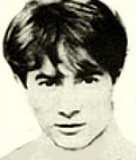 Michael Lupo
Serial killer · United Kingdom · 1986
Michael Lupo was a former choir boy in his native Italy. He served in an Italia…
4 victims
Michael Lupo
Serial killer · United Kingdom · 1986
Michael Lupo was a former choir boy in his native Italy. He served in an Italia…
4 victims
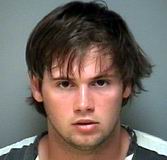 George Huguely
Murderer · USA · 2010
George Huguely was sentenced to 23 years in prison on August 30, 2012. · George…
1 victim
George Huguely
Murderer · USA · 2010
George Huguely was sentenced to 23 years in prison on August 30, 2012. · George…
1 victim
- Gender
- male
- Country
- USA
- Location
- Harris County, Texas, USA
- Date of birth
- September 6, 1982
- Age at first offence
- 20
- Characteristics
- rape, domestic violence, murder for hire, abduction
- Victim profile
- His girlfriend, Myiesha Bennett, 15; her mother, Brenda Bennett, 44; and her grandfather, Obie Lee Bennett, 77
- Method of murder
- Strangulation
- Date(s) of murder
- July 2, 2002
- Years active
- 2002
- Date of arrest
- Next day
- Status
-
Sentenced to death
Sentenced to death on May 27, 2003
Case details
Derrick Dewayne Charles was charged with capital murder and pled guilty before a jury to the murders of Obie Bennett, Brenda Bennett, and Myeshia Bennett.
TDCJ number: 999451 Date of birth: 09/06/1982 Date received: 05/27/2003 Age when received: 20 County (at offence): Harris State: Texas Race: Black Gender: Male Hair color: Black Height: 05'09" Weight: 179 Eye color: Brown Education level: 05/27/2003 Prior occupation: Laborer Prior prison record: #1033599 on a 3 year sentence from Harris County for 1 count of burglary of a habitation with intent to commit theft.
Background
Charles was visiting his girlfriend when the attack began.
The victims lived together. Charles came over to the victims' home and murdered Obie Bennett by strangling and beating him while Brenda Bennett and Myeshia Bennett were at church.
The offence
When Brenda Bennett and Myeshia Bennett returned home from church, Charles was waiting for them. He bound Brenda Bennett and Myeshia Bennett with electrical cord.
Obie Bennett was killed by strangling and beating. Myeshia Bennett was killed by beating with a speaker and then dropping a television on her until she was dead.
Brenda Bennett was bound with electrical cord and was attacked after their return. Charles unsuccessfully attempted to electrocute Brenda in a bathtub. He then sexually assaulted her with a plunger and then strangled her.
When Charles and the victims were at the residence, the incident involved the deaths of three people.
Investigation
After the 2002 attack, Charles confessed to strangling his girlfriend, Myiesha Bennett, 15; raping and strangling her mother, Brenda Bennett, 44; and fatally beating her grandfather, Obie Lee Bennett, 77.
Arrest
Charles was arrested a day after the 2002 attack. At the time, he was on parole following a burglary conviction.
Trial
Charles was convicted of capital murder.
He pled guilty before a jury to the murders of Obie Bennett, Brenda Bennett, and Myeshia Bennett. Myeshia was Charles’s former girlfriend, Obie was her grandfather, and Brenda was her mother.
Evidence and proceedings
The trial court sentenced Charles to death pursuant to the jury's answers to the special issues.
Charles raised five points of error on direct appeal. The Texas Court of Criminal Appeals affirmed the judgment and sentence.
Victim character evidence objections (points of error one through three)
At the punishment phase, Charles complained that the trial court abused its discretion at the punishment phase in admitting victim character evidence through Brenda's sister when she briefly mentioned the victims' hobbies and Obie's military service.
The testimony described by the prosecution included multiple biographical and hobby details about Obie Bennett, Brenda Bennett, and Myeshia Bennett.
Prosecutor statement: “Okay. Judge, [Brenda's sister] is going to testify that her father's name is Obie Bennett-was named Obie Bennett. She is going to give his date of birth, how old he was, the fact that he was married, how many children he had, that her mother was Obie Bennett's wife, when she died, where he worked, for how long he worked there, what he did at his employment, that he had served in the armed forces, that he had fought in the Korean War, why he moved into the house with Brenda and Myeshia Bennett, and when he moved into the house with Brenda and Myeshia Bennett. And it's been in evidence that he usually worked out of the garage all the time. She will testify to what he did in the garage, what type of woodwork he did in the garage. And that's it. That's it on Obie Bennett.”
Defense objection: “Okay. Judge, we object. With respect to the family, we object, Your Honor, to the testimony about the honorable things that we all know and can agree that Mr. Bennett did. The participation in the armed forces, what he did for hobbies, we believe that those are things that are outside the realm of victim impact, and have more to do with who he was and the kind of person he was as opposed to the effect he has on the family members not having him around. And so we think that that part of the proffer that we have talked about should not be admitted before the jury.”
Trial court ruling: “Thank you. Based on the current state of the record, that's overruled, and that will be admitted. But we don't need a lot of detail about his military service and so forth.”
Prosecutor response: “That's fine, Judge.”
Prosecutor statement continued: “That's fine. And Ms. Bennett's date of birth, how old she was when he [sic] died, where she worked, how long she worked there-how long she worked there, what she did at her work, how many children she had, where she lived, how long she had lived in that place in the that house, and that she belonged to a trail riding club. And her major hobby was riding horses. And that's it on Brenda Bennett.”
Defense objection: “And, Your Honor, we object to the testimony about the hobbies and the club that she belonged to. It's not proper testimony for victim impact testimony.”
Trial court ruling: “That's overruled. But I wouldn't want a lot of detail.”
Prosecutor statement: “Okay. Judge, on Myeshia Bennett, date of birth, how old she was at the time of her death, where she went to school, and basically, that she also belonged to the same club as her mother on the trail riding club. And that's it.”
Defense objection: “And we only object to that portion of testimony that applies to her hobbies and belonging to the trail riding club as being improper victim impact testimony.”
Trial court ruling: “It's overruled.”
The Court of Criminal Appeals decided the trial court did not abuse its discretion to admit a brief “glimpse” into the victims’ lives and background and overruled points of error one through three.
Constitutionality of capital-murder scheme (point of error four)
Charles complained that Texas' capital-murder scheme was “unconstitutional because there is no meaningful appellate review of the special issues which determine the infliction of the death penalty.”
The Texas Court of Criminal Appeals declined to revisit the issue and overruled point of error four.
Guilty plea procedure in a death-penalty case (point of error five)
Charles complained that the trial court erred in accepting his plea of guilty because procedurally a defendant may not plead guilty in a capital case unless the State waives the death penalty.
Guilty plea and trial procedure discussion outside the jury’s presence
After Charles pled guilty before the jury, the record reflected proceedings outside the jury's presence. These included objections and the trial court's instructions about whether there would be separate guilt and punishment deliberations.
Trial court: “We have been discussing [off the record] how we would proceed, and since this came up kind of unexpectedly, I would think we would proceed with the guilt phase and you can-State can present whatever evidence they wish with regard to guilt, that then the jury will be instructed to find the defendant guilty, and then after the finding of guilt, we will proceed with the punishment phase. Is there anyone who objects to that?”
Defense attorney Williams: “We do.”
Defense attorney Crowley: “The way to proceed- [WILLIAMS]: We object. [CROWLEY]: It's always been my experience, if I may, basically, that you put the whole case on, evidence guilt/innocence, punishment, then they were instructed to go back and find the defendant guilty and answer, I guess, the punishment issues.”
Trial court: “Well, you may be right on that. Seems to me I read that somewhere.”
Crowley: “That is how we have done it in nondeath cases.”
Trial court: “So, is it your opinion that there will only be one deliberation then?”
Williams: “That’s-that's correct, Your Honor.”
Crowley: “Yes. [WILLIAMS]: Since we don't have a guilt/innocence phase, since this is the punishment phase, basically.”
Prosecution: “No, because we have to put on evidence of his guilt.”
Crowley: “Well, you put on evidence of his guilt to inform the jury, but the plea of guilt establishes sufficient evidence. And putting on the witnesses is to basically inform the jury's discretion-”
Trial court: “Seems to me that I looked at that one other time and it seems to me that[,] contrary to my common sense, I think you're right. My recollection, they may be right. This is what I propose, you're just going forward with guilt evidence?”
Prosecution: “Uh-huh (affirmative).”
Trial court: “But I guess it's important for opening statement, isn't it, if we're going to do guilt and punishment phases together, then that will change opening statements. Right? You only get one opening statement. So I have to make the decision before we go any further. You can still present- [WILLIAMS]: It wouldn't change our opening statement, because we weren't going to give one in guilt/innocence, only at the beginning of our case on punishment.”
Trial court: “Well, probably if we're going to do it, it seems to me there is something in the back of my mind that they are right, we do it together. So, I need to stop and look at that before we start. And you can still proceed with all your guilt evidence. Everything for guilt still comes in the same as before, so it won't affect how you proceed today, but it might affect your opening statement. So, let me see if I can figure that out. Let me go back-I left my books in the back-and take another 10-minute break and let me figure that out.”
Trial court upon returning with the jury: “Thank you. Please be seated. Members of the jury, since the defendant has entered a plea of guilty, that will change the procedure for conducting the trial somewhat. There will only be one phase of the trial and one deliberation. And the parties, both the State and defense, will be allowed to present evidence relating to guilt and also relating to punishment. So I wanted to explain that things would be a little different than we anticipated when the procedure was discussed with you before.”
The Court of Criminal Appeals concluded Charles was estopped from complaining about the procedure and overruled point of error five.
Confession details included in appeal
The appellate discussion included that Charles confessed to these murders after his arrest: strangling his girlfriend Myiesha Bennett, raping and strangling her mother Brenda Bennett, and fatally beating her grandfather Obie Lee Bennett.
Sentencing
Charles was sentenced to death on May 27, 2003 after the jury answered the special issues.
The Court of Criminal Appeals affirmed the conviction and sentence.
Appeals
The case on direct appeal was filed as: “IN THE COURT OF CRIMINAL APPEALS OF TEXAS NO. AP- 74,694 DERRICK DEWAYNE CHARLES , Appellant v. THE STATE OF TEXAS ON DIRECT APPEAL FROM HARRIS COUNTY”
The opinion was delivered by Hervey, J. The judgment was affirmed.
The Court of Criminal Appeals addressed five points of error and overruled each. It concluded the judgment of the trial court was affirmed.
Outcome
The Texas Court of Criminal Appeals upheld Charles’s conviction and sentence.
Other details
Charles was described as angry with Brenda Bennett because she had told police he was having sex with her underage daughter.
Prosecutors told jurors at Charles’s 2003 trial that Charles was hiding in his girlfriend's bedroom while she left to run an errand, then was surprised to find the teenager's grandfather still in the house.
Evidence described the teenager being strangled, beaten with stereo speakers, and having a television dropped on her head.
Evidence described Charles waiting for more than three hours in the house for his girlfriend and her mother to return.
Evidence described Brenda Bennett being put in a tub of water, then having a plugged-in TV thrown into the tub with her, then being dragged through the house, raped, and strangled.
Spotted an error, or have more information about this case?