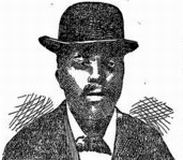
Robert Charles
Spree killer Paul John Knowles
Spree killer · USA · 1974
Paul John Knowles (April 17, 1946 – November 18, 1974) was an American spree ki…
35 victims
Paul John Knowles
Spree killer · USA · 1974
Paul John Knowles (April 17, 1946 – November 18, 1974) was an American spree ki…
35 victims
 Mark Barton
Spree killer · USA · 1999
Mark Orrin Barton (1955 – July 29, 1999) committed a spree killing in Stockbrid…
12 victims
Mark Barton
Spree killer · USA · 1999
Mark Orrin Barton (1955 – July 29, 1999) committed a spree killing in Stockbrid…
12 victims
 Bobby Joe Maxwell
Spree killer · USA · 1978
Name: Bobby Joe Maxwell Sex: M Race: B Type: T Motive: PC-nonspecific Method of…
11 victims
Bobby Joe Maxwell
Spree killer · USA · 1978
Name: Bobby Joe Maxwell Sex: M Race: B Type: T Motive: PC-nonspecific Method of…
11 victims
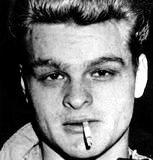 Charles Starkweather
Spree killer · USA · 1957
Charles Raymond Starkweather was born in Lincoln, Nebraska, on November 24, 193…
11 victims
Charles Starkweather
Spree killer · USA · 1957
Charles Raymond Starkweather was born in Lincoln, Nebraska, on November 24, 193…
11 victims
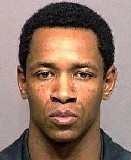 John Allen Muhammad
Spree killer · USA · 2002
John Allen Muhammad carried out the 2002 D.C. sniper attacks with his 17-year-o…
10 victims
John Allen Muhammad
Spree killer · USA · 2002
John Allen Muhammad carried out the 2002 D.C. sniper attacks with his 17-year-o…
10 victims
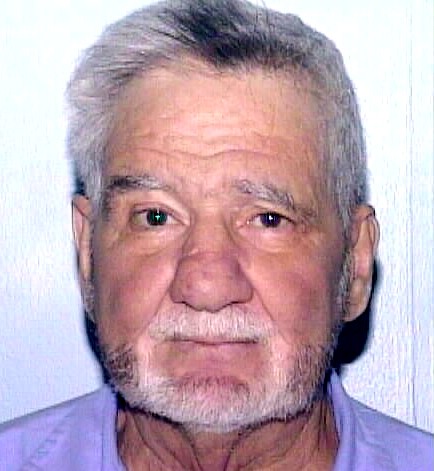 Edmund Lopes
Murderer · USA · 1966
Edmund Lopes was a Baptist minister. After being sentenced for murdering his wi…
2 victims
Edmund Lopes
Murderer · USA · 1966
Edmund Lopes was a Baptist minister. After being sentenced for murdering his wi…
2 victims
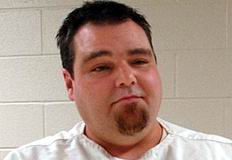 Christopher Newton
Murderer · USA · 2001
May 24, 2007 — Christopher Newton was executed by lethal injection in Ohio. · M…
1 victim
Christopher Newton
Murderer · USA · 2001
May 24, 2007 — Christopher Newton was executed by lethal injection in Ohio. · M…
1 victim
 Lawrence Smith
Murderer · USA · 1999
Lawrence Smith was convicted of first-degree murder and attempted first-degree…
1 victim
Lawrence Smith
Murderer · USA · 1999
Lawrence Smith was convicted of first-degree murder and attempted first-degree…
1 victim
 Gary Leon Brown
Murderer · USA · 1996
Gary Leon Brown was indicted for the capital offense of the murder of Jack McGr…
1 victim
Gary Leon Brown
Murderer · USA · 1996
Gary Leon Brown was indicted for the capital offense of the murder of Jack McGr…
1 victim
 Carlos Ordway
Murderer · USA · 2007
Carlos Lamont Ordway (DOB 6-21-81) was sentenced to death on October 29, 2010 i…
2 victims
Carlos Ordway
Murderer · USA · 2007
Carlos Lamont Ordway (DOB 6-21-81) was sentenced to death on October 29, 2010 i…
2 victims
 Ronnie Thornton
Murderer · USA · 1991
Ronnie Thornton was sentenced to death on January 11, 1993. His convictions wer…
1 victim
Ronnie Thornton
Murderer · USA · 1991
Ronnie Thornton was sentenced to death on January 11, 1993. His convictions wer…
1 victim
- Gender
- male
- Country
- USA
- Location
- New Orleans, Louisiana, USA
- Date of birth
- 1865
- Age at first offence
- 35
- Characteristics
- to avoid arrest, escape
- Victim profile
- White people (four of the victims were policemen)
- Method of murder
- Shooting
- Date(s) of murder
- July 23-27, 1900
- Years active
- 1900
- Date of arrest
- —
- Status
-
Died in custody
Killed during a shoot-out with the police on July 27, 1900
Case record: Robert Charles (July 1900)
Background
The events became known as the Robert Charles Riots of 1900. The riots were sparked after African American laborer Robert Charles shot a white police officer, which led to a manhunt. Twenty-eight people were killed in the conflict, including Charles. Many more people were killed and wounded in the riots.
Civil Unrest was described as a racially diverse state at the turn of the century, with a population listed at 730,000 “white” and 650,000 “negro” by the Twelfth Census of the United States. Louisiana law attempted to keep these two populations separate at the end of the 19th century. Plessy vs. Ferguson was originally a Louisiana case before going to the Supreme Court, and Louisiana had passed eight Jim Crow laws by 1900.
The effect of segregation laws was described as clear in the city of New Orleans at the beginning of the 20th century, with increasing animosity between the races being seen almost daily during June and July 1900. It was also said that both the police and press received an unprecedented number of complaints.
Racial tensions were increased by the racist undertones of New Orleans newspapers, which were described as becoming more stridently racist in their editorial columns and treatment of the news. The confrontational journalistic practices of Henry J. Hearsay and the States newspaper were described as causing racial rifts in New Orleans. Henry J. Hearsay, described as a former Major in the Confederate Army, stated:
"if [negroes] listen to the screeds of agitators in the North... the result will be a race war, and race war means extermination... Then the negro problem of Louisiana at least will be solved–and that by extermination."
Timeline
- July 23, 1900 (approximately 11 p.m.) — Three white police officers investigated “two suspicious looking negroes” on the 2800 block of Dryades Street and found Robert Charles and his roommate, 19-year-old Leonard Pierce, at the scene.
- July 24, 1900 (approximately 3 a.m.) — Captain Day and a patrol wagon approached Charles’s residence on the 2000 block of Fourth Street and Charles fired on them, hitting Day with a rifle shot to the heart and shooting another policeman in the head; Charles then escaped.
- July 24, 1900 — Crowds gathered on Fourth Street where the policemen were killed, with shouts for lynching Charles.
- July 25, 1900 — Acting Mayor Mehle announced a $250 reward for the arrest of Charles and issued a proclamation urging peace; riots followed.
- July 25, 1900 (night) — Three blacks died and six more blacks were hospitalized, along with five whites, and more than 50 people were injured.
- July 25, 1900 to July 27, 1900 — Charles took refuge at 1208 Saratoga Street and remained safe from the police until Friday, July 27.
- July 27, 1900 (day) — Police surrounded the residence at 1208 Saratoga Street; Charles sporadically returned fire; police decided to burn down the building; Charles was killed during the attempt to escape the smoke-filled building.
- Several days after July 27, 1900 — Informant Fred Clark was shot and killed by an admirer of Charles, Lewis Forstall.
The offence
Initial shooting and flight
At approximately 11 p.m. on July 23, 1900, three white police officers—Sergeant Jules C. Aucion, August T. Mora, and Joseph D. Cantrelle—investigated “two suspicious looking negroes” sitting on a porch on the 2800 block of Dryades Street in a predominantly white neighborhood.
The officers arrived to find Charles and his roommate, 19-year-old Leonard Pierce, at the scene. The policemen questioned the two men, demanding to know what they “were doing and how long they had been there.” One of the two men replied that they were “waiting for a friend.”
Charles then stood up, which the police believed to be an aggressive move. Mora grabbed him and the two struggled. Mora hit Charles with his billet. Charles and Mora then pulled guns and exchanged shots. Reports varied on who drew first. Both men received non-lethal gunshot wounds. Charles fled the scene, leaving a trail of blood. Pierce, also armed, was left at the gunpoint of a police officer when Charles ran.
Subsequent shooting of police and escape
Charles returned to his residence early the next morning while the police attempted to track him down. Discovering where Charles lived by interrogating Pierce, Captain Day and a patrol wagon approached Charles’s residence on the 2000 block of Fourth Street at approximately 3 a.m. on July 24, 1900.
When police attempted to apprehend Charles, he fired upon them, hitting Day with a rifle shot to the heart. Charles shouted, “I will give you all some,” and shot another policeman in the head. The remaining policemen took refuge in a nearby room while Charles escaped.
Shoot-out at the refuge address
Charles took refuge at 1208 Saratoga Street, where he remained safe from the police until Friday, July 27. The house was quickly surrounded by police after they were informed of Charles’s location.
Throughout that day, men from outside the house fired upon Charles, who sporadically returned the fire. By the end of the day, Charles had shot a total of 27 white people over the course of the week, seven lethally, including four victims who were policemen.
At this point, the police decided to burn down the building in which Charles was holed up. When attempting to escape the smoke-filled building, Charles was shot by Charles A. Noiret, described as a medical student and member of the special police (a police group of volunteer citizens). The policemen present continued to shoot Charles, then dragged him outside where a mob of bystanders beat Charles’s body.
Investigation
Police were able to determine where Charles lived by interrogating Leonard Pierce.
A manhunt for Charles began after the altercation involving Charles, his roommate Leonard Pierce, and several New Orleans police officers on Monday, July 23, 1900.
Arrest
No formal arrest of Charles occurred. Charles was killed during a shoot-out with the police on July 27, 1900.
Trial
No trial information appeared in the provided record.
Sentencing
No sentencing information appeared in the provided record.
Appeals
No appeals information appeared in the provided record.
Outcome
Aftermath
New Orleans riots and attacks on institutions
After the killing, mobs in New Orleans continued to rampage. Police had difficulty getting the body to the morgue due to angry white mobs attempting to damage the corpse.
Several innocent African-American people were killed. The Thomy Lafon schoolhouse, described as “the best Negro schoolhouse in Louisiana,” was burned down.
The informant who told police the whereabouts of Charles, Fred Clark, was shot and killed several days later by an admirer of Charles, Lewis Forstall.
Impact outside Louisiana
The events in New Orleans had an effect outside the state. A young white Bostonian, Lillian Jewett, started the Anti-Lynching League in reaction to Charles’s death. Some members of the group wanted retribution for the killing and called for revenge.
In response, a group of white New Orleanians formed the Green Turtles, who threatened Jewett’s life.
Other details
- The police were involved in investigating “two suspicious looking negroes” at the scene on the 2800 block of Dryades Street.
- At the initial confrontation, one of the men told the police they were “waiting for a friend.”
- During the later confrontation on July 24, 1900, Charles shouted: “I will give you all some.”
Spotted an error, or have more information about this case?