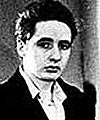
Joseph Christopher
Serial killer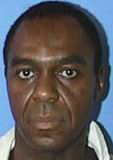 Carl Eugene Watts
Serial killer · USA · 1974
Carl Eugene Watts (born November 7, 1953; died September 21, 2007), also known…
100 victims
Carl Eugene Watts
Serial killer · USA · 1974
Carl Eugene Watts (born November 7, 1953; died September 21, 2007), also known…
100 victims
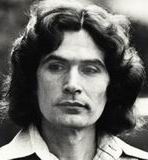 Rodney Alcala
Serial killer · USA · 1977
Rodney James Alcala (born August 23, 1943) was also known as Rodrigo Jacques Al…
100 victims
Rodney Alcala
Serial killer · USA · 1977
Rodney James Alcala (born August 23, 1943) was also known as Rodrigo Jacques Al…
100 victims
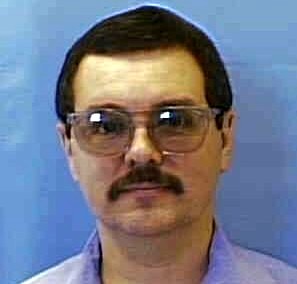 Donald Harvey
Serial killer · USA · 1970
Donald Harvey was known as an American serial killer and a self-professed “Ange…
87 victims
Donald Harvey
Serial killer · USA · 1970
Donald Harvey was known as an American serial killer and a self-professed “Ange…
87 victims
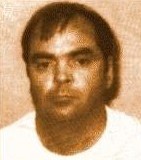 Donald Leroy Evans
Serial killer · USA · 1975
Donald Leroy Evans (born July 5, 1957) was an American serial killer who murder…
60 victims
Donald Leroy Evans
Serial killer · USA · 1975
Donald Leroy Evans (born July 5, 1957) was an American serial killer who murder…
60 victims
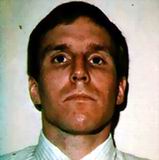 Michael Swango
Serial killer · USA · 1981
Michael Swango (Joseph Michael Swango) was a physician and American serial kill…
60 victims
Michael Swango
Serial killer · USA · 1981
Michael Swango (Joseph Michael Swango) was a physician and American serial kill…
60 victims
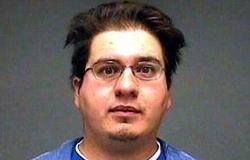 Efren Saldivar
Serial killer · USA · 1989
Efren Saldivar (born 30 September 1969) was an American serial killer who murde…
50 victims
Efren Saldivar
Serial killer · USA · 1989
Efren Saldivar (born 30 September 1969) was an American serial killer who murde…
50 victims
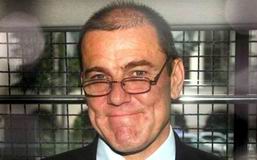 Michael McCrea
Murderer · Singapore · 2002
Michael McCrea was sentenced to 24 years imprisonment on June 29, 2006. · 2 Jan…
2 victims
Michael McCrea
Murderer · Singapore · 2002
Michael McCrea was sentenced to 24 years imprisonment on June 29, 2006. · 2 Jan…
2 victims
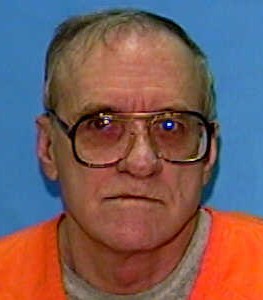 Lloyd Chase Allen
Murderer · USA · 1991
Lloyd Chase Allen was convicted and sentenced to death for the November 13, 199…
1 victim
Lloyd Chase Allen
Murderer · USA · 1991
Lloyd Chase Allen was convicted and sentenced to death for the November 13, 199…
1 victim
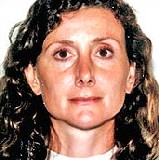 Susan Cummings
Homicide · USA · 1997
Susan Cummings (born c. 1959) was an American heiress. She was convicted of kil…
1 victim
Susan Cummings
Homicide · USA · 1997
Susan Cummings (born c. 1959) was an American heiress. She was convicted of kil…
1 victim
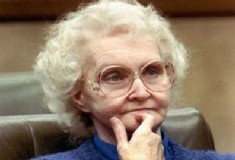 Dorothea Puente
Serial killer · USA · 1982
Dorothea Puente was a convicted serial killer. In Sacramento, California, she r…
9 victims
Dorothea Puente
Serial killer · USA · 1982
Dorothea Puente was a convicted serial killer. In Sacramento, California, she r…
9 victims
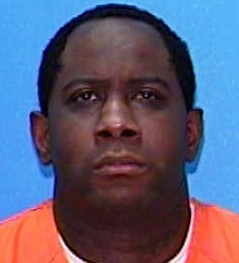 Steven Maurice Evans
Murderer · USA · 1996
Steven Maurice Evans was born on 07/31/67. The case was in the Ninth Judicial C…
1 victim
Steven Maurice Evans
Murderer · USA · 1996
Steven Maurice Evans was born on 07/31/67. The case was in the Ninth Judicial C…
1 victim
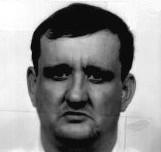 David Wayne Stoker
Murderer · USA · 1986
David Wayne Stoker (born October 26, 1987 referenced in the record as “David St…
1 victim
David Wayne Stoker
Murderer · USA · 1986
David Wayne Stoker (born October 26, 1987 referenced in the record as “David St…
1 victim
- Gender
- male
- Country
- USA
- Location
- New York, USA
- Date of birth
- 1955
- Age at first offence
- 25
- Characteristics
- history of mental illness, police officer, domestic violence, rape, convicted rapist
- Victim profile
- Glenn Dunn, 14 / Harold Green, 32 / Emmanuel Thomas, 30 / Joseph McCoy / Parler Edwards, 71 / Ernest Jones, 40 / Luis Rodriguez, 19 / Antone Davis, 30 / Richard Renner, 20 / "John Doe" / Roger Adams, 31 / Wendell Barnes, 26
- Method of murder
- Shooting / St abbing with knife
- Date(s) of murder
- September-December 1980
- Years active
- 1980
- Date of arrest
- January 18, 1981
- Status
-
Life imprisonment
Sentenced to life in prison on November 14, 1985
Case record: Joseph Christopher
Background
Joseph Christopher was a 25-year-old Army private when he was arrested at Fort Benning. He had joined the army on November 13 and arrived at Fort Benning six days later. He was absent on leave from December 19 to January 4, with a bus ticket recording his arrival in Manhattan on December 20.
On May 6, 1981, Christopher was hospitalized with self-inflicted wounds. Four days later, he was charged with three of the local shooting deaths, and a fourth murder count was added on June 29. Additional charges were also brought relating to non-fatal Buffalo stabbings in December 1980 and January 1981.
Christopher was an involuntary patient at the Mid-Hudson State Psychiatric Center and requested release at a court hearing at the hospital.
At one point, a State Supreme Court justice in Erie County, William Flynn, had sent Christopher to the hospital after finding him mentally unfit to understand the nature of the crimes he was charged with or to participate in his own defense. Benjamin Altman, an acting State Supreme Court justice in Manhattan, made the same ruling 10 days earlier based on evidence from the Erie County decision.
The director of the Mid-Hudson State Psychiatric Center, Dr. Erdogan Tekben, later said that Christopher was mentally competent to stand trial.
The offence
Christopher launched a one-man war against blacks in September 1980, leaving victims from upstate New York to southwestern Georgia. Four black victims were killed with the same gun. The authorities described the incidents as racially motivated attacks.
The war began September 22, when 14-year-old Glenn Dunn was shot and killed outside a Buffalo supermarket. The victim had been sitting in a stolen car when he died, and witnesses described his assailant as an unidentified “white youth.”
The following day, 32-year-old Harold Green was shot while dining at a fast-food restaurant in suburban Cheektowaga. That night, Emmanuel Thomas, age 30, was killed by a sniper while crossing the street to his home, seven blocks from the scene of Dunn’s murder.
On September 24, the action shifted to nearby Niagara Falls, with the murder of a fourth black victim, Joseph McCoy. Investigators found that all four victims were killed with the same gun.
On October 8, 71-year-old Parler Edwards, a black taxi driver, was found in the trunk of his car, parked in suburban Amherst; his heart had been cut out and carried from the scene.
Next day, another black cabbie, 40-year-old Ernest Jones, was found beside the Niagara River in Tonawanda, with the heart ripped from his chest. His blood-spattered taxi was retrieved by police in Buffalo, three miles away.
On October 10, a black patient, 37-year-old Collin Cole, was recuperating from illness when a white stranger appeared at his bedside and snarled, “I hate niggers.” A nurse’s arrival saved Cole from death by strangulation, but his condition was listed as serious, with severe damage done to his throat. Descriptions of the would-be strangler roughly matched eyewitness reports on the “.22-caliber killer.”
On December 22, in Manhattan, five blacks and one Hispanic victim were stabbed in less than thirteen hours, with four of them killed. John Adams, 25 years old, was the first to fall, narrowly escaping death when he was knifed by a white assailant around 11:30 a.m. Two hours later, 32-year-old Ivan Frazier was accosted on the street, deflecting a blade with his hand, sustaining minor injuries before he fled on foot.
The next four victims were less fortunate. Messenger Luis Rodriguez, 19, was stabbed to death around 3:30 p.m. in what police described as “an apparent holdup.” No motive was suggested in the deaths of 30-year-old Antone Davis, knifed around 6:50 p.m., or 20-year-old Richard Renner, killed less than four hours later. The last victim, discovered just before midnight, was a black “John Doe” stabbed to death on the street near Madison Square Garden.
Police were searching for the “Midtown Slasher” when 31-year-old Roger Adams, a black man, was stabbed to death in Buffalo on December 29. Wendell Barnes, 26, was fatally wounded in Rochester on December 30. Albert Menefee survived the next day after receiving a thrust that nicked his heart.
On January 1, Larry Little and Calvin Crippen survived separate attacks, fighting off their white assailant with only minor injuries.
On January 6, police announced that the recent stabbings were “probably linked” with Buffalo’s unsolved “.22-caliber shootings,” but they seemed no closer to a suspect.
In the United States sentencing and trial proceedings described in the material, Christopher was convicted on murder counts connected to the slayings of the Buffalo victims and later convicted for the Manhattan stabbing death of Luis Rodriguez and the attempted murder wounding of Ivan Frazier.
Investigation
Authorities described quantities of .22-caliber ammunition, a gun barrel, and two sawed-off rifle stocks after a search of Christopher’s former residence near Buffalo.
The case broke in Georgia when Christopher was arrested at Fort Benning.
During his opening statement, Assistant District Attorney James Fogel told the jury that while hospitalized at Fort Benning, Ga., after trying to kill a black fellow Army recruit, Private Christopher bragged to nurses that he had killed black men in Buffalo and New York City.
The defense attorney, Richard Siracusa, told the jury of seven women and five men that Christopher should be acquitted because “he is not a well person, his vision of reality has nothing to do with ours.”
Arrest
Joseph G. Christopher was arrested at Fort Benning. He was charged with slashing a black GI.
Trial
Christopher waived his right to a jury trial in Buffalo in October 1981 and placed his fate in the hands of a judge.
In October 1981 he waived his right to a jury trial. A later ruling found him mentally incompetent for trial, but the ruling had been reversed by April 1982.
On April 27, after twelve days of testimony, Christopher was convicted on three counts of first-degree murder, with a prison term of 60 years to life.
In February 1982, Dr. Erdogan Tekben’s statement had opened the way for the return of Christopher to Erie County, where he faced murder charges in separate shootings of three men in Buffalo, and he could be tried in New York City where he was accused of fatally stabbing a teen-age boy and injuring another man. He also was indicted for a homicide in Niagara Falls.
Christopher pleaded not guilty to all five homicide charges. At the Orange County Court, Judge Gerald Delaney postponed a decision on Christopher’s request for release because it appeared he would be returned anyway to Erie County in light of Dr. Tekben’s statement.
In Manhattan, a jury rejected Christopher’s insanity plea, convicting him in the murder of Luis Rodriguez and the wounding of Ivan Frazier.
In September 1983, Christopher sat for an interview with Buffalo journalists. He estimated that his murder spree had claimed a minimum of thirteen lives. Reporters noted that he “did not deny” the grisly murders of Parler Edwards and Ernest Jones, but no charges had yet been filed in those cases.
Sentencing
After convictions, sentencing was set for Nov. 14.
Christopher was sentenced to life terms in May 1982 after being convicted of fatally shooting three black men in Buffalo in September 1980.
Buffalo convictions were overturned in July 1985 after the trial judge had barred the defense from presenting expert psychiatric testimony about Christopher’s fitness to stand trial.
Despite that overturning, sentencing proceeded, and Christopher was sentenced to life in prison on November 14, 1985.
Appeals
In July 1985, Christopher’s Buffalo conviction was overturned on the grounds that the judge had improperly barred testimony pointing toward mental incompetence.
Outcome
Christopher was convicted in connection with the murders in Buffalo in September 1980 and the Manhattan stabbing death of Luis Rodriguez and the wounding of Ivan Frazier. He was sentenced to life in prison on November 14, 1985.
Spotted an error, or have more information about this case?