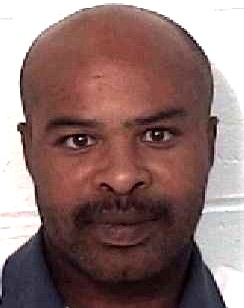
Lawrence Jefferson
Murderer Brian Kevin Rosenfeld
Murderer · USA · 1985
Brian Kevin Rosenfeld Brian Kevin Rosenfeld was sentenced to three concurrent l…
23 victims
Brian Kevin Rosenfeld
Murderer · USA · 1985
Brian Kevin Rosenfeld Brian Kevin Rosenfeld was sentenced to three concurrent l…
23 victims
 Marvin Gray
Murderer · USA · 1975
Marvin Gray was convicted killer who claimed responsibility for 23 slayings and…
23 victims
Marvin Gray
Murderer · USA · 1975
Marvin Gray was convicted killer who claimed responsibility for 23 slayings and…
23 victims
 Yahweh ben Yahweh
Murderer · USA · 1980
Yahweh ben Yahweh was born and legally named Hulon Mitchell Jr. (October 27, 19…
23 victims
Yahweh ben Yahweh
Murderer · USA · 1980
Yahweh ben Yahweh was born and legally named Hulon Mitchell Jr. (October 27, 19…
23 victims
 Russell Ellwood
Murderer · USA · 1991
Russell Ellwood was a former taxi driver. Authorities suspected him of killing…
20 victims
Russell Ellwood
Murderer · USA · 1991
Russell Ellwood was a former taxi driver. Authorities suspected him of killing…
20 victims
 Kimberly McCarthy
Murderer · USA · 1988
Kimberly LaGayle McCarthy was convicted in Dallas, Texas, of capital murder inv…
3 victims
Kimberly McCarthy
Murderer · USA · 1988
Kimberly LaGayle McCarthy was convicted in Dallas, Texas, of capital murder inv…
3 victims
 Jeffery Motley
Murderer · USA · 1984
Offender: Jeffery (Jeffrey Dean) Motley · Case number: 3 F.3d 781; Jeffrey Dean…
1 victim
Jeffery Motley
Murderer · USA · 1984
Offender: Jeffery (Jeffrey Dean) Motley · Case number: 3 F.3d 781; Jeffrey Dean…
1 victim
 Duane Earl Pope
Murderer · USA · 1965
Duane Earl Pope (born 1943) was convicted in connection with a bank robbery at…
3 victims
Duane Earl Pope
Murderer · USA · 1965
Duane Earl Pope (born 1943) was convicted in connection with a bank robbery at…
3 victims
 Patty Michelle White
Murderer · USA · 2011
Patty Michelle White killed her former roommate, Michele O'Dowd, and later plea…
1 victim
Patty Michelle White
Murderer · USA · 2011
Patty Michelle White killed her former roommate, Michele O'Dowd, and later plea…
1 victim
 Jessica McCord
Murderer · USA · 2002
Jessica McCord and her ex-husband Alan Bates had a bitter divorce and an even m…
2 victims
Jessica McCord
Murderer · USA · 2002
Jessica McCord and her ex-husband Alan Bates had a bitter divorce and an even m…
2 victims
- Gender
- male
- Country
- USA
- Location
- Cobb County, Georgia, USA
- Date of birth
- 1955
- Age at first offence
- 30
- Characteristics
- armed robbery, rape?, robbery, mentally ill
- Victim profile
- Edward Taulbee, 37 (his construction job supervisor)
- Method of murder
- Beating with a stick and then his skull was crushed with a 40-pound tree trunk
- Date(s) of murder
- May 1, 1985
- Years active
- 1985
- Date of arrest
- Next day
- Status
-
Sentenced to death
Sentenced to death on March 17, 1986
Case record
Identifiers
Lawrence Joseph Jefferson (42) was convicted of felony murder during the commission of an armed robbery and was sentenced to death.
Background
In 1979, Lawrence Jefferson pleaded guilty in Louisville to armed robbery and burglary.
The offence
Soon after 4:00 p.m. on May 1, 1985, Jefferson and co-worker Edward Taulbee quit work for the day and went to Lake Allatoona in Taulbee's car to do some fishing. Later that evening, Jefferson returned home alone in Taulbee's car. A neighbor observed clothes soaking in Jefferson's bathtub and discovered that Jefferson's wallet contained some $100 in cash, although he had not yet cashed his paycheck. The neighbor testified that Jefferson told him "his little fat buddy was dead."
Another neighbor testified that he took Jefferson to Lake Allatoona later that night, and that Jefferson disappeared into some woods and returned a few minutes later carrying a fishing pole and tackle box. The neighbor testified that Jefferson then took him to an automatic teller machine where Jefferson, asking whether it took "pictures," put on a straw hat and sunglasses and attempted to make a cash withdrawal. Jefferson subsequently gave Taulbee's bank card to a third neighbor and told her to get rid of it. The bank card was recovered from the neighbor's window air-conditioning unit.
On the morning of May 2, 1985, Taulbee's body was discovered lying face down in some woods near Lake Allatoona. A large log lay across his head, and two large wooden sticks lay nearby, one of which was shattered and had hair and blood on it. The victim's pockets were empty except for his paycheck receipt.
Jefferson admitted to the police that he owed the victim some money. Although Jefferson denied killing him, he stated that "[Taulbee] did not need to be around other people, that he wanted to be executed, and that he wanted to be put to sleep."
Edward Taulbee (37) was murdered, and the conviction was based on felony murder during the commission of an armed robbery. The sufficiency of the evidence was not questioned on appeal.
Investigation and arrest
Law enforcement investigated the homicide and Jefferson admitted owing Taulbee some money. Jefferson's statement included:
- "[Taulbee] did not need to be around other people, that he wanted to be executed, and that he wanted to be put to sleep."
Trial
The appeal addressed multiple alleged errors in jury selection and evidentiary rulings.
Jefferson contended the trial court should have granted his challenges to the grand and petit jury arrays. The racial percentages of the jury lists were essentially the same as those dealt with in Cook v. State. The contention regarding comparative disparity was addressed in Cook. The trial court found as a matter of fact that Jefferson failed to establish the cognizability of any group of young persons, and the record supported this finding.
Jefferson contended that three prospective jurors were improperly excused for bias against the death penalty. The issue was evaluated under Wainwright v. Witt. The prospective juror Newkirk testified that she could not "honestly" say whether she could conscientiously oppose capital punishment and that she would not automatically vote against a death sentence. She subsequently testified that, although she would try to be fair and impartial, she was "in general" opposed to the death penalty, that she would "just hate" to consider it, and that her feelings about the death penalty would "substantially impair" her performance. When asked by the defense whether she could vote for a death sentence, she stated that she hated to give a yes or no answer but that if pressed she would say no, and if given a choice as to sentence, she "guess[ed]" she would "say life." The appellate court rejected the argument that this was only "qualms" about capital punishment and held the trial court did not err in excusing the juror.
Prospective juror Williamson equivocated about her ability to impose a death sentence, stating she could "change her mind," particularly if the victim were a member of her family or someone she "loved very deeply." She ultimately stated, "I wouldn't want him to have the death penalty. I don't think I could live with it if I sentenced somebody to the death penalty . . . I wouldn't want to make that decision." The appellate court held that the excusal issue was within the deference due to the trial judge and that the juror was properly excused under the Wainwright v. Witt standard.
Prospective juror Beck testified that he was conscientiously opposed to capital punishment and answered, "Yes sir, I believe I would." The appellate court rejected the contention that Beck's testimony was too "equivocal, uncertain and qualified" to justify excusal and held the excusal was proper.
Jefferson also argued one prospective juror should have been excused because she said, "I don't like the appearance of the accused." The appellate court held Jefferson did not object on this ground at trial, and in view of her testimony that she had formed and expressed no opinion on guilt or innocence, the trial court did not err by failing to excuse her.
Jefferson contended that OCGA 15-12-164 (a) (4) did not state the proper test for disqualification and was unconstitutional. The statute required the question: "Are you conscientiously opposed to capital punishment?" The appellate court held Jefferson lacked standing because no juror was excused simply for answering affirmatively or declared competent for answering negatively.
Jefferson also argued that failure to give a requested instruction was reversible error; the appellate court held it was not where the charge given substantially covered the principles of law.
Jefferson argued the trial court erred by refusing to exclude a state's witness for alleged violation of the rule of sequestration. The appellate court held exclusion was not an appropriate remedy, and that the trial court had instructed the jury that violations could be considered in evaluating credibility.
Jefferson argued the trial court erred by allowing the state to buttress testimony with prior consistent statements; the appellate court held it was not error.
Sentencing
At sentencing, the jury found statutory aggravating circumstances that:
- the murder was committed while the offender was engaged in the commission of another capital felony; and
- the murder was outrageously or wantonly vile, horrible or inhuman in that it involved an aggravated battery to the victim.
The jury convicted Jefferson of murder during the commission of an armed robbery, and the appellate court held the evidence supporting the conviction supported the jury's capital felony aggravating circumstance finding. For the aggravated battery aggravating circumstance, the evidence showed Jefferson severely beat the victim in the face with a heavy stick and finished him off by crushing his skull with a log after the victim had fallen to the ground.
The appellate court held the sentence was not imposed as the result of passion, prejudice, or other arbitrary factor and that the sentence of death was neither excessive nor disproportionate considering the crime and the defendant.
Evidence of prior criminal activity offered during sentencing
In the Louisville, Kentucky proceedings described in the sentencing portion of the appeal, Officer William Hubble testified that on November 2, 1979, his home was burglarized and several pistols were taken, including a nickel-plated .45 calibre Colt revolver with black pearl grips. A juvenile committed the burglary and sold the guns. The nickel-plated .45 was recovered five days later on November 7, 1979, after having been used in several armed robberies on that day.
Cosby Powell, manager of a Bonded gas station in Louisville, testified that early in the afternoon of November 7, 1979, Lawrence Jefferson pointed a "chrome-plated .45" at his face and said, "This is a holdup." Powell testified that Jefferson was accompanied by three other black males who stood by in the immediate vicinity without taking overt part in the robbery.
Mrs. Rosalynn Gail Hart, cashier at a Gulf station in Louisville, testified that later that same afternoon she observed Jefferson pumping gas into an automobile. Some time thereafter, another black male pointed a "silver gun" with a "dark handle" at her and demanded her money. She pulled the alarm, ducked under the counter, and called her manager. The man fired the gun and left.
Detective Hurst investigated these two robberies and a third at another Bonded station two miles from the Gulf station when he received word that an automobile fitting the description of the car reportedly used by the robbers had been stopped. Inside the car were four black males including Jefferson and the person identified by Hart as the man who had pulled the gun on her. The .45 revolver belonging to Officer Hubble was recovered from the automobile, and sums of money were recovered from several occupants, including $180 from Jefferson.
Detective Hurst was questioned about state's exhibit 81, which consisted of three bench warrants issued for Jefferson from the district court of Jefferson County, Kentucky—one issued in connection with a traffic offense (failure to maintain insurance), one for nonsupport, and one relating to a burglary charge. Hurst explained that bench warrants were generally issued in response to a defendant's failure to appear in answer to the charges. On cross-examination, defense showed a document establishing that Jefferson received a probated sentence on the burglary charge on a date preceding by several months the issuance of the bench warrant. Hurst explained that the district court handled misdemeanor offenses and that Jefferson probably had been allowed to plead guilty in exchange for having the burglary charge treated as a misdemeanor, and that the bench warrant would have been issued for Jefferson's noncompliance with probation terms and conditions.
State's exhibit 75 included a copy of a six-count indictment charging four defendants including Jefferson with three counts of armed robbery, one count of receiving stolen property (Officer Hubble's .45 pistol), and one count of possession of LSD, and charging one of Jefferson's co-defendants as a repeat offender. The exhibit showed on its face that the grand jury no-billed the possession-of-LSD count (Count 5). Exhibit 75 also included a copy of Jefferson's guilty plea on Count one charging robbery of the Bonded station managed by Cosby Powell. The plea document showed that, in exchange for the guilty plea, charges in Counts 2, 3, and 4 were dropped.
Jefferson argued the trial court erred in allowing references in state's exhibits to unproven criminal charges. The appellate court held the state did not simply offer evidence that Jefferson had been indicted; four witnesses testified relating to crimes charged in counts 1 through 4. The appellate court held a prior crime may be proven in aggravation despite the lack of a conviction so long as there had not been a previous acquittal. The appellate court held counts 5 and 6 should have been deleted but found no reversible error absent a proper objection, and held that showing the jury a count marked "no-billed" and another count not even charging the defendant did not result in a death sentence imposed due to passion, prejudice, or other arbitrary factor.
As for state's exhibit 81, the state offered it solely to prove that Jefferson came to Georgia while three Kentucky bench warrants were outstanding and to show his conduct in failing to appear, as relevant to character, not to prove actual commission of crimes referred to in the warrants. The court gave limiting instructions consistent with that proffer, instructing the jury that the exhibit was not allowed to prove the truth of the charges in the documents but only for the limited purpose asserted by the state. The appellate court held no error in view of the limiting instructions and the defendant's own evidence establishing he committed the only serious crime referred to in the bench warrants, the burglary.
Appeals
Jefferson appealed his conviction and death sentence. The appellate court affirmed the conviction and reviewed enumerations of error relating to jury challenges, constitutional challenges to voir dire procedures, requested jury instructions, sequestration, prior consistent statements, sentencing-phase evidence, and the statutory aggravating circumstances.
On motion for reconsideration, Jefferson raised three additional grounds. The appellate court evaluated them under OCGA 17-10-35 and denied the motion.
On reconsideration, A) Jefferson argued that because the jury failed to find intent to kill (having convicted him of felony murder), his death sentence was constitutionally excessive and disproportionate under Enmund v. Florida. The appellate court rejected an interpretation that Enmund prohibited death in all felony-murder cases and held that Jefferson himself directly committed murder.
B) Jefferson argued it was unconstitutional to allow the armed robbery to serve both as a basis for felony murder conviction and as a statutory aggravating circumstance. The appellate court held the argument was incorrect and explained that a second plane is established by the b (2) circumstance separating from all felony murder cases those in which the penalty of death is possible. The appellate court held the two statutory aggravating circumstances justified the death sentence in view of Jefferson's prior record of conviction for armed robbery.
C) The appellate court stated it did not need to address a claim that if the b (2) finding were constitutionally defective, reversal would be required despite a valid b (7) finding, citing Zant v. Stephens.
The Motion for Reconsideration was denied.
Outcome
The appellate court affirmed the conviction and upheld the sentence of death.
Timeline
- 1979 — Jefferson pleaded guilty in Louisville to armed robbery and burglary.
- May 1, 1985 — Jefferson and Edward Taulbee went fishing at Lake Allatoona in Taulbee's car; later Jefferson returned home alone in Taulbee's vehicle.
- May 2, 1985 — Taulbee's body was discovered near Lake Allatoona.
- March 17, 1986 — Jefferson was sentenced to death.
- March 9, 1986 — Jefferson was sentenced to death.
- March 31, 1986 — A motion for new trial was filed.
- June 18, 1986 — The motion was amended.
- June 20, 1986 — The motion was heard and denied.
- July 10, 1986 — A notice of appeal was filed.
- July 31, 1986 — The case was docketed in this court.
- October 20, 1986 — The case was orally argued.
- May 1987 — A federal habeas petition regarding Jefferson’s sentence was granted, with the federal court finding ineffective assistance of counsel in failing to investigate and present mental health evidence.
- Aug. 13, 2007 — A brief from the state in answer to the federal finding was due.
- March 3, 1987 — The case was decided; reconsideration was denied later in March.
- March 24, 1987 — Reconsideration was denied.
Other details
Sentence review statutory findings
The appellate court referenced OCGA 17-10-30 (b) (2) and (b) (7), and OCGA 17-10-35 (c) (1) and (c) (3).
Trial court and named attorneys
The trial was in Cobb Superior Court before Judge Cauthorn. The appellate decision listed:
- Thomas J. Charron, District Attorney, Michael J. Bowers, Attorney General, and J. Michael Davis, Assistant Attorney General, for appellee.
- Kearns & Reeves and Ralph W. Kearns, Jr., for appellant.
Procedural and jury selection details included in the appeal
Jefferson raised numbered enumerations of error, and the appellate court addressed each as described in the discussion:
- challenges to grand and petit jury arrays,
- excusal of jurors for bias against the death penalty,
- failure to excuse a juror who said, "I don't like the appearance of the accused,"
- constitutionality and application of OCGA 15-12-164 (a) (4),
- failure to give requested instructions,
- sequestration rule violation and remedy,
- prior consistent statements used to buttress testimony,
- admission of sentencing exhibits 75 and 81 and the handling of counts marked no-billed and unproven criminal charges.
Federal habeas and state response
A federal habeas petition regarding Jefferson’s sentence was granted in May, with the federal court finding ineffective assistance of counsel in failing to investigate and present mental health evidence. A brief from the state in answer to the finding was due Aug. 13, 2007.
Spotted an error, or have more information about this case?