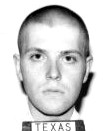
Raymond Levi Cobb
Homicide
2known / alleged victims
Similar offenders
 Hu Wanlin
Homicide · China · 1997
Hu Wanlin (胡万林), born 1949, was from Mianyang, Sichuan Province. · 1993 — While…
146 victims
Hu Wanlin
Homicide · China · 1997
Hu Wanlin (胡万林), born 1949, was from Mianyang, Sichuan Province. · 1993 — While…
146 victims
 Jack Kevorkian
Homicide · USA · 1990
Jack Kevorkian (born May 26, 1928) was a controversial American pathologist. He…
130 victims
Jack Kevorkian
Homicide · USA · 1990
Jack Kevorkian (born May 26, 1928) was a controversial American pathologist. He…
130 victims
 David Koresh
Homicide · USA · 1993
David Koresh (born Vernon Wayne Howell; August 17, 1959 – April 19, 1993) led t…
79 victims
David Koresh
Homicide · USA · 1993
David Koresh (born Vernon Wayne Howell; August 17, 1959 – April 19, 1993) led t…
79 victims
 Leszec Pekalski
Homicide · Poland · 1984
1984–1992 — Leszek Pękalski was believed to have killed at least 17 people. · 1…
17 victims
Leszec Pekalski
Homicide · Poland · 1984
1984–1992 — Leszek Pękalski was believed to have killed at least 17 people. · 1…
17 victims
 Todd Hall
Homicide · USA · 1996
Todd Hall was described by neighbors as "mentally slow" and was said to have su…
9 victims
Todd Hall
Homicide · USA · 1996
Todd Hall was described by neighbors as "mentally slow" and was said to have su…
9 victims
RA
Ray Martin DeFord
Homicide · USA · 1996
Ray Martin DeFord, a minor child, appealed a juvenile court judgment finding hi…
8 victims
Random profiles
 Charles Jason Baldwin
Homicide · USA · 1993
Charles Jason Baldwin was born April 11, 1977. At the time of his arrests, Jaso…
3 victims
Charles Jason Baldwin
Homicide · USA · 1993
Charles Jason Baldwin was born April 11, 1977. At the time of his arrests, Jaso…
3 victims
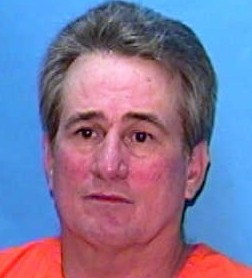 Ken Eldon Lott
Murderer · USA · 1994
Defendant: Ken Eldon Lott Date of birth: 02/14/53 Jurisdiction: Ninth Judicial…
1 victim
Ken Eldon Lott
Murderer · USA · 1994
Defendant: Ken Eldon Lott Date of birth: 02/14/53 Jurisdiction: Ninth Judicial…
1 victim
 Susan Wright
Murderer · USA · 2003
Susan Lucille Wright (also described as Susan Lucille Wyche; born April 24, 197…
1 victim
Susan Wright
Murderer · USA · 2003
Susan Lucille Wright (also described as Susan Lucille Wyche; born April 24, 197…
1 victim
TH
Thomas Carr
Murderer · USA · 1860
Thomas D. Carr was executed by hanging on March 24, 1870. He was the first pers…
15 victims
 John Salvi
Murderer · USA · 1994
John C. Salvi III (March 2, 1972 – November 29, 1996) was identified as an anti…
2 victims
John Salvi
Murderer · USA · 1994
John C. Salvi III (March 2, 1972 – November 29, 1996) was identified as an anti…
2 victims
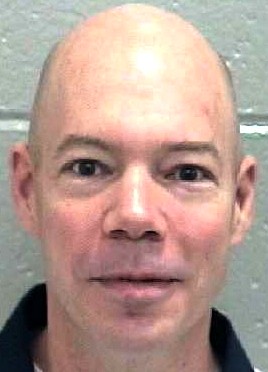 Robert Dale Conklin
Murderer · USA · 1984
Defendant: Robert Dale Conklin · Gender: Male · Race: White · Date of birth: 02…
1 victim
Robert Dale Conklin
Murderer · USA · 1984
Defendant: Robert Dale Conklin · Gender: Male · Race: White · Date of birth: 02…
1 victim
Case Facts
- Gender
- male
- Country
- —
- Location
- —
- Date of birth
- J une 18, 1976
- Age at first offence
- 17
- Characteristics
- juvenile (17), kidnapping, robbery
- Victim profile
- Margaret Lorraine Owings, 23, and her daughter Kori Rae, 16-month-old
- Method of murder
- St abbing with knife / Buried alive Loca tion : Walker County, Texas, USA
- Date(s) of murder
- December 27, 1993
- Years active
- 1993
- Date of arrest
- November 1995
- Status
-
Life imprisonment
Commuted to life in prison on June 22, 2005
Case Summary
Case record
Parties and case identifiers
- Appellant: Raymond Levi Cobb
- Court: In the Court of Criminal Appeals of Texas
- Case number: No. 72,807
- Trial court: 12th District Court of Walker County
- Judge: Mansfield, J.
- Decision date: delivered March 15, 2000 (PUBLISH)
- Concurring judges: Meyers, Price, Holland, Womack, and Johnson, JJ.
- Dissenting judges: McCormick, P.J., filed a dissenting opinion, in which Keller and Keasler, JJ., joined.
Legal outcome in Texas appellate proceedings
- Appellant, Raymond Levi Cobb, was found guilty of intentionally killing two people in a single criminal transaction. See Tex. Pen. Code 19.03.
- Punishment at trial: assessed at death.
- The Court held that it would reverse the judgment of the trial court and remand the cause for a new trial.
- The Court reversed the judgment because it sustained appellant’s fourth point of error regarding admission of a written statement.
- The Court overruled appellant’s eleventh point of error concerning legal sufficiency of the evidence supporting the jury’s affirmative answer to the first punishment issue on future dangerousness.
Timeline
- December 27, 1993 — A burglary occurred at the Lindsey and Margaret Owings residence in rural Walker County, and appellant intentionally killed Margaret Owings (22) and sixteen-month-old Kori Rae Owings during the course of the burglary.
- Early February 1994 — The sheriff’s office received an anonymous tip that appellant, who resided across the street from the Owings residence, might have been involved in the burglary.
- July 15, 1994 — After further questioning, appellant, then under arrest in an unrelated case, gave a written statement confessing to the burglary.
- August 15, 1994 — Attorney Hal Ridley was appointed to represent appellant in the burglary case.
- September 13, 1995 — Investigators again sought Ridley’s permission to question appellant about the disappearances, and Ridley gave permission; appellant again denied involvement.
- November 11, 1995 — Appellant’s father, Charles Cobb, telephoned the Walker County Sheriff’s Office with information that appellant had confessed to him about killing Margaret Owings and burying her body in a wooded area not far from the home.
- November 11, 1995 — Appellant was arrested, Mirandized, and interrogated after Odessa police received and acted on Charles Cobb’s statement; appellant then gave a written statement admitting killing both Margaret and Kori Rae Owings during the burglary.
- November 15, 1995 — The judgment includes references to “delivered March 15, 2000”; the procedural history in the text includes “delivered March 15, 2000” as the appellate delivery date. (The source text contains “delivered March 15, 2000”; no further dated appellate delivery date is introduced.)
- March 15, 2000 — The opinion was delivered.
- June 22, 2005 — Commutation occurred to life in prison (as stated in the case summary).
- 2001 — US Supreme Court case “texas v. cobb, 532 U.S. 162 (2001)” appears in the case summary.
The offence
- Appellant burglarized the Lindsey and Margaret Owings residence in a rural part of Walker County.
- During the burglary, appellant stole a stereo system, a videocassette recorder, and other items.
- The evidence at the guilt/innocence stage established that sometime between 5:45 a.m. and 5:15 p.m., December 27, 1993, appellant burglarized the Owings residence and intentionally killed:
- Margaret Owings, age 22
- Kori Rae Owings, age sixteen months
- The jury found appellant guilty of intentionally killing two people in a single criminal transaction.
- The relevant statutory reference used for the guilt finding was Tex. Pen. Code 19.03.
Background
- Lindsey Owings notified the Walker County Sheriff’s Office that his home had been burglarized and that some of his property had been stolen.
- Lindsey Owings reported that his wife, Margaret, and his daughter, Kori Rae, were missing.
- Appellant resided across the street from the Owings residence.
- Appellant was seventeen years old at the time of the offense.
- The evidence at the punishment stage, viewed in the necessary light, established that appellant had a dangerous personality disorder and lacked any regard for the welfare of others.
Investigation
- The sheriff’s office received an anonymous tip in early February 1994 that appellant might have been involved in the burglary.
- Walker County investigators questioned appellant about the burglary and the disappearances, and appellant denied any involvement.
- Walker County investigators sought Ridley’s permission to question appellant again about the disappearances on two occasions:
- After Ridley’s appointment on August 15, 1994, investigators sought Ridley’s permission; Ridley gave permission only after being assured appellant was not a suspect in the disappearances; appellant denied any involvement.
- On September 13, 1995, investigators again sought Ridley’s permission; appellant again denied any involvement.
- The Walker County investigators received information from Charles Cobb on November 11, 1995 and instructed Charles Cobb to proceed to an Odessa police station to give a statement.
- The Odessa police faxed Charles Cobb’s statement to Walker County, and investigators there used the statement to obtain an arrest warrant, which they faxed back to Odessa.
- The Walker County investigators neglected to inform the Odessa police that appellant had counsel in the burglary case.
Arrest and interrogation
- Odessa police located appellant, arrested him, Mirandized him, and interrogated him.
- After ninety minutes of questioning, appellant gave a written statement in which he admitted killing both Margaret and Kori Rae Owings while in the course of burglarizing their home.
Trial
Guilt/innocence stage
- Appellant was convicted of intentionally killing two people in a single criminal transaction (Tex. Pen. Code 19.03).
Punishment stage: future dangerousness issue
- The jury was asked whether there was a probability that appellant would commit criminal acts of violence that would constitute a continuing threat to society. This was identified as Art. 37.071, 2(b)(1).
- The State had the burden of proving the first punishment issue beyond a reasonable doubt (Art. 37.071, 2(c)).
- Appellant challenged the sufficiency of evidence supporting the jury’s affirmative answer to the first punishment issue. He argued:
- He was only seventeen years old at the time of the offense.
- He had no prior history of violent conduct.
- He had no prior convictions.
- Prosecution witness Dr. Frederick Mears, described as a licensed clinical psychologist, testified in a manner appellant claimed was “inherently unreliable” and thus inadmissible because he did not actually examine appellant.
- Defense witness Dr. Walter Quijano, also described as a licensed clinical psychologist, testified that appellant would not likely be a future danger if imprisoned for life.
- The Court described the standard of review for legal sufficiency and held that a rational jury could have found beyond a reasonable doubt that appellant was dangerous and incorrigible and that the answer to the first punishment issue was “yes.”
- The Court overruled appellant’s eleventh point of error.
Sentencing
- At trial, punishment was assessed at death.
- Appellant sought a new trial or reformation of the sentence from death to imprisonment for life based on eleven points of error.
- The appellate disposition included a reversal and remand for a new trial due to sustained constitutional error.
Appeals
Appellant’s eleventh point of error (future dangerousness)
- Appellant argued that evidence was legally insufficient to support the jury’s affirmative answer to the first punishment issue regarding future dangerousness (Art. 37.071, 2(b)(1)).
- The Court overruled the eleventh point of error.
Appellant’s fourth point of error (admission of a post-indictment statement)
- Appellant contended the trial court erred in admitting, at the guilt/innocence stage, a written statement he gave to police shortly after his arrest.
- Appellant argued that the police obtained the statement in violation of his Sixth Amendment right to counsel because police initiated interrogation without first notifying his counsel of record.
- Appellant cited Michigan v. Jackson and Upton v. State.
- The State argued:
- At the time the police interrogated appellant, the Sixth Amendment right to counsel had not yet attached.
- In the alternative, even if the right had attached, it had been waived because defense counsel allowed police to interrogate appellant without counsel being present on two previous occasions.
Constitutional analysis and application by the Court
- The Court recited Sixth Amendment right to counsel principles, including attachment of the right at initiation of adversarial proceedings and that interrogation can be a “critical stage.”
- The Court described rules that once the right to counsel attaches and is invoked, waiver during police-initiated interrogation is ineffective unless counsel has first given permission (Michigan v. Jackson).
- The Court also referenced that once the right attaches to the offense charged, it attaches to closely related offenses factually (State v. Frye; Upton v. State; United States v. Arnold; and cited treatise material).
- The Court described imputation of state knowledge across state actors, using the Michigan v. Jackson rule that police may not claim ignorance of a request for counsel to another state actor (court).
- Applying the rules, the Court reasoned:
- Once appellant was indicted for the Owings burglary, his Sixth Amendment right to counsel attached to that offense and to the capital murder offense, described as factually interwoven with the burglary.
- When appellant accepted Ridley’s appointment as counsel, the Odessa police had an obligation to contact Ridley and get his permission before questioning appellant about the disappearances.
- Odessa police failed to do that; therefore, the written statement obtained during interrogation was inadmissible in the prosecution’s case-in-chief.
- The Court rejected the relevance of Ridley’s two permissions to Walker County investigators, stating the record did not suggest Ridley’s permission was continuing or could have reasonably been interpreted that way.
Harmless error
- Having found constitutional error, the Court analyzed harmlessness under Chapman v. California and Texas Rule of Appellate Procedure 44.2(a).
- The Court concluded that appellant’s statement was incriminating and central to the prosecution’s case against him.
- The Court found a reasonable likelihood existed that admission of the statement materially affected the jury’s deliberations.
- The Court sustained appellant’s fourth point of error.
Final appellate disposition
- The Court reversed the judgment of the trial court and remanded the case for a new trial.
- Because the Court reversed based on the fourth point of error, it stated it did not need to address the remaining points of error.
Outcome
- Appellant was initially found guilty of intentionally killing two people in a single criminal transaction and was sentenced at trial to death.
- The Court of Criminal Appeals of Texas reversed the trial court’s judgment and remanded for a new trial.
Aftermath
- Commutation occurred to life in prison on June 22, 2005, as stated in the case summary.
- The case summary references “US Supreme Court texas v. cobb, 532 U.S. 162 (2001).”
- The case summary includes a statement attributed to McCreary that characterizes Cobb’s account about the baby and a grave:
- "This man claimed that the baby just fell into the grave, and he left it there," McCreary said.
- "And he walked around ... with a cloud over his head because of this."
- The case summary states that lawyers argued to throw out the confession because Cobb had already been indicted for the burglary.


Spotted an error, or have more information about this case?