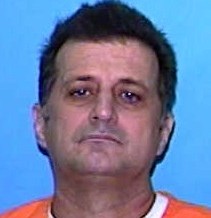
Omar Blanco
Murderer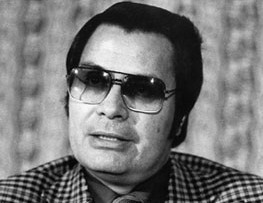 Jim Jones
Murderer · Guyana · 1978
James Warren "Jim" Jones (May 13, 1931 – November 18, 1978) was the American fo…
900 victims
Jim Jones
Murderer · Guyana · 1978
James Warren "Jim" Jones (May 13, 1931 – November 18, 1978) was the American fo…
900 victims
 Dr. Wouter Basson
Murderer · 1992
Wouter Basson (born July 6, 1950) was a South African cardiologist and the form…
230 victims
Dr. Wouter Basson
Murderer · 1992
Wouter Basson (born July 6, 1950) was a South African cardiologist and the form…
230 victims
 Ervil LeBaron
Murderer · USA · 1972
Ervil Morrell LeBaron (1925 to August 16, 1981) was the leader of a polygamous…
35 victims
Ervil LeBaron
Murderer · USA · 1972
Ervil Morrell LeBaron (1925 to August 16, 1981) was the leader of a polygamous…
35 victims
 Ershad Sikder
Murderer · Bangladesh · 1990
Ershad Sikder was an influential political figure in the south-western city of…
30 victims
Ershad Sikder
Murderer · Bangladesh · 1990
Ershad Sikder was an influential political figure in the south-western city of…
30 victims
 Brian Kevin Rosenfeld
Murderer · USA · 1985
Brian Kevin Rosenfeld Brian Kevin Rosenfeld was sentenced to three concurrent l…
23 victims
Brian Kevin Rosenfeld
Murderer · USA · 1985
Brian Kevin Rosenfeld Brian Kevin Rosenfeld was sentenced to three concurrent l…
23 victims
 Bobby Lee Ramdass
Murderer · USA · 1992
Bobby Lee Ramdass was executed by lethal injection in Virginia on December 6, 2…
2 victims
Bobby Lee Ramdass
Murderer · USA · 1992
Bobby Lee Ramdass was executed by lethal injection in Virginia on December 6, 2…
2 victims
 Billy Sunday Birt
Murderer · USA · 1972
Billy Sunday Birt was sentenced to death in 1975, for murder counts connected w…
3 victims
Billy Sunday Birt
Murderer · USA · 1972
Billy Sunday Birt was sentenced to death in 1975, for murder counts connected w…
3 victims
 Michael Anthony Rodriguez
Murderer · USA · 1994
Michael Anthony Rodriguez was executed by lethal injection in Texas on August 1…
2 victims
Michael Anthony Rodriguez
Murderer · USA · 1994
Michael Anthony Rodriguez was executed by lethal injection in Texas on August 1…
2 victims
 Jeffrey Landrigan
Murderer · USA · 1982
Jeffrey Landrigan In December 1989, Chester Dean Dyer was found dead in his apa…
2 victims
Jeffrey Landrigan
Murderer · USA · 1982
Jeffrey Landrigan In December 1989, Chester Dean Dyer was found dead in his apa…
2 victims
 Steven Lorenzo
Murderer · USA · 2003
Steven Lorenzo was sentenced to 200 years in prison on January 28, 2006. A U.S.…
2 victims
Steven Lorenzo
Murderer · USA · 2003
Steven Lorenzo was sentenced to 200 years in prison on January 28, 2006. A U.S.…
2 victims
 Larry Ralston
Serial killer · USA · 1975
Larry Ralston was convicted of the murders of four young women in the 1970s and…
5 victims
Larry Ralston
Serial killer · USA · 1975
Larry Ralston was convicted of the murders of four young women in the 1970s and…
5 victims
- Gender
- male
- Country
- —
- Location
- —
- Date of birth
- J uly 4, 1950
- Age at first offence
- 32
- Characteristics
- —
- Victim profile
- John Ryan
- Method of murder
- Shooting Loca tion : Broward County, Florida, USA
- Date(s) of murder
- January 14, 1982
- Years active
- 1982
- Date of arrest
- Same day
- Status
-
Sentenced to death
Sentenced to death on June 21, 1982; execution stayed in February 1986; second resentencing resulted in sentence of death on January 6, 1995; Florida Supreme Court affirmed sentencing and denials of postconviction relief including denial of the third 3.850 motion on 07/01/03, with the U.S. Supreme Court denying certiorari in 1992 and 1998
Case information
Omar Blanco (also known as Omar Curro) was tried in the Seventeenth Judicial Circuit, Broward County, Florida, in Case #82-453. The defendant’s DOB was 07/04/50. The DC number was 084582. The offense date was 01/14/82. The sentencing judge was The Honorable Stanton S. Kaplan.
The trial and direct appeal attorney was Michael D. Gelety, Esq. The collateral appeals attorney was Ira Still, Esq. (Registry).
The Supreme Court of Florida opinion numbers included 83829, 85518, and SC03-1328.
Timeline
- 01/14/82 — The defendant murdered the victim, John Ryan, by shooting him in Ryan’s home.
- 06/11/82 — The defendant was found guilty of First-Degree Murder and Armed Burglary.
- 06/15/82 — Upon advisory sentencing, the jury recommended that the defendant be sentenced to death for the murder conviction by a vote of 8 to 4.
- 06/21/82 — The defendant was sentenced to death for the murder conviction; he also received 75 years imprisonment for the burglary conviction.
- 1984 — Blanco was convicted of an armed robbery he committed two weeks prior to the murder; the Florida Supreme Court affirmed the convictions and sentences.
- 1985 — The U.S. Supreme Court denied certiorari.
- January 1986 — Governor Graham signed a death warrant.
- February 1986 — The defendant filed a 3.850 motion and asked for a stay of execution; the trial court stayed execution but denied postconviction relief two months later.
- February 1986 — The defendant petitioned the Florida Supreme Court for a writ of habeas corpus.
- May 1986 — The defendant appealed the denial of the 3.850 motion to the court.
- 1987 — In a consolidated opinion, the Florida Supreme Court denied the habeas petition and affirmed the trial court’s denial of the 3.850 motion.
- August 1987 — Governor Martinez signed a second death warrant.
- 1988 — The U.S. District Court, Southern District, granted a stay of execution and remanded the case for a new sentencing hearing.
- 1991 — The U.S. 11th Circuit Court of Appeals affirmed the district court’s decision.
- 1992 — The U.S. Supreme Court denied certiorari on petitions for a writ of certiorari filed by the State and Blanco.
- 1989 — The defendant filed his second 3.850 motion with the trial court.
- 1994 — The trial court denied the second 3.850 motion.
- 05/05/94 — Upon advisory sentencing, the jury recommended that the defendant be sentenced to death for the murder conviction by a vote of 10 to 2.
- 01/06/95 — The defendant was sentenced to death for the murder conviction.
- 1997 — The Florida Supreme Court rejected two claims presented on appeal following resentencing and affirmed the trial court’s ruling; the court affirmed the sentence on Blanco’s second direct appeal; the U.S. Supreme Court denied certiorari in 1998.
- 1998 — The U.S.
- 07/01/03 — Blanco’s third 3.850 motion was denied.
- 07/31/03 — Blanco filed an appeal of that decision in the Florida Supreme Court.
Background
Blanco was identified as the perpetrator by the victim’s 14-year-old niece, Thalia Vezos. The defendant’s armed robbery conviction from 1984 related to an armed robbery committed two weeks prior to the murder.
The offence
On or about 01/14/82, Blanco murdered John Ryan by shooting him to death in Ryan’s home.
Thalia Vezos, the victim’s 14-year-old niece, testified that at approximately 11 p.m. on January 14, 1982, she was in bed in her Ft. Lauderdale home when she saw a man standing in the hallway holding a gun and carrying a brown wallet-type object under his arm. Vezos testified that the man indicated she was to keep quiet, cut the wires to her telephone, and left the room. Vezos then saw Ryan appear in the hall and try to take the gun from the intruder. Ryan was shot in the scuffle and landed on top of Vezos. The intruder shot six more times and then fled.
A man’s purse containing Blanco’s ID papers and a watch belonging to Vezos was found near the door to Vezos’ bedroom.
Investigation, BOLO, stop, and arrest
Police responding to a BOLO stopped Blanco while he was riding a bicycle and arrested him shortly after the intruder fled.
On the day following the murder, Vezos identified Blanco in a lineup as the perpetrator.
Trial
On 06/11/82, the defendant was found guilty of First-Degree Murder and Armed Burglary.
Advisory sentencing (first sentencing)
At advisory sentencing on 06/15/82, the jury recommended that the defendant be sentenced to death for the murder conviction. The jury recommendation was by a vote of 8 to 4.
On 06/21/82, the defendant was sentenced to death for the murder conviction. He also received 75 years imprisonment for the burglary conviction.
Appeals
Blanco appealed the murder conviction and sentence to the Florida Supreme Court. He also appealed the armed burglary conviction and sentence to the Fourth District Court of Appeals the same year. The DCA transferred the case to the Supreme Court, and the Supreme Court consolidated it with the murder appeal. The court affirmed the convictions and sentences in 1984. The U.S. Supreme Court denied certiorari in 1985.
Postconviction and habeas proceedings surrounding the first death warrant
Governor Graham signed a death warrant in January 1986. That same month, the defendant filed a 3.850 motion with the trial court and asked the court for a stay of execution. The trial court in February 1986 stayed the execution but denied postconviction relief two months later.
The defendant petitioned the Florida Supreme Court for a writ of habeas corpus in February 1986 and appealed the denial of the 3.850 motion to the court in May of that year. In a consolidated opinion, the court in 1987 denied the habeas petition and affirmed the trial court’s denial of the 3.850 motion.
Governor Martinez signed a second death warrant in August 1987. Blanco petitioned the U.S. District Court, Southern District, for a writ of habeas corpus. The court granted a stay of execution and in 1988 remanded the case for a new sentencing hearing. The State appealed the decision to the U.S. 11th Circuit Court of Appeals and Blanco filed a cross-appeal. In 1991, the court affirmed the district court’s decision.
Both parties then petitioned the U.S. Supreme Court for a writ of certiorari, and both petitions were denied in 1992.
Second 3.850 motion and resentencing
Blanco filed his second 3.850 motion with the trial court in 1989, and the court denied it in 1994.
In his appeal to the Florida Supreme Court, Blanco presented two claims: (1) that the trial court erred in denying the motion, and (2) that the trial court erred in denying the motion to recuse the judge. The appeal was held in abeyance pending the outcome of Blanco’s resentencing.
Resentencing
At advisory sentencing on 05/05/94, the jury recommended that the defendant be sentenced to death for the murder conviction by a vote of 10 to 2.
On 01/06/95, the defendant was sentenced to death.
Outcome after resentencing and later collateral proceedings
The Supreme Court in 1997 rejected both claims and affirmed the trial court’s ruling following the resentencing in 1995. The defendant filed his second direct appeal with the Florida Supreme Court in 1995, and the court affirmed the sentence in 1997.
The U.S.
Blanco filed his third 3.850 motion in 1999, and it was denied on 07/01/03. Blanco filed an appeal of that decision in the Florida Supreme Court on 07/31/03.
Other details
Blanco was convicted in 1984 of an armed robbery he committed two weeks prior to the murder.
Spotted an error, or have more information about this case?