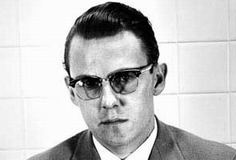
Joseph Corbett
Murderer Frank Lee Smith
Murderer · USA · 1960
Frank Lee Smith died in prison on January 30, 2000. He was exonerated on Decemb…
3 victims
Frank Lee Smith
Murderer · USA · 1960
Frank Lee Smith died in prison on January 30, 2000. He was exonerated on Decemb…
3 victims
 George Sitts
Murderer · USA · 1945
George Sitts was executed by the State of South Dakota on April 8, 1947 for the…
3 victims
George Sitts
Murderer · USA · 1945
George Sitts was executed by the State of South Dakota on April 8, 1947 for the…
3 victims
 Joseph Medley
Murderer · USA · 1940
Joseph Medley was a male White person identified as being associated with robbe…
3 victims
Joseph Medley
Murderer · USA · 1940
Joseph Medley was a male White person identified as being associated with robbe…
3 victims
 Lester Edward Bartholomew
Murderer · USA · 1955
Lester Edward Bartholomew was charged in Arizona with murder in the Superior Co…
3 victims
Lester Edward Bartholomew
Murderer · USA · 1955
Lester Edward Bartholomew was charged in Arizona with murder in the Superior Co…
3 victims
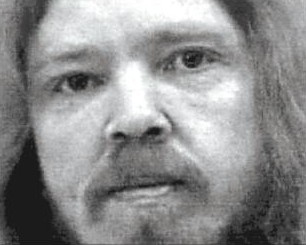 Robert Dale Yeatts
Murderer · USA · 1989
Name: Robert Dale Yeatts Other people named: Charles Michael Vernon; Ruby Meeks…
1 victim
Robert Dale Yeatts
Murderer · USA · 1989
Name: Robert Dale Yeatts Other people named: Charles Michael Vernon; Ruby Meeks…
1 victim
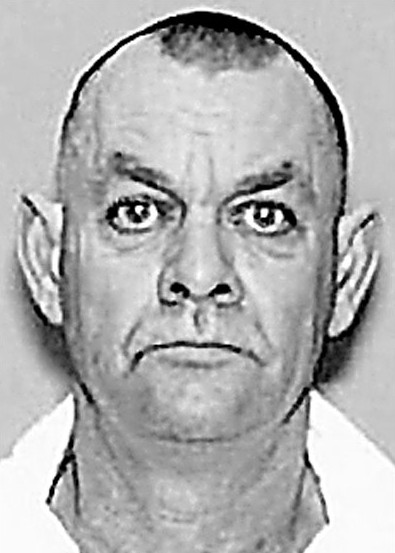 Larry Allen Hayes
Murderer · USA · 1999
Larry Allen Hayes was convicted of capital murder and was executed by lethal in…
2 victims
Larry Allen Hayes
Murderer · USA · 1999
Larry Allen Hayes was convicted of capital murder and was executed by lethal in…
2 victims
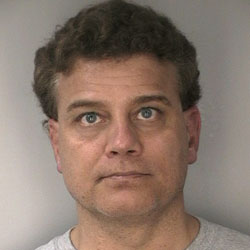 Steven Lorenzo
Murderer · USA · 2003
Steven Lorenzo was sentenced to 200 years in prison on January 28, 2006. A U.S.…
2 victims
Steven Lorenzo
Murderer · USA · 2003
Steven Lorenzo was sentenced to 200 years in prison on January 28, 2006. A U.S.…
2 victims
- Gender
- male
- Country
- USA
- Location
- Marin County, California / Jefferson County, Colorado, USA
- Date of birth
- October 25, 1928
- Age at first offence
- 22
- Characteristics
- kidnapping, fugitive, escape attempt
- Victim profile
- A hitchhiker / Adolph Coors III, 44 (heir to the Coors Beer fortune)
- Method of murder
- Shooting
- Date(s) of murder
- December 21, 1950 / February 9, 1960
- Years active
- 1950–1960
- Date of arrest
- October 29, 1960 (in Vancouver, Canada)
- Status
-
Died in custody
Committed suicide by shooting himself on August 24, 2009
Case overview
Joseph Corbett, Jr. (October 25, 1928 – August 24, 2009) became the 127th fugitive named on the FBI's Ten Most Wanted list. He was placed there March 30, 1960 for the kidnap and subsequent murder of Adolph Coors III, heir to the Coors Beer fortune.
Background
Corbett was a former Fulbright scholar at the University of Oregon. He was headed to medical school when, in 1951, he got into an altercation with an Air Force sergeant. During the fight, he shot the man and ended up pleading guilty to second-degree murder. He was convicted of shooting a man in the back of the head in 1951. He claimed it was self-defense.
Corbett’s mother, Marion, fell from a balcony where the railing had been removed and died five days later. His behavior became erratic by 1950 and he began to unravel completely when his mother died.
Corbett later lived under the alias Walter Osborne and was transferred to a minimum-security prison, from which he then escaped. He began living under the alias Walter Osborne.
The offence
Adolph Coors III (referred to as Adolph Coors III, Ad, and as the grandson of the Coors' founder) was kidnapped and later shot. Coors left his Morrison, Colorado home on February 9, 1960, headed to work. His kidnapping involved ransom demands and subsequent killing.
Coors had no known enemies. He was described as president of the company, which he ran with his brothers William and Joseph. He was married for 20 years and the father of four children. He was also described as chairman of the Golden brewery and a prominent citizen connected to the Coors founder.
Coors was abducted on a trip from his ranch in Morrison to the brewery in Golden, Colo. His vehicle was later found idling on a narrow bridge over Turkey Creek, with blood spattered on a bridge railing and the discovery of a hat and pair of glasses belonging to Coors in the creek below. Coors was shot twice in the back at close range.
The handcuffs and leg irons that Corbett ordered through the mail in the months preceding the kidnapping were described as apparently going unused. The handgun that he likewise ordered through the mail was described as apparently used but never found.
In addition to the kidnapping and murder of Adolph Coors III, Corbett’s case included a prior killing in 1951: he shot and killed a hitchhiker near Hamilton Air Force Base north of San Francisco.
Investigation
After Coors disappeared, a nationwide manhunt was conducted that spanned from California to Atlantic City, New Jersey, and eventually to Vancouver, British Columbia, Canada.
Evidence tied the crime to Corbett through several avenues:
- A canary yellow 1951 Mercury linked to Corbett was discovered and traced.
- A gasoline-fueled fire in Atlantic City, New Jersey, was deliberately set, but it could not destroy the serial number imprinted on the engine.
- Dirt from the car was traced back to the area where Coors was grabbed and taken hostage.
- Seven months after the abduction of Adolph Coors in 1960, Coors’ clothes were found in a dump near Sedalia, Colorado, leading to the discovery of Coors’ remains nearby.
- A ransom letter was traced back to Joe Corbett’s typewriter.
- Investigators found that Corbett had also ordered handcuffs, leg irons, and a gun through the mail in the months preceding the kidnapping.
- The FBI distributed 1.5 million posters with Corbett’s picture and tracked him across Canada.
An FBI investigation mapped the car’s journey based on dirt scraped from the undercarriage of Corbett’s canary-yellow 1951 Mercury, describing four layers of dirt, including dirt and particles matching those in the Atlantic City dump, and others matching pink feldspar and granite from the site where Coors’ body was found and from roads around the Coors ranch. The FBI collected 450 dirt samples in its effort.
A letter was recovered in the Morrison post office addressed to Coors’ wife, Mary. The letter demanded $500,000 in tens and twenties and instructed her to advertise a tractor for sale in the Denver Post and then wait for the call. It also included the instruction: “Call the police or FBI: he dies. Cooperate: he lives,” written by the kidnapper.
Mary Coors placed the ad as instructed and waited, but no call came and more than 50 ransom notes were described as cruel hoaxes.
The bones of Adolph Coors III were discovered in Douglas County and experts concluded he was shot twice in the back at close range.
A store clerk identified Corbett as the buyer of a certain brand of typing paper used for the ransom note, and a note demanding $500,000 in ransom was traced to a Royalite typewriter purchased by Corbett at May D&F, according to the FBI.
Corbett’s disappearance and capture were connected to sightings of the canary-yellow Mercury. The car was traced from the Morrison area to Atlantic City, and then through Toronto to Vancouver. The Mercury was observed in the days leading up to the abduction, and it was found abandoned and set ablaze in Atlantic City.
Arrest
Corbett was finally arrested October 29, 1960 in Vancouver, British Columbia by Canadian police. His arrest followed recognition by two Canadian citizens who recognized him from a November 1960 Reader’s Digest article.
Corbett was arrested in Vancouver under the context described as detectives closing in on the Maxine Hotel in Vancouver, British Columbia. The landlady described a man believed to be Corbett staying in a room under the name Thomas C. Wainwright.
On arrest, Corbett gave himself up and stated: “OK,” he said, “I give up.” He later gave himself up with an additional statement during capture: “I’m your man.” The FBI agent Alfred Gunn is named in connection with Corbett telling him: “I’m your man.” Corbett also stated: “I'm not armed. I give up.”
A loaded pistol was described as found in a zippered bag in his hotel room, and it was described as not the Coors murder weapon.
Trial
Corbett faced trial in Golden District Court. The murder trial opened in Golden on March 13, 1961. On March 29, 1961, the jury found Corbett guilty. Another account describes the jury convicted him of first-degree murder and that the jury deliberated for two days and took 12 ballots before convicting him of first-degree murder.
Corbett never testified at his trial. He never made any statement described as taking place in the trial, and he did not testify. Corbett was described as having refused to talk to investigators about the Coors murder or provide an alibi.
Co-workers described the defendant’s boasts about planning “something big” and it would net him a million dollars. In addition, a later account described prosecutors presenting evidence including the claim that Corbett had bragged about scheming for “a big score” that would net him a half-million dollars or more.
During the trial, forensic scientists showed that the ransom note came from a typewriter Corbett had purchased. The star witness was described as the yellow Mercury.
Sentencing
Corbett’s 1951 conviction for second-degree murder resulted in a plea and sentencing:
- March 15, 1951: Corbett pleaded guilty to second-degree murder; a judge sentenced him to five years to life.
For the Coors kidnapping and subsequent murder:
- Corbett was sentenced to life imprisonment after being convicted of murder.
- June 15, 1978: Corbett was granted parole.
After parole, public debate and parole-related events were described in multiple ways, including:
- July 6, 1978: Corbett’s parole was revoked after a public outcry.
- July 5, 1979: Corbett was granted parole again.
- July 10, 1979: Corbett was released and flew to California.
- July 11, 1979: Corbett flew back to Colorado to close a bank account.
- July 15, 1979: Corbett was arrested in California for violating parole by returning to Colorado.
- July 31, 1979: Corbett’s parole was revoked.
- Dec. 12, 1980: Corbett was paroled yet again.
- Dec. 12, 1985: Corbett was released from supervision.
Appeals
No appeals are described in the provided material.
Outcome
Corbett remained a fugitive from California following his 1951 plea. He sneaked out of his dorm at a minimum-security prison and disappeared on August 1, 1955.
After Coors’ kidnapping and murder, Corbett was apprehended October 29, 1960 and later convicted. He was paroled in 1978 and released later for additional parole terms.
On August 24, 2009, Corbett was found dead in his apartment of a single self-inflicted gunshot wound to the head. The body was found at his southwest Denver apartment, and he left no note and no one to claim his body.
Aftermath
Corbett was described as living near-seclusion for the past 29 years before his death, having been free from prison since 1980 for the murder of Adolph Coors III.
A 1996 interview was conducted with Joe Corbett by The Denver Post, and the article appeared in print on Sunday, Feb. 11, 1996. During the interview, Corbett made multiple statements, including:
“I don't want to stir things up again, because it just gets me all wrought up,”
“I see myself as a pretty commonplace man who through sheer, bizarre circumstances got involved in something notorious,”
“It would be futile to retry the case now,”
“What's the point? It just goes against all my instincts, all my conditioning, to say anything at all now that would add to my notoriety.”
Corbett also said:
“Sometimes things take such a turn,”
“you just can't believe it.”
Regarding the 1951 murder plea, Corbett said:
“I shot the guy,”
“There was a fight, and I shot him. It was a terrible thing, but I pleaded guilty.”
Corbett described why he fled his Capitol Hill apartment just one day after Coors was reported missing, stating:
“I was a fugitive from California, and I had been in that area (where Coors was kidnapped),”
“he said.”
Corbett’s conversation with agent Alfred Gunn included:
“I'm your man.”
“I'm not armed. I give up.”
He described an alibi he believed would have been false as follows:
“We had a man and his son who were all ready to testify that I was at a gas station having my car fixed (on the day Coors disappeared). But I told (my lawyer), "That's just not true. Someone may have been at that gas station. But it wasn't me."”
A manager and witnesses described the discovery of Corbett’s death:
- Monday, Aug. 24, 2009: the manager Mark Johnsen turned the knob and pushed open the green-trimmed door on unit 307 and encountered a shocking scene, with Corbett lying motionless in bed and a pistol nearby.
- Corbett was pronounced dead at 8:28 a.m.
- Paramedics, police officers and firefighters swarmed the apartment complex.
Neighbors described Corbett’s reclusive behavior and daily routines, including:
- Ron Kirkman described Corbett’s demeanor and gave quoted remarks: he called out “Hello, Mr. Corbett,” and later said: “despondent.” Kirkman later said: “I couldn't have asked for a better neighbor,” and “I am going to miss him — I really am.”
- Tom Dang, owner of the Barn Store across the street, described seeing Corbett returning home lugging sacks and said: “I figured out the guy was strong and fast,” and also said he did not know Corbett’s name until hearing of the suicide and asked the apartment manager.
- Ron Olson described Corbett: “I knew him as intellectually very, very sharp,” and “Emotionally, very immature. High strung. Excitable.”
Timeline
- October 25, 1928 — Joseph Corbett Jr. was born in Seattle.
- June 7, 1949 — Corbett’s mother, Marion, fell from a balcony with the railing removed and died five days later.
- Dec. 21, 1950 — Corbett shot and killed a hitchhiker near Hamilton Air Force Base north of San Francisco.
- March 15, 1951 — Corbett pleaded guilty to second-degree murder; a judge sentenced him to five years to life.
- Aug. 1, 1955 — Corbett sneaked out of his dorm at a minimum-security prison and disappeared.
- Late 1955 — Corbett arrived in Denver, adopted the name Walter Osborne, and eventually lands a job at the Benjamin Moore paint plant north of downtown.
- April 1, 1956 — Corbett moved into a third-floor apartment at 1435 Pearl St.
- June 8, 1957 — Corbett ordered a pistol through the mail.
- Feb. 24, 1959 — Corbett ordered four pairs of leg irons.
- May 1, 1959 — Three pairs of handcuffs were shipped to Corbett.
- Jan. 8, 1960 — Corbett bought a yellow 1951 Mercury.
- Jan. 25, 1960 — Corbett was ticketed about 3 miles from Morrison while driving the yellow Mercury.
- Feb. 9, 1960 — Adolph Coors III left his Morrison-area home, headed to the family brewery; his vehicle was later found idling on a narrow bridge.
- Feb. 10, 1960 — Corbett moved out of his Capitol Hill apartment and vanished; Mary Coors received a ransom note instructing her to come up with $500,000 and to place an ad for a tractor in The Denver Post’s classified section once she had the money.
- Feb. 14, 1960 — The Coors family placed the ad offering a John Deere tractor for sale.
- Feb. 17, 1960 — Corbett’s yellow 1951 Mercury was discovered ablaze near Atlantic City, N.J.
- March 30, 1960 — The FBI placed Corbett on its 10 Most Wanted List.
- Sept. 11, 1960 — The bones of Adolph Coors III were discovered in Douglas County; experts concluded he was shot twice in the back.
- Oct. 25, 1960 — FBI agents picked up Corbett’s trail in Toronto, where he again used the name Walter Osborne.
- Oct. 29, 1960 — Corbett was arrested in Vancouver, British Columbia.
- March 13, 1961 — Corbett’s murder trial opened in Golden.
- March 29, 1961 — The jury returned a guilty verdict, meaning a life sentence.
- June 15, 1978 — Corbett was granted parole.
- July 6, 1978 — Corbett’s parole was revoked after a public outcry.
- July 5, 1979 — Corbett was granted parole again.
- July 10, 1979 — Corbett was released and flew to California.
- July 11, 1979 — Corbett flew back to Colorado to close a bank account.
- July 15, 1979 — Corbett was arrested in California for violating parole by returning to Colorado.
- July 31, 1979 — Corbett’s parole was revoked.
- Dec. 12, 1980 — Corbett was paroled yet again.
- Dec. 12, 1985 — Corbett was released from supervision.
- Aug. 24, 2009 — Corbett was found dead in his southwest Denver apartment, a victim of suicide.
Other details
Corbett was described as 80 years old at the time of his death and had been suffering from cancer.
Corbett was described as living in an apartment near South Federal Boulevard, including mention of Royal Chateau Apartments along South Federal Boulevard, and an apartment numbered 307. He was also described as living in a one-bedroom apartment.
Corbett’s work after prison included being a truck driver for the Salvation Army, and he was described as having retired and living on Social Security by the time of the 1996 interview.
Corbett’s escape and identity included:
- After escape from prison in California in 1955, he headed for Denver.
- A man calling himself Walter Osborne showed up in Denver.
- Corbett had been living in Capitol Hill for four years under the name of Walter Osborne.
A hotel and aliases were described:
- A room under the name Thomas C. Wainwright was referenced in connection with his stay at the Maxine Hotel in Vancouver.
Multiple sources of narrative and environment were included, including descriptions of the bridge over Turkey Creek and the burned-out canary yellow Mercury in Atlantic City.
Corbett’s possessions and evidence referenced included chains and padlocks, a paperback copy of Robert Traver’s book "Anatomy of a Murder," and a loaded pistol found in a zippered bag in his hotel room.
Corbett refused to talk to police and FBI agents about the Coors murder, did not testify at trial, and never made any statement described as being made at trial.
Corbett was also described as claiming his final victim and as having taken his own life.
Spotted an error, or have more information about this case?