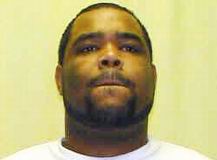
Sidney Cornwell
Murderer Russell Ellwood
Murderer · USA · 1991
Russell Ellwood was a former taxi driver. Authorities suspected him of killing…
20 victims
Russell Ellwood
Murderer · USA · 1991
Russell Ellwood was a former taxi driver. Authorities suspected him of killing…
20 victims
 Robert Martines Perez
Murderer · USA · 1994
Name: Robert Martines Perez · Other name used in proceedings: Robert Martinez P…
15 victims
Robert Martines Perez
Murderer · USA · 1994
Name: Robert Martines Perez · Other name used in proceedings: Robert Martinez P…
15 victims
 Billy Frank Vickers
Murderer · USA · 1993
Billy Frank Vickers Vickers was executed by lethal injection in Texas on Januar…
14 victims
Billy Frank Vickers
Murderer · USA · 1993
Billy Frank Vickers Vickers was executed by lethal injection in Texas on Januar…
14 victims
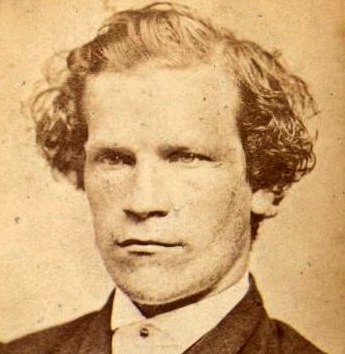 Franz Müller
Murderer · United Kingdom (on a train) · 1864
Franz Müller was a German tailor. He murdered Thomas Briggs, a City banker. On…
1 victim
Franz Müller
Murderer · United Kingdom (on a train) · 1864
Franz Müller was a German tailor. He murdered Thomas Briggs, a City banker. On…
1 victim
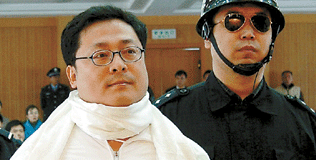 Yuan Baojing
Murderer · China · 2003
Yuan Baojing (simplified Chinese: 袁宝璟; traditional Chinese: 袁寶璟) (1966 – March…
1 victim
Yuan Baojing
Murderer · China · 2003
Yuan Baojing (simplified Chinese: 袁宝璟; traditional Chinese: 袁寶璟) (1966 – March…
1 victim
 Travis Lee Gibson
Murderer · USA · 2000
Travis Lee Gibson received sentences of death on 2001. On automatic and direct…
1 victim
Travis Lee Gibson
Murderer · USA · 2000
Travis Lee Gibson received sentences of death on 2001. On automatic and direct…
1 victim
 Joshua Jenkins
Homicide · USA · 1996
Joshua Jenkins was a 15-year-old American killer who killed five members of his…
5 victims
Joshua Jenkins
Homicide · USA · 1996
Joshua Jenkins was a 15-year-old American killer who killed five members of his…
5 victims
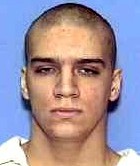 Mark Sam Arthur
Homicide · USA · 1996
Mark Sam Arthur was a juvenile at the time of the offence and was later sentenc…
1 victim
Mark Sam Arthur
Homicide · USA · 1996
Mark Sam Arthur was a juvenile at the time of the offence and was later sentenc…
1 victim
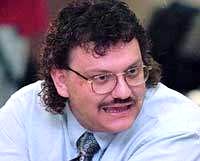 Orville Majors
Serial killer · USA · 1994
Orville Lynn Majors (born 24 April 1961) was a former licensed practical nurse…
6 victims
Orville Majors
Serial killer · USA · 1994
Orville Lynn Majors (born 24 April 1961) was a former licensed practical nurse…
6 victims
- Gender
- male
- Country
- USA
- Location
- Youngstown, Ohio, USA
- Date of birth
- April 22, 1977
- Age at first offence
- 19
- Characteristics
- retaliation
- Victim profile
- Jessica Ballew, 3
- Method of murder
- Shooting
- Date(s) of murder
- June 11, 1996
- Years active
- 1996
- Date of arrest
- Same day
- Status
-
Life imprisonment
Sentenced to death on May 23, 1997; commuted to life without the possibility of parole in November 2010
Background
Sidney Cornwell was convicted in Ohio of killing a three-year-old child during a gang shootout and of attempted aggravated murder involving other occupants of an apartment.
Cornwell was of Youngstown. The intended targets involved rival neighborhood gangs described as “Crips” and “Bloods.”
Cornwell’s death sentence was later commuted to life without the possibility of parole after a clemency decision by the governor.
The offence
During the early morning hours of June 11, 1996, Sidney Cornwell and some associates who belonged to a neighborhood gang in Youngstown drove up to an apartment building on Oak Park Lane with the intention of shooting a rival gang member.
When the intended victim was not seen, Cornwell opened fire on the occupants of an apartment, killing a three-year-old child and wounding three adults.
The child who was killed was identified as Jessica Ballew. The girl was three years old when Cornwell murdered her during the gang shootout. Cornwell was scheduled to die by injection for the killing of Jessica Ballew.
Investigation
On the afternoon of the previous day, Cornwell and other members or associates of the “Crips” gang had been involved in a shootout with members of the “Bloods” gang on Elm Street at New York Avenue in Youngstown.
Trial
Sidney Cornwell was subsequently convicted of aggravated murder and attempted aggravated murder.
Cornwell was sentenced to death.
Cornwell was described as being on death row and as having been scheduled to die by injection.
Sentencing
Sidney Cornwell was sentenced to death on May 23, 1997.
Appeals
No appeal proceedings were described.
Outcome
Cornwell’s sentence was commuted to life without the possibility of parole in November 2010.
The clemency decision was described as coming from the State of Ohio Adult Parole Authority clemency report and was attributed to Governor Ted Strickland.
Governor Ted Strickland said:
“Although I disagree with the governor's decision, I respect his right to make that decision,”
Mahoning County Prosecutor Paul Gains said:
The Parole Board had recommended against mercy for Cornwell, but Strickland said jurors might have chosen a different sentence if they had known of Cornwell’s condition.
The medical condition was identified as Klinefelter Syndrome, described as undiagnosed and as contributing to developmental disabilities and large breasts as a child.
It was stated that Cornwell’s condition caused him to develop motor and language skills late and gave him large breasts as a boy, which led to repeated teasing.
Cornwell’s public defenders cited the medical condition in seeking mercy, and they also said Cornwell was abused by his father and fell under the influence of gangs as a teenager.
Cornwell’s sentence commutation was described alongside a statement that it would spare him death and that his life sentence would be without the possibility of parole.
Cornwell was described as the third death row inmate that year to be spared by the governor.
Aftermath
It was stated that Seventeen men had been put to death since Strickland took office in 2007.
It was stated that the decision was the last Strickland must make regarding a death penalty case, and that he had been defeated in the election and would be succeeded by Republican John Kasich in January.
The next execution was described as scheduled for Feb. 17.
It was also stated that Kasich may have to address concerns about a shortage of a lethal injection drug that had prompted execution delays across the country.
Spotted an error, or have more information about this case?