Norman Dean Yazzie
Mass murderer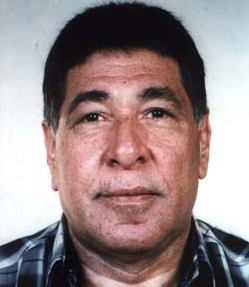 Gameel Al-Batouti
Mass murderer · USA · 1999
Gameel Al-Batouti (also rendered “Gamil ElBatouty” or “El Batouty” in U.S. offi…
216 victims
Gameel Al-Batouti
Mass murderer · USA · 1999
Gameel Al-Batouti (also rendered “Gamil ElBatouty” or “El Batouty” in U.S. offi…
216 victims
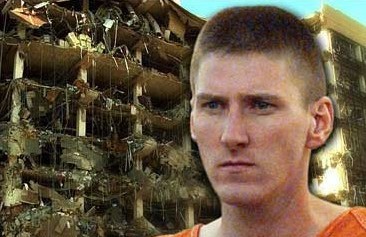 Timothy McVeigh
Mass murderer · USA · 1995
Timothy James McVeigh (April 23, 1968 – June 11, 2001) was a United States Army…
168 victims
Timothy McVeigh
Mass murderer · USA · 1995
Timothy James McVeigh (April 23, 1968 – June 11, 2001) was a United States Army…
168 victims
 Julio Gonzalez
Mass murderer · USA · 1990
Julio Gonzalez was sentenced to 174 twenty-five-year sentences (a total of 4,35…
87 victims
Julio Gonzalez
Mass murderer · USA · 1990
Julio Gonzalez was sentenced to 174 twenty-five-year sentences (a total of 4,35…
87 victims
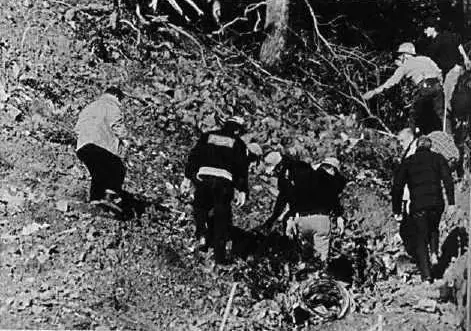 David Burke
Mass murderer · USA · 1987
David Augustus Burke (May 18, 1952–December 7, 1987) was an employee of USAir,…
43 victims
David Burke
Mass murderer · USA · 1987
David Augustus Burke (May 18, 1952–December 7, 1987) was an employee of USAir,…
43 victims
 George Jo Hennard
Mass murderer · USA · 1991
George Jo Hennard carried out a mass killing at a Luby’s Cafeteria in Killeen,…
23 victims
George Jo Hennard
Mass murderer · USA · 1991
George Jo Hennard carried out a mass killing at a Luby’s Cafeteria in Killeen,…
23 victims
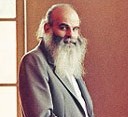 Ronald Gene Simmons
Mass murderer · USA · 1987
Ronald Gene Simmons was a retired United States Air Force sergeant. Over the Ch…
16 victims
Ronald Gene Simmons
Mass murderer · USA · 1987
Ronald Gene Simmons was a retired United States Air Force sergeant. Over the Ch…
16 victims
 Azad Abdullah
Murderer · USA · 2002
Azad Abdullah Sentenced to death on November 2004 Azad Abdullah was accused of…
1 victim
Azad Abdullah
Murderer · USA · 2002
Azad Abdullah Sentenced to death on November 2004 Azad Abdullah was accused of…
1 victim
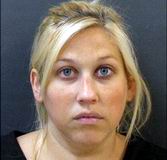 Lindsey Lowe
Murderer · USA · 2011
Lindsey Lowe was convicted of felony murder, premeditated murder, and aggravate…
2 victims
Lindsey Lowe
Murderer · USA · 2011
Lindsey Lowe was convicted of felony murder, premeditated murder, and aggravate…
2 victims
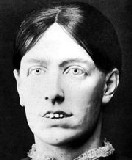 Mary Pearcey
Murderer · United Kingdom · 1890
Mary Pearcey (Mary Eleanor Wheeler; also known as Mary Eleanor) was born in 186…
2 victims
Mary Pearcey
Murderer · United Kingdom · 1890
Mary Pearcey (Mary Eleanor Wheeler; also known as Mary Eleanor) was born in 186…
2 victims
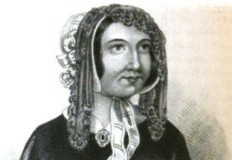 Maria Manning
Murderer · United Kingdom · 1849
Maria Manning was also identified as Marie Manning and Marie de Roux. Maria Man…
1 victim
Maria Manning
Murderer · United Kingdom · 1849
Maria Manning was also identified as Marie Manning and Marie de Roux. Maria Man…
1 victim
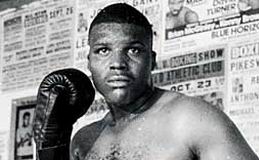 Reggie Gross
Murderer · USA · 1986
Reggie Gross (born January 1962) was a journeyman heavyweight boxer in the 1980…
3 victims
Reggie Gross
Murderer · USA · 1986
Reggie Gross (born January 1962) was a journeyman heavyweight boxer in the 1980…
3 victims
- Gender
- male
- Country
- USA
- Location
- Dinnehotso, Arizona, USA
- Date of birth
- 1964
- Age at first offence
- 32
- Characteristics
- parricide
- Victim profile
- His four daughters aged 5, 8, 11 and 13
- Method of murder
- Shooting ( .22-caliber rifle)
- Date(s) of murder
- September 1, 1996
- Years active
- 1996
- Date of arrest
- —
- Status
-
Life imprisonment
Sentenced to life in prison without parole, plus 85 years on March 11, 1997
Case record: Norman Dean Yazzie
Background
Norman Dean Yazzie shot at his five children, killing his four daughters and wounding his son. Before the killings, Yazzie wrote a rambling note to his wife, Cecilia, describing his outrage over her ongoing affair with another man.
The offence
On September 1, 1996, Yazzie fired at least 35 times at his children inside the family’s trailer home on a Navajo reservation in Dinnehotso, a small community just south of the Arizona-Utah border.
Yazzie shot his four daughters repeatedly in the head with a .22-caliber rifle. His 11-year-old son survived the rampage by playing dead as he was shot in the shoulder and the chest.
Investigation
Yazzie was convicted of four counts of first-degree murder and eight other felony charges in December.
Sentencing
On March 11, 1997, Judge Earl Carroll of Federal District Court imposed the sentence. Yazzie was sentenced to life in prison without parole, plus 85 years.
Prosecutors could not seek the death penalty because the Navajo Nation does not allow it.
Appeals
Norman Dean Yazzie appealed his jury conviction and sentence for:
- first degree murder (18 U.S.C. §§ 1153 & 1111)
- assault with intent to commit murder (18 U.S.C. §§ 1153 & 113(a)(1))
- use of firearm in a crime of violence (18 U.S.C. § 924(c))
- attempted arson of a dwelling (18 U.S.C. §§ 1153 & 81)
- assault of a federal officer (18 U.S.C. § 111)
The appeal was decided by the United States Court of Appeals, Ninth Circuit.
Citation and procedural details included in the case material
- 145 F.3d 1343 UNITED STATES OF AMERICA, Plaintiff-Appellee, v. Norman Dean YAZZIE, Defendant-Appellant.
- No. 97-10134.
- United States Court of Appeals, Ninth Circuit.
- May 20, 1998.
- Appeal from the United States District Court for the District of Arizona.
- Before: SCHROEDER, TROTT, and FERNANDEZ, Circuit Judges.
- MEMORANDUM
- Submitted May 14, 1998
Carroll, J. Presiding
The appellate court stated it had jurisdiction pursuant to 28 U.S.C. § 1291, and affirmed.
Yazzie argued that the district court erred by failing to strike a potential juror from the jury pool because she was exempt from service under 28 U.S.C. § 1863(b)(6). The court concluded that even if it assumed error, reversal was not warranted, noting that the venireperson in question did not serve as a juror in this case and Yazzie failed to allege any separate constitutional violation.
Yazzie also argued that the trial court erred by limiting the testimony of his expert witness, Dr. Hammerschlag, under Federal Rule of Evidence 704(b). The court concluded there was neither an abuse of discretion nor any manifest error. It stated that Dr. Hammerschlag was permitted to testify that Yazzie suffered from acute dissociative disorder and the cultural syndrome of amok, and was allowed to describe in detail the characteristics and effects of these conditions. The court further stated it sustained the government’s objection when the defense sought further explanation on what specific role amok played on the day of the murders and how it related to “the way Norman Yazzie was” on the day of the murders, and that this approach complied with Rule 704(b).
The appellate court also addressed Yazzie’s argument that the district court’s imposition of consecutive sentences pursuant to 18 U.S.C. 924(c) was improper because his conduct fell within the more specific terms of section 924(j). The court held that section 924(j) is a sentencing enhancement provision that extends the maximum term for a section 924(c) violation when death results; it does not alter or modify the requirement that the sentences be imposed consecutively.
The appellate court concluded: AFFIRMED.
The memorandum included additional notes:
- “This disposition is not appropriate for publication and may not be cited to or by the courts of this circuit except as provided by 9th Cir. R. 36-3”
- “The panel unanimously finds this case suitable for decision without oral argument. See Fed. R. App. P. 34(a); 9th Cir. R. 34-4”
A further contention was that Yazzie was precluded from asking whether a person in a dissociative state would know what he was doing. The court stated that the record showed Dr. Hammerschlag was allowed to briefly testify that a person in such a state would have no conscious awareness of what was going on, and that the court limited further testimony on the grounds that it was on the verge of impermissible territory, which the appellate court found was proper.
Outcome
The United States Court of Appeals for the Ninth Circuit affirmed Yazzie’s jury conviction and sentence.
Other details
- Yazzie was 33 at sentencing.
- The sentencing judge was Judge Earl Carroll.
- Rhyan was the name of Yazzie’s 11-year-old son who survived and testified against his father.
- Cecilia was Yazzie’s wife.
- The memorandum cited the appellate review as “MEMORANDUM” and included case law references to Fed. R. Evid. Rule 704(b) and related decisions.


Spotted an error, or have more information about this case?