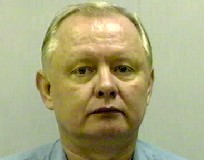
Danny Crump
Mass murderer Julio Gonzalez
Mass murderer · USA · 1990
Julio Gonzalez was sentenced to 174 twenty-five-year sentences (a total of 4,35…
87 victims
Julio Gonzalez
Mass murderer · USA · 1990
Julio Gonzalez was sentenced to 174 twenty-five-year sentences (a total of 4,35…
87 victims
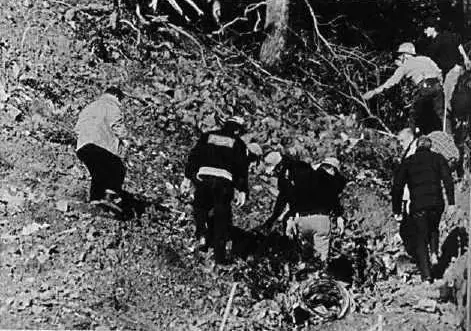 David Burke
Mass murderer · USA · 1987
David Augustus Burke (May 18, 1952–December 7, 1987) was an employee of USAir,…
43 victims
David Burke
Mass murderer · USA · 1987
David Augustus Burke (May 18, 1952–December 7, 1987) was an employee of USAir,…
43 victims
 James Huberty
Mass murderer · USA · 1984
James Oliver Huberty was a 41-year-old unemployed security guard. He was born i…
21 victims
James Huberty
Mass murderer · USA · 1984
James Oliver Huberty was a 41-year-old unemployed security guard. He was born i…
21 victims
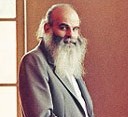 Ronald Gene Simmons
Mass murderer · USA · 1987
Ronald Gene Simmons was a retired United States Air Force sergeant. Over the Ch…
16 victims
Ronald Gene Simmons
Mass murderer · USA · 1987
Ronald Gene Simmons was a retired United States Air Force sergeant. Over the Ch…
16 victims
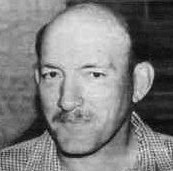 Patrick Henry Sherrill
Mass murderer · USA · 1986
Patrick Henry Sherrill Patrick Henry Sherrill committed suicide by shooting him…
14 victims
Patrick Henry Sherrill
Mass murderer · USA · 1986
Patrick Henry Sherrill Patrick Henry Sherrill committed suicide by shooting him…
14 victims
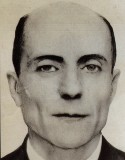 Gabriel Socley
Murderer · France · 1935
Gabriel Socley was sentenced to death for the rape, and the later status of the…
1 victim
Gabriel Socley
Murderer · France · 1935
Gabriel Socley was sentenced to death for the rape, and the later status of the…
1 victim
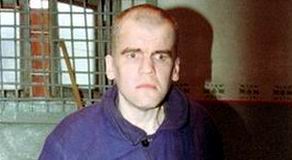 Sergei Ryakhovsky
Serial killer · Russia · 1989
Sergei Vasilyevich Ryakhovsky (рус. Сергей Василевич Ряховский), also known as…
19 victims
Sergei Ryakhovsky
Serial killer · Russia · 1989
Sergei Vasilyevich Ryakhovsky (рус. Сергей Василевич Ряховский), also known as…
19 victims
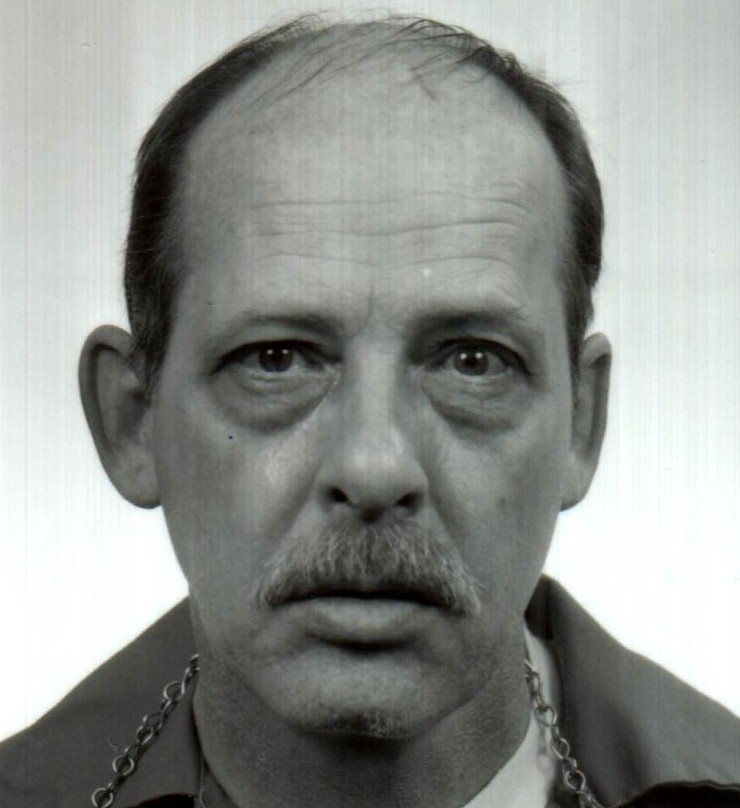 John Ingle
Murderer · USA · 1996
Name: John Ingle Sex/Race: White male Date of birth: 10-29-49 Age: not stated D…
1 victim
John Ingle
Murderer · USA · 1996
Name: John Ingle Sex/Race: White male Date of birth: 10-29-49 Age: not stated D…
1 victim
 Kimberly Cargill
Murderer · USA · 2010
Name: Kimberly Cargill · TDCJ Number: 999572 · Sex: Female · Race: White · Hair…
1 victim
Kimberly Cargill
Murderer · USA · 2010
Name: Kimberly Cargill · TDCJ Number: 999572 · Sex: Female · Race: White · Hair…
1 victim
- Gender
- male
- Country
- USA
- Location
- Olathe, Johnson County, Kansas, USA
- Date of birth
- 1952
- Age at first offence
- 28
- Characteristics
- convicted rapist
- Victim profile
- H is ex-wife, Diane Post Crump, 19, and five members of her family: her father and mother, Robert, 51, and Norma Jeanne Post, 47, a sister, Susan Post, 20, and two brothers, Richard, 21, and James Post, 10
- Method of murder
- Dynamite bomb
- Date(s) of murder
- September 20, 1980
- Years active
- 1980
- Date of arrest
- —
- Status
-
Life imprisonment
Sentenced to six consecutive life terms in 1981
Case record: Danny Crump
Background
Danny Crump left a package marked "Handle with Care" on the hood of his ex-wife's car on September 20, 1980. The package was filled with ten sticks of dynamite and rigged to explode when opened.
Crump’s actions killed Susan Post, his ex-wife, and five members of her family, and tore apart their Olathe home.
Diane Post married Danny Crump in October 1979, and the couple got a divorce the next year. Diane had given birth to Randy in that short time, and that ignited a custody dispute between them.
The offence
The bomb was contained in a package placed on the hood of a car at the home by Danny Crump, then 27, and the bomb exploded when the package was opened.
The Kansas Supreme Court described the bomb as being rigged in a cardboard box addressed to Diane. The bomb was described as a booby-trap bomb.
The blast destroyed the Post home.
Victims
Robert Post, 51; Norma Jeanne Post, 47; Richard Post, 21; James Post, 10; Diane Post Crump (age about 20); and Susan Post (about 20) were killed when the bomb ripped apart their house.
The Kansas Supreme Court described Craig Weber as a survivor who was injured by the blast. The explosion also injured David Post, Craig Weber, and Randy Crump.
Randy Crump was described as a 4-month-old who was reported in critical condition at Olathe Community Hospital and undergoing surgery, and he was also described as thrown from the house.
Kraig Weber was described as age 10 to 12 and reported in critical but stable condition at Olathe Community Hospital.
David Post was described as 18 then and was said to have climbed out of the rubble.
Joe Post was stationed at Whiteman Air Force Base and brought back to Olathe after the explosion occurred.
Cindy Post Foster lived a block away with her husband, Jim Foster, and their 3-year-old son. She was described as four months pregnant with their daughter.
Lori Post Joray was described as 7 years old and outside playing; she remembered little about the explosion.
Investigation
A Jackson v. Denno hearing was held regarding suppression of Danny Crump’s confession.
Testimony at the hearing disclosed that on the afternoon of September 20, police officers located and questioned Crump as a suspect in the bombing. Crump voluntarily submitted to being swabbed for explosive residue and drove himself to the police station to submit to police interrogation.
It was undisputed that Crump was required to wait some five hours in the interview room until a detective, who had been investigating the crimes, arrived to question him. He was then questioned for two and one-half hours.
Crump claimed he was not allowed to leave nor make a telephone call. He claimed he was interrogated by an angry and aggressive detective.
Crump presented psychological testimony from Dr. Robert Schulman. Dr. Schulman testified that Crump was an individual who does not handle stress or anxiety well and that he would say almost anything to avoid the emotional impact of the interrogation. Dr. Schulman was of the opinion that the confession was not voluntarily given.
The State submitted expert testimony in rebuttal. The State pointed out that although Crump spent nearly eight hours at the police station under suspicion, he at no time asked for a lawyer or otherwise asserted his right to remain silent.
It was undisputed that Crump was adequately advised of his Miranda rights and that he waived them more than once by signing written waiver forms, although he later contended he really didn't understand his rights.
The State’s psychological expert concluded that Crump was capable of protecting himself during the interrogation by the police and that he was not coerced.
The trial court failed to make any findings in overruling the motion to suppress the statement given by Crump and allowing the confession to be admitted in evidence. The Kansas Supreme Court stated that inherent in the court’s ruling was the finding that the statement was freely, voluntarily and knowingly given, and that the ruling was supported by substantial competent evidence.
Law enforcement officers who attended a parole hearing agreed that Crump should remain behind bars.
Larry Griffin, a detective on the case who had since retired from the Olathe Police Department, said Crump never has taken responsibility or shown remorse for his crime. Griffin said he never had seen something so horrific as the Post bombing.
Griffin said Crump was "cold and calculated," and that the bomb was "designed to kill."
When Griffin and Moore interviewed Crump in prison almost a decade after the killings, Crump blamed his conviction on a crooked district attorney’s office and a crooked judge. Crump also claimed his friends framed him.
Griffin was quoted as saying: "He never would take responsibility," and: "I believe him to be cold, calculated and cowardly,"
Retired Capt. Phil Patterson said the irony of the crime was that Crump almost killed Randy, stating: "The man interested in getting custody of this child had almost killed him,"
Arrest
Police located and questioned Danny Crump as a suspect in the bombing on the afternoon of September 20, 1980, and he drove himself to the police station for interrogation.
Trial
Danny Crump was convicted of using a booby-trap bomb in killing his ex-wife, Diane Post Crump, and five members of her family, including Robert and Norma Jeanne Post, Susan Post, and two brothers, Richard and James Post.
The Kansas Supreme Court described the jury as convicting Crump on all eleven felony counts, after evidence included his confession and the testimony of Sandra Goold.
Sandra Goold testified and was described as being granted immunity in exchange for her testimony.
Crump denied involvement in the crime and testified that he observed Sandra Goold and one Charles Price placing a mysterious package on one of the Post cars about three o'clock on the morning of the fatal day.
The Kansas Supreme Court described the State’s evidence as follows: sometime around two o'clock in the morning, September 20, 1980, Crump and his girlfriend, Sandra Goold, took a dynamite bomb to the Post residence and left it on the hood of one of the family cars parked in the driveway. The neighbor observed someone from the Post house looking at the package on the car at around nine o'clock that morning; that person then took the package inside the house. Shortly thereafter the explosion occurred.
Craig Weber, who survived the blast, testified with details. He said he and his friend, James Post, had entered the kitchen of the home for a drink of water just before the explosion. He said they observed Diane, her mother, father, Richard and Susan, seated around the table with the package sitting in front of them. When Diane attempted to lift off the lid, the bomb exploded leaving dismembered corpses and a heap of rubble where the Post home formerly stood.
Charges and counts (as appealed)
In the Kansas Supreme Court, Danny Crump was listed as appealing his convictions by a jury of one count of premeditated murder and five counts of felony murder (K.S.A. 21-3401), three counts of aggravated battery (K.S.A. 21-3414), one count of arson (K.S.A. 21-3718), and one count of attempted arson (K.S.A. 21-3718, 21-3301).
Timeline
- September 20, 1980 — Danny Crump left a package marked "Handle with Care" on the hood of his ex-wife's car; the package was rigged with ten sticks of dynamite and exploded when opened, killing Susan Post and five members of her family and destroying the Post home.
- September 20, 1980 — Police officers located and questioned Danny Crump as a suspect; Crump submitted to explosive residue swabbing and drove himself to the police station for interrogation.
- December 3, 1982 — The Kansas Supreme Court affirmed Danny Crump’s convictions.
- 1995 — A parole hearing occurred; the Kansas Parole Board denied parole and granted a maximum extension of three years.
- 1998 — When eligible again for parole, the Post family sought and received 10 years between parole hearings.
- Monday (date not specified) — The Post family appeared before the Kansas Parole Board again in Kansas City, Kan., City Hall.
- July 29, 2008 — The parole hearing article appeared (By Kevin Wright - Theolathenews.com).
- Aug. 11 (year not specified) — Danny Crump was to go before the parole board again, with a decision to follow four to six weeks after that.
Sentencing
Danny Crump was sentenced to six consecutive life terms in 1981.
At sentencing, he had been convicted on six counts of first-degree murder and sentenced to six consecutive life terms.
Appeals
Danny Crump appealed his convictions.
In the Kansas Supreme Court decision dated December 3, 1982, the court described six points on appeal and stated that none warranted reversal and the judgment was affirmed.
Point 1: motion to suppress confession
Crump asserted the trial court erred in failing to suppress his confession, claiming mental coercion and that it was not a product of free will. A Jackson v. Denno hearing was held, and the Kansas Supreme Court found the trial court’s ruling was supported by substantial competent evidence.
Point 2: duplicity challenge
Crump asserted the trial court should have stricken Count I of the amended information because it alleged murder in the alternative as either premeditated murder or felony murder and was therefore duplicitous. The Kansas Supreme Court held the issue lacked merit based on prior cases including State v. Lamb and State v. Jackson.
Point 3: constitutional challenge to felony murder statute
Crump asserted the trial court erred in not dismissing the five counts of felony murder, claiming the felony murder provision of K.S.A. 21-3401 was unconstitutional. The Kansas Supreme Court addressed Michigan cases cited by Crump and rejected them as not persuasive, reaffirming Kansas law that the underlying felony must be inherently dangerous to human life and concluding the statute as interpreted and applied did not violate the Sixth Amendment or the due process clause of the Fifth Amendment. The court also rejected the double jeopardy argument and discussed that first-degree murder under separate theories and convictions did not constitute double jeopardy under the Fifth Amendment.
Point 4: evidentiary challenge to photographs
Crump asserted the trial court erred in allowing gruesome and gory photographs in evidence. The Kansas Supreme Court described photographs showing dismemberment and injuries, and discussed that even when cause of death is stipulated, the State must prove all elements. The court held the admission was discretionary and no abuse of discretion was shown.
Point 5: change of venue
Crump asserted the trial court erred in refusing to grant a change of venue due to extensive news media coverage. The Kansas Supreme Court described how the court delayed its ruling until after voir dire and overruled the motion, and it held there was no abuse of discretion.
Point 6: instructions on lesser homicides
Crump asserted the trial court erred in refusing to give requested instructions on lesser homicides. The Kansas Supreme Court held that when murder is committed during the commission of a felony it is not necessary to include lesser homicide instructions when proof of the underlying felony is strong. It also noted that as to Count I, the defendant did have an instruction on second-degree murder and that the evidence would not warrant instructions on lesser degrees of homicide. The Kansas Supreme Court affirmed the judgment.
Outcome
The Kansas Supreme Court affirmed Danny Crump’s convictions.
Crump was later subject to parole hearings. The first parole hearing occurred in 1995, and the Kansas Parole Board denied parole and gave him the maximum extension of three years before eligibility for parole again.
A bill signed into law allowed the parole board to extend the time between parole hearings to up to 10 years. The Posts sought and received those 10 years when Crump was eligible for parole again in 1998.
At a later parole hearing in Kansas City, Kan., City Hall, the board set to decide whether to parole Crump.
The Post family pleaded with the parole board to keep Crump in prison.
Crump was described as almost eligible for parole again based on the hearing schedule, with another appearance before the board set for Aug. 11 and a decision expected four to six weeks afterward.
Aftermath
Surviving Post family members described their lives as being changed by the killings.
Michael Post said: "Our lives were forever changed that day,"
Chrystal Post Doleshal told the board: "The choices Danny Crump made, made choices for our whole family,"
David Post said that serving 28 years for six deaths was not long enough and said: "It should be at least 30 more years before this creep is eligible for parole,"
The Congressman Dennis Moore, described as having prosecuted the case as Johnson County district attorney, asked the parole board to pass over Crump for another 10 years.
Moore said this crime had two sets of victims: the Post family and survivors, who were the direct victims, and Crump’s family members, who were the indirect victims.
Crump had four children besides Randy, and two of his children, Daniel and Diane, asked the board to release their father, saying they had grown up without him and would like to have him back in their life.
The Post family’s support for keeping Crump behind bars included 50-plus Post family members and friends. Many wore shirts that read, "Justice For Six." The shirts had the six deceased family members’ photographs surrounding a cross underneath the words.
The mother, Norma Jeanne Post, was described as drawing comfort from the Serenity Prayer printed on the back of the shirts: "God grant me the serenity to accept the things I cannot change; courage to change the things I can; and wisdom to know the differences."
Crump was described as having blamed his conviction on a crooked district attorney’s office and a crooked judge, and as having claimed his friends framed him.
Spotted an error, or have more information about this case?