Thomas Wayne Crump
Serial killer Carl Eugene Watts
Serial killer · USA · 1974
Carl Eugene Watts (born November 7, 1953; died September 21, 2007), also known…
100 victims
Carl Eugene Watts
Serial killer · USA · 1974
Carl Eugene Watts (born November 7, 1953; died September 21, 2007), also known…
100 victims
 Rodney Alcala
Serial killer · USA · 1977
Rodney James Alcala (born August 23, 1943) was also known as Rodrigo Jacques Al…
100 victims
Rodney Alcala
Serial killer · USA · 1977
Rodney James Alcala (born August 23, 1943) was also known as Rodrigo Jacques Al…
100 victims
 Donald Leroy Evans
Serial killer · USA · 1975
Donald Leroy Evans (born July 5, 1957) was an American serial killer who murder…
60 victims
Donald Leroy Evans
Serial killer · USA · 1975
Donald Leroy Evans (born July 5, 1957) was an American serial killer who murder…
60 victims
 Michael Swango
Serial killer · USA · 1981
Michael Swango (Joseph Michael Swango) was a physician and American serial kill…
60 victims
Michael Swango
Serial killer · USA · 1981
Michael Swango (Joseph Michael Swango) was a physician and American serial kill…
60 victims
 Efren Saldivar
Serial killer · USA · 1989
Efren Saldivar (born 30 September 1969) was an American serial killer who murde…
50 victims
Efren Saldivar
Serial killer · USA · 1989
Efren Saldivar (born 30 September 1969) was an American serial killer who murde…
50 victims
 Gary Ridgway
Serial killer · USA · 1982
Gary Leon Ridgway Ridgway was born 18-February-1949 in Salt Lake City, UT. He w…
49 victims
Gary Ridgway
Serial killer · USA · 1982
Gary Leon Ridgway Ridgway was born 18-February-1949 in Salt Lake City, UT. He w…
49 victims
 Jose Carranza
Murderer · USA · 2007
Jose Carranza was a suspect in the slayings of three college students in a Newa…
3 victims
Jose Carranza
Murderer · USA · 2007
Jose Carranza was a suspect in the slayings of three college students in a Newa…
3 victims
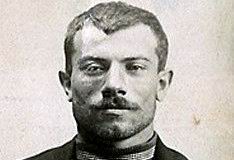 Luigi Lucheni
Murderer · Switzerland · 1898
Luigi Lucheni (April 22, 1873 – October 19, 1910) was an Italian anarchist. Lui…
1 victim
Luigi Lucheni
Murderer · Switzerland · 1898
Luigi Lucheni (April 22, 1873 – October 19, 1910) was an Italian anarchist. Lui…
1 victim
 David Morris
Mass murderer · United Kingdom · 1999
David Morris, a former scrap metal dealer and builder’s labourer from Craig Cef…
4 victims
David Morris
Mass murderer · United Kingdom · 1999
David Morris, a former scrap metal dealer and builder’s labourer from Craig Cef…
4 victims
 Willie Darden
Murderer · USA · 1973
Willie Jasper Darden (also identified as Willie Jasper Darden, Jr.) was convict…
1 victim
Willie Darden
Murderer · USA · 1973
Willie Jasper Darden (also identified as Willie Jasper Darden, Jr.) was convict…
1 victim
- Gender
- male
- Country
- USA
- Location
- New Mexico/Nevada, USA
- Date of birth
- 1940
- Age at first offence
- 41
- Characteristics
- kidnapping, robbery
- Victim profile
- His second wife / A cab driver / A Minnesota tourist / Jodie Jameson, 25
- Method of murder
- Ligature strangulation - ???
- Date(s) of murder
- 1970s - 1981
- Years active
- 1981
- Date of arrest
- —
- Status
-
Sentenced to death
Sentenced to life in prison in New Mexico; sentenced to death in Nevada
Case identification
Thomas Wayne Crump
Background
Thomas Wayne Crump was another in a series of lethal drifters who left their tracks across America in the 1980s. Crump was born in 1940.
Crump was convicted in Albuquerque, New Mexico, of killing his second wife, a cab driver, and a Minnesota tourist. He was already serving life on those counts when he confessed to an October 1980 murder in Las Vegas.
The offence
On October 4, 1980, the body of Jodie Jameson (“Jameson”) was discovered in a motel room bathtub in Las Vegas, Nevada. Her arms and legs were tightly bound with pantyhose. A loosely fitting ligature made from thin knotted strips of torn pillowcase fabric was found around Jameson's neck. An autopsy revealed the cause of death to be ligature strangulation.
In a videotaped confession received into evidence during the guilt phase of the trial, Crump confessed that he killed and robbed Jameson because he believed that she had robbed him. In his videotaped confession, Crump stated:
I snapped․ I didn't have nothin'․ I told her she could take [the money] to hell with her․ No crime of murder, of violence is justifiable, but in my estimation it was․ She deserved what she got, I don't feel no remorse over it․ I could have obtained my money without killing her. I just wanted to kill her․ It's an eye for an eye․ I premeditated. I knew I was going to kill her and I did.
Crump additionally had a second videotaped confession received into evidence during the death penalty phase of his trial. In the second videotaped confession, Crump spoke at length about the multiple crimes he had committed during his life. He confessed he had committed (1) seven murders; (2) seven attempted murders; and (3) innumerable robberies, assaults and kidnappings. He additionally confessed he had participated in a prison uprising in which a prison guard had been taken hostage and killed, and that he had escaped from a New Mexico jail. In this videotaped confession, Crump stated:
I would escape if you give me the opportunity; time is nothing․ Penitentiary time doesn't affect me at all; If I was to get out of here today, I'd hurt somebody today; and I would like the death penalty because I deserve it․ I don't want to hurt nobody else.
Timeline
- October 4, 1980 — The body of Jodie Jameson was discovered in a motel room bathtub in Las Vegas, Nevada; her death was caused by ligature strangulation.
- April 24, 1984 — The jury convicted Crump of first degree murder and robbery, both with use of a deadly weapon.
- May 8, 1984 — The district court formally sentenced Crump to death for his first degree murder conviction.
- May 17, 1990 — Crump filed an addendum to supplement to petition for writ of habeas corpus adding an additional claim.
- May 7, 1986 — Remittitur issued after Crump’s convictions and sentences were affirmed.
- April 9, 1986 — This court affirmed Crump’s convictions and sentences.
- October 6, 1986 — The United States Supreme Court denied Crump’s petition for writ of certiorari.
- October 16, 1986 — The State obtained an execution warrant to be carried out on November 14, 1986.
- October 28, 1986 — Crump filed a proper person petition for post-conviction relief.
- November 4, 1986 — Barbara Schubel was appointed to represent Crump for post-conviction relief.
- November 7, 1995 — The district court ordered dismissal of Crump’s petition on procedural grounds.
- December 6, 1995 — Crump appealed, arguing that the district court erred by dismissing his petition on procedural grounds.
- February 26, 1997 — Opinion in the appeal referenced as “No. 27937” was dated.
Investigation
No separate investigation facts were stated beyond the autopsy and physical circumstances regarding Jodie Jameson’s death, including the ligature and binding described as pantyhose and torn pillowcase fabric strips.
Trial
On April 24, 1984, the jury convicted Crump of first degree murder and robbery, both with use of a deadly weapon.
In the penalty phase, the jury found three aggravating circumstances:
- The murder was committed by a person who had a previous conviction for another murder or felony involving use or threat of violence to another person.
- The murder was committed while the person was engaged in the commission of or flight after committing a robbery.
- The murder involved depravity of mind.
The jury found no mitigating circumstances and sentenced Crump to death.
Sentencing
On May 8, 1984, the district court formally sentenced Crump to death for his first degree murder conviction. For his robbery with use of a deadly weapon conviction, the court sentenced Crump to two consecutive fifteen-year prison terms.
Appeals
On April 9, 1986, this court affirmed Crump’s convictions and sentences (Crump v. State, 102 Nev. 158, 716 P.2d 1387). Remittitur issued on May 7, 1986.
Crump filed a petition for a writ of certiorari in the United States Supreme Court, and on October 6, 1986, the Court denied the petition (Crump v. Nevada, 479 U.S. 871, 107 S.Ct. 242, 93 L.Ed.2d 167).
On October 28, 1986, Crump filed a proper person petition for post-conviction relief in the Eighth Judicial District Court. Pursuant to NRS 177.345(1), counsel was appointed on November 4, 1986 (Barbara Schubel). The district court dismissed Crump’s petition after an evidentiary hearing on April 14, 1987. Crump’s appeal from that denial was dismissed (Crump v. State, Docket No. 18226, 104 Nev. 854, 809 P.2d 601 (Order Dismissing Appeal, August 31, 1988)).
Crump petitioned for a writ of habeas corpus in the United States District Court for the District of Nevada on October 26, 1988, and that petition was voluntarily dismissed on August 14, 1989.
On August 31, 1989, Crump filed a petition for a writ of habeas corpus in the First Judicial District Court. The district court denied the petition on November 7, 1995 on procedural grounds. Crump appealed on December 6, 1995.
Post-conviction and habeas proceedings
Crump raised two claims of error in his petition for a writ of habeas corpus:
- Nevada's Statute “Aggravating Factor” that the offense was committed in an especially “[c]ruel”, “heinous”, or “depraved” manner is unconstitutionally vague.
- The Nevada Statute violated [Petitioner's] Sixth Amendment right to a Jury determination of the elements of an offense by requiring the Judge to make factual findings regarding aggravating circumstances.
On September 1, 1989, the district court appointed the State Public Defender's Office to represent Crump and ordered Crump to supplement the petition within forty-five (45) days in accordance with NRS 34.750.
On March 26, 1990, Crump filed a supplement alleging seventeen grounds of error, labeled A through Q:
- A. [Prior to trial,] Crump did not waive his right to an attorney or a stand-by attorney.
- B. The trial court's refusal to grant Crump's motion to continue his capital murder trial was error.
- C. It was error [for the trial court] to require that Crump state reasons for the necessity of his out of state witnesses.
- D. The [trial counsel's] failure to ask the court to remand the proceedings to justice court for a preliminary hearing was error.
- E. The [trial counsel's] failure to seek the recusal of Judge Thompson prior to trial was error.
- F. The [trial counsel's] failure to demand prior notice of the alleged aggravating factors was error.
- G. The [trial counsel's] failure to proffer a jury instruction on the “voluntariness” issue was error.
- H. The [trial counsel's] failure to raise the issue of the presentation of the Rithchie and Strickland testimony during the state's guilt phase case-in-chief was error.
- I. It was error [for the trial counsel] to fail to request a continuance prior to the penalty phase of Crump's trial.
- J. The [trial counsel's] failure to object to the three aggravating factors presented to the jury during the penalty phase was error.
- The “depravity of mind” and “murder during a robbery” instructions.
- The prior murder or violent felony conviction aggravator.
- K. Crump did not knowingly waive his right to present evidence in mitigation of the death penalty.
- L. [Appellate and post-conviction] counsel's failure to interview the trial jurors was error.
- M. The [district] court's refusal to appoint an investigator at post-conviction was error.
- N. The failure to revolve [sic] the initial conflict of interest was error.
- O. The [post-conviction counsel's] failure to move to recuse Judge Thompson from the post-conviction proceedings was error.
- P. Crump did not waive his right to appear at his post-conviction proceedings.
- Q. The [trial counsel's] failure to move for a mistrial after Crump was excluded from the courtroom was error.
On May 17, 1990, Crump filed an addendum adding claim R:
- R. The [trial] court's instruction regarding burden of proof at penalty phase shifted the burden of proof to the defense in violation of the Constitution.
On May 21, 1990, the district court entered an order permitting Crump to file a second supplement, with a deadline of June 12, 1990.
On July 6, 1994, Crump filed his second addendum to supplement. He raised five additional claims of error labeled S through W:
- S. Trial counsel failed to object to the jury instructions given which improperly defined “reasonable doubt,” failed to propose a proper instruction on the subject, and appellate and post-conviction counsel neglected to pursue this issue.
- Guilt phase.
- Penalty phase.
- T. Trial counsel failed to object to impermissible instances of prosecutorial misconduct and was ineffective. In addition, appellate and post-conviction counsel were ineffective for failing to raise these issues.
- Guilt phase.
- Penalty phase.
- U. Appellate and post-conviction counsel were ineffective for failing to raise the issue of whether Crump validly waived his constitutional right to testify during the guilt and penalty phases of the trial.
- V. Nevada's death penalty scheme suffers from numerous constitutional infirmities.
- Nevada's death penalty statute is unconstitutional as it fails to truly narrow the categories of eligible defendants.
- Nevada's death penalty scheme is unconstitutionally vague since it allows the use of unspecified non-statutory aggravating circumstances.
- NRS 200.033 plainly states that only the aggravating circumstances set forth in the statute may be used as aggravating circumstances and evidence at trial should be restricted to the circumstances.
- The death penalty is cruel and unusual punishment in all circumstances and is prohibited by the Eighth Amendment to the United States Constitution.
- The death penalty is unconstitutional under Article 1, sec. 6 of the Nevada State Constitution which prohibits cruel and unusual punishment.
- W. The petitioner's right to due process was violated by the failure to require the jury to specify which mitigating circumstances set forth in penalty phase jury instruction no. 11 were considered and rejected since this deprived the defendant of effective appellate review.
The State filed a motion to dismiss on July 21, 1994. Crump filed an opposition, with a response filed by the State. The district court conducted oral argument on August 22, 1995.
The district court dismissed the petition on November 7, 1995 on procedural grounds, concluding that pursuant to NRS 34.810, the claims were procedurally barred because:
- The issues could have been raised on direct appeal or in the prior post-conviction proceeding in the Eighth Judicial District Court, or
- The issues had been raised and decided in the prior post-conviction relief proceeding.
Crump challenged the district court's denial of his second petition for post-conviction relief on appeal.
Outcome
The appeal resulted in a remand for an evidentiary hearing on the issue of whether post-conviction counsel was ineffective in order to satisfy the “cause” element necessary to defeat procedural default of the claims in the present petition pursuant to NRS 34.810(1)(b)(3). The opinion stated that an evidentiary hearing was necessary to determine whether “cause” and “prejudice” existed to defeat procedural default. It also held that Crump’s remaining arguments were without merit.
Other proceedings and procedural details
On October 28, 1986, Crump filed a proper person petition for post-conviction relief. On November 8, 1986, after the district court denied a motion to stay execution, Crump filed a petition for a writ of mandamus against Judge Thompson with this court. Crump simultaneously filed a writ of habeas corpus in the United States Federal District Court for the District of Nevada. A federal district court stay of execution resulted in the mandamus action being concluded as moot and denied.
On February 6, 1987, the federal district court dismissed Crump’s habeas corpus petition and stated:
It is ordered that the above-entitled actions are hereby dismissed without prejudice to permit the parties to exhaust state remedies.
On October 26, 1988, the federal district court directed Crump to “include all grounds for relief of which Petitioner is aware.” The federal court advised that failure to raise all possible grounds may result in loss of omitted grounds under the rules regarding abuse of the writ, and stated:
If Petitioner knows of grounds of relief which have not been exhausted in the state system, the present petition should be voluntarily dismissed by Petitioner so that Petitioner may exhaust all possible grounds for relief in the state court before proceeding in federal court.
On August 14, 1989, Crump filed a motion to dismiss his federal petition, and on August 31, 1989, the federal district court entered an order dismissing the petition.
Participants
Steven G. McGuire, State Public Defender, and James P. Logan, Deputy, Carson City, represented Crump (Appellant). Frankie Sue Del Papa, Attorney General, and Keith G. Munro, Deputy, Carson City, represented the respondent.
The appeal was styled as: Thomas Wayne Crump, Appellant, v. Warden, Nevada State Prison, Peter Demosthenes, Respondent. No. 27937.
Related case facts involving an escape
Thomas Wayne Crump assisted by Robert Earl Davis to escape from the Torrance County jail. On June 19, 1982, while a prisoner at the Torrance County jail, Robert Earl Davis assisted serial murderer Thomas Wayne Crump to escape from that jail. Crump used a car owned by Davis's wife in exchange for a promise that Crump would kill Davis's enemies on the outside.
It was alleged that former cops Crump committed crimes with, along with judicial officials involved, had become targets for Davis while he was sitting in prison.
Davis was charged with aiding the escape of Crump, who shot and killed a taxi cab driver while a fugitive. Davis was acquitted of aiding the escape, but convicted of having a pistol in the jail.
Associated with this jail break, the county began building a new detention center built by Corrections Corporations of America, with modern security devices installed in prisons or detention center at the time.
Characteristics reflected in the case
Crump killed his wife, a prostitute, and various strangers. The facts included confession to seven murders, seven attempted murders, and innumerable robberies, assaults and kidnappings. The case involved a murder and robbery with use of a deadly weapon. The characteristics list also referenced kidnapping and robberies.
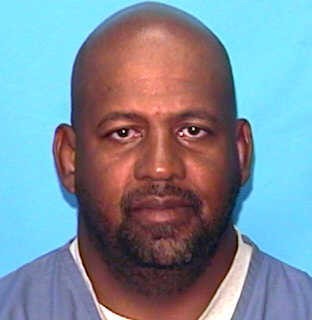
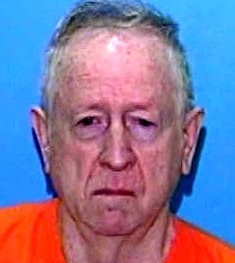
Spotted an error, or have more information about this case?