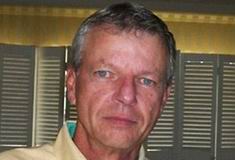
John Houser
Murderer Leon Davis Jr.
Murderer · USA · 2007
Leon Davis Jr. was sentenced to death on April 29, 2011, for the execution-styl…
5 victims
Leon Davis Jr.
Murderer · USA · 2007
Leon Davis Jr. was sentenced to death on April 29, 2011, for the execution-styl…
5 victims
 Raymond Lee Oyler
Murderer · USA · 2006
Raymond Lee Oyler was convicted for starting the 2006 Esperanza fire in Riversi…
5 victims
Raymond Lee Oyler
Murderer · USA · 2006
Raymond Lee Oyler was convicted for starting the 2006 Esperanza fire in Riversi…
5 victims
 Anthony Garcia
Murderer · USA · 2008
Anthony Garcia was a former doctor who was found guilty on all counts including…
4 victims
Anthony Garcia
Murderer · USA · 2008
Anthony Garcia was a former doctor who was found guilty on all counts including…
4 victims
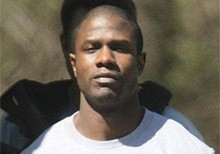 Brian Gene Nichols
Murderer · USA · 2005
Brian Gene Nichols was born December 10, 1971. He was known for his escape and…
4 victims
Brian Gene Nichols
Murderer · USA · 2005
Brian Gene Nichols was born December 10, 1971. He was known for his escape and…
4 victims
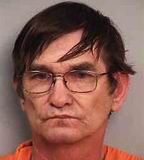 Bruce Mendenhall
Murderer · USA · 2007
Bruce Mendenhall grew up in Crawford County, Illinois. He was married and has t…
4 victims
Bruce Mendenhall
Murderer · USA · 2007
Bruce Mendenhall grew up in Crawford County, Illinois. He was married and has t…
4 victims
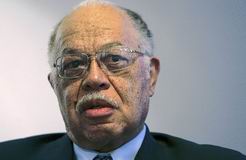 Kermit Gosnell
Murderer · USA · 2006
Kermit Barron Gosnell was an American physician from Philadelphia. He ran an ab…
4 victims
Kermit Gosnell
Murderer · USA · 2006
Kermit Barron Gosnell was an American physician from Philadelphia. He ran an ab…
4 victims
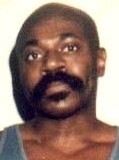 Ernest Martin
Murderer · USA · 1983
Ernest Martin was convicted of the aggravated murder of Robert Robinson during…
1 victim
Ernest Martin
Murderer · USA · 1983
Ernest Martin was convicted of the aggravated murder of Robert Robinson during…
1 victim
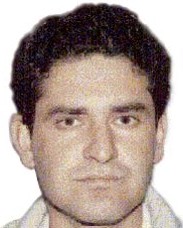 Mir Aimal Kasi
Murderer · USA · 1993
Mir Aimal Kasi was a Pakistani native who was also known as Mir Aimal Kansi and…
2 victims
Mir Aimal Kasi
Murderer · USA · 1993
Mir Aimal Kasi was a Pakistani native who was also known as Mir Aimal Kansi and…
2 victims
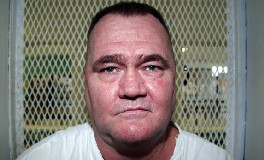 Cleve Foster
Murderer · USA · 2001
Cleve Foster was sentenced to death on March 1, 2004. He was executed by lethal…
2 victims
Cleve Foster
Murderer · USA · 2001
Cleve Foster was sentenced to death on March 1, 2004. He was executed by lethal…
2 victims
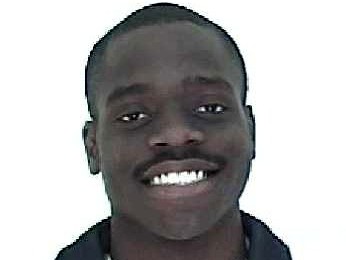 Mustafa Raheem
Murderer · USA · 1999
Mustafa Raheem was sentenced to death for the 1999 murders of a mother and her…
2 victims
Mustafa Raheem
Murderer · USA · 1999
Mustafa Raheem was sentenced to death for the 1999 murders of a mother and her…
2 victims
 Glen Valance
Murderer · Australia · 1964
Glen Sabre Valance Glen Sabre Valance was executed by hanging on November 24, 1…
1 victim
Glen Valance
Murderer · Australia · 1964
Glen Sabre Valance Glen Sabre Valance was executed by hanging on November 24, 1…
1 victim
 Mauro Antonello
Mass murderer · Italy · 2002
Mauro Antonello was a 40-year-old construction worker, former security guard an…
7 victims
Mauro Antonello
Mass murderer · Italy · 2002
Mauro Antonello was a 40-year-old construction worker, former security guard an…
7 victims
- Gender
- male
- Country
- USA
- Location
- Lafayette, Louisiana, USA
- Date of birth
- November 22, 1955
- Age at first offence
- 60
- Characteristics
- spree killer, alcohol, history of mental illness
- Victim profile
- Mayci Breaux, 21 / Jillian Johnson, 33
- Method of murder
- Shooting (Hi-Point .40-caliber handgun)
- Date(s) of murder
- July 23, 2015
- Years active
- 2015
- Date of arrest
- —
- Status
-
Died in custody
Suicide by gunshot wound to the mouth the same day photo gallery 2015
Case record: John Russell Houser (Lafayette shooting)
Background
John Russell “Rusty” Houser was born on November 22, 1955, and died on July 23, 2015. He was 59 years old at the time of the shooting.
Houser was described as a wayfarer and a drifter. Law enforcement said he was raised in Columbus, Georgia, and he graduated from Columbus High School and Columbus Technical College. An online LinkedIn account linked to Houser stated he also attended Columbus State University and Faulkner University. Houser owned bars in Georgia. He once attended law school but dropped out.
Houser’s last recorded residence was in Phenix City, Alabama, where he purchased his firearm at the Money Miser Northside Pawn shop in February 2014.
Houser was said to have mental health issues, which he had been treated for in 2008 and 2009. In 2008, he underwent a mental health evaluation. According to Houser’s wife, he suffered from bipolar disorder.
Houser had previous arrest and complaint records including arson, domestic violence, stalking, and selling alcohol to a minor; these were described as at least a decade old. In 2008, Houser’s wife and daughter, along with the daughter’s then-fiancé and his parents, issued a protective order against him during his mental health evaluation. The order cited Houser’s violent and erratic behavior and stated that he had tried to stop his daughter and her fiancé from marrying. Houser’s wife hid his guns away from him for protection. After the order was issued, family members ceased contact with him.
In 2014, after Houser faced a threat of eviction from his home in Alabama, he booby-trapped the house by twisting out and igniting the gas starter tube in the fireplace, after removing the logs, in an attempt to make the house catch on fire.
In March 2015, a week after Houser’s wife filed for divorce, Houser called her and threatened her. He then went to a retirement community where his mother lived. At that location, he threatened to commit suicide outside if she did not give him money. The mother called Houser’s wife, and she was urged to have Houser hospitalized again. Instead, the wife gave Houser $5,000.
Houser entered Louisiana around July 2 or 3 and spent time exploring the state along Interstate 10, apparently searching for a location to attack. During the week of July 13, Houser visited a food bank in Lake Charles twice and requested aid.
The only known connection to Lafayette was an uncle who once lived there and died in 1980. Investigators believed Houser was traveling to Texas and that Lafayette was a stopping point.
Investigators studied Houser’s online posts to determine a motive. They also recovered a 39-page journal belonging to Houser that contained the name of the theater and the time and date of the screening of Trainwreck, along with random notes and observations. The journal did not provide a clear motive.
Investigators finished processing the crime scene at the theater on July 27.
Questions were raised about how Houser was able to obtain the gun used in the shooting. It was initially reported that he had been involuntarily committed for mental health treatment in 2008, which would have legally prohibited him from purchasing firearms. It was later determined that he was able to purchase the gun because a judge never committed him and instead had him undergo a mental health evaluation. Once the evaluation was done, medical authorities either had to release him, convince him to commit himself voluntarily for treatment, or petition a court to force him to undergo treatment. They never petitioned the court, but it was unclear if Houser was released or voluntarily committed. Houser’s 2008 evaluation was never officially reported to the Georgia Bureau of Investigation.
The offence
On July 23, 2015, a shooting occurred at the Grand 16 movie theater in Lafayette, Louisiana.
The shooting occurred in theater 14 during the 7:10 p.m. screening of Trainwreck, held at the Grand 16 movie theater in Lafayette. Houser went to the theater alone, bought a ticket ten minutes late into the movie, and sat for several minutes in the theater’s second-to-last row.
Including Houser, there were 25 people in the theater and 300 people in the building.
Houser was armed with a Hi-Point .40-caliber handgun and equipped with two 10-round magazines. Shortly before 7:30 p.m., he stood up, pulled out the handgun from his pants, and started shooting indiscriminately while walking down the steps.
Houser fired at least 13 rounds and reloaded once. He killed two people and injured nine others. The first two people he shot were sitting right in front of him.
The shooting was contained to one theater.
After the shooting ended, Houser exited the theater through a side door and apparently tried to head for his vehicle while blending in with survivors. Upon noticing police sirens, he retreated back inside the building and fired three more shots at fleeing moviegoers. He then committed suicide.
Houser had a blood alcohol level of 0.1, while the legal limit was 0.08.
Investigators later believed Houser chose to commit the shooting in a theater playing Trainwreck due to feminist themes and characters, as well as the lead actor’s Jewish background. Houser was described as a misogynist and praised the actions of Adolf Hitler on online message boards.
Investigation and scene response
Prior to the shooting, two police officers were already on duty at the 16-screen multiplex. Four other officers responded to the scene in less than a minute after receiving a 7:28 p.m. report of the shooting.
After witnessing audiences fleeing and hearing gunshots, officers made their way in the auditorium. Two-and-a-half minutes after arrival, they found Houser dead from a self-inflicted gunshot wound to the mouth. His body remained inside the theater for several hours.
Following the shooting, the other local Grand Theatre was also closed, while the entire area was locked down as law enforcement searched for additional shooters.
Law enforcement participating in the investigation included the Louisiana State Police, the Federal Bureau of Investigation (FBI), the Bureau of Alcohol, Tobacco, Firearms, and Explosives (ATF), the Lafayette Parish Sheriff, and the Lafayette Police Department.
On late Thursday night, police investigated Houser’s car, a blue 1995 Lincoln Continental, and found two suspicious objects with wires inside. Fearing that the items might be an explosive, the police halted the investigation. On the morning of July 24, the bomb squad was called, and the windows and trunk were blown up. Investigators found three objects in the theater that were feared to be explosives and had them examined with a robot. An apartment complex behind the theater was evacuated as a precaution. The objects in the theater and in the car were later found not to be dangerous.
A search of the car later turned up more disguises.
Investigators recovered the 39-page journal and studied Houser’s online posts for motive.
Investigators were also studying whether Houser had bought the gun legally and whether it was purchased by Houser.
Police discovered that Houser illegally switched his license plates near an exit door to the theater and in his motel room.
Arrest
No arrest was recorded because Houser died by suicide after the shooting.
Trial
No trial was described.
Sentencing
No sentencing was described.
Appeals
No appeals were described.
Outcome
Two women were killed by Houser in the shooting. One died at the scene, and the other died at a nearby hospital.
Victims
- Mayci Breaux, age 21, of Franklin, Louisiana. She died at the theater. She was a student at Louisiana State University Eunice and worked at the Coco Eros boutique. She died from a single gunshot wound. She was accompanied at the theater by her boyfriend, Matthew Rodriguez, who was injured in the neck and in the armpit.
- Jillian Johnson, age 33, of Lafayette. She died at the hospital. She operated a gift and toy shop in Lafayette and played ukulele and guitar for a band called The Figs. She died from two gunshot wounds. She was accompanied at the theater by her friend Julia Egedahl, who was injured in the torso and suffered serious fractures.
The injuries of the survivors ranged from light to critical and were inflicted either from gunshots and/or during accidents while fleeing.
Other injured people included:
- Two women who were friends and employees at a local high school. One was a librarian who jumped on top of the second woman, a schoolteacher, to save her life and was shot through the leg. Both women were ultimately shot, but the librarian was able to stand up and pull the fire alarm.
- The cousin of Louisiana Representative Charles Boustany and her husband.
- Egedahl, described as the last victim discharged, left Our Lady of Lourdes Regional Medical Center on August 14.
- One victim was shot four times.
- Houser was among the dead; officers found him dead after entering the theater.
The victims’ ages ranged from late teens to their 60s.
Aftermath
Following the shooting, security was increased at the other Grand movie theater in Kenner, Louisiana, and at the Esplanade Mall in Kenner. The theater and its parent company, the Southern Theatres, later issued a statement: “All of us offer our thoughts and prayers to the victims and the community of Lafayette. We are grateful to all local officials and to the governor for their efforts.”
The Grand 16 theater was shut down after the shooting. It reopened four months later on November 19, after a ceremony honoring the victims.
On January 13, 2016, police released a 589-page report of the shooting and photos of Houser’s motel room.
Houser’s car remained under investigation until items were examined and ruled not to be dangerous.
A Political and public response included:
- Louisiana Governor Bobby Jindal traveled to the scene and said he was praying for the victims, and he praised law enforcement’s actions during the shooting.
- U.S. Senators David Vitter and Bill Cassidy of Louisiana released statements expressing sorrow for the victims and that they were praying for them.
- Louisiana State Representative Barbara Norton stated that she was planning on drafting a bill requiring all movie theaters in Louisiana to have a metal detector.
- Amy Schumer posted on her Twitter account: “My heart is broken and all my thoughts and prayers are with everyone in Louisiana.” She later joined U.S. Senator Chuck Schumer of New York in calling for stricter gun control and increased mental health funding.
- Universal Studios, the film’s distributor, issued a statement: “All of us at Universal Pictures send our heartfelt sympathies to the victims of this senseless tragedy and their families in Louisiana.”
- President Obama was briefed on the shooting while enroute to Africa for a visit and asked aides to keep him updated.
Other details
Use of force and immediate on-scene details
Chief Jim Craft of the Lafayette Police Department described the wounded range from non-life-threatening to critical. He said that after officers entered the theater they found Houser dead from a self-inflicted wound.
Chief Craft stated that three people were killed, including Houser, and that those injured had been taken to nearby hospitals. Craft described the crime scene as “pretty chaotic.”
Sgt. Brooks David of the Louisiana State Police described Houser as a 58-year-old “lone white male.”
Col. Michael Edmonson, superintendent of the Louisiana State Police, said there was no information to indicate any relationship between the gunman and any victims.
Vehicle and explosive concerns
Police investigated Houser’s car, and a suspicious package was found; a bomb squad was called and the windows and trunk were blown up.
A robot was brought in to examine suspicious objects in the theater.
Reports about Houser’s planning and escape attempts
Police believed Houser intended to escape before being cornered by police, which led to his suicide.
Investigators found wigs, glasses, and disguises in a nearby Motel 6 where Houser had been staying.
Police believe Houser illegally switched his license plates near an exit door and in his motel room.
Questions about mental health history and gun purchase
The question of why Houser could purchase a firearm involved whether he had been involuntarily committed in 2008. It was determined that a judge never committed him and instead ordered a mental health evaluation. Medical authorities had options after the evaluation, but it was unclear whether Houser was released or voluntarily committed. The 2008 evaluation was never officially reported to the Georgia Bureau of Investigation.
Public statements and verbatim quotations related to the shooting
Governor Bobby Jindal described the shooting as “senseless.” He also described the incident’s impact, saying: “When these kinds of acts of violence happen in a movie theater, when there’s no real good reason why this kind of evil should intrude on the lives of families who are just out for a night of entertainment, I know a lot of us are horrified and shocked,” Mr. Jindal said. He added: “This is an awful night for Lafayette. This is an awful night for Louisiana. This is an awful night for the United States.”
He said he had spoken to two teachers who were wounded, including one who “literally jumped” on top of the other to shield her. He stated: “One of the teachers who was shot in the leg ‘had the presence of mind to pull the fire alarm and save other lives’ after she had been wounded.
Chief Craft described the shooting as “pretty chaotic.”
Eyewitness and hospital-related quotes
Tanya Clark, 36, saw people run screaming through the lobby and told: “I thought it was just a joke,” Her son, Robert Martinez, 17, told: “People were screaming.”
He said a woman in her 60s ran past them shouting that she had been shot in the leg and that he saw blood pouring down her leg. Clark said she grabbed her 5-year-old daughter and ran, leaving her purse and phone on the concession stand counter. She stated: “I just grabbed her arm,” “In that moment, you don’t think about anything. That’s when you realize that your wallet and phone are not important.”
Paige Bearb said about hearing people screaming next door: “We could hear people screaming next door.” She also stated: “As we were running for our car, I could see people with gunshot wounds and one lady bleeding from the leg with a T-shirt wrapped around it,”
Other personal background information
Houser was described as estranged from his family. His brother, Rem Houser, told CNN he saw his brother the previous month for the first time in 10 years; he said his brother needed some money, that they gave him money, and “that was the last we heard of him.” Rem Houser said that after giving money, he did not speak with him again. He also said the family had been separated from him for probably 20-something years and that they did not believe he had the capability to do what he did.
Rem Houser said: “We want answers too but we are not going to get answers.” “How can you get answers out of somebody who has been mentally ill?” He added that “This has been going on for 20 years with our family.” and that “He just started drifting out on us.” He stated: “I think it was a slow march to the dark side. We had seen him getting darker.”
A sheriff described receiving a domestic violence complaint in 2005, but the victim did not want to prosecute. Houser was denied a concealed weapons permit in 2006 due to the domestic violence complaint and a previous arrest for arson.
A pastor, Reverend Brady Baird, described Houser as quiet and said he believed Houser “probably suffered from bi-polar disorder or something like that”.
A neighbor described damage after Houser was kicked out and stated: “He had about 300 koi carp in his pond and he killed them, then started spreading the fish parts everywhere.” The neighbor also described trash and cussing and swearing while neighbors had grandchildren over.
Investigators also said Houser was a drifter and his last residence was in Phenix City, Alabama.


Spotted an error, or have more information about this case?