Ramon Pedro Hernandez
Murderer Ervil LeBaron
Murderer · USA · 1972
Ervil Morrell LeBaron (1925 to August 16, 1981) was the leader of a polygamous…
35 victims
Ervil LeBaron
Murderer · USA · 1972
Ervil Morrell LeBaron (1925 to August 16, 1981) was the leader of a polygamous…
35 victims
 Brian Kevin Rosenfeld
Murderer · USA · 1985
Brian Kevin Rosenfeld Brian Kevin Rosenfeld was sentenced to three concurrent l…
23 victims
Brian Kevin Rosenfeld
Murderer · USA · 1985
Brian Kevin Rosenfeld Brian Kevin Rosenfeld was sentenced to three concurrent l…
23 victims
 Marvin Gray
Murderer · USA · 1975
Marvin Gray was convicted killer who claimed responsibility for 23 slayings and…
23 victims
Marvin Gray
Murderer · USA · 1975
Marvin Gray was convicted killer who claimed responsibility for 23 slayings and…
23 victims
 Yahweh ben Yahweh
Murderer · USA · 1980
Yahweh ben Yahweh was born and legally named Hulon Mitchell Jr. (October 27, 19…
23 victims
Yahweh ben Yahweh
Murderer · USA · 1980
Yahweh ben Yahweh was born and legally named Hulon Mitchell Jr. (October 27, 19…
23 victims
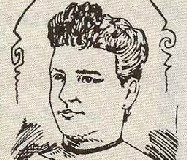 Alice Mitchell
Murderer · USA · 1892
Alice Mitchell was tried for murder and entered a plea of “present insanity,” m…
1 victim
Alice Mitchell
Murderer · USA · 1892
Alice Mitchell was tried for murder and entered a plea of “present insanity,” m…
1 victim
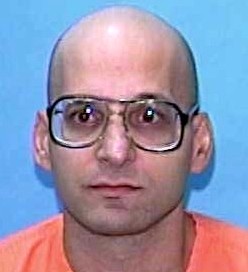 Anthony John Ponticelli
Murderer · USA · 1987
Name: Anthony John Ponticelli Date of birth: 04/19/67 Fifth Judicial Circuit: M…
2 victims
Anthony John Ponticelli
Murderer · USA · 1987
Name: Anthony John Ponticelli Date of birth: 04/19/67 Fifth Judicial Circuit: M…
2 victims
 Hilton Lewis Crawford
Murderer · USA · 1995
Hilton Lewis Crawford was executed by lethal injection in Texas on July 2, 2003…
1 victim
Hilton Lewis Crawford
Murderer · USA · 1995
Hilton Lewis Crawford was executed by lethal injection in Texas on July 2, 2003…
1 victim
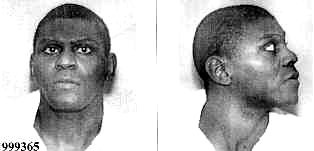 Exzavier Stevenson
Murderer · USA · 2000
Exzavier Lamont Stevenson (TDCJ Number 999365) was born on 06/06/1968. He was r…
2 victims
Exzavier Stevenson
Murderer · USA · 2000
Exzavier Lamont Stevenson (TDCJ Number 999365) was born on 06/06/1968. He was r…
2 victims
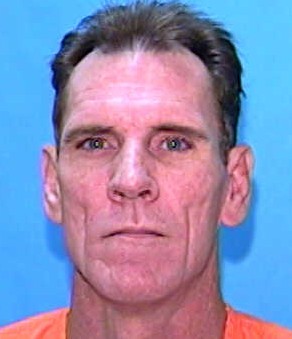 David Wyatt Jones
Murderer · USA · 1987
David Wyatt Jones was tried in the Fourth Judicial Circuit, Duval County, under…
2 victims
David Wyatt Jones
Murderer · USA · 1987
David Wyatt Jones was tried in the Fourth Judicial Circuit, Duval County, under…
2 victims
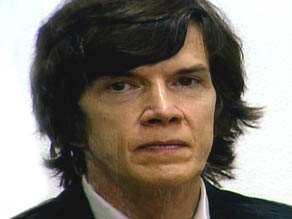 Richard Sharpe
Murderer · USA · 2000
Richard Sharpe was sentenced to life in prison on November 29, 2001. He was fou…
1 victim
Richard Sharpe
Murderer · USA · 2000
Richard Sharpe was sentenced to life in prison on November 29, 2001. He was fou…
1 victim
- Gender
- male
- Country
- USA
- Location
- El Paso County, Texas, USA
- Date of birth
- 1942
- Age at first offence
- 38
- Characteristics
- burglary, drugs, rape?, robbery
- Victim profile
- Oscar Frayre ( service station mechanic )
- Method of murder
- Shooting
- Date(s) of murder
- June 20, 1980
- Years active
- 1980
- Date of arrest
- —
- Status
-
Executed
Executed by lethal injection in Texas on January 30, 1987
Case record
Name and identifiers
Ramon Pedro Hernandez, 44 years old.
Status and outcome
Ramon Hernandez was executed by lethal injection in Texas on January 30, 1987.
He was pronounced dead at 1:13 A.M.
Timeline
- January 13, 1986 — The federal appeal described the Western District of Texas proceedings that Hernandez challenged via a civil rights suit that was treated as including habeas corpus matters.
- November 1986 — Sentencing took place, and Hernandez was allowed to proceed pro se.
- January 29, 1987 — Richard M. Lovelace sought a stay of execution on behalf of Ramon Pedro Hernandez.
- January 30, 1987 — The punishment of death was carried out at approximately 1:00 A.M.; Hernandez was pronounced dead at 1:13 A.M.
The offence
Ramon Hernandez was convicted of shooting the mechanic Oscar Frayre in a 1980 burglary at a service station in El Paso.
The burglary occurred at a service station that had closed for the night, and Oscar Frayre was asleep at the closed service station when he was shot.
The burglary was described as occurring at 3 A.M. in El Paso on June 20, 1980.
Investigation and arrest
Hernandez filed a civil rights suit after his arrest for the murder, asserting that his arrest following the murder was illegal, that his residence was illegally searched, and that the defendants used unreasonable force and threats in connection with his arrest and consequent interrogation.
Trial
Hernandez had declined legal help and rejected legal aid, and he did not want to be represented by attorneys because he thought he would lose the right to represent himself.
Hernandez served a three-year term in Texas prisons in the mid-1960’s for drug possession.
Hernandez requested to the jury assessing punishment that he be given the death penalty rather than a life sentence as a matter of preference.
Sentencing
Hernandez was sentenced to death.
After the trial, Hernandez requested to be permitted to proceed pro se, and when the sentencing took place in November 1986, Richard M. Lovelace was allowed to withdraw as counsel.
The execution date was set for after midnight January 30, 1987.
Judge Peter Peca sentenced Hernandez.
Judge Peca spoke to Hernandez by telephone for 90 minutes before refusing a stay.
Appeals
Richard M. Lovelace, who had defended Hernandez at his trial, pressed appeals in state and Federal courts, and his efforts delayed the execution about an hour.
United States Supreme Court
Hernandez’s rejection of legal aid failed to deter his former trial lawyer, Richard Lovelace, from pressing his case in state and Federal courts.
A final appeal to the Supreme Court had been denied.
The Supreme Court rejected Lovelace’s appeal by a vote of 5 to 2, allowing the state to proceed with the execution.
The United States Supreme Court rejected a last-minute appeal early today to halt the execution, and the court, in a hearing by telephone, voted 5 to 2 to reject lawyers’ pleas for a stay.
Fifth Circuit / Federal district court (civil rights suit and habeas corpus)
Hernandez appealed from a trial court order staying his civil rights suit against policemen who arrested him for the murder until such time as the courts had made ultimate disposition of his sentence of death and the issues raised in connection with the state proceedings in which said sentence was imposed.
The appellate court considered Hernandez’s handwritten complaint as assertive of claims including illegal arrest, illegal residence search, and unreasonable force and threats in connection with arrest and consequent interrogation.
The appellate court concluded that challenges intertwined with the fact of conviction or gravity of sentence were properly treated as habeas corpus matter.
It stated that habeas corpus was the exclusive initial cause of action where the basis of the claim went to the constitutionality of the state court conviction.
It discussed that when a state prisoner attacks the fact or length of his confinement, the appropriate cause of action was a petition for habeas corpus.
The court distinguished a claim for use of unreasonable force in connection with and following arrest as a civil rights claim not requiring exhaustion of state remedies.
The appellate court held:
“Hernandez is the master of his pleadings and, subject to the requirements of Rule 11, Fed.R.Civ.P., may include in them whatever claims he wishes.”
The appellate court also held:
“This Court, therefore, had before it no motion for stay, no petition for habeas corpus, nor any other legal request by or with the authorization of Hernandez.”
The appellate court affirmed.
“AFFIRMED.”
Fifth Circuit / denial of oral motion for stay of execution
On January 29, 1987, Richard M.
The petition was made without the approval of Hernandez.
Lovelace’s claim was that Hernandez had never understood that he had the right to act pro se.
The state district court interviewed Hernandez by telephone and made findings of fact that the court had made it completely clear to Hernandez that he had the right to ask for a stay on a pro se basis, that he could do so immediately and orally, and that he was not bound by having had Lovelace and others as attorneys in times past.
The state district court denied habeas corpus:
- on the ground that Lovelace did not have standing as “next friend,” and
- on the ground that Hernandez himself had clear understanding of his rights and had refused to take any steps to postpone his execution.
The Texas Court of Criminal Appeals denied an appeal.
After state remedies were exhausted, Lovelace moved for a stay of execution in the United States District Court at approximately 5:15 p.m. on January 29, 1987.
The district judge denied the stay after 11:00 p.m.
An oral motion for a stay of execution was then made by Lovelace to the United States Court of Appeals for the Fifth Circuit.
The Court heard oral argument in a conference call, and after receiving no information countering the findings of the state district court, the Court denied the oral motion at 11:55 p.m. on January 29.
The Court stated:
“The oral motion for a stay of execution was denied because the record is clear that as a matter of choice the prisoner under sentence of death chose not to undertake to file any motion for stay of execution or petition for habeas corpus either on a pro se basis or through the representation of movant Lovelace or any other attorney.”
The Court also stated:
“The record reveals that Hernandez was a person of substantial intelligence, with a degree of at least junior college level, and was well versed in the criminal law and procedures as a result of his own studies over a period of years.”
The Court further stated:
On next friend standing, the Court stated:
“Next friend” petitions are permitted only if it is clearly demonstrated that the individual is unable to seek relief on his own behalf or is mentally incompetent to do so.
It concluded:
“There is nothing in the record which casts any doubt upon the mental competence of Hernandez.”
The Court denied the oral motion.
“ORAL MOTION FOR STAY OF EXECUTION DENIED.”
Arrest, legal aid refusals, and communications before execution
Hernandez declined help in a telephone conversation with Judge Peter Peca of State District Court.
A state prosecutor said Hernandez declined help.
Bill Zapalac, an Assistant Attorney General, stated:
“The court asked if he wanted a stay and asked what he wanted and he apparently refused to do anything.”
Bill Zapalac also stated:
“The trial court recommended that relief be denied.”
Bill Zapalac also stated:
“Anyone can file on behalf of an inmate, but if the inmate refuses to have it considered, the court doesn’t have to consider it.”
Judge Peca spoke by telephone with Hernandez for 90 minutes before refusing a stay.
Hernandez told his wife Velma:
“I’ll always love you, you know that,”
Hernandez told reporters in an interview:
“Nobody wants to die,”
“But sometimes people have to make a stand.”
“I have a paramount right to represent myself.”
“If I get a stay, I won’t be making a stand.”
“Seeing that I’m a human being, it’s very important for me not to die.”
“But at the same time, it’s important for me to make a stand.”
Hernandez declined to be represented by attorneys because he thought he would lose the right to represent himself.
Attorney General Jim Mattox stated:
“did not want to be represented by attorneys”
and:
“He was a real good jailhouse lawyer - better than most,”
Mattox also said he told Hernandez early today that a final appeal to the Supreme Court had been denied.
Will Gray, a lawyer, stated:
“The guy has a whole misconception of the law,”
and:
“His point ain’t going to help him. He can take his point to heaven with him.”
Prison history and other convictions
Hernandez had served a three-year term in Texas prisons in the mid-1960’s for drug possession.
Hernandez had federal convictions for illegally transporting aliens.
Hernandez stated that drug use was responsible for his repeated brushes with the law that began at age 13.
Execution details and last moments
Hernandez was moved from his Death Row cell to a holding cell next to the death chamber while lawyers pressed appeals before Federal District Judge Lucius Bunton and the United States Court of Appeals for the Fifth Circuit in New Orleans.
After the needle was inserted, Hernandez was pronounced dead at 1:13 A.M.
People involved
- Ramon Pedro Hernandez — defendant; convicted of killing Oscar Frayre in a burglary.
- Oscar Frayre — mechanic; was asleep at the closed service station when he was shot.
- Velma — Hernandez’s wife.
- Jim Mattox — Attorney General.
- Richard Lovelace — Hernandez’s former trial lawyer; sought a stay of execution; served as court-appointed attorney; allowed to withdraw after sentencing.
- Judge Peter Peca — State District Court judge who sentenced Hernandez; spoke with Hernandez by telephone for 90 minutes.
- Lucius Bunton — Federal District Judge.
- United States Court of Appeals for the Fifth Circuit — court involved in appeals.
- Bill Zapalac — Assistant Attorney General who addressed Hernandez’s refusal of a stay.
- Will Gray — lawyer who disputed Hernandez’s position.
- James A. Lyna ugh — Acting Director, Texas State Department of Corrections (respondent in a federal case caption).
- David Spencer — Detective Sergeant (defendant in a federal case caption).
- et al. — additional defendants in the federal civil rights matter.
Legal case references included in the record
- 780 F.2d 504 — Ramon Pedro Hernandez, Plaintiff-Appellant, v. David Spencer, Detective Sergeant, Et Al., Defendants-Appellees.
- No. 85-1175 — Federal Circuits, 5th Cir. January 13, 1986; Appeal from the United States District Court for the Western District of Texas.
- 809 F.2d 1136 — Richard Lovelace, Applicant and as Next Friend of Ramon Pedro Hernandez, Petitioner-Appellant, v. James A. Lyna ugh, Acting Director, Texas State Department of Corrections, Respondent-Appellee.
- No. 87-1065 — United States Court of Appeals, Fifth Circuit; February 3, 1987. Appeal from the United States District Court for the Western District of Texas.
Spotted an error, or have more information about this case?