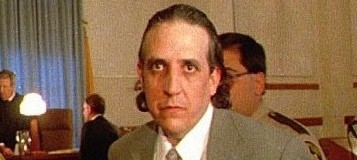
Terry Clark
Murderer Brian Kevin Rosenfeld
Murderer · USA · 1985
Brian Kevin Rosenfeld Brian Kevin Rosenfeld was sentenced to three concurrent l…
23 victims
Brian Kevin Rosenfeld
Murderer · USA · 1985
Brian Kevin Rosenfeld Brian Kevin Rosenfeld was sentenced to three concurrent l…
23 victims
 Yahweh ben Yahweh
Murderer · USA · 1980
Yahweh ben Yahweh was born and legally named Hulon Mitchell Jr. (October 27, 19…
23 victims
Yahweh ben Yahweh
Murderer · USA · 1980
Yahweh ben Yahweh was born and legally named Hulon Mitchell Jr. (October 27, 19…
23 victims
 Russell Ellwood
Murderer · USA · 1991
Russell Ellwood was a former taxi driver. Authorities suspected him of killing…
20 victims
Russell Ellwood
Murderer · USA · 1991
Russell Ellwood was a former taxi driver. Authorities suspected him of killing…
20 victims
 Phil Spector
Murderer · USA · 2003
Harvey Phillip Spector (born December 26, 1939) was an American record producer…
1 victim
Phil Spector
Murderer · USA · 2003
Harvey Phillip Spector (born December 26, 1939) was an American record producer…
1 victim
 Celeste Carrington
Murderer · USA · 1992
Celeste Carrington Celeste Simone Carrington was Black and was 30 at the time o…
2 victims
Celeste Carrington
Murderer · USA · 1992
Celeste Carrington Celeste Simone Carrington was Black and was 30 at the time o…
2 victims
 Alain de Bernardy de Sigoyer
—
Alain de Bernardy de Sigoyer was a French offender who presented himself as a m…
Alain de Bernardy de Sigoyer
—
Alain de Bernardy de Sigoyer was a French offender who presented himself as a m…
 Aaron Hardin
Homicide · USA · 1999
Aaron Hardin was 15 years old when he was tried as an adult for the killing of…
1 victim
Aaron Hardin
Homicide · USA · 1999
Aaron Hardin was 15 years old when he was tried as an adult for the killing of…
1 victim
 Brian Rooney
Murderer · USA · 2006
Brian Rooney (born June 27, 1970) was a former construction worker. He was conv…
1 victim
Brian Rooney
Murderer · USA · 2006
Brian Rooney (born June 27, 1970) was a former construction worker. He was conv…
1 victim
 Frank Ronghi
Murderer · Kosovo · 2000
Frank Ronghi was an American Staff Sergeant in the U.S. Army. · Merita Shabiu w…
1 victim
Frank Ronghi
Murderer · Kosovo · 2000
Frank Ronghi was an American Staff Sergeant in the U.S. Army. · Merita Shabiu w…
1 victim
- Gender
- male
- Country
- USA
- Location
- Chaves County, New Mexico, USA
- Date of birth
- May 17, 1956
- Age at first offence
- 30
- Characteristics
- rape, convicted rapist
- Victim profile
- Dena Lynn Gore (female, 9)
- Method of murder
- Shooting
- Date(s) of murder
- July 17, 1986
- Years active
- 1986
- Date of arrest
- J uly 1986
- Status
-
Executed
Executed by lethal injection in November 6, 2001
Case record: Terry Clark
Background
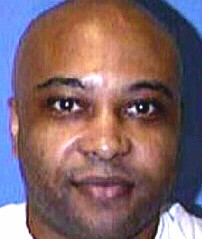
Terry Doug Clark (May 17, 1956 – November 6, 2001) was executed by the State of New Mexico by means of lethal injection. He became the first New Mexico inmate to be executed in 41 years and the first ever to be executed by means of lethal injection in New Mexico since 1976 when the death penalty was reinstated.
Terry Clark had been free on bond pending appeal of his conviction for kidnapping and raping a 6-year-old Roswell girl in 1984. While out on bond, Clark kidnapped and raped Dena Lynn Gore and then killed her.
Clark was convicted of the murder of nine-year-old Dena Lynn Gore and executed for first-degree murder of Dena Lynn Gore.
At the time of the execution, the New Mexico Department of Corrections announced that Clark was read the warrant for execution at 7 p.m., made a statement, and was given the series of chemicals immediately thereafter. The Office of the Medical Examiner pronounced Terry D. Clark dead at 7:10 p.m., and another announcement recorded him declared dead at 7:12 p.m.
The offence
Dena Lynn Gore disappeared on July 17, 1986, while riding a bicycle near her home on the way to a convenience store. She was kidnapped, taken to a nearby ranch where Terry Clark was employed, and sexually penetrated. She was raped and shot 3 times in the back of the head.
Her naked, bound body was found 5 days later in a shallow grave on a Chaves County ranch northwest of Artesia. Police discovered the decomposed body on July 22, 1986 and later identified it as Dena Lynn Gore.
Investigation
On July 22, 1986, police went to the ranch and discovered the decomposed body later identified as Dena Lynn Gore.
After being taken into custody, Terry Clark confessed to a family minister while he was in jail. The confession included that he had kidnapped the girl, had sex with her, and then shot her when she said, “you’re going to pay for this.”
Arrest
Terry Clark was taken into custody after police discovered Dena Lynn Gore’s body on July 22, 1986.
Trial
Clark pleaded guilty to kidnapping and murder in 1986 and was sentenced to death.
The state Supreme Court overturned the sentence in 1994, stating that constitutional rights had been violated. The court ordered resentencing.
During resentencing in 1996, a second jury decided that Clark should die for the crimes.
Clark waived his appeals in 1999.
Clark had always maintained his innocence in the 1984 kidnapping and rape case. The 1984 case involved a 6-year-old Roswell girl named Donita Welch. The material also stated that Clark was convicted of kidnapping and raping Donita Welch and leaving her for dead on an isolated road west of Roswell.
The material stated that Clark had been out on $50,000 bond pending an appeal to the state Supreme Court when Dena Lynn disappeared. It also stated that Clark was ordered to stay out of Roswell and that he was living with brother Steve Clark, who managed the Squaw Canyon Ranch, where the girl's body was later found.
Less than five months after his arrest, Clark pleaded guilty on Dec. 4, 1986 to kidnapping and first-degree murder, thinking that he could win a pardon from then-Gov. Toney Anaya.
Sentencing
The trial sentenced Clark to death after he pleaded guilty to kidnapping and murder in 1986.
The state Supreme Court overturned the death sentence in 1994 and ordered resentencing due to constitutional rights violations, including that the jury was not accurately told how much prison time Clark faced if given a life term.
In 1996, a second jury again decided that Clark should die for his crimes.
After the Supreme Court upheld the death sentence for Clark and an execution date was set, Clark resumed appeals in February 2000.
Appeals
On July 14, 2000, attorneys filed a petition for habeas corpus challenging Clark’s conviction and sentence.
Clark personally wrote to the judge and requested that the petition be dismissed.
Judge Bonem held a four-day hearing at which various mental health experts and others testified concerning Clark’s mental competence.
On August 10, 2001, Judge Bonem held that Clark was mentally competent to waive further review and dismissed the habeas corpus petition as Clark requested. Judge Bonem set the execution for November 6, 2001.
The material stated that an attorney attempted to obtain review of Judge Bonem’s ruling in the New Mexico Supreme Court, but Clark wrote to that court and asked that the petition filed on his behalf be dismissed. On September 14, 2001, the New Mexico Supreme Court granted Clark’s request and refused to consider the petition filed on his behalf.
The material also stated that earlier Tuesday, the U.S. Supreme Court denied a challenge from lawyers that questioned Clark’s state of mind and competence to accept his death sentence.
The material further stated that Clark dropped his appeals and requested execution against the wishes of his lawyers, who argued he was mentally ill.
Execution / Outcome
Clark waived his appeals in 1999 and was executed in 2001.
A New Mexico Corrections Secretary statement described the execution and stated it was carried out without incident. New Mexico Corrections Secretary Robert J. Perry was quoted:
“Have brought ‘truth’ to those words”, by carrying-out without incident, the clinical-lethal injection, of Terry Douglas Clark, his execution was conducted with decency, in a professional, dignified, and compassionate manner,” said New Mexico Corrections Secretary Robert J. Perry.
A final statement attributed to Clark before the lethal drug solution was injected into his arm was:
“15 minutes.”
Governor Gary Johnson issued a statement regarding the execution:
“At approximately 7 p.m. today, Terry Clark was executed by lethal injection. I am satisfied that justice was done, and that the state carried out its obligation to its citizens. Mr. Clark deserved the punishment he received for the heinous crimes that he committed, crimes for which he properly paid the ultimate price. I can only hope that his execution will serve as a lesson to all those who would engage in such evil acts. My thoughts and prayers go out to the family of Dena Lynn Gore, who have suffered so many years from the death of their daughter, and I pray that the events of today will provide them some resolution to the nightmare they have lived for so long. No parent should ever have to face such hardship. I commend the professional manner in which the New Mexico Corrections Department, Secretary of Corrections Robert Perry, and Warden Tim LeMaster performed their duty to carry out the sentence against Terry Clark. Now that the sentence against Mr. Clark has been carried out, I ask New Mexicans to put the emotions surrounding this event behind us and move forward.”
Clark dead at 7:10 p.m., and another part of the material recorded him declared dead at 7:12 p.m.
The material stated that Clark’s execution began at 7 p.m. Mountain Standard Time, and that Tim Le Master, Warden of the Penitentiary of New Mexico, began the Warrant of Execution as ordered by the Ninth Judicial District Court for the State of New Mexico.
The material also stated that it took eight minutes for the convicted child killer to die by lethal injection, with Clark muttering his last unexplained words: “15 minutes.”
Aftermath
Clark’s body was ferried moments after the execution to the OMI in Albuquerque for an autopsy.
The material stated that Clark would be interred at the Sunset Mausoleum in Albuquerque.
The material included statements from Thomas Rutledge, the district attorney who prosecuted the case:
“What happened tonight wasn’t about Terry Clark; it was about this little girl - Dena Lynn Gore,” said Thomas Rutledge, the district attorney who prosecuted the case. “Justice was served tonight 15 years after the heartaches began.”
The material also stated that Dena Lynn Gore’s parents, Colleen Gore and Jeff Gore, attended and that Jeff Gore planned to visit Dena Lynn’s grave in a White Oaks cemetery and tell her that the vow he made to her 15 years before had finally been fulfilled.
Sylvia Hewett, an Artesia newspaper reporter, was quoted:
“There was just quiet between them, no sobbing, just quiet,” said Sylvia Hewett, an Artesia newspaper reporter who served as one of two media representatives in the witness room. “There was a tearful strength.”
Witness Barry Massey, a reporter for The Associated Press, was named as reporting on the witness rooms. Holly Lawrence was quoted:
“I think it was kind of like I thought it would be,” said Holly Lawrence, one of the witnesses chosen by the warden to attend the execution. “I expected him not to express sorrow or remorse, and unfortunately I got what I expected.”
Timeline
- July 17, 1986 — Dena Lynn Gore disappeared while riding a bicycle near her home on the way to a convenience store.
- July 22, 1986 — Police went to the ranch and discovered the decomposed body later identified as Dena Lynn Gore.
- Dec. 4, 1986 — Terry Clark pleaded guilty to kidnapping and first-degree murder.
- 1994 — The state Supreme Court overturned Clark’s death sentence and ordered resentencing, citing constitutional rights violations.
- 1996 — A second jury decided Clark should die for the crimes.
- 1999 — Clark waived his appeals.
- July 14, 2000 — Attorneys filed a petition for habeas corpus challenging Clark’s conviction and sentence.
- February 2000 — Clark resumed appeals after an execution date was set.
- August 10, 2001 — Judge Bonem held Clark was mentally competent to waive further review and dismissed the habeas corpus petition.
- September 14, 2001 — The New Mexico Supreme Court granted Clark’s request and refused to consider the petition filed on his behalf.
- November 6, 2001 — Terry Clark was executed by lethal injection.
Other details
Terry Clark drove to Artesia on July 17, 1986 and kidnapped nine-year-old Dena Lynn Gore, who was riding a bike to a convenience store.
The material stated that Dena Lynn Gore had been on her brother’s bicycle and that it was the first time she made the five-block trip alone. The material also stated she had been on a five-block trip to an Allsup’s in Artesia to buy a soda.
The material stated that Clark sexually penetrated her and shot her in the head three times. Her body was found in a shallow grave on a remote ranch 60 miles northwest of Artesia.
The material stated that Clark was 43 when he pled guilty to kidnapping and murder in 1986 and that he was 45-year-old at the time of execution. It also stated that he was 30 at the time of Dena’s kidnapping.
Steve Clark managed the Squaw Canyon Ranch where Dena’s body was later found. The material also mentioned Dena’s brother’s bicycle, linking the bike ride to her brother’s bicycle.
The material stated that Clark was the first New Mexico inmate to be executed in 41 years and the first ever to be executed by means of lethal injection.
The material included references to the Governor’s death-penalty stance under then-Gov. Toney Anaya, including that Anaya had emptied death row and commuted all five inmates’ sentences to life imprisonment before Clark’s sentencing was delayed until after Anaya left office.
The material stated that Judge Bonem found Clark competent in August and set the execution for Tuesday, and that on the day Clark decided to drop appeals he asked a judge to go ahead with his execution.
The material mentioned a Christian minister described as Clark’s spiritual adviser who baptized the convict while in prison.
The material stated that Clark’s girlfriend, Jean Ortiz of Roswell, plus a lawyer who handled his appeal and another woman, were in a smaller, separate room as witnesses.
The material included that Ortiz wrote Clark a letter in prison asking him “why he wasn’t dead yet” and received a letter back that changed her mind. It also stated that Ortiz was now Clark’s fiancée and was among the witnesses invited by Clark to watch his execution.
The material included a quoted statement attributed to Clark:
“I know we still have a long way to go, especially if he's not going to waive it,” said the victim's mother, Colleen Gore, from the Estancia auto repair shop where she works. And further quoted: “I think it's a tactic but this is our system and that's the way it works. So it will be a little bit longer, maybe 20 years longer,” she said with tears in her eyes. And further quoted: “Great. I think this is the start of showing people you can't hurt our children. Enough is enough,” she said.
The material also quoted Patti Jo Grisham:
“I will not allow myself, my family and the victim's family to be put through any more,” Clark wrote to Bonem. “15 years of being at trials and court hearings, I'm not going to miss the day to say, 'Justice for Dena,'” said Patti Jo Grisham, a long-time friend of Dena Lynn's mother, Colleen Gore.
The material included a letter quote attributed to Clark in February 2000:
“There is not a day that goes by that I don't suffer from extreme guilt,” Clark said in a Feb. 21, 2000, letter to a Tribune reporter. “The shame of it is why I chose to die instead of having to live with that on my mind from day to day.”
The material included a quote attributed to witness Paul Steele about Jeff Gore’s planned actions:
“He said he made a vow over her grave the day she was buried: Whoever did this to her would die,” said Steele, a University of New Mexico professor.
The material stated that the last execution in New Mexico was on Jan. 8, 1960 when David Nelson became the only person to die in the state’s gas chamber.
The material included claims about the “Dena Lynn Gore law” and the appellate bond law, but it did not record additional judicial outcomes beyond the overturning and resentencing already included above.
The material included statements from a New Hampshire Coalition Against the Death Penalty page about another execution in Georgia and that both convicted child killers were put to death by lethal injection, with no additional case details beyond naming Georgia and New Mexico generally.
Spotted an error, or have more information about this case?