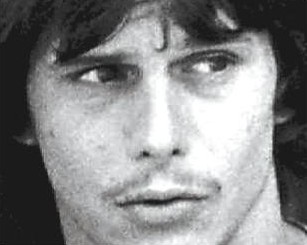
Walter Milton Correll
Murderer Brian Kevin Rosenfeld
Murderer · USA · 1985
Brian Kevin Rosenfeld Brian Kevin Rosenfeld was sentenced to three concurrent l…
23 victims
Brian Kevin Rosenfeld
Murderer · USA · 1985
Brian Kevin Rosenfeld Brian Kevin Rosenfeld was sentenced to three concurrent l…
23 victims
 Marvin Gray
Murderer · USA · 1975
Marvin Gray was convicted killer who claimed responsibility for 23 slayings and…
23 victims
Marvin Gray
Murderer · USA · 1975
Marvin Gray was convicted killer who claimed responsibility for 23 slayings and…
23 victims
 Yahweh ben Yahweh
Murderer · USA · 1980
Yahweh ben Yahweh was born and legally named Hulon Mitchell Jr. (October 27, 19…
23 victims
Yahweh ben Yahweh
Murderer · USA · 1980
Yahweh ben Yahweh was born and legally named Hulon Mitchell Jr. (October 27, 19…
23 victims
 Russell Ellwood
Murderer · USA · 1991
Russell Ellwood was a former taxi driver. Authorities suspected him of killing…
20 victims
Russell Ellwood
Murderer · USA · 1991
Russell Ellwood was a former taxi driver. Authorities suspected him of killing…
20 victims
 Walter Key Williams
Murderer · USA · 1981
Walter Key Williams grew up in San Antonio’s poor East Side. His childhood neig…
2 victims
Walter Key Williams
Murderer · USA · 1981
Walter Key Williams grew up in San Antonio’s poor East Side. His childhood neig…
2 victims
 John Donald Merrett
Homicide - Murderer · United Kingdom · 1926
John Donald Merrett (also known as Ronald Chesney) was born in New Zealand in 1…
3 victims
John Donald Merrett
Homicide - Murderer · United Kingdom · 1926
John Donald Merrett (also known as Ronald Chesney) was born in New Zealand in 1…
3 victims
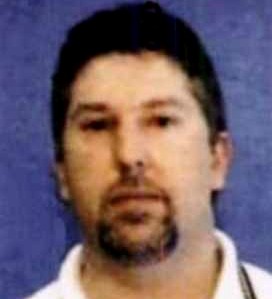 Richard Evonitz
Serial killer · USA · 1996
Richard Marc Evonitz (July 29, 1963 - June 27, 2002) was a serial killer, kidna…
3 victims
Richard Evonitz
Serial killer · USA · 1996
Richard Marc Evonitz (July 29, 1963 - June 27, 2002) was a serial killer, kidna…
3 victims
 Robert Bierenbaum
Murderer · USA · 1985
Robert Bierenbaum was a plastic surgeon who was convicted in October 2000 of mu…
1 victim
Robert Bierenbaum
Murderer · USA · 1985
Robert Bierenbaum was a plastic surgeon who was convicted in October 2000 of mu…
1 victim
 Gilberto Chamba
Serial killer · Ecuador / Spain · 1988
Gilberto Antonio Chamba Jaramillo was an Ecuadorian immigrant to Spain. He was…
9 victims
Gilberto Chamba
Serial killer · Ecuador / Spain · 1988
Gilberto Antonio Chamba Jaramillo was an Ecuadorian immigrant to Spain. He was…
9 victims
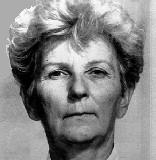 Marianne Nölle
Serial killer · Germany · 1984
Marianne Nölle was born in 1938. She was a German serial killer from Cologne. M…
7 victims
Marianne Nölle
Serial killer · Germany · 1984
Marianne Nölle was born in 1938. She was a German serial killer from Cologne. M…
7 victims
- Gender
- male
- Country
- USA
- Location
- Franklin County, Virginia, USA
- Date of birth
- 1961
- Age at first offence
- 24
- Characteristics
- abduction, robbery, history of mental illness, alcohol
- Victim profile
- Charles W. Bousman Jr.
- Method of murder
- Stabbing with knife
- Date(s) of murder
- August 11, 1985
- Years active
- 1985
- Date of arrest
- 5 days after
- Status
-
Executed
Executed by lethal injection on January 4, 1996 in Virginia; clemency petition to Gov. George F. Allen was denied shortly after 8 p.m. on January 5, 1996; pronounced dead at 9:13 p.m.
Case details
Walter Milton Correll Jr. was convicted of capital murder and robbery in Virginia. He was executed by lethal injection in Virginia on January 4, 1996. A last-minute appeal for clemency to Gov. George F. Allen was denied shortly after 8 p.m., and Correll was pronounced dead at 9:13 p.m.
Background
Correll died in the state's death chamber. The inmate executed was described as having mental retardation, with an IQ of 68. His two co-defendants blamed the murder on him and received lighter sentences. Correll had no final statement. He met with clergy during the day, and while in prison, Correll converted to Catholicism.
The offence
Correll was convicted of capital murder for the August 11, 1985 slaying of Charles W. Bousman Jr. Three men stole Bousman's car in Roanoke and stuffed him in the trunk. Bousman was taken to a wooded area in nearby Franklin County, robbed, and stabbed to death.
The two other defendants, John Dalton and Richard Reynolds, testified that Correll killed Bousman by twice throwing a knife in his chest. Correll's lawyers contended that Dalton and Reynolds, described as friends of above-average intelligence, blamed Correll for the killing to escape the death penalty for their own acts. The only way Correll could receive a death sentence was if the court found that he struck the fatal blow.
Correll confessed to police that he stabbed Bousman, but his attorneys contended the confession was tainted because his request for a lawyer before questioning was denied.
Events described at trial (as addressed on appeal)
On the evening of August 10, Correll met John Dalton and Richard Reynolds at the home of Rhonda Small in Roanoke, Virginia. The three men left Small's residence either late that night or in the early morning hours of August 11 and walked to an overpass at Interstate 581. During the walk, Correll began to discuss "getting a car," and as they neared the overpass, Correll instructed Dalton and Reynolds to wait on a hill next to the overpass while he remained on the street below.
A maroon Buick automobile driven by Bousman stopped beside Correll. Correll entered the front passenger seat and motioned for Dalton and Reynolds to approach. Bousman noticed Dalton behind the Buick and exited the vehicle to investigate. Correll followed Bousman, seized him in a stranglehold, and choked him until he lost consciousness. Correll stole Bousman's wallet and placed him in the trunk of the automobile, then departed in the Buick with Dalton and Reynolds.
Correll drove to a wooded area of Franklin County, Virginia and robbed Bousman, who was still unconscious, of a ring and a pocket watch. Correll removed Bousman from the trunk and kicked him in the face four to five times as he lay on the ground. Correll and Dalton dragged Bousman into the woods, and Correll produced a hunting knife discovered in the Buick during the drive. Correll hurled the knife into Bousman's body, removed it, and handed it to Reynolds, who made a minor cut on Bousman's neck with it. Correll retrieved the knife and again threw it into Bousman. Correll then pulled the knife from Bousman's body and instructed Dalton "to get rid of it."
The three men left in the Buick. During the return trip to Roanoke, at Correll's direction, Dalton pitched the knife beneath a bridge before returning to Small's home. Bousman's badly decomposed body was discovered in Franklin County approximately one week later.
An autopsy revealed two stab wounds to the chest: one that penetrated the right lung, severing the pulmonary artery and causing Bousman's death, and another that caused Bousman's left lung to collapse and which, untreated, would have resulted in his death.
Investigation
After Dalton and Reynolds implicated Correll in the murder, Correll was taken into custody by Roanoke police on Friday, August 16.
Although Correll invoked his right to counsel during police questioning, the police did not honor his request for counsel by ceasing interrogation. Correll gave two confessions that evening: one to a Roanoke police detective and another later that night to Investigator Overton of the Franklin County Sheriff's Department.
On Sunday, August 18, Correll was transported from the jail in Roanoke, where he was detained, to Appomattox, Virginia to undergo a polygraph examination. Following the polygraph examination, Correll was transported by Officer Ferguson of the Franklin County Sheriff's Department to the Franklin County jail to be processed on the arrest warrant for the murder and robbery of Bousman. While detained in a holding cell there, Correll asked to speak with Investigator Overton. Correll initiated the contact so he could explain the results of the polygraph examination to Overton.
After Investigator Overton gave Correll Miranda warnings, Correll waived these rights and began to answer Investigator Overton's questions, which led to another confession. Correll moved to suppress all three confessions.
Arrest
Correll was taken into custody by Roanoke police on Friday, August 16.
He was transported from the jail in Roanoke to Appomattox, Virginia on Sunday, August 18 for a polygraph examination.
After the polygraph examination, he was transported by Officer Ferguson of the Franklin County Sheriff's Department to the Franklin County jail to be processed on the arrest warrant for the murder and robbery of Bousman.
Trial
Correll waived his right to a jury trial and was tried and convicted of capital murder and robbery.
He was sentenced to death for the murder after the judge found it was outrageously and wantonly vile, horrible, and cruel and was sentenced to life imprisonment for the robbery.
These convictions and sentences were upheld on direct appeal. Correll v. Commonwealth, 352 S.E.2d 352 (Va. 1987).
The Supreme Court of Virginia rejected Correll's claim that the third confession should have been suppressed based on the argument that Investigator Overton initiated questioning or because the questioning at the Franklin County jail was merely a continuation of the polygraph examination. The Supreme Court of Virginia also conducted a proportionality review in accordance with Va. Code Ann. § 17-110.1(C)(2) (Michie 1988) and concluded that Correll's sentence was not disproportionate or excessive compared to the sentences imposed in comparable capital murder cases.
Appeals
U.S. District Court (habeas corpus)
Correll brought a state habeas proceeding raising a litany of issues. The state habeas court held that all of the issues advanced, except Correll's ineffective assistance of counsel claims, were procedurally barred and dismissed them. The state habeas court then conducted a plenary evidentiary hearing on Correll's ineffective assistance of counsel claims and denied relief.
Correll filed a first § 2254 petition in February 1991. The Commonwealth moved to dismiss, arguing procedural bars and that factual findings of the state courts were entitled to a presumption of correctness under § 2254(d). For nearly three years thereafter the petition languished; in December 1993, the district court conducted a hearing on the Government's motion to dismiss.
In May of 1994, the district court ruled granting the Commonwealth's motion, dismissing Correll's petition, and concluding an evidentiary hearing on the petition was not necessary since Correll had had a full and fair hearing in the state proceedings. In July 1994, the court granted Correll's motion pursuant to Federal Rule of Civil Procedure 59(e) and vacated its prior decision. The following month, three and one-half years after Correll filed the petition, the district court entered an order granting the writ based on errors concerning the admission of the third confession.
U.S. Court of Appeals for the Fourth Circuit
The appellate proceedings included:
- UNITED STATES COURT OF APPEALS FOR THE FOURTH CIRCUIT
- Walter Milton Correll, Jr., Petitioner-Appellee, v. Charles E. Thompson, Warden, Mecklenburg Correctional Facility, Respondent-Appellant. No. 94-4007
- Walter Milton Correll, Jr., Petitioner-Appellant, v. Charles E. Thompson, Warden, Mecklenburg Correctional Facility, Respondent-Appellee. No. 94-4012
- Appeals from the United States District Court for the Western District of Virginia, at Roanoke.
- James C. Turk, District Judge. (CA-91-131-R)
- Argued: April 6, 1995
- Decided: August 24, 1995
- Before WILKINSON and WILKINS, Circuit Judges, and PHILLIPS, Senior Circuit Judge.
- Judge Wilkins wrote the opinion, joined by Judge Wilkinson and Senior Judge Phillips.
- Counsel argued included Katherine P. Baldwin, Joseph D. Tydings, and on brief James S. Gilmore, III, Lois Casaleggi Wolf, Robert E. Pokusa, Kevin P. Sherburne, Donald R. Lee, and Michele Brace.
The Fourth Circuit addressed whether the district court erred in granting the writ by vacating Correll's convictions and sentences.
The Fourth Circuit concluded that the district court erred:
- by vacating Correll's conviction and sentence on the basis that the third confession was obtained as a result of police interrogation, reasoning that the record did not demonstrate that disclosure of polygraph results constituted interrogation; and
- by vacating on the basis that the third confession was tainted by earlier confessions elicited in violation of Edwards, concluding that the earlier confessions were not obtained in violation of the Fifth Amendment and therefore could not taint the third confession.
- The Fourth Circuit also concluded that even if admission of the confession had been error, the admission was harmless because the evidence against Correll aside from the confession was overwhelming.
The Fourth Circuit vacated the district court's judgment and remanded with instructions to reinstate Correll's convictions and sentences.
Supreme Court of Virginia and U.S. Supreme Court
The Supreme Court of Virginia upheld the convictions and sentences and rejected the confession-suppression arguments.
The United States Supreme Court denied Correll's petition for certiorari, and the conviction became final on June 15, 1987. Correll v. Virginia, 482 U.S. 931 (1987).
On Wednesday, the U.S. Supreme Court rejected an emergency request to postpone the execution and denied a formal appeal.
Sentencing
Correll was sentenced to death for the capital murder. The sentencing judge found it was outrageously and wantonly vile, horrible, and cruel.
He was sentenced to life imprisonment for the robbery.
Outcome
Clemency was denied on a last-minute petition to Gov. George F. Allen shortly after 8 p.m. Correll was pronounced dead at 9:13 p.m. Correll had converted to Catholicism while in prison and met with clergy during the day. He had an IQ of 68 and no final statement.
Dalton and Reynolds entered plea agreements and served prison terms.
Aftermath
The execution was described as the 30th in Virginia since the state reinstated the death penalty in 1976. The two other defendants were reported to be serving prison terms after helping the State convict Correll.
Spotted an error, or have more information about this case?