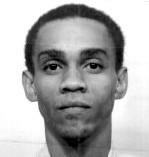
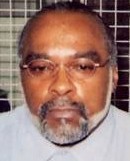
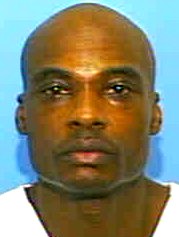
Walter Key Williams
Murderer Ervil LeBaron
Murderer · USA · 1972
Ervil Morrell LeBaron (1925 to August 16, 1981) was the leader of a polygamous…
35 victims
Ervil LeBaron
Murderer · USA · 1972
Ervil Morrell LeBaron (1925 to August 16, 1981) was the leader of a polygamous…
35 victims
 Brian Kevin Rosenfeld
Murderer · USA · 1985
Brian Kevin Rosenfeld Brian Kevin Rosenfeld was sentenced to three concurrent l…
23 victims
Brian Kevin Rosenfeld
Murderer · USA · 1985
Brian Kevin Rosenfeld Brian Kevin Rosenfeld was sentenced to three concurrent l…
23 victims
 Marvin Gray
Murderer · USA · 1975
Marvin Gray was convicted killer who claimed responsibility for 23 slayings and…
23 victims
Marvin Gray
Murderer · USA · 1975
Marvin Gray was convicted killer who claimed responsibility for 23 slayings and…
23 victims
 Yahweh ben Yahweh
Murderer · USA · 1980
Yahweh ben Yahweh was born and legally named Hulon Mitchell Jr. (October 27, 19…
23 victims
Yahweh ben Yahweh
Murderer · USA · 1980
Yahweh ben Yahweh was born and legally named Hulon Mitchell Jr. (October 27, 19…
23 victims
 Russell Ellwood
Murderer · USA · 1991
Russell Ellwood was a former taxi driver. Authorities suspected him of killing…
20 victims
Russell Ellwood
Murderer · USA · 1991
Russell Ellwood was a former taxi driver. Authorities suspected him of killing…
20 victims
 Tommy Zethraeus
Mass murderer · Sweden · 1994
Tommy Zethraeus and Guillermo Marques Jara had been refused to enter a night cl…
4 victims
Tommy Zethraeus
Mass murderer · Sweden · 1994
Tommy Zethraeus and Guillermo Marques Jara had been refused to enter a night cl…
4 victims
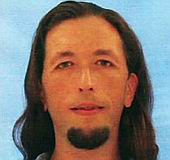 Adam Mayes
Murderer · USA · 2012
Adam Mayes (September 2, 1976 – May 10, 2012) was accused in the Bain murder-ki…
2 victims
Adam Mayes
Murderer · USA · 2012
Adam Mayes (September 2, 1976 – May 10, 2012) was accused in the Bain murder-ki…
2 victims
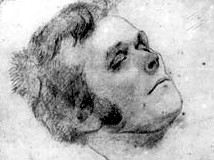 Alexander Pearce
Murderer · Australia · 1822
1819 — Alexander Pearce was sentenced at Armagh in 1819 to penal transportation…
6 victims
Alexander Pearce
Murderer · Australia · 1822
1819 — Alexander Pearce was sentenced at Armagh in 1819 to penal transportation…
6 victims
 David Lee Fisher
Murderer · USA · 1983
David Lee Fisher was executed by lethal injection in Virginia on March 25, 1999…
1 victim
David Lee Fisher
Murderer · USA · 1983
David Lee Fisher was executed by lethal injection in Virginia on March 25, 1999…
1 victim
 Jennifer San Marco
Mass murderer · USA · 2006
Jennifer San Marco (December 6, 1961 – January 30, 2006) was a former US Postal…
7 victims
Jennifer San Marco
Mass murderer · USA · 2006
Jennifer San Marco (December 6, 1961 – January 30, 2006) was a former US Postal…
7 victims
 Miguel Rios
Murderer · USA · 1992
Miguel Rios was sentenced to death on April 2, 1996 for the shooting death of M…
2 victims
Miguel Rios
Murderer · USA · 1992
Miguel Rios was sentenced to death on April 2, 1996 for the shooting death of M…
2 victims
- Gender
- male
- Country
- USA
- Location
- Bexar County, Texas, USA
- Date of birth
- January 30, 1962
- Age at first offence
- 19
- Characteristics
- robbery, gang, drug addict
- Victim profile
- Man (gas station attendant) / Daniel Liepold, 19 (convenience store clerk)
- Method of murder
- Shooting ( .38 caliber revolver)
- Date(s) of murder
- February 10, 1981
- Years active
- 1981
- Date of arrest
- Next day
- Status
-
Executed
Executed by lethal injection in Texas on October 5, 1994
Background
Walter Key Williams grew up in San Antonio’s poor East Side. His childhood neighborhood had been referred to as one filled with guns, gangs, and drugs.
On the evening of February 9, 1981, Walter Williams and a friend, Theodore Edwards, went to the home of Williams’s parents, where Williams was living at the time. While there, the two men took a .38 revolver belonging to Williams’s mother and walked to a nearby gas station. Williams stayed in the parking lot as Edwards proceeded to the store service window. Edwards shot twice at the gas station attendant and killed him, reached in through the window, and took the money. After Edwards and Williams left the scene, they split the money.
At approximately 9:00 p.m. that same evening, the police responded to a call reporting a robbery in progress. Upon their arrival at the gas station, the police discovered the body of the clerk.
Later that same night, Williams and Edwards went for a car ride. While driving around, the two men discussed the fact that they were both short of cash, so they decided to rob a nearby Circle K convenience store at which Williams had previously worked. Williams placed the revolver in the waistband of his trousers and entered the store with Edwards. Williams knew Danny Liepold, the clerk who was working that evening, because Williams had worked with Liepold in that same store before.
Williams and Edwards picked up food items and took positions at opposite sides of the counter. When Liepold turned his back to Williams in order to wait on Edwards, Williams fatally shot Liepold in the back. After Liepold fell to the floor, Edwards and Williams went behind the counter to open the two cash registers located in the store. Unable to open the register that he was working on, Williams ran to the car, leaving Edwards inside the store. He yelled at Edwards from the car that they should leave. At that point, Williams saw someone drive by. Becoming scared, he left the scene without Edwards. Williams went home and went to bed. He had been asleep for a half hour before he was awakened by the police.
Williams was nineteen years old when he murdered Liepold.
The offence
The events began with the gas station robbery in the parking lot outside the gas station, followed by the Circle K convenience store robbery and shooting. At the Circle K store, Williams fatally shot Danny Liepold in the back. At the gas station, Edwards shot twice at the gas station attendant and killed him. The two men split the cash after leaving each scene.
Investigation
At approximately 2:00 a.m. on February 10, 1981, Roberto Gutierrez, a friend of Danny Liepold and fellow employee of the Circle K who worked at a different location, drove to the store to talk to Danny. After Gutierrez visited Danny at the Circle K, he left to run a quick errand, planning to return shortly. Upon returning approximately 20 minutes later, Gutierrez noticed a car suspiciously parked parallel to the front of the store and two men standing inside the store trying to open the cash registers. Gutierrez recognized one of the men as Walter, an employee of the store. Concerned for Danny, whom he did not see, Gutierrez slowly drove by the store once and turned around to look into the store a second time. Upon driving by the second time, he noticed that one of the men was in the car pulling away, leaving behind the other man who was walking toward the car. Gutierrez followed the car for about 20 minutes and managed to get a description and take down its license plate number.
As Police Officer Thomas Estrada drove toward the Circle K at approximately 2:30 a.m. to make a routine check, he noticed a man walking away from the store. Unable to see the clerk inside the store, Officer Estrada parked his car and entered the store. He discovered Liepold lying beneath the counter in a pool of blood. Estrada immediately notified the dispatcher and described the man he had seen walking away just moments before. Gutierrez then returned to the store with a description of the car and its license plate number. Gutierrez told the police that he saw two men and recognized one of the men as an attendant named Walter who worked at that store on weekends.
Shortly thereafter, Police Officer Heim arrested Ted Edwards about a mile away. Following his arrest, Officer Estrada and Gutierrez positively identified Edwards as the man they had seen earlier at the store. After being advised of his rights, Edwards denied having had anything to do with the robbery and shooting. However, when it was discovered that he had a package of cigarettes which, based on the stamp on the bottom of the package, came from that Circle K, Edwards admitted his involvement in the shooting and robbery.
Officer Roy Thomas arrived at the scene at approximately 3:30 a.m. and read Edwards his rights again. Edwards identified Williams as the other person involved in the shooting and told Officer Thomas where Williams lived.
Relying on Edwards’s directions, several officers drove to Williams’s house, where they discovered a car matching the description and license plate number provided by Gutierrez. Lucian Williams, Williams’s father, answered the door and, after having the situation explained to him, let the officers in to look for his son.
As the officers entered Williams’s bedroom, they saw Williams asleep on the bed with a revolver in plain view on the nightstand. The jury was not informed that the officers also saw on the nightstand a birthday card given to Williams by Danny Liepold, the man Williams had just killed.
Officer Thomas woke Williams and read him his rights. Williams was not under the influence of drugs or alcohol at the time of his arrest.
A .38 caliber copper-jacketed bullet recovered from Liepold’s body was positively identified as having been fired from the revolver recovered from atop Williams’s nightstand. An additional .38 caliber bullet was recovered from the car, parked in front of the house, that matched the vehicle and license plate number that Gutierrez had described.
Arrest
Upon arrival at the police station, Williams was again advised of his rights, and he made a written, signed voluntary statement regarding the robbery. The following morning, Williams asked that he be allowed to amend the written statement. Detective Abel Juarez read him his rights for the third time, and Williams gave a new statement, again indicating his involvement in the robbery, but admitting, contrary to his first statement, that it was he, not Edwards, who had shot the clerk in the Circle K. Additionally, after being advised of his rights still one more time, Williams told Officer Michael Akeroyd of his involvement in the shooting at the gas station the night before.
Trial
Williams was convicted of capital murder for the robbery and shooting at the Circle K.
The Texas Court of Criminal Appeals affirmed his conviction. See Williams v. State, 668 S.W.2d 692 (Tex.Crim.App.1983), cert. denied, 466 U.S. 954 , 104 S.Ct. 2161, 80 L.Ed.2d 545 (1984).
Williams was sentenced to death.
The jury was required to answer the following special issues at the sentencing phase of Williams’s trial:
- whether the conduct of the defendant that caused the death of the deceased was committed deliberately and with the reasonable expectation that the death of the deceased or another would result; and,
- whether there is a probability that the defendant would commit criminal acts of violence that would constitute a continuing threat to society. Tex.Code Crim.Proc.Ann. art. 37.071(b).
Williams’s appeals stated an ineffective assistance of counsel claim and other issues.
Jury selection and venire members excused for cause
During voir dire, venire member Salazar stated that she was opposed to the death penalty and would be unable to set aside her personal beliefs in order to answer the special issues based on the evidence presented at Williams’s trial.
Venire member Flores stated that she would not be able to inflict the death penalty in any case.
Venire member Castillo stated that she would not be able to impose the death penalty under any circumstances.
Sentencing
At the time of his trial, Williams was nineteen years old.
Appeals
Direct appeals and federal habeas proceedings
A federal habeas corpus appeal reviewed the denial of Williams’s petition. The federal circuit panel included DAVIS, JONES, and DUHE, Circuit Judges. EDITH H. JONES, Circuit Judge, wrote the opinion.
Walter Key Williams, Petitioner-Appellant, v. James A. Collins, Director, Texas Department of Criminal Justice, Institutional Division, Respondent-Appellee. Docket number: 93-8499. Federal Circuits, 5th Cir. March 7, 1994.
The case was an appeal from the United States District Court for the Western District of Texas.
Williams filed an application for federal habeas relief in 1986. The case was initially referred by the district court to Magistrate Judge Jamie Boyd. Because of Boyd’s impending retirement from the bench, the case was subsequently referred to Magistrate Judge Robert O’Connor. Magistrate Judge O’Connor recommended denying relief; his recommendations were adopted by order of then-District Judge Emilio Garza.
Williams filed a motion to alter or amend judgment based upon then-recent decisions by the Supreme Court and the Fifth Circuit which mandated a re-examination of the district court’s decision. Upon reconsideration, both the magistrate judge and District Judge Edward Prado adhered to the earlier decision, and a certificate of probable cause was issued. Williams then appealed.
Ineffective assistance of counsel claims
Williams complained that he received ineffective assistance of counsel in violation of the sixth amendment because trial counsel failed to prepare and investigate adequately in preparation for his case in mitigation at the sentencing phase of his trial, to object during voir dire when three venire members were stricken for cause, to request a psychiatric examination, and to object or limit testimony of the victim’s mother regarding the victim’s good character.
Trial counsel mitigation investigation
At trial, Williams was represented by Allan Manka and Michael Callahan, both of whom were experienced capital trial counsel. After his indictment, both Manka and Callahan encouraged Williams to accept the state’s plea bargain, which Williams refused. After interviewing Williams and family members at length, counsel decided not to pursue defenses based upon alibi, insanity, or self-defense because investigation provided no reasonable basis for doing so. Counsel made a strategic decision to direct attention to the punishment phase.
Both Manka and Callahan were aware of the use of character witnesses to mitigate punishment, and they were concerned that any mitigating testimony would open the door to more damaging evidence under cross-examination. The appellate analysis concluded that counsel’s decision not to present mitigation witnesses could not be said to be professionally deficient performance.
Failure to object during voir dire regarding strikes for cause
Williams argued that venire members Salazar, Flores, and Castillo were improperly excused for cause and counsel did not object.
The voir dire examination included the following testimony: Venire member Trinidad Salazar testified:
[Q. By Mr. Callahan, defense attorney]: Now, my question to you is could you set aside your opposition to the death penalty and answer these questions just based on the evidence as you have heard, and could you do that, or would you feel--could you do that, answer those questions based just on the evidence?
A: Well, I don't know. I don't think I will be able to do it.
The Court: You don't think you could answer yes? Mrs. Salazar: No, sir. SOF IX:18.
Venire member Juanita Flores testified:
The Court: [I]f a defendant is convicted of capital murder, he can be punished by death or life imprisonment. Those are the two punishments. Now, bearing that in mind, will that affect you in your deliberations?
[A]: I don't think I could pass judgment. I would be nervous and scared.
The Court: Are you conscientiously opposed to the death penalty? [A]: Yes. The Court: You are? Okay. Let me ask you this: Could you in a capital case, capital murder case, could you ever inflict the death penalty, no matter how cruel, how heinous, how awful, how terrible the case may be, could you ever vote to inflict the death penalty?
[A]: I don't think I could. I don't think I could decide whether to have a man's life on my hands.
The Court: Now, let me ask you if you will give me a yes or no answer. Could you in any case, no matter how heinous, how terrible, how awful the case might be, could you in any capital murder case inflict the death penalty?
[A]: I don't think so, no.
SOF XII: 102-03.
Venire member Maria Castillo testified:
The Court: In a capital case there are two optional punishments. If the Defendant is found guilty of capital murder, his punishment will be life in prison or death. Do you understand that? [A]: Right.
The Court: Knowing that, is that going to affect your deliberations when you determine what the facts in the case are? Will that affect you? [A]: Well, it will because I don't believe in the death penalty.
The Court: You don't believe in the death penalty? [A]: Right.
The Court: You would not under any--let me ask you this: would you consider assessing the penalty of death in any case, no matter how vicious or how bad it might be?
[A]: It would--it would have to be very bad. I really don't think so, no.
The Court: Well, you have answered it two different ways. First you said that you would if it was bad enough, and then you said it would depend. [A]: It would take a lot out of me to do it.
The Court: Well, I want you in your own mind to imagine the worst possible capital murder, the worst possible type of murder which was a capital offense, say a murder committed during the course of the commission of a robbery by the defendant, not this particular case, but just imagine some terribly brutal, vicious murder. Now, would you consider assessing a death penalty in the most brutal type of murder that you can imagine?
[A]: No, I don't feel I could.
The Court: You would not? [A]: No.
The Court: Not under any circumstances? [A]: No, I don't think so.
SOF IV:125-27.
Failure to request a psychiatric examination
Williams complained that trial counsel did not request a psychiatric examination to aid in presentation of mitigating evidence of insanity, duress, and emotional disturbance. Williams was described as not alleging that he had any defense against a guilty verdict based on these theories. The appellate analysis addressed counsel’s decision not to seek a psychiatric evaluation due to concern about the state’s use of rebuttal psychiatric testimony about future dangerousness.
Failure to object or limit the testimony of the victim’s mother
Williams complained that trial counsel did not object or try to limit testimony of the victim’s mother. The victim’s mother, Danny Liepold’s mother, testified for what amounted to three pages of trial transcript and identified her son as the victim, testifying emotionally but briefly about his trusting nature. The appellate analysis addressed strategy and concluded Williams had not satisfied prejudice.
Other claims raised in the federal habeas appeal
The appellate decision addressed additional claims, including:
- A challenge to the special issues at the punishment phase and an argument about a mitigating instruction for Williams’s youth.
- A challenge to due process, equal protection, fair trial, and effective assistance of counsel based on the trial court refusing to allow questioning of venire member Lindley regarding range of punishment.
- A complaint that the federal district court abused its discretion by not allowing testimony from trial jurors at the federal evidentiary hearing.
- A complaint that Magistrate Judge Boyd had a conflict of interest because he went to work for the state district attorney’s office after the evidentiary hearing and that he later recused himself because of impending retirement.
- An argument regarding the statutory maximum for payment of investigators, described as a $500 limit for reimbursement of costs of court-appointed investigators, and that the investigation exceeded that limit and was reimbursed.
- A complaint about an alleged variance between the indictment and proof at trial, relating to the indictment charging Williams with causing the death of Danny Liepold “while in the course of committing and attempting to commit the offense of robbery upon the complainant.”
- An argument that fourth amendment claims were barred by Stone v. Powell.
- A complaint that confessions were unconstitutionally obtained due to diminished capacity and coercive police behavior.
The appellate analysis included a discussion of Federal Rule of Evidence 606(b), stating that post-verdict jury deliberation inquiry through testimony or affidavits was precluded except on limited grounds.
Other details
An arresting officer was identified as Roy W. Thomas, a retired San Antonio Police detective.
The appellate analysis discussed that Williams’s trial attorneys were Allan R. Manka and Michael Callahan.
The analysis also discussed that Williams’s ineffective assistance of counsel claims included ineffective assistance on appeal by Allan Manka, and that Williams’s brief stated counsel failed to raise issues including: ineffective assistance of counsel; introduction of inflammatory and prejudicial evidence such as the testimony of the victim’s mother; introduction of the decedent’s high school yearbook photograph; prejudicial and inflammatory remarks by the prosecutor during arguments at the punishment phase of the trial; Witherspoon/Adams challenges; voluntariness of the confession; illegal arrest and failure of the state to prove ownership of the property.
In discussion of juror questioning, the appellate analysis reported that the prosecution objected when defense asked venire member Lindley about the probability and reliability of future violence, and the objection was sustained; when defense counsel asked again with a similar question, the objection was again sustained.
Outcome
The federal court denied federal habeas corpus relief and affirmed the denial.
For the foregoing reasons, this court AFFIRMS the denial of Williams's petition for federal writ of habeas corpus.
Walter Key Williams was executed by lethal injection in Texas on October 5, 1994.
Spotted an error, or have more information about this case?