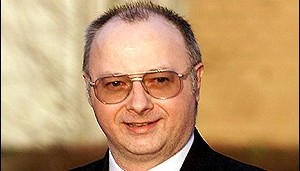
Stephen Downing
Homicide ?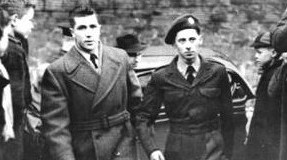 Iain Hay Gordon
Homicide ? · United Kingdom · 1952
Iain Hay Gordon was convicted of the killing of Patricia Curran and was found g…
1 victim
Iain Hay Gordon
Homicide ? · United Kingdom · 1952
Iain Hay Gordon was convicted of the killing of Patricia Curran and was found g…
1 victim
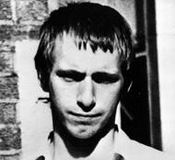 Bruce Lee
Serial killer · United Kingdom · 1973
Bruce Lee was born Peter George Dinsdale in 1960. He later changed his name to…
26 victims
Bruce Lee
Serial killer · United Kingdom · 1973
Bruce Lee was born Peter George Dinsdale in 1960. He later changed his name to…
26 victims
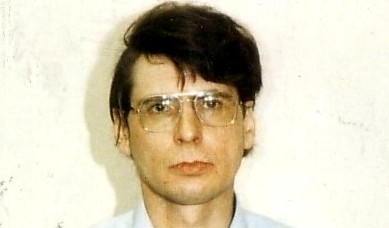 Dennis Nilsen
Serial killer · United Kingdom · 1978
Dennis Andrew Nilsen was born on November 23, 1945. He lived in London. He was…
16 victims
Dennis Nilsen
Serial killer · United Kingdom · 1978
Dennis Andrew Nilsen was born on November 23, 1945. He lived in London. He was…
16 victims
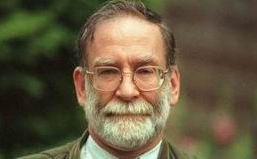 Dr. Harold Shipman
Serial killer · United Kingdom · 1974
Harold Fredrick Shipman was an English doctor who was convicted as a serial kil…
15 victims
Dr. Harold Shipman
Serial killer · United Kingdom · 1974
Harold Fredrick Shipman was an English doctor who was convicted as a serial kil…
15 victims
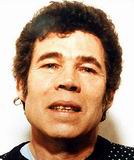 Frederick West
Serial killer · United Kingdom · 1967
Frederick West (29 September 1941 – 1 January 1995) was an English serial kille…
13 victims
Frederick West
Serial killer · United Kingdom · 1967
Frederick West (29 September 1941 – 1 January 1995) was an English serial kille…
13 victims
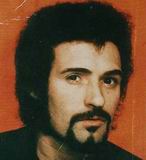 Peter Sutcliffe
Serial killer · United Kingdom · 1975
Peter William Sutcliffe (born 2 June 1946) was an English serial killer dubbed…
13 victims
Peter Sutcliffe
Serial killer · United Kingdom · 1975
Peter William Sutcliffe (born 2 June 1946) was an English serial killer dubbed…
13 victims
 Guo Zhongmin
Mass murderer · China · 2003
Guo Zhongmin was a Chinese mass murderer. He killed 13 people in Yangxiaoxiang,…
13 victims
Guo Zhongmin
Mass murderer · China · 2003
Guo Zhongmin was a Chinese mass murderer. He killed 13 people in Yangxiaoxiang,…
13 victims
 Robert Bayne
Murderer · United Kingdom · 2010
Robert Bayne was convicted in the High Court of Justiciary in Edinburgh of murd…
1 victim
Robert Bayne
Murderer · United Kingdom · 2010
Robert Bayne was convicted in the High Court of Justiciary in Edinburgh of murd…
1 victim
 Lulonda Flett
Mass murderer · Canada · 2011
Lulonda Flett (accused; sentenced to five life sentences) · Evelyn Laforte (mot…
5 victims
Lulonda Flett
Mass murderer · Canada · 2011
Lulonda Flett (accused; sentenced to five life sentences) · Evelyn Laforte (mot…
5 victims
 Rhonda Bell Martin
Serial killer · USA · 1937
Rhonda Bell Martin was an American serial killer known for poisoning multiple f…
6 victims
Rhonda Bell Martin
Serial killer · USA · 1937
Rhonda Bell Martin was an American serial killer known for poisoning multiple f…
6 victims
 Randall Knese
Murderer · USA · 1996
State of Missouri v. Randall Knese, 985 S.W.2d 759 (Mo. banc 1999) The case was…
1 victim
Randall Knese
Murderer · USA · 1996
State of Missouri v. Randall Knese, 985 S.W.2d 759 (Mo. banc 1999) The case was…
1 victim
 Carey Moore
Murderer · USA · 1979
Carey Moore was sentenced to death in 1980. In August 1979, Carey Dean Moore pu…
2 victims
Carey Moore
Murderer · USA · 1979
Carey Moore was sentenced to death in 1980. In August 1979, Carey Dean Moore pu…
2 victims
- Gender
- male
- Country
- United Kingdom
- Location
- Bakewell, Derbyshire, England, United Kingdom
- Date of birth
- 1956
- Age at first offence
- 17
- Characteristics
- juvenile (17), rape, miscarriage of justice
- Victim profile
- Wendy Sewell, 32
- Method of murder
- Beating with the handle of a pickaxe
- Date(s) of murder
- September 12, 1973
- Years active
- 1973
- Date of arrest
- —
- Status
-
Sentenced to life in prison on February 15, 1974; conviction overturned on January 15, 2002 after Stephen Downing served 27 years in prison.
Case record: Stephen Downing
Background
Stephen Downing was a 17-year-old council worker who worked in the Bakewell cemetery where Wendy Sewell was murdered. Downing had a reading age of an 11-year-old when he was tried and found guilty. Downing was born in 1956 and worked as a gardener for the local council.
Downing served 27 years in jail and had to change prison eight times due to being assaulted by fellow prisoners as a sex offender. He was released from Littlehey Prison in Cambridgeshire in 2001.
Downing did not admit to the crime and was classified as “IDOM” (In Denial of Murder), which made him ineligible for parole. Downing received compensation of £750,000 because he was not informed he was under arrest nor that he had the right to a solicitor.
Downing said: “We are very, very pleased and absolutely delighted with what has happened. It has been a long, hard battle.”
The offence
Wendy Sewell was attacked in Bakewell Cemetery at lunchtime on 12 September 1973.
A witness, Charles Carman, saw Sewell enter the cemetery at about 12.50 pm. Sewell was beaten with the handle of a pickaxe around the head and sexually assaulted. Sewell’s trousers, pants, plimsolls and parts of her bra had been removed. She died from her injuries in Chesterfield Royal Hospital two days later on 14 September, without being able to reveal who had assaulted her.
Downing was the primary suspect and was tried in relation to Sewell’s murder.
Investigation
Downing told police that he had found Sewell lying on the ground, covered in blood, and that her blood got on his clothes because she shook her head.
Downing was taken to the police station, questioned for nine hours without a solicitor present, and signed a confession. Downing’s confession was later treated as unsafe in the appeal proceedings.
A medical expert, the forensic scientist Norman Lee, gave evidence at trial that the blood found on Downing could only have been there if he had been responsible for the assault. The evidence included the assertion that it was a “Textbook example [...] which might be expected on the clothing of the assailant .
Later appeal discussions included an argument that more recent knowledge of blood-splattering patterns meant the prosecution’s claim that the blood could only have been found on the clothes of the attacker was questionable.
A medical expert and forensic evidence about blood patterns were central to the prosecution’s case.
Arrest
Downing signed a confession after being questioned at the police station.
Trial
The trial took place at Nottingham Crown Court between 13 and 15 February 1974.
Stephen Downing pleaded not guilty.
At the trial, the judge drew attention to Downing’s own admission in the trial of having indecently assaulted Sewell as she lay injured in the cemetery. He later denied that he made those admissions during the trial.
Stephen Downing was found guilty by all members of the jury and was convicted of murder.
He was sentenced to be detained at Her Majesty's pleasure (indefinitely), with the stipulation that he should serve a minimum of ten years.
Downing was classified as “IDOM” (In Denial of Murder) and ineligible for parole because he did not admit to the crime.
A full transcript of the trial did not exist.
During the trial, Downing’s family were said to have been stunned by the verdict. Downing’s younger sister Christine vowed never to marry until her brother’s name was cleared.
Appeals
First appeal
A witness was found who said she saw Downing leaving the cemetery and at that time she also saw Wendy Sewell alive and unharmed.
Downing applied for leave to appeal on the grounds he had a new witness.
On 25 October 1974, the Court of Appeal heard the grounds for appeal and concluded that the witness’s evidence of seeing Sewell walking towards the back of the consecrated chapel was unreliable due to fully grown trees obstructing her line of sight. The Court felt that her evidence was not credible and secure enough to allow an appeal against the conviction.
During Derbyshire Police’s re-investigation in 2002, the witness was re-interviewed and accompanied back to the cemetery location. She reaffirmed that the fully grown trees, which had since been felled, would have obstructed her line of sight. She also revealed that she was short sighted at the time.
The witness had been 15 years old at the time of the murder and was unable to give an adequate reason for why she came forward with her original evidence.
Second appeal
During the second appeal held on 15 January 2002, the Court of Appeal accepted many of the reasons put forward by Don Hale and others for believing the conviction was unsafe.
Julian Bevan, counsel for the Crown, accepted two arguments put forward by the defence.
The first was that Downing’s confession should not have been allowed to go before a jury. The confession was unsafe because Downing had been questioned for eight hours, during which the police shook him and pulled his hair to keep him awake; he was not formally cautioned that what he said may be used in evidence against him; and he was not given a solicitor.
The Crown also agreed with the defence argument that more recent knowledge of blood-splattering patterns meant the prosecution’s claim that the blood could only have been found on the clothes of the attacker was questionable.
The Rt Hon. Lord Justice Pill said:
The question for [the Court of Appeal’s] consideration is whether the conviction is safe and not whether the accused is guilty
His Lordship said:
The court cannot be sure the confessions are reliable. It follows that the conviction is unsafe. The conviction is quashed.
The Court of Appeal overturned Downing’s conviction on January 15, 2002 after he had served 27 years in prison.
Sentencing
On February 15, 1974, Stephen Downing was sentenced to be detained at Her Majesty's pleasure (indefinitely), with the stipulation that he should serve a minimum of ten years.
Outcome
After the conviction was overturned, Derbyshire police declared the case closed after failing to link any other person with the murder nor able to eliminate Downing as the suspect.
Aftermath
Police reinvestigation
A year after the conviction was overturned, February 2003, Derbyshire police revealed findings of their reinvestigation of the murder.
They interviewed 1,600 witnesses at an estimated cost of £500,000. Downing refused to be reinterviewed.
After failing to link any other person with the murder nor able to eliminate Downing as the suspect, police declared the case closed.
Under the “double jeopardy” rule, the police did not submit the results of their inquiries to the Crown Prosecution Service because Downing could not be re-arrested and charged with the same crime without new evidence.
Operation Noble
Following the Court of Appeal overturning Stephen Downing’s conviction, the Derbyshire Police reinvestigated the murder under the name Operation Noble.
During 2002, they interviewed 1,600 witnesses at an estimated cost of £500,000. There were 22 other possible suspects, many of whom had been suggested by Don Hale during his campaign and in his book Town Without Pity. All were cleared of any possibility of having murdered Wendy Sewell.
Other details
Campaign
Stephen Downing continued to deny committing the murder.
In 1994, his family wrote to the local newspaper Matlock Mercury. Don Hale took up the case and, along with Downing’s family, ran a campaign.
During the campaign, Wendy Sewell’s promiscuity was exploited while searching for other possible murderers, and Sewell became known as the “Bakewell tart”.
As a result of this campaign and Downing’s continual protestations of innocence, the case was referred to the Criminal Cases Review Commission in 1997.
Downing was released on appeal in 2001 after 27 years in prison.
Don Hale
Don Hale was born in July 1952. He was a professional footballer for Bury FC and Blackburn Rovers for 6 years before injury forced him into retirement.
He joined the BBC, also writing for several newspapers and magazines, initially on sport, then general features and news before taking over as editor of the local newspaper, the Matlock Mercury, in 1985.
A campaign for a retrial came to the attention of Don Hale in 1994. Though initially sceptical, he joined the campaign and lobbied the home secretary of the time, Michael Howard. The paper’s owner, the Johnston Press, was not supportive of Hale’s interest in the campaign, and he only had a small staff of three journalists which made research difficult.
A commission inquiry into Johnston Press said: “There had not been any instances, [...] where Mr Hale had actually dropped or changed a story as a result of pressure from management.”
After the Mercury ran the first of Hale’s stories in January 1994, he received warnings. He believed his life was in threat when on three separate occasions he was involved in near miss traffic incidents, including a sports car trying to run him down outside the local cinema.
Hale believed that “Another strugggle may be about to start.”
He later said:
Another strugggle may be about to start.
Hale also said:
We have disproved several false alibis and there's clear evidence pointing to the killer," he said. "They've got away with it for 27 years. There are some very nervous people in Bakewell.
In 2002, Hale published his account of the case, Town Without Pity.
Details from the campaign narrative
Downing’s father contacted Hale after two anonymous calls from a woman claiming to have sent a letter containing new evidence to the paper. Nothing arrived.
Downing said he had hit Ms Sewell twice on the back of the neck and indecently assaulted her. Forensics described seven or eight strikes in a frenzied attack but no sexual assault.
In January 1995, the Mercury ran a report with the headline “Innocent or Guilty?”
Hale received a badly-typed letter from a woman who was back in Bakewell after 20 years and said she saw Ms Sewell arguing with a man, who she identified, before Downing arrived in the cemetery and bent over her prostrate body. A few months later, the same woman wrote again, claiming she had been threatened and had moved house.
Hale also received threatening calls telling him to leave the case alone.
On a rainy winter’s night, Hale was waiting for his wife outside the local cinema when a sports car with no lights on accelerated towards him. He dived into the cinema wall and the car sped off. Then there was the dark night a lorry tailed and nudged his car. A series of death threat calls followed.
Hale said:
like searching for some missing parts of a dusty and complicated jigsaw
Hale gathered more than 70 new witness statements, along with diagrams, photographs and soiled clothing that Downing wore to work that day.
Six witnesses were prepared to say they saw Downing leave the cemetery while Ms Sewell was alive.
One witness saw Sewell kissing a man in the cemetery while another approached, shouting and swearing at Ms Sewell.
Hale learned that the murder victim wanted money from the likely fathers of her child and had liaisons with at least one senior police officer, a lawyer and three known local criminals.
The cemetery where she died was known as a haunt for lovers.
Hale said that forensic tests showing that a palm print and fibres found on the pickaxe handle used to bludgeon Ms Sewell did not belong to her or Downing supported the case. Hale said that the attacker, unlike Downing, was right-handed.
Additional mentions of court and media
The case was referred to the Court of Appeal and was described as potentially the longest miscarriage of justice in British legal history.
The case attracted worldwide media attention as the “Bakewell Tart” murder.
The case was featured in a 2004 BBC drama, In Denial of Murder, in which Jason Watkins played Stephen Downing and Caroline Catz played Wendy Sewell.
Other people named
Wendy Sewell was a 32-year-old legal secretary.
Charles Carman was a witness who saw Sewell enter the cemetery at about 12.50 pm.
Norman Lee was the forensic scientist who gave evidence at trial.
Ray Downing was named as Downing’s father and was said to be 66.
Juanita Downing was named as Downing’s mother and was said to be 67.
Christine Downing was named as Downing’s younger sister and was said to be 40.
Jane Bentley was named as a schoolgirl in 1973 who saw Downing leave the cemetery and Ms Sewell embracing a man.
Jean Hall was named as the person to whom Miss Sewell admitted, on the day of her death, that she was on the way to meet someone at the cemetery.
Michael Howard was named as the home secretary Hale lobbied.
The Court of Appeal proceedings on the second appeal involved Julian Bevan, counsel for the Crown.
Lord Justice Pill was the judge who gave the quoted statements on 15 January 2002.
Derbyshire Police were involved in the reinvestigation and re-interviewed witnesses.
The Criminal Cases Review Commission was involved in considering a dossier of new evidence and putting the matter back before the courts.
Matlock Mercury editor Don Hale was the editor involved in the campaign.
Wikipedia.org appeared in the scraped text, but no additional facts were added beyond those already stated.
Spotted an error, or have more information about this case?