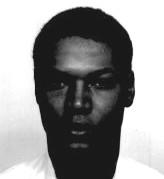
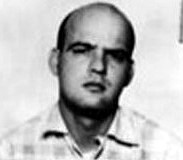
Harvey Earvin
Murderer Ervil LeBaron
Murderer · USA · 1972
Ervil Morrell LeBaron (1925 to August 16, 1981) was the leader of a polygamous…
35 victims
Ervil LeBaron
Murderer · USA · 1972
Ervil Morrell LeBaron (1925 to August 16, 1981) was the leader of a polygamous…
35 victims
 Brian Kevin Rosenfeld
Murderer · USA · 1985
Brian Kevin Rosenfeld Brian Kevin Rosenfeld was sentenced to three concurrent l…
23 victims
Brian Kevin Rosenfeld
Murderer · USA · 1985
Brian Kevin Rosenfeld Brian Kevin Rosenfeld was sentenced to three concurrent l…
23 victims
 Marvin Gray
Murderer · USA · 1975
Marvin Gray was convicted killer who claimed responsibility for 23 slayings and…
23 victims
Marvin Gray
Murderer · USA · 1975
Marvin Gray was convicted killer who claimed responsibility for 23 slayings and…
23 victims
 Yahweh ben Yahweh
Murderer · USA · 1980
Yahweh ben Yahweh was born and legally named Hulon Mitchell Jr. (October 27, 19…
23 victims
Yahweh ben Yahweh
Murderer · USA · 1980
Yahweh ben Yahweh was born and legally named Hulon Mitchell Jr. (October 27, 19…
23 victims
 Eric Adam Schneider
Murderer · USA · 1985
Eric Adam Schneider was executed by lethal injection in Missouri on January 29,…
2 victims
Eric Adam Schneider
Murderer · USA · 1985
Eric Adam Schneider was executed by lethal injection in Missouri on January 29,…
2 victims
 James Wilson Chambers
Murderer · USA · 1982
James Wilson Chambers was born in St. Louis, Missouri on April 15, 1952. In May…
1 victim
James Wilson Chambers
Murderer · USA · 1982
James Wilson Chambers was born in St. Louis, Missouri on April 15, 1952. In May…
1 victim
 Margaret Waters
Murderer · United Kingdom · 1866
Margaret Waters was an English murderess who was hanged by executioner William…
19 victims
Margaret Waters
Murderer · United Kingdom · 1866
Margaret Waters was an English murderess who was hanged by executioner William…
19 victims
 Thomas Hamilton
Mass murderer · United Kingdom · 1996
Thomas Hamilton committed suicide by shooting himself on 13 March 1996. · 13 Ma…
17 victims
Thomas Hamilton
Mass murderer · United Kingdom · 1996
Thomas Hamilton committed suicide by shooting himself on 13 March 1996. · 13 Ma…
17 victims
 Dovie Dean
Murderer · USA · 1952
Dovie Blanche Dean was executed by electrocution on January 15, 1954. Dovie Bla…
1 victim
Dovie Dean
Murderer · USA · 1952
Dovie Blanche Dean was executed by electrocution on January 15, 1954. Dovie Bla…
1 victim
 Regina & Margaret DeFrancisco
Homicides · USA · 2000
Regina DeFrancisco and Margaret DeFrancisco were two teenage girls who made nat…
1 victim
Regina & Margaret DeFrancisco
Homicides · USA · 2000
Regina DeFrancisco and Margaret DeFrancisco were two teenage girls who made nat…
1 victim
- Gender
- male
- Country
- USA
- Location
- Angelina County, Texas, USA
- Date of birth
- April 7, 1958
- Age at first offence
- 18
- Characteristics
- robbery
- Victim profile
- Ertis Brock (male, 75)
- Method of murder
- Shooting (20-gauge shotgun)
- Date(s) of murder
- December 7, 1976
- Years active
- 1976
- Date of arrest
- —
- Status
-
Sentenced to death
Sentenced to death on August 25, 1977; conviction and sentence affirmed by the Texas Court of Criminal Appeals on January 10, 1979; certiorari denied by the United States Supreme Court on October 15, 1979; execution date of May 14, 1986 was learned of and stay requests were denied by the Texas Court of Criminal Appeals; United States Court of Appeals for the Fifth Circuit affirmed denial of habeas corpus relief
Case overview
Harvey Earvin was convicted of capital murder by a jury and was sentenced to death. He sought federal habeas corpus relief after exhausting state-court appeals, and the United States District Court for the Eastern District of Texas denied the writ of habeas corpus on September 3, 1987. He appealed to the United States Court of Appeals for the Fifth Circuit, which affirmed the denial.
Timeline
- December 7, 1976 — The body of Ertis Brock was discovered on the evening of December 7, 1976.
- August 24, 1977 — Earvin was tried before a jury and convicted of murder.
- August 25, 1977 — Earvin was sentenced to death.
- January 10, 1979 — Earvin’s conviction and sentence were affirmed by the Texas Court of Criminal Appeals.
- October 15, 1979 — Certiorari was denied by the United States Supreme Court.
- September 3, 1987 — A writ of habeas corpus was denied by the United States District Court for the Eastern District of Texas.
- May 14, 1986 — After learning of his execution date of May 14, 1986, Earvin filed two separate applications for writ of habeas corpus and motions for stay of execution, which were both denied by the Texas Court of Criminal Appeals.
- Nov. 10, 1988 — The United States Court of Appeals for the Fifth Circuit affirmed the district court’s denial of habeas corpus relief.
The offence
The body of Ertis Brock was discovered on the evening of December 7, 1976. Brock had been shot once in the chest with a shotgun. Within days, Earvin was arrested in connection with the murder along with two others. Earvin subsequently made a written confession stating that he shot Brock while attempting to rob him.
Earvin testified at the punishment phase that the robbery had been planned for at least two days, that he had gone to the scene armed and disguised, and that he had fired the fatal shot. Earvin claimed he only shot his gun after the decedent reached into his pocket. The prosecution presented evidence that no gun was found on Brock.
Investigation
Within days of Brock’s death, Earvin was arrested in connection with the murder along with two others. Earvin made a written confession stating that he shot Brock while attempting to rob him.
Trial
Earvin was tried before a jury and convicted of murder on August 24, 1977. He was then sentenced to death on August 25, 1977.
At the punishment phase of the trial, Earvin’s attorney presented witnesses including Earvin, Earvin’s mother, his stepfather, a preacher, one of the jailers in charge of Earvin, and two county prisoners who shared Earvin’s cell.
Using the witnesses’ testimony, counsel attempted to develop mitigating factors including the youth of Earvin, his lack of a criminal record, his fear at the time of the murder, and his lack of specific intent to murder.
Earvin later narrowed his appeal to claim ineffective assistance of counsel only at the penalty stage of his trial. He raised claims under the Sixth, Eighth, and Fourteenth Amendments to the United States Constitution. He also raised for the first time the claim that the Texas procedure imposing the death penalty was unconstitutional on its face.
Sentencing
Earvin was sentenced to death on August 25, 1977.
Appeals
Earvin’s conviction and sentence were affirmed by the Texas Court of Criminal Appeals on January 10, 1979. Certiorari was denied by the United States Supreme Court on October 15, 1979. Earvin v. State, 582 S.W.2d 794 (Tex.Crim.App.1979) (en banc), cert. denied, 444 U.S. 919, 100 S.Ct. 238, 62 L.Ed.2d 175 (1979).
After learning of his execution date of May 14, 1986, Earvin filed two separate applications for writ of habeas corpus and motions for stay of execution. Both were denied by the Texas Court of Criminal Appeals.
Habeas corpus proceedings and the Fifth Circuit appeal
Earvin filed a writ pursuant to 28 U.S.C. Sec. 2254 and requested a stay of execution in the federal district court. The stay was granted, and an evidentiary hearing was held. Earvin claimed, among other things, that he was denied effective assistance of counsel throughout his trial. The district judge ruled against Earvin, finding no constitutional ground meriting relief.
On appeal to the Fifth Circuit, Earvin narrowed his claims and argued that his counsel was ineffective only at the penalty stage of his trial. The Fifth Circuit affirmed the district court’s denial of habeas corpus relief.
Claim of ineffective assistance of counsel
Earvin alleged three main errors by his counsel:
- His counsel failed to guide the jury in relating the mitigating evidence presented to the three special issues the jury had to decide affirmatively for Earvin to receive the death penalty.
- His counsel, in his closing argument, failed to disagree with the prosecutor that special issues one and three should be affirmatively answered by the jury.
- His counsel failed to object to either the trial court’s definition of “deliberate” in the penalty charge or the prosecution’s argument on this issue.
In Strickland v. Washington, 466 U.S. 668, 104 S.Ct. 2052, 80 L.Ed.2d 674 (1984), the Supreme Court enunciated the standard to be applied when reviewing a claim of ineffective assistance of counsel:
A convicted defendant's claim that counsel's assistance was so defective as to require reversal of a conviction or death sentence has two components. First, the defendant must show that counsel's performance was deficient. This requires showing that counsel made errors so serious that counsel was not functioning as the "counsel" guaranteed the defendant by the Sixth Amendment. Second, the defendant must show that the deficient performance prejudiced the defense. This requires showing that counsel's errors were so serious as to deprive the defendant of a fair trial, a trial whose result is reliable. Unless a defendant makes both showings, it cannot be said that the conviction or death sentence resulted from a breakdown in the adversary process that renders the result unreliable. Id. at 686, 104 S.Ct. at 2064.
To prove counsel was deficient, the defendant must prove that counsel's representation fell below an objective prevailing professional standard of reasonableness. Id. at 690, 104 S.Ct. at 2065.
This assessment is determined by looking to the situation as seen by counsel at the time of the trial. Because of the difficulties of this inquiry, the Supreme Court directs us to "indulge a strong presumption that counsel's conduct falls within the wide range of reasonable professional assistance; that is, the defendant must overcome the presumption that, under the circumstances, the challenged action 'might be considered sound trial strategy.' " Id. (citations omitted); see also Knighton v. Maggio, 740 F.2d 1344, 1350 (5th Cir.), cert. denied, 469 U.S. 924, 105 S.Ct. 306, 83 L.Ed.2d 241 (1984).
The Fifth Circuit held that Earvin’s claim failed because the challenged action of Earvin’s counsel could reasonably be part of sound trial strategy. The strategy was to admit to the murder and focus on gaining the sympathy of the jury to grant Earvin a life sentence instead of the death penalty. The court concluded that Earvin had not established that counsel was ineffective or that any deficiency prejudiced the defense.
The Fifth Circuit addressed each alleged error:
- Guidance regarding mitigating evidence and special issues: The court discussed that the Supreme Court had contemplated that a jury would be “given guidance regarding the factors about the crime and the defendant that the state, representing society, deems particularly relevant to the sentencing decision....” Gregg v. Georgia, 428 U.S. 153, 191, 96 S.Ct. 2909, 2939, 49 L.Ed.2d 859 (1976). The court stated that the Texas statute’s use of three special issues gave enough guidance and referenced Franklin v. Lynaugh and Jurek v. Texas. The court concluded that since Earvin conceded that counsel and the prosecution brought out all relevant mitigating evidence, the jury was properly guided through the three special issues.
- Alleged waiver of special issues one and three: The court stated that counsel made a conscious strategy decision to focus on special issue two. It stated that issue two was the issue with the best chance for success and that only one negatively answered issue was needed for the defendant’s life to be spared. As to issue one (deliberateness), the court said the jurors heard overwhelming evidence of deliberate conduct, including Earvin’s own punishment-phase testimony about planning, going armed and disguised, and firing the fatal shot, and concluded counsel was not unreasonable in effectively conceding the issue. As to issue three (provocation), the court said facts were disputed and noted the prosecution’s evidence that no gun was found on Brock; it stated the jury was free to disbelieve Earvin’s statement about the victim having a gun. The court also referenced law stating a robber had no right to self defense and discussed Smith v. State.
- Failure to object to the punishment charge: The court addressed Earvin’s claim that the definition of “deliberate” in the charge coupled with the court’s definition of “intent” and the prosecution’s misstatement made intentional and deliberate conduct synonymous. The court stated that “something more than intentional conduct must be found at the punishment phase of the trial on the issue of ‘deliberateness.’” It cited Marquez v. State and Fearance v. State and said that the definitions of “deliberate” and “intent” used by the trial court were defined differently and not at odds with definitions provided by the Texas Court of Criminal Appeals, citing Thompson v. State.
- Failure to object to the prosecution’s alleged improper argument: The Fifth Circuit stated Earvin had to show “either persistent and pronounced misconduct or that the evidence was so insubstantial that but for the remarks, no conviction would have occurred.” Fulford v. Maggio, 692 F.2d 354, 359 (5th Cir.1982), rev'd on other grounds, 462 U.S. 111, 103 S.Ct. 2261, 76 L.Ed.2d 794 (1983); see also Willie v. Maggio, 737 F.2d 1372, 1390 (5th Cir.), cert. denied, 469 U.S. 1002, 105 S.Ct. 415, 83 L.Ed.2d 342 (1984). The court concluded the jury had enough evidence to find deliberateness so the prosecution’s remarks were not prejudicial.
- Prejudice requirement: The court stated that even if Earvin satisfied the first prong of Strickland, he still had to show prejudice, and both prongs had to be satisfied for relief; it cited Willie v. Maggio for the principle that proof of one without the other was not enough. The court added that Earvin fell far short of showing the outcome would have been different even if error by his counsel occurred, stating he had not shown that if counsel had objected, or argued differently on the special issues, or tied the evidence more closely to the special issues, the outcome would have been different. The court also stated Earvin failed to demonstrate fundamental unfairness to the proceeding.
Constitutional challenge to the Texas death penalty procedure
Earvin raised for the first time in a series of petitions and appeals that the Texas statute on its face was unconstitutional, relying on Penry v. Lynaugh. The Fifth Circuit held that the claim was not properly before the court and should not be considered for the first time on appeal, citing Hall v. Maggio. The court also stated that even if the claim were properly before the court, the Supreme Court continued favorably to view the use of the “special issues” by the Texas courts, citing Franklin. The court then quoted Justice O’Connor’s concurrence in Franklin:
[O]n the facts of this case, the Texas capital sentencing procedure did not prevent the sentencing jury from giving mitigating effect to any evidence relevant to petitioner's character or background or to the circumstances of the offense.
Outcome
The Fifth Circuit affirmed the district court’s decision denying Earvin habeas corpus relief. The Fifth Circuit held that Earvin failed to prove his counsel was so deficient that he was denied effective assistance of counsel at the penalty stage of his trial and also failed to prove any prejudice from the actions of his counsel justifying relief. The court affirmed.

Spotted an error, or have more information about this case?