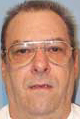
Jerry Paul Henderson
Murderer Brian Kevin Rosenfeld
Murderer · USA · 1985
Brian Kevin Rosenfeld Brian Kevin Rosenfeld was sentenced to three concurrent l…
23 victims
Brian Kevin Rosenfeld
Murderer · USA · 1985
Brian Kevin Rosenfeld Brian Kevin Rosenfeld was sentenced to three concurrent l…
23 victims
 Marvin Gray
Murderer · USA · 1975
Marvin Gray was convicted killer who claimed responsibility for 23 slayings and…
23 victims
Marvin Gray
Murderer · USA · 1975
Marvin Gray was convicted killer who claimed responsibility for 23 slayings and…
23 victims
 Yahweh ben Yahweh
Murderer · USA · 1980
Yahweh ben Yahweh was born and legally named Hulon Mitchell Jr. (October 27, 19…
23 victims
Yahweh ben Yahweh
Murderer · USA · 1980
Yahweh ben Yahweh was born and legally named Hulon Mitchell Jr. (October 27, 19…
23 victims
 Russell Ellwood
Murderer · USA · 1991
Russell Ellwood was a former taxi driver. Authorities suspected him of killing…
20 victims
Russell Ellwood
Murderer · USA · 1991
Russell Ellwood was a former taxi driver. Authorities suspected him of killing…
20 victims
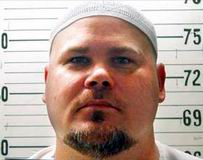 Marlon Kiser
Murderer · USA · 2001
Marlon Duane Kiser was sentenced to death in November 2003 for the 2001 first-d…
1 victim
Marlon Kiser
Murderer · USA · 2001
Marlon Duane Kiser was sentenced to death in November 2003 for the 2001 first-d…
1 victim
 Cornelius Alan Goss
Murderer · USA · 1987
Name: Cornelius Alan Goss · May 20, 1987 — 66-year-old Carl Leevy, a sporting g…
1 victim
Cornelius Alan Goss
Murderer · USA · 1987
Name: Cornelius Alan Goss · May 20, 1987 — 66-year-old Carl Leevy, a sporting g…
1 victim
 Marjorie Orbin
Murderer · USA · 2004
Marjorie Orbin murdered her husband Jay Orbin in Phoenix, Arizona on or about S…
1 victim
Marjorie Orbin
Murderer · USA · 2004
Marjorie Orbin murdered her husband Jay Orbin in Phoenix, Arizona on or about S…
1 victim
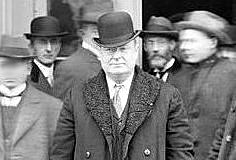 Albert Patrick
Murderer · USA · 1900
Albert Patrick was convicted in New York, New York for the murder of William M.…
1 victim
Albert Patrick
Murderer · USA · 1900
Albert Patrick was convicted in New York, New York for the murder of William M.…
1 victim
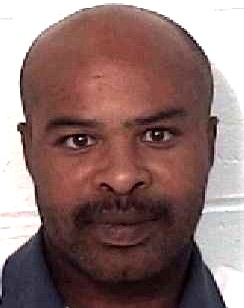 Lawrence Jefferson
Murderer · USA · 1985
Lawrence Joseph Jefferson (42) was convicted of felony murder during the commis…
1 victim
Lawrence Jefferson
Murderer · USA · 1985
Lawrence Joseph Jefferson (42) was convicted of felony murder during the commis…
1 victim
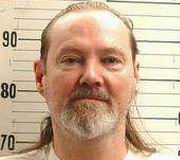 David Lee McNish
Murderer · USA · 1983
Defendant: David Lee McNish · Victim: Gladys E. Smith (also referred to as Mrs.…
1 victim
David Lee McNish
Murderer · USA · 1983
Defendant: David Lee McNish · Victim: Gladys E. Smith (also referred to as Mrs.…
1 victim
- Gender
- male
- Country
- USA
- Location
- Talladega County, Alabama, USA
- Date of birth
- December 8, 1946
- Age at first offence
- 38
- Characteristics
- murder for hire
- Victim profile
- Jerry Haney, 33 ( his sister-in-law’s husband )
- Method of murder
- Shooting
- Date(s) of murder
- January 1, 1984
- Years active
- 1984
- Date of arrest
- September 12, 1987
- Status
-
Executed
Executed by lethal injection in Alabama on June 2, 2005
Case record: Jerry Paul Henderson
Background
Jerry Paul Henderson was convicted of capital murder and sentenced to death for the New Year’s Day 1984 murder of Jerry Haney. Henderson was 58 and formerly of Calhoun, Ga.
Henderson and his wife (Martha Henderson) threw a party on New Year’s Eve at their home in Georgia. After excusing himself from his guests, Henderson said he was not feeling well and went to lie down in a back bedroom. He then climbed out his bedroom window and drove to Haney’s residence in Talladega.
Henderson’s sister-in-law and co-defendant was Judy Haney. She was Henderson’s payment intermediary for the scheme to kill Jerry Haney. Judy Haney was convicted of capital murder and sentenced to death, but her sentence was later reduced to life in prison without the possibility of parole.
Henderson’s last words during his execution reflected that he was “very sorry for the pain I’ve caused.”
The offence
Henderson was convicted and sentenced to death for the murder of Jerry Haney, identified as his brother-in-law. The scheme involved Judy Haney paying Henderson for the murder.
Court documents stated that Henderson:
- lured Haney to his front porch and shot (him) with a shotgun
- told Haney he was bringing his wife and children back from Georgia, but they had run out of gas
- opened fire when Haney came out of the house
The first shot struck Haney in the chest but was not fatal. A second shot merely grazed his ear. Court documents stated that Haney made it to the back porch before collapsing and begging for his life, and that Henderson responded by putting the shotgun a few inches from Haney’s face and firing a third time. The third shot blew Haney’s lips and teeth off and went into his skull, ending (his life).
In the narrative of the state attorney general’s request for an execution date, court submissions described the killing as:
“Henderson responded to this plea for mercy by putting the shotgun a few inches from Haney’s face and firing a third time. This shot blew Haney’s lips and teeth off and went into his skull, ending (his life),”
After taking $80 from Haney, Henderson returned home, climbed back into his home through his bedroom window, and rejoined his party guests.
Investigation
Henderson’s murder was solved more than three years later, and he was arrested after the investigation.
A pre-sentence report stated that after Judy and the children fled, funds were discussed and threats were made:
- “After Jerry (Haney) found out about the loss of funds, he threaten (sic)to kill her if the money was not returned,” an investigator with the Alabama Board of Pardons and Paroles wrote in a pre-sentence report.
- This occurred in late December 1983.
- Jerry Haney was murdered New Year’s Day 1984.
During the investigation, Henderson made statements that his shotgun had been stolen from his truck. Talladega County District Attorney Robert Rumsey said the facts surrounding the alleged theft were suspicious:
- “But the glass on the truck window was broken out, not in,” Rumsey said.
- “That confirmed our suspicions.”
- The shotgun was later tossed into a river and has never been recovered.
Rumsey described investigators’ early suspicions:
- “After the killing, Henderson stopped at a restaurant in Oxford and called his wife and Judy Haney back in Georgia to let them know he had carried out the plan. He put money in the pay phone, but when the 3 minutes ran out, he didn’t have any more change. So they got the number of the pay phone and called him back.”
- The call showed up in the couple’s phone records.
- “So we knew that someone had made a long distance call to a pay phone within just a few minutes after the killing,” Rumsey said.
- “Then, later on, we told Henderson we were coming to examine his shotgun to see if we could match it to the shooting. Of course, you can’t really do that with a shotgun, but apparently he didn’t know that.”
Arrest
Eventually, Henderson’s wife (Martha Henderson) confessed to her role in the plot and agreed to wear a wire, which led to Henderson’s arrest. Court papers stated Henderson confessed shortly after his arrest.
In the appellate court narrative of the case, the steps included:
- Mrs. Haney contacted Lieutenant Billy Haney of the Talladega Police Department on January 2, 1984 because she could not reach her husband by phone.
- Billy Haney discovered the body of his brother at the residence.
- Jerry Wayne Haney’s corpse was taken to the Department of Forensic Sciences for an autopsy.
The appellate court record described the forensic findings as including:
- one shotgun wound to the victim’s left lower arm that penetrated the arm and entered his left chest
- a wound that grazed the victim’s left ear
- one shotgun wound to Haney’s mouth that caused the mouth to be torn at the corners
- the gunshot wound to the mouth that fractured almost every bone in the victim’s skull, fractured the first two cervical vertebrae, and drove a tooth into Haney’s spinal cord
- the appellate narrative stated that it was this wound that killed Jerry Haney
When the murder investigation officially commenced, the appellate narrative stated that Jerry Henderson was the key suspect and that Henderson reported to police on January 30, 1984 that his pickup truck had been broken into and his shotgun had been stolen.
For the wire recording:
- In the fall of 1987, Martha Henderson agreed to turn State’s evidence.
- On September 9, 1987, law enforcement officials placed a “nagra unit” in the back seat of Mrs. Henderson’s car to tape record conversations between her and her husband.
- The police got every word on tape that night.
- On September 12, 1987, Henderson was arrested in Rome, Georgia for the capital murder of Jerry Wayne Haney.
- The next morning, the appellate narrative stated Henderson confessed to the murder at the Floyd County jail in Georgia, and his confession was tape recorded.
Trial
Henderson stood trial in 1989, and was convicted of two counts of capital murder, being:
- a murder for hire
- murder during the course of a robbery
The jury voted 10-2 in favor of the death penalty over life in prison without possibility of parole.
The case was decided in the Circuit Court, Talladega County, before Jerry Fielding, J.
The appellate court opinion stated the appellant was convicted of the murder of Jerry Wayne Haney, a capital offense as defined by §§ 13A-5-40(a)(2). It also stated that after complying with § 13A-5-47, Code of Alabama 1975, the trial court sentenced the appellant to death by electrocution.
The appellate opinion described a New Year’s Day 1984 sequence including:
- On New Year’s Day, Henderson went to the home of Michael Wayne Wright, an old friend and hunting partner.
- Henderson asked Wright if he had any shotgun shells he could give Henderson.
- Wright replied he did not, but that his friend Robert Lewis probably did.
- They went to the home of Lewis, and Lewis’s wife Wanda gave them the requested shotgun shells.
- Later that night, Henderson and his wife were entertaining friends; Henderson complained of having the flu and retired to his bedroom.
- The appellant turned out the light and let himself out the window, then got into his pickup truck and drove to Alabama.
- Henderson parked his truck in a wooded area adjacent to the Haney home, walked through the woods, and up to the front door.
- Henderson put his loaded shotgun down on the porch and knocked on the door.
- Haney was in bed and heard the knocking and went to the door.
- Henderson told Haney that he had brought Mrs. Haney and the children back to Alabama but the truck had run out of gas; Haney agreed to help get gas, changed clothes, and came outside, locking the front door behind him.
- The appellate narrative described the sequence of shots as: a first shot hitting Haney in the chest, a second shot grazing his ear while he was on the ground, and a final shot with the shotgun placed on Haney’s bottom lip.
- The appellate narrative stated that Henderson rolled the victim onto his stomach, took his wallet from the victim’s back pocket, and broke the light on the front porch on the way back to his pickup truck.
The appellate narrative also described events after the killing:
- At approximately 11:00 p.m., Henderson stopped in Oxford, Alabama and called his wife and Mrs. Haney from a Waffle House restaurant to tell them that Mr. Haney was dead.
- Henderson arrived back home and took approximately $100 from the wallet, and Mrs. Haney took the victim’s Social Security card.
- Mrs. Haney paid about $30 for expenses and kept the remainder of the cash.
- The appellate narrative stated the wallet was later destroyed.
- It also stated the shotgun was thrown into the river and was never recovered.
In the appellate narrative, the evidence tending to show the plan included that Henderson and Judy Haney discussed a plan in which Mrs. Haney would pay Henderson $3,000 in exchange for murder, with the decision to murder Mr. Haney on January 1, 1984.
Sentencing
The jury recommended that Henderson be sentenced to death, and the trial court sentenced him to death by electrocution.
The appellate opinion stated that Henderson was indicted under two counts:
- murder for hire
- murder occurring during the theft of $80
The appellate narrative stated that the two counts were also considered aggravating circumstances under Alabama law, including:
- a capital offense committed while engaged or an accomplice in committing or attempting to commit robbery, burglary or kidnapping
- a capital offense committed for pecuniary gain
- a capital offense especially heinous, atrocious or cruel compared to other capital offenses
The appellate decision stated that Section 13A-5-49, Code of Alabama 1975, included these aggravating circumstances:
“(4) The capital offense was committed while the defendant was engaged or was an accomplice in the commission of, or an attempt to commit, or flight after committing, or attempting to commit, rape, robbery, burglary or kidnapping;
····
(6) The capital offense was committed for pecuniary gain;
····
(8) The capital offense was especially heinous, atrocious or cruel compared to other capital offenses.”
It also stated that Section 13A-5-50 said:
“The fact that a particular capital offense as defined in § 13A-5-40(a) necessarily includes one or more aggravating circumstances as specified in § 13A-5-49 shall not be construed to preclude the finding and consideration of that relevant circumstances or circumstances in determining sentence.”
The appellate opinion concluded that Henderson received a fair and impartial trial and found no plain error.
In a later stage narrative, it was stated that at his sentencing in 1988, Henderson confessed to killing Haney, said he was tormented by what he had done, and said he found solace only in prayer and God. The narrative included his quoted remarks:
“My life belongs to God. It don’t belong to anyone else,”
“But I want you to understand that it’s not right for anybody to take anybody’s life. I don’t care what the circumstances are. You know, the Lord said, 'Thou shalt not kill.'”
“He didn't say you can do it through a court and it's all right.”
Appeals
After trial, the verdict and sentence were upheld in the state appellate courts.
A direct appeal in 1990 was recorded as: Henderson v. State, 583 So.2d 276 (Ala.Crim.App. 1990). The Court of Criminal Appeals held that:
- the defendant was not entitled to change of venue
- failure to “life-qualify” prospective jurors was not plain error
- the brother of the victim was properly seated at prosecutor’s counsel table and introduced to jury
- the defendant was not entitled to present evidence of victim’s violent behavior toward third party
- the jury was properly instructed on aggravating circumstances
- claimed instances of prosecutorial misconduct did not warrant reversal
The judgment was: AFFIRMED.
The opinion included the statement:
“Therefore, his conviction for this capital offense and his sentence of death are due to be, and they are hereby, affirmed.”
The Supreme Court affirmed in Ex parte Henderson, 583 So.2d 305 (Ala. 1991). The United States Supreme Court denied certiorari.
A PCR stage was recorded as Henderson v. State, 733 So.2d 484 (Ala.Crim.App. 1998). The case record stated that:
- the Court affirmed that the defendant possessed requisite mental competence to dismiss his petition and did so voluntarily, knowingly, and intelligently
- the petition was a Rule 32 petition alleging ineffective assistance of trial and appellate counsel, among other issues
- the circuit court dismissed the petition after the motion for dismissal at the hearing held on April 22, 1997
- the appellate court affirmed; application for rehearing overruled
The narrative recorded that on October 13, 1993 Henderson filed a post-conviction petition pursuant to Ala.R.Crim.P. 32, and that other issues were precluded from review because they either were raised at trial and/or on appeal and decided adversely, or could have been raised but were not.
The record stated that Henderson’s counsel filed the Rule 32 petition without consulting with him, and that counsel were permitted to withdraw. The circuit court continued the hearing to allow Henderson time to find new counsel, then appointed counsel.
During the Rule 32 hearing, held on April 22, 1997, Henderson through appointed counsel moved for dismissal of his petition. The Court concluded the circuit court was correct.
The record also stated the opinion was prepared by Retired Appellate Judge John Patterson while serving on active duty status under § 12-18-10(e), Ala. Code 1975.
In a later portion of the narrative, Justin Ravitz (a former judge from Michigan) represented Henderson during the last several years of federal appeals. Ravitz argued that Giddens’ brother, Rod Giddens, was a prosecutor when Henderson was tried, and that Steve Giddens’ testimony that he didn’t know anything about the case was “truly absurd” and that Steve Giddens admitted being friends with Billy Haney. Ravitz’s position included that Henderson did not even know why he was back in Talladega.
The narrative included multiple quotes attributed to Ravitz and others:
Ravitz’s arguments included these statements:
“For Fielding to appoint Steve Giddens when Rod Giddens prosecuted the case is absurd, and Steve Giddens’ testimony in federal court that he didn’t know anything about the case is truly absurd, especially since he admitted being friends with Billy Haney. Henderson didn’t even know why he was back in Talladega.”
Ravitz also said:
“It’s also risible that Giddens would ask Henderson if he thought he had a fair trial. Giddens is the lawyer. Henderson has a seventh-grade education, you couldn’t expect him to understand complex Sixth Amendment issues. I find it shameful that the state of Alabama, the 11th Circuit, and the United States Supreme Court would all find that was a valid waiver. The Rule 32 hearing would have been a venue to argue mitigating circumstances that didn’t come out at trial, and that was trampled by lust for vengeance.”
Ravitz further argued:
“shameful” and also: “shameful for Henderson to be put to death with the minimum possible jury vote when “those jurors truly heard precious little about the man they were sending to the gallows. None of them could have written a full page on the history of this person. His trial counsel offered no mitigating circumstances for the jury to consider when they were deciding whether or not to execute a human being with no prior record of violence and a minimal criminal history.”
The narrative quoted Ravitz on mitigating circumstances:
“They didn’t know how he was brutalized by his aunt in Florida after that, or how he talked to his mother for the first time when he was 16 years old. They didn’t know his mother committed suicide after that, and that the only time he ever saw her, she was in a box. They didn’t know that Henderson shot himself in the chest at 25, and that he has a long, prominent scar,”
Ravitz continued:
“They were made aware of none of this in any significant way. They saw a vicious murder for hire, but that’s not really what this was. It was a brutal, unlawful murder, and he deserves to be punished. He knows that, and he is remorseful.”
Rumsey’s quoted response included:
“It is certainly sad, but this was gruesome, almost perfectly planned murder. It was solved thanks to excellent police work, and progressed through the state and federal systems just as it should. There is no issue as to his guilt.”
The narrative included Steve Giddens was unable to comment because he had previously represented Henderson, and Assistant District Attorney Barry Matson said:
“My heart goes out to the Haney family. Victims and their families live with the results of violent crimes their whole lives, and the Haneys will continue to live with what Henderson did. It’s not closure, I think that’s an overused word that should be retired. But I hope they do receive at least some sense of justice.”
Outcome
Henderson was executed by lethal injection in Alabama on June 2, 2005 at Holman Prison in Atmore.
During his execution, Billy Haney and one of the victim’s nephews witnessed the execution.
Associated Press reported that Henderson’s last words were: “very sorry for the pain I’ve caused.”
Aftermath
Billy Haney waited 21 years for Henderson to die and attended Henderson’s execution. The narrative included Billy Haney’s statements:
“it took the justice system an awfully long time to come around, but that’s how it works. I still have every faith and confidence that the system works, but sometimes I wish it could be speeded up a little. I’ve lost both my parents and my sister since Jerry was killed. And (Henderson) got to live on this earth 21 years longer than my brother did. So there’s still some bitterness there.”
He also said:
“It’s not a revenge venture, it’s just for peace of mind, for closure. I’m there to represent my family, especially my sister and my parents. It’s a ritual to bring us all some peace.”
The narrative stated that in May the execution date was set.
It also stated that anti-death penalty advocates were appealing to Governor Bob Riley for clemency.
Other details
The following individuals and roles were included in the narrative and case record:
- Jerry Haney (victim), identified as Jerry Wayne Haney in the appellate narrative; he was 33.
- Judy Haney (co-defendant and victim’s wife)
- Martha Henderson (Henderson’s wife; later confessed to her role in the plot and wore a wire)
- Robert Rumsey (former Talladega County District Attorney who prosecuted Henderson)
- Julian King (described in the narrative as currently Talladega County’s presiding circuit judge and as involved in prosecution; the narrative also said Rumsey described prosecutors actively involved as himself and Julian King)
- Steve Giddens (appointed to represent Henderson at a Rule 32 hearing; later described as district attorney for Talladega County at the time of an interview)
- Rod Giddens (assistant district attorney during Henderson’s trial; cited in arguments about conflicts)
- Barry Matson (Assistant District Attorney)
- Jerry Fielding (trial judge in the Rule 32 proceedings and Circuit Court)
- Billy Haney (lieutenant in the Talladega Police Department; brother of Jerry Haney; first officer on the scene)
- Michael Wayne Wright (old friend and hunting partner; involved in acquiring shotgun shells)
- Robert Lewis (friend referenced for shotgun shells)
- Wanda (Lewis’s wife; gave shotgun shells)
The narrative also included the names of Henderson’s attorneys and a related person:
- Justin Ravitz (represented Henderson during the last several years of federal appeals)
- Stephen Bright (director of the Southern Center for Human Rights; handled Judy Haney’s successful appeal)
The case included references to Henderson’s education:
- Henderson had a seventh-grade education.
The narrative included payment amounts:
- Judy Haney paid Henderson $3,000 for the murder.
The narrative also included references to phone and location details:
- Oxford, Alabama (restaurant stop and calling from a pay phone; also stopping in Oxford at approximately 11:00 p.m. in the appellate narrative)
- Waffle House restaurant (calling location described in the appellate narrative)
The narrative included parts of the alleged plan and timing:
- The murder was decided for January 1, 1984.
- Henderson’s wife and Judy Haney were called shortly after the killing on the evening of the killing in the restaurant/pay phone narrative.
It also included the statement that Henderson’s wallet was later destroyed and that the shotgun was thrown into a river and was never recovered.
Finally, the narrative included additional text that appeared as a case index entry for “Henderson v. State, 583 So.2d 276 (Ala.Crim.App. 1990) (Direct Appeal)” and “Henderson v. State, 733 So.2d 484 (Ala.Crim.App. 1998)(PCR),” both of which were tied to the affirmances described in the Appeals section.

Spotted an error, or have more information about this case?