
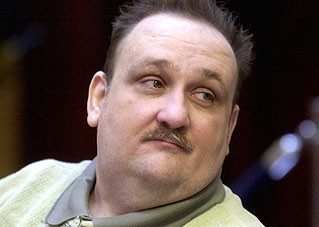
Alex Baranyi
Homicide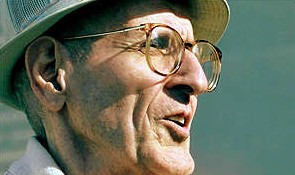 Jack Kevorkian
Homicide · USA · 1990
Jack Kevorkian (born May 26, 1928) was a controversial American pathologist. He…
130 victims
Jack Kevorkian
Homicide · USA · 1990
Jack Kevorkian (born May 26, 1928) was a controversial American pathologist. He…
130 victims
 David Koresh
Homicide · USA · 1993
David Koresh (born Vernon Wayne Howell; August 17, 1959 – April 19, 1993) led t…
79 victims
David Koresh
Homicide · USA · 1993
David Koresh (born Vernon Wayne Howell; August 17, 1959 – April 19, 1993) led t…
79 victims
 Todd Hall
Homicide · USA · 1996
Todd Hall was described by neighbors as "mentally slow" and was said to have su…
9 victims
Todd Hall
Homicide · USA · 1996
Todd Hall was described by neighbors as "mentally slow" and was said to have su…
9 victims
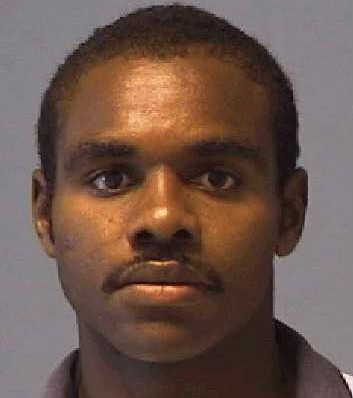 Clinton Bankston
Homicide · USA · 1987
15 August 1987 — Ann Morris (63), her sister Sally Nicholson (59), and Sally’s…
5 victims
Clinton Bankston
Homicide · USA · 1987
15 August 1987 — Ann Morris (63), her sister Sally Nicholson (59), and Sally’s…
5 victims
 Joshua Jenkins
Homicide · USA · 1996
Joshua Jenkins was a 15-year-old American killer who killed five members of his…
5 victims
Joshua Jenkins
Homicide · USA · 1996
Joshua Jenkins was a 15-year-old American killer who killed five members of his…
5 victims
 Cesar Armando Librado Legorreta
Serial killer · Mexico · 2011
Cesar Armando Librado Legorreta was a Mexican serial offender who worked as a c…
6 victims
Cesar Armando Librado Legorreta
Serial killer · Mexico · 2011
Cesar Armando Librado Legorreta was a Mexican serial offender who worked as a c…
6 victims
 Eugene Aram
Murderer · United Kingdom · 1744
Eugene Aram (1704 - August 6, 1759) was an English philologist who also became…
1 victim
Eugene Aram
Murderer · United Kingdom · 1744
Eugene Aram (1704 - August 6, 1759) was an English philologist who also became…
1 victim
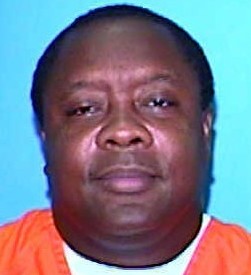 Alfred Lewis Fennie
Murderer · USA · 1991
Alfred Lewis Fennie was also known by the alias “Ezell Foster.” Fennie was indi…
1 victim
Alfred Lewis Fennie
Murderer · USA · 1991
Alfred Lewis Fennie was also known by the alias “Ezell Foster.” Fennie was indi…
1 victim
 Jill Coit
Murderer · USA · 1993
Jill Coit appealed the judgment of conviction entered upon jury verdicts findin…
1 victim
Jill Coit
Murderer · USA · 1993
Jill Coit appealed the judgment of conviction entered upon jury verdicts findin…
1 victim
- Gender
- male
- Country
- USA
- Location
- Bellevue, Washington, USA
- Date of birth
- 1979
- Age at first offence
- 18
- Characteristics
- juvenile (17), torture
- Victim profile
- Rose and William Wilson and their daughters, Kimberly, 20, and Julia, 17
- Method of murder
- Strangulation / St abbing with knife
- Date(s) of murder
- January 4, 1997
- Years active
- 1997
- Date of arrest
- 5 days after
- Status
-
Life imprisonment
Sentenced to life in prison in December 1998
Case record: Alex Baranyi
Background
Alex Baranyi and David Anderson were 17-year-old high-school dropouts from Bellevue, Washington, who were later charged as adults. Baranyi and Anderson were described as close friends who shared an interest in the Gothic lifestyle, including dressing in all black and sometimes with black trench coats, and playing role-playing games such as “Dungeons and Dragons.” Neighbors described them as “The Blues Brothers.” Baranyi wore his hair in a ponytail to emulate the star of the “Highlander” television show, and he owned a sword collection and talked often of death.
Baranyi’s parents separated when he was 8. His father, Alex Sr., took him to Pennsylvania, and Baranyi was later sent back to Washington to live with his mother, Patricia, an educational assistant. In November, Baranyi and Anderson dropped out of the Off Campus School, an alternative high school program in Bellevue, and they had attended Bellevue High before that. Baranyi was described as having been kicked out of a couple of role-playing groups for carrying the games too far. An acquaintance, Dawn Kindschi (17), filed a complaint against Baranyi after he allegedly beat her and said that “Sometimes I thought he might be sort of suicidal.”
A psychologist later described Baranyi as having bipolar disorder, also known as manic depression, characterized by moods alternating between extreme excitability and withdrawal. Another psychologist gave a different interpretation, describing Baranyi as having antisocial personality disorder and stating that he was not suffering from any form of diminished capacity.
The offence
Baranyi was convicted of four counts of aggravated first-degree murder for the killings of Rose and William Wilson and their daughters Kimberly and Julia.
Kimberly Wilson was 20. She was strangled in a Bellevue park early January 4, 1997, and her body was found the next day in the Bellevue park. After police notified the Wilson family, detectives found William Wilson (52), Rose Wilson (46), and their daughter Julia Wilson (17) bludgeoned and stabbed to death in their nearby home on the same day.
Autopsies revealed that Kimberly had been strangled with a cord wrapped around her neck. Police also described Kimberly as clubbed with a baseball bat and strangled. According to autopsies, Kimberly had also been kicked or stomped on with enough force to break three of her ribs and injure her kidneys and spleen, and there was no evidence of sexual assault.
William, Rose, and Julia Wilson were stabbed in the neck and beaten on their heads. No weapons were found in the house or yard.
Investigation
On January 3, 1997, two boys were playing in a park in Bellevue, Washington, when they spotted what they thought was a pile of clothes concealed by shrubs about five feet off a trail. They returned to the park the next morning and realized the pile concealed a body. One of the boys ran home and one of their mothers called the Bellevue Police Department.
At 11:30 a.m., Bellevue detectives responded to the scene and found the body of a young woman dressed in blue jeans, a white T-shirt, and “waffle-stomper” boots. The victim had a cord wrapped around her neck and appeared to have been strangled. Identification indicated the victim was Kimberly Wilson, age 20, who lived only a few blocks from the park.
Det. Jeff Gomes of the King County Medical Examiner’s Office and Senior Prosecutor Patti Eakes proceeded to the victim’s home. Gomes, described as having been a cop for 23 years, was dreading informing the family. Gomes found the sliding-glass door unlocked, drew his gun, stepped inside, and called out again without response.
In the master bedroom, the body of a middle-aged woman was lying in her bed. The head had been crushed by repeated blows from a heavy, blunt object, and the throat had through-and-through stab wounds. Near the foot of another bed in the same room, lay the body of a middle-aged man, whose skull had been crushed and who had numerous penetrating stab wounds to the face, neck, and head. Down the hall, another bedroom held the body of a teenage girl, Julia. Compared with the other victims, Julia had apparently been able to struggle against her attacker, with defensive injuries to her hands and arms, including broken bone by blunt impact and numerous stab wounds to her throat and head.
Neighbors identified the victims as Kimberly’s sister Julia and their parents William and Rose Wilson. William worked as an accountant for a steel firm in nearby Kirkland, was described as “eager, very loyal, a good employee,” and Rose worked as an accounting supervisor at the University of Washington Library and was described by colleagues as “friendly and outgoing.” Julia was recalled as “a sweet, shy young girl” and had recently been accepted to Central Washington University. Kimberly had graduated in 1995 from the same high school and joined AmeriCorps and had recently been in San Diego for basic training before coming home for the holidays. A high school counselor said, “There was tension in the household during her last couple of years in high school.” Bellevue Police had been called to the Wilson home less than a week before, Dec. 28, 1996, on a domestic disturbance call stemming from a dispute between Kimberly and her parents. Residents in the Woodbridge neighborhood were terrified because the police did not have any motive or any suspects.
Detectives learned that Kimberly’s friends were involved with the “Gothic” lifestyle, which involved role-playing games featuring themes of gloom and death. A group referred to as the “Saturday Night Denny’s Club” liked to hang out late at night at Denny’s Restaurant in Bellevue’s Eastgate neighborhood. Detectives learned that two fringe members of that club, Alex Baranyi and David Anderson (both 17), had talked about committing murder and their friends had treated it as idle ravings.
Detectives brought Baranyi in for questioning and obtained Miranda rights. After being advised of his Miranda rights, Baranyi acknowledged that he understood them and waived them. Baranyi told detectives that he and an accomplice, whom he refused to name, murdered all of the Wilsons. Baranyi told police he first strangled Kimberly to death in the park. He said he then went to her house with a baseball bat and a combat knife. According to Baranyi, he beat Rose Wilson with the bat while she slept, William Wilson woke up and attempted to intercede, and Baranyi stabbed and beat William to death before finishing Rose with his knife. Baranyi said he then did the same to Julia. Before leaving, Baranyi said he took a telephone, a CD player, and a VCR. Baranyi told detectives that he did not act alone and said his accomplice beat Kimberly while he strangled her and accompanied him to the Wilson residence. Baranyi steadfastly refused to name his accomplice but said that David Anderson was the only person he had ever really liked. Baranyi told detectives that he had been planning to murder someone for over a year because he was “in a rut” and felt he was becoming “decadent.”
After Baranyi’s confession, detectives re-interviewed Anderson. After waiving his rights, Anderson claimed that he had lied earlier about being with Baranyi at the time of the murders. Anderson now claimed he spent the night driving alone in a truck that belonged to his girlfriend’s father and driving aimlessly around freeways between Seattle and Bellevue. Anderson claimed he knew Baranyi had been planning to murder the Wilsons and said that Baranyi had no relationship with Kimberly and had never been to her house. Anderson said the only thing Kim and Baranyi had in common was that they were both friends of his. Witnesses who lived in the same house as Baranyi contradicted Anderson, saying they saw Baranyi and Anderson leave around 10:30 p.m. on Jan. 3 and that neither returned until later, with one witness saying they stayed awake until 3 a.m. and another describing seeing them return at around 3:30 a.m. on Jan. 4. These housemates described Baranyi and Anderson driving off in a small black pickup truck with a canopy, matching Anderson’s description of the truck he drove that night. Anderson’s girlfriend confirmed he had her father’s truck during that period and said he told her he sat in a park in the truck and that she noticed very little gas was used.
Detectives learned that witnesses disputed the youths’ claims that they stayed home all night playing video games at Baranyi’s home on the night of the murders. They also sought confirmation about Baranyi’s shoes because police were looking for a distinctive shoe-tread pattern discovered at the scene. Baranyi showed brown work boots, which he claimed were his only pair of shoes.
Written permission was obtained to search their residences. The search of Baranyi’s house produced the Wilsons’ telephone, CD player, and VCR. Human blood was found on the VCR and DNA tests confirmed it matched William Wilson’s genetic profile. Baranyi’s fingerprint was found on the CD player. Police recovered bloody shoelaces from a trashcan in Baranyi’s bedroom, and DNA tests showed that the blood on the shoelaces was consistent with William Wilson’s. At Anderson’s residence, police seized brown-and-black boots from Anderson’s bedroom, and Anderson’s girlfriend and his brothers confirmed the boots belonged to Anderson. Numerous bloodstains were found on the boots, and DNA tests indicated the blood displayed genetic profiles of both William and Julia Wilson. Experts determined some stains were consistent with Anderson being within several feet of Julia when her blood spattered on the boots. Criminalists from the Washington State Patrol Crime Laboratory found blood on the truck’s passenger compartment floor mat; presumptive tests confirmed it was blood, but further DNA tests were unsuccessful in matching it to any person.
Investigators recovered a cut part of a black T-shirt in Anderson’s truck along with a piece of rope. A similar portion of a cut T-shirt was recovered from Julia’s bedroom. Baranyi told investigators he fashioned headgear from a black T-shirt that he wore into the Wilson house and said he lost there. The rope found in the truck was indistinguishable from that used to strangle Kimberly. A pair of wool socks was also found in the truck. Baranyi told investigators he wore socks on his hands during the murders in the Wilson residence. Baranyi’s fingerprint was found on the CD player, and a pair of bloody shoelaces were recovered from the trashcan in Baranyi’s bedroom. Baranyi told detectives he wore socks on his hands.
Detectives interviewed acquaintances and learned that Baranyi and Anderson discussed a plan to kill the Wilsons for more than a year. One witness described a conversation in late 1995 in which Anderson discussed a plan to kill the Wilsons and showed a bat and knives. Another witness said the pair compiled a “hit list” of potential murder victims, including Kimberly Wilson. A friend of Kimberly told detectives Kimberly became aware of Anderson’s plan, spoke to a friend about it, and said she intended to confront Anderson and attempt to dissuade him from pursuing it further.
Investigators learned Baranyi and Anderson owned collections of knives and swords, and witnesses described seeing Anderson with a large fixed-blade knife with “brass knuckles” on its handle, but detectives never found the knife despite repeated searches.
Anderson’s pager number was written on a small piece of paper in Kimberly’s bedroom, and detectives found a promissory note signed by Anderson and dated June 1996. The note promised that Kimberly would be paid $500 by September 1996. Investigators said this money was a debt Anderson incurred during the previous two years. Anderson told several people he was angry that Kimberly insisted that he owed her money and was pursuing payment, and Anderson told at least one person he was considering killing Kimberly because of this debt. Detectives also learned that photographs of Anderson were found in Kimberly’s bedroom and Anderson and Kimberly had dated on-and-off for several years. Shortly before her death, Kimberly disclosed her homosexuality to several close friends. Anderson complained to a friend that Kimberly refused to have sex with him, and he declared his intent to kill Kimberly in conversations with that friend, describing a scenario in which Baranyi would entice Kimberly somewhere and Anderson would strangle or stab her to death.
Arrest
Baranyi was brought in for questioning and admitted involvement, saying he had committed the killings with an accomplice whose identity he refused to name. Later, authorities arrested Anderson as a partner in the crime. Anderson continued to deny his involvement and claimed he had lied earlier.
Trial
Both defendants were charged with first-degree murder as adults. Prosecutors planned to try them together.
The trial began in October 1998, but jury selection was soon halted when the Washington State Supreme Court ruled that it was easier for defendants to offer a diminished-mental-capacity defense. King County Superior Court Judge Michael Spearman ruled that Baranyi was entitled to pursue a diminished-capacity defense and that Baranyi and Anderson should be tried separately. Spearman ruled that Baranyi’s confession was admissible but said references to an accomplice must be edited out to avoid prejudicing the case against Anderson. Prosecutors decided not to use the confession at all.
In presenting their case against Baranyi, prosecutors linked Baranyi with Anderson and presented medical examiner testimony indicating the victims were killed with a sword and a baseball bat, raising the possibility of more than one attacker. Numerous friends and acquaintances testified about their Gothic role-playing activities and that Baranyi and Anderson had talked about murdering with baseball bats and knives. The defense put psychologist Karen Froming on the stand.
Froming testified that Baranyi had never felt better about himself and his prospects than he did right before the killings. She testified about a raise and complimented work ethic from Baranyi’s boss at a Seattle construction company the day before the slayings, and said that Baranyi felt depressed for months and had told his mother he was considering suicide. Froming testified that Baranyi had no plans for the future and had little personal satisfaction outside of work, and that he became emotionally dependent on David Anderson, his only friend, for whom he would do anything. She testified that Baranyi told her that during the slayings he felt like “he was watching himself,” and that he did not think it was real. Froming speculated that Baranyi was incapable of differentiating between role-playing fantasies and the actual killings. She also said Baranyi told her that Anderson had beaten William and Rose Wilson with an aluminum baseball bat, while Baranyi attacked Julia and strangled Kimberly.
In response, the prosecution presented Dr. Robert Wheeler, who derived a different interpretation from the same psychological battery of assessment tests. Wheeler testified that Baranyi had antisocial personality disorder, including being impulsive, aggressive, and lacking empathy or remorse. Wheeler said Baranyi knew what he was doing, had admitted as much, and was not suffering from any diminished capacity.
Family members of Baranyi sat in the courtroom during Froming’s testimony. Baranyi’s father fidgeted while his mother worked quietly on needlework, an embroidery of the 23rd Psalm.
Three weeks after the trial began, a jury quickly found Baranyi guilty of all four counts of aggravated first-degree murder.
When Baranyi was asked if he had anything to say, he replied, “No, I don’t think so.”
Sentencing
Two months after the verdict, Baranyi was sentenced to four consecutive life terms, without possibility of parole.
Appeals
No appeals were described for Baranyi in the provided material. Baranyi said he would consider acting as his own attorney if he were granted another chance by a higher court.
Outcome
Baranyi was convicted by a jury of four counts of aggravated first-degree murder. He was sentenced to four consecutive life terms, without possibility of parole, in December 1998.
After Baranyi was put away, Anderson went on trial for his part in the murders. The first Anderson trial ended with a hung jury. Prosecutors retried Anderson, and a second jury decided in six hours that Anderson was guilty on all four counts of aggravated first-degree murder. Anderson was sentenced to four consecutive life terms, without possibility of parole.
Other details
Baranyi was 17 at the time of the murders and was described as almost 18 at the time of trial coverage. An Eastside Journal article described his statements about why he committed the killings and included the following quotes from Baranyi:
- “It's almost like the ability to kill someone is totally separate from someone's personality,”
- “It's, I don't know, maybe a messed-up gene somewhere.'”
- “I have consciously tried to block out as much of that situation as possible,”
- “It's a very gruesome thing, and it's not something I want to remember... I look back and think I couldn't have done it. It seems like it was a different person.”
- “The victims' family will hate me until the day I die. No begging for forgiveness would even be listened to.”
- “When I look back at our relationship, I pretty much think of it as him manipulating me -- and everyone else,”
- “It didn't really sink home that these 12 people on my right are going to decide whether I live or die in prison,”
- “If I was the jury, I would have found me guilty too,”
- “That whole experience with death thing -- I can't believe I said all that garbage,”
- “It was never something that was real,”
A juror named Carl King (67) said:
- “a neurotic, troubled young guy... But I don't think it makes him any less guilty.”
A prosecutor named Norm Maleng was quoted discussing the murders:
- “for the sheer experience of killing.”
A school principal, Kevin Wulff, was quoted saying:
- “We ignore [these kids] and hope they go away,”
- “and then we are horrified when they commit these crimes.”
A sentencing-coverage quote included that Baranyi did not want to remember the murders and tried to block out details.
During the investigation and trial narratives, a number of additional items were described as recovered and tested:
- The Wilson’s telephone, CD player, and VCR were recovered from Baranyi’s house.
- Human blood was found on the VCR; DNA confirmed it matched William Wilson’s genetic profile.
- Bloody shoelaces were recovered from a trashcan in Baranyi’s bedroom; DNA was consistent with William Wilson’s.
- A black T-shirt portion was cut and recovered from Anderson’s truck; a similar portion was found in Julia’s bedroom.
- Rope found in the truck was indistinguishable from that used to strangle Kimberly.
- A pair of wool socks were found in the truck.
- Anderson’s boots had bloodstains; DNA tests showed genetic profiles of both William and Julia Wilson.
- Criminalists found blood on the truck’s passenger compartment floor mat; further DNA tests were unsuccessful.
During the discussion of the Gothic lifestyle, detectives described role-playing games and underlying themes of eroticism and death, and a group referred to as the “Saturday Night Denny’s Club” was described as meeting at Denny’s Restaurant in Bellevue’s Eastgate neighborhood late at night.
Spotted an error, or have more information about this case?