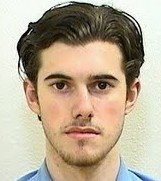
Scott Dyleski
Homicide Todd Hall
Homicide · USA · 1996
Todd Hall was described by neighbors as "mentally slow" and was said to have su…
9 victims
Todd Hall
Homicide · USA · 1996
Todd Hall was described by neighbors as "mentally slow" and was said to have su…
9 victims
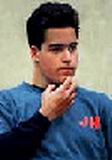 Joshua Jenkins
Homicide · USA · 1996
Joshua Jenkins was a 15-year-old American killer who killed five members of his…
5 victims
Joshua Jenkins
Homicide · USA · 1996
Joshua Jenkins was a 15-year-old American killer who killed five members of his…
5 victims
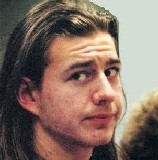 Alex Baranyi
Homicide · USA · 1997
Alex Baranyi and David Anderson were 17-year-old high-school dropouts from Bell…
4 victims
Alex Baranyi
Homicide · USA · 1997
Alex Baranyi and David Anderson were 17-year-old high-school dropouts from Bell…
4 victims
 David Anderson
Homicide · USA · 1997
David Anderson was convicted by a jury of four counts of aggravated first-degre…
4 victims
David Anderson
Homicide · USA · 1997
David Anderson was convicted by a jury of four counts of aggravated first-degre…
4 victims
 Lewis Williams
Murderer · USA · 1983
Lewis Williams was tried in the Cuyahoga County Court of Common Pleas and found…
1 victim
Lewis Williams
Murderer · USA · 1983
Lewis Williams was tried in the Cuyahoga County Court of Common Pleas and found…
1 victim
 Vernon Brown
Serial killer · USA · 1980
Vernon Brown · October 24, 1986 — Nine-year-old Janet Perkins left Cole School…
5 victims
Vernon Brown
Serial killer · USA · 1980
Vernon Brown · October 24, 1986 — Nine-year-old Janet Perkins left Cole School…
5 victims
 Lyndon Fitzgerald Pace
Serial killer · USA · 1988
Lyndon Fitzgerald Pace was 32 years old when he was sentenced to death in March…
4 victims
Lyndon Fitzgerald Pace
Serial killer · USA · 1988
Lyndon Fitzgerald Pace was 32 years old when he was sentenced to death in March…
4 victims
 Roger Dale Epperson
Murderer · USA · 1985
Roger Dale Epperson Roger Dale Epperson (DOB 5-19-50) was sentenced to death Ju…
3 victims
Roger Dale Epperson
Murderer · USA · 1985
Roger Dale Epperson Roger Dale Epperson (DOB 5-19-50) was sentenced to death Ju…
3 victims
 Debbie Fornuto
Murderer · USA · 1972
Deborah Fornuto was the mother of six children whose deaths were initially rule…
7 victims
Debbie Fornuto
Murderer · USA · 1972
Deborah Fornuto was the mother of six children whose deaths were initially rule…
7 victims
- Gender
- male
- Country
- USA
- Location
- Lafayette, California, USA
- Date of birth
- October 30, 1988
- Age at first offence
- 17
- Characteristics
- juvenile, motive unclear
- Victim profile
- Pamela Vitale, 52 (his neighbor)
- Method of murder
- S triking her in the head with a piece of crown molding
- Date(s) of murder
- October 15, 2005
- Years active
- 2005
- Date of arrest
- 4 days after
- Status
-
Life imprisonment
Sentenced to life in prison without possibility of parole on September 26, 2006
Case record: Scott Dyleski
Timeline
- December 17, 1994 — Scott Dyleski’s father notified Child Protective Services that Scott Dyleski was neglected and emotionally abused when in his mother’s care; no action was taken on the claim.
- April 3, 1995 — Scott Dyleski’s father notified Child Protective Services again that Scott Dyleski was neglected and emotionally abused when in his mother’s care; no action was taken on the claim.
- October 15, 2005 — Pamela Vitale was found dead.
- October 19, 2005 — Contra Costa County sheriff’s deputies searched Scott’s home and seized two laptops, a desktop computer, bedding, knives and a duffel bag.
- October 20, 2005 — Scott Edgar Dyleski was charged with murder as an adult in the death of Pamela Vitale.
- November 9, 2005 — Scott Dyleski pleaded not guilty.
- February 17, 2006 — Judge Mary Ann O’Malley ruled prosecutors had enough evidence for trial.
- March 3, 2006 — Scott Dyleski was arraigned on an additional charge of first-degree residential burglary; he entered a new plea of not guilty to all the charges.
- July 17, 2006 — Jury selection began in the courtroom of Judge Barbara Zuniga, who became the trial judge after defense attorney Ellen Leonida made a peremptory challenge against Judge O’Malley on the grounds that the jurist was “prejudiced against the interest of the defendant.”
- July 27, 2006 — Prosecutor Harold Jewett gave an opening statement describing Dyleski’s identification with Gothic symbols and art that depicted violence and described him stabbing and beating Vitale; Ellen Leonida described Dyleski as a gentle kid whose friends knew he “isn’t a killer and instead valued human and animal rights.”
- August 22, 2006 — Closing arguments were given.
- August 28, 2006 — A jury found Scott Dyleski guilty of first-degree murder, found the special circumstance of murder in the commission of a first-degree residential burglary, found first-degree residential burglary, and found an enhancement for using a dangerous weapon to bludgeon Vitale.
- September 26, 2006 — Scott Dyleski was formally sentenced to life in prison without the possibility of parole.
- August 15, 2006 — DNA analyst David Stockwell testified in Contra Costa County Superior Court that blood on accused murderer Scott Dyleski’s clothing matched Pamela Vitale’s blood, and that Dyleski’s DNA was also found on the clothing.
Background
Scott Edgar Dyleski was born October 30, 1988. He was American.
Scott Dyleski’s parents were Esther Fielding and Kenneth Dyleski. His parents separated when he was two years old. After the separation, Scott and his mother moved frequently and lived in various places throughout Northern California before moving to Lafayette, California to live with another family. When Dyleski moved to Lafayette he was in the sixth grade. He enjoyed playing baseball and played in Lafayette Little League.
Dyleski and his mother lived outdoors and then in a small lean-to shack. For years, Dyleski lived without electricity, plumbing, heat, or running water. He could shower only once a week, at the homes of his mother’s friends.
Dyleski’s father became concerned about his son’s welfare and contacted Child Protective Services twice, but they failed to investigate the complaint.
In 2002, Dyleski’s half-sister was killed in an automobile accident. She was the passenger in the accident, and both she and another passenger were killed. All passengers were friends and roommates. Dyleski briefly attended Acalanes High School in Lafayette.
Dyleski was a Boy Scout for a time in Lafayette Troop 224. He was shunned by fellow scouts due to his view that the September 11, 2001 attacks were government orchestrated, and he quit the unit shortly after.
In the summer of 2005, he received his California High School Profiencency Certificate (similar to the GED) and began studying art at Diablo Valley College in Pleasant Hill, California.
The offence
On October 15, 2005, Pamela Vitale was found dead.
Investigators believed Dyleski and his friend planned to start a marijuana-growing operation, with Dyleski in charge of raising money. Dyleski was believed to have stolen credit card information belonging to his neighbors and used the cards to order lighting equipment. According to prosecutors, one of his orders just days before the killing was billed to Vitale’s address, and he may have gone to her home thinking Vitale was another neighbor, Karen Schneider. Schneider’s credit card had also been used fraudulently.
Authorities believed Dyleski killed Vitale by striking her numerous times in the head with a piece of crown molding, and then carved a symbol widely described in media as a “gothic” signature into her back while she was still alive. Prosecutors also alleged that Dyleski stabbed her in the stomach after she died.
Dyleski had scratches on his face and legs consistent with a violent struggle when arrested.
Autopsy reports indicated Vitale, a former high tech executive, suffered 26 head wounds, broken fingers and dislodged teeth. Her body was bruised and battered. She suffered a gaping knife wound to her abdomen, exposing her intestines. A symbol that resembled signature marks on Dyleski’s artwork was carved onto her back.
Before he left the crime scene, Dyleski took a sip from Vitale’s water bottle and washed his knife in the bathtub, leaving behind bloody smears. A black face mask, gloves, shirt and trench coat were later found in Dyleski’s duffel bag and were stained with a mixture of his and Vitale’s blood. Dyleski also left his shoe print at the crime scene, and evidence of his DNA was found on Vitale’s foot.
Daniel Horowitz came home that evening from working on a case to find his wife’s body bloodied and curled up in a fetal position by the door.
Investigation
During searches related to the case, Contra Costa County sheriff’s deputies seized two laptops, a desktop computer, bedding, knives and a duffel bag from Dyleski’s home.
Prosecutors established that a symbol found carved on Vitale’s back closely resembled the letter “H” in the word “hate” from a bumper sticker reading "I’m for separation of Church and Hate", which was seized from Dyleski’s bedroom.
During testimony about evidence, it was discussed that investigators found blood on a balaclava ski mask and a glove, with the glove containing DNA from at least two different people.
DNA testing proved that blood found on Dyleski’s clothing matched Pamela Vitale’s blood, and Dyleski’s DNA was also found on the clothing. The mixture of two DNA profiles suggested a statistical degree of probability that varies depending on the quality of samples, from one in six to one in 13 quadrillion that Dyleski was at Vitale’s home the day she was killed.
A DNA match was also described for DNA found on the bottom of Vitale’s foot.
Blood found on a folding knife’s blade groove was described as not being Vitale’s, and could have been Dyleski’s.
Two mugs found in the kitchen sink had Vitale’s blood on them and DNA matching Horowitz’s DNA profile; they did not have DNA matching Dyleski.
A shirt found in the van had only Dyleski’s DNA. Shoes allegedly asked his girlfriend to hold had both Dyleski’s and Vitale’s DNA. Fingernail clippings taken from Vitale during her autopsy bore only her DNA.
In court, it was discussed that DNA from inside the glove would prove that someone other than Dyleski murdered Vitale, and that evidence suggested someone other than Dyleski had worn the glove.
Deputy Public Defender Ellen Leonida described the defense position that DNA found inside the glove would prove someone other than Dyleski murdered Vitale.
Arrest
After Pamela Vitale was found dead, Dyleski was searched for and arrested in connection with the death.
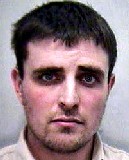
Dyleski was described as 5 ft 11 in and weighing 110 pounds, and he had scratches on his face and legs consistent with a violent struggle when arrested.
Trial
Scott Dyleski was tried as an adult.
Initially, Dyleski was represented by attorney Thomas McKenna. He later asked to be removed from the case because he defended the driver of a car that killed Dyleski’s sister and another passenger in 2002. Ellen Leonida later represented him as a public defender.
Soon after Dyleski pleaded not guilty, the Contra Costa Superior Court imposed a gag order barring all trial participants from talking to reporters. It was described as the first gag order issued in Contra Costa County in 40 years.
Dyleski pleaded not guilty on November 9, 2005.
On March 3, 2006, he was arraigned on an additional charge of first-degree residential burglary and entered a new plea of not guilty to all the charges.
On July 17, jury selection began in Judge Barbara Zuniga’s courtroom after Ellen Leonida made a peremptory challenge against Judge O’Malley on the grounds that the jurist was “prejudiced against the interest of the defendant.”
On July 27, opening statements were made. Prosecutor Harold Jewett said Dyleski identified with Gothic symbols and art that depicted violence and that he stabbed and beat Vitale. Leonida described her client as a gentle kid whose friends know he isn’t a killer and instead valued human and animal rights.
During the trial, the prosecutor called Dyleski’s housemates, mother, girlfriend, friend, a forensic pathologist, a DNA expert and several criminalists.
Gloria Allred, representing Jena Reddy, Dyleski’s girlfriend, told the jury that while Dyleski never admitted or denied killing his neighbor, he told her he would take the blame to protect her and his best friend.
Leonida called a number of Dyleski’s friends as character witnesses. Dyleski waived his right to testify. No DNA experts were called to rebut the prosecution’s DNA evidence.
On August 28, 2006, Dyleski was found guilty of all charges against him:
- first-degree murder;
- the special circumstance of murder in the commission of a first-degree residential burglary;
- first-degree residential burglary;
- an enhancement for using a dangerous weapon to bludgeon Vitale.
Dyleski was ineligible for the death penalty because he was 16 at the time of the murder.
Sentencing
Dyleski was formally sentenced on September 26, 2006.
Judge Barbara Zuniga stated:
“You do not deserve to live among decent people,”
Judge Barbara Zuniga told Dyleski.
She added:
“You concealed your identity by wearing a mask and gloves, by wearing a long coat,”
the judge added, describing the circumstances of the crime.
She continued:
“You planned this, sir, and this was a very brutal killing,”
she continued.
She stated:
“As she lay dying at your feet, you proceeded to stab her. That was unnecessary. You added to her pain, Mr. Dyleksi.”
Victim Pamela Vitale’s parents, her sister, her two children, and her husband, attorney and legal analyst Daniel Horowitz, gave statements. Daniel Horowitz asked the judge to “show Dyleski the same lack of mercy and humanity that he showed to my wife, Pamela.”
Dyleski chose not to make a statement and did not express any emotion during the hearing. His lawyer pleaded with the judge to give Dyleski the “slimmest opportunity” of a chance at parole after he served 25 years.
Public defender Ellen Leonida said:
“Scott Dyleski made a terrible mistake,”
“There is always the possibility that he can mature into a responsible, productive citizen.”
At sentencing, Daniel Horowitz condemned Dyleski. Daniel Horowitz said:
“What I thought and what I felt when I walked into that house was almost a party of blood. You took such a pleasure in killing. It was clearly something you wanted. You can’t be honest. You have a complete absence of remorse. I never had a client who took such complete pleasure in the act of killing.”
Horowitz said:
“Pamela would have screamed ‘I don’t believe this is happening!’ She would have said, ‘Stop!’ But you did not stop. She probably cried and asked for mercy. You kept on hitting her, striking her at least 26 times in the head with a rock, causing her brain to bleed, breaking her nose, fingers, knocking out some teeth, bruising and cutting almost every part of her body.”
Horowitz continued:
“He took pleasure in the killing as engaged in it. He beat her again and again and he took pleasure in it. It was horrible to listen to Dyleski’s foolish teachers describe his good character during the trial and to watch Dyleski flirt with his defense attorney during the preliminary hearing. I had to take a phone call from his mother who wanted to give me a soufflé as she was destroying the evidence of the crime.”
Horowitz asked:
“Do not let Pamela’s family have to go into the parole board in 25 years and have to testify to keep him in prison for more time. I ask you to show Dyleski the same lack of mercy and humanity that he showed to my wife, Pamela. I am asking you to take him out of my life and my family’s life forever.”
Judge Zuniga described evidence and characterized the killing as deliberate and planned.
The judge stated:
“You planned this, Sir. A very brutal murder.”
She said:
“Any murder is brutal.”
She stated:
“But this case was very brutal and shown by the autopsy and photographs.”
She said:
“This killing was full of rage and hatred and very personal.”
She added:
“While dying at your feet, you stabbed her and added to her pain.”
She stated:
“Photos of the wounds showed you live out your fantasies, like one of your idols Jack the Ripper.”
She said:
“You carved a symbol into her back, proud of your work.”
She stated:
The court sentenced Dyleski as follows:
- Count One: Penal Code 187 Murder in the first degree, with enhancements of Penal Code 190.2(a) (17) and Penal Code 12022(b) (1) found true; sentence life without the possibility of parole.
- For the enhancement of Penal Code 12022(b) (1): one additional year sentence imposed.
- Count Two: Penal Code 459/460(a) residential burglary — the middle term of 4 years imposed and stayed and would become permanent upon completion of the life sentence.
- Dyleski was to provide samples, specimens and fingerprints pursuant to Penal Code Section 296.
- Dyleski was to pay restitution to the victim fund and/or restitution fund; the court retained jurisdiction over restitution.
- A restitution fine of $200 was imposed.
- Dyleski had 342 days credit for time served with no good conduct time because this was a life sentence.
The judge told Dyleski he had a right to file a Notice of Appeal within 60 days, and Leonida replied affirmatively that she would take care of that.
The judge remanded Dyleski to the custody of the Sheriff for transport forthwith to the Department of Corrections and Rehabilitation.
Appeals
Dyleski was advised of his right to file a Notice of Appeal within 60 days.
Outcome
A jury found Dyleski guilty of first-degree murder, found the special circumstance of murder in the commission of a first-degree residential burglary, found first-degree residential burglary, and found an enhancement for using a dangerous weapon to bludgeon Vitale. He was sentenced to life in prison without the possibility of parole on September 26, 2006.
Other details
Pamela Vitale family and courtroom statements
Victim’s son Mario Vitale said he discovered during the month-long trial that he and Dyleski had things in common. Mario Vitale said:
“Where we differ is that somewhere along the line you got lost,”
and:
“Now you’re nothing more than a murderer with no one to blame but yourself.”
Marisa Vitale spoke to the judge about her mother’s death and asked why, and said:
“How can I address a person who killed my mother?”
Marisa Vitale said:
“It is unbearable pain.”
Marisa Vitale asked:
“Remember our faces – those faces you ruined.”
Marisa Vitale requested life without possibility of parole.
Pamela’s father Verne Ludtke told the judge:
“Children are always children to a parent no matter what their age.”
He said:
“The murder of Pamela by this human predator was the greatest shock.”
He described feeling:
“It was like an emotional tsunami. Everyone asked why? Why did he do this to such a wonderful person?”
He said:
“As a Christian man, I try to forgive. I try to forgive you for this vicious attack and murder. But, I see no remorse. If I see remorse, I hope I can forgive.”
Pamela’s mother, Carol (Mrs. Ludtke), said:
“The death of a child is devastating. This savage butchery is something from which I will never recover.”
She said:
“We are reduced to only three --completely shattered.”
She stated:
“At 10:30 p.m. on October 15 I got a phone call.”
She said:
“I could not live without my Pamy-girl.”
She asked:
“Why?”
Tamara Hill, Pamela’s only sibling, described injuries and said:
“Pamela suffered 26 blows to the head, and every surface of her brain bled.”
She said:
“She was only 52-years-old.”
She condemned Dyleski and said:
“He no longer deserves to be called human!”
She requested:
“I request this – a sentence of life without possibility of parole. There is nothing more I can do. I request this sentence -- for Pamela.”
Witnesses at sentencing related to Scott’s background
Lyn Dyleski testified about Scott’s father and mother. She described her former husband Kenneth Dyleski as having obsessive compulsive behavior and said there was a history of domestic violence between Esther and Ken, and that police were sometimes called. She testified that she met Kenneth in 1994 when he was living in Castro Valley and that he had lost custody of his daughter and saw Scott on Fridays because Esther had custody.
Lyn Dyleski said Ken fed Scott fast food and that Ken abandoned Scott as a teenager. She described Scott’s upbringing in Lafayette, including living in lean-to conditions, and she testified that Scott was a Boy Scout and played in Little League.
Lyn Dyleski testified about Scott’s interests and character, stating that he was considerate, respectful, interested in animal rights, and became a Vegan. She said Scott obtained his high school degree early, wanted to be a sound engineer, and sought education while in juvenile hall.
Boy Scout and other character witnesses
Carl Brown, leader of Dyleski’s Boy Scout Troop, testified:
“I knew Scott since age 11. He is a kind honorable person.”
He said:
“This is a tragedy.”
He testified:
“I don’t believe he did it.”
Linda Brown said:
“Today is not about guilt or innocence.”
She asked:
“Please give him a chance.”
Viola Bolick testified:
“If he is offered parole he will remain kind and gentle.”
Defense and prosecution sentencing positions
Ellen Leonida argued at sentencing for a parole possibility, stating:
“I ask for mercy, not that he not be punished, but that the sentence not be life without the possibility of parole.”
Leonida said:
“We are asking that after 25 actual years he can appear before the parole Board.”
Leonida also stated:
“There is remote possibility he could be released after the parole board hears from everyone.”
Leonida said:
“There is no release date.”
Deputy District Attorney Harold Jewett argued that punishment was the purpose of sentencing and said the case was about justice rather than rehabilitation. Jewett said:
“This is an emotional tragedy. But today is not about compassion but about justice.”
Jewett said:
“The death he caused goes beyond Pamela.”
Jewett stated there was “no mercy shown by Scott Dyleski” and described it as “a cold premeditated act.”
Statements and quotes about Dyleski’s conduct
Daniel Horowitz quoted in sentencing described his reaction to discovering his wife’s body as:
“almost a party in blood.”
Mario Vitale described Dyleski’s carving as:
“You cut a symbol in Mom’s back.”
Marisa Vitale asked for explanation of why her mother was killed and said:
“This was not a passion killing. It was calculated.”
Judge Zuniga stated Dyleski did not deserve to live among decent people and described fascination with injuries when autopsy photographs were shown. She said:
“Absolutely fascinated by your handiwork.”
Spotted an error, or have more information about this case?