Vernon Elwood Booher
Mass murderer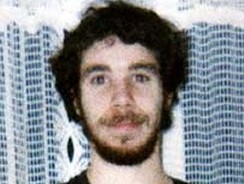 Marc Lepine
Mass murderer · Canada · 1989
Marc Lépine committed a shooting at the École Polytechnique engineering school…
14 victims
Marc Lepine
Mass murderer · Canada · 1989
Marc Lépine committed a shooting at the École Polytechnique engineering school…
14 victims
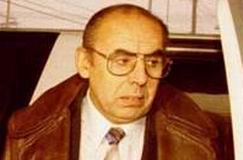 Roger Warren
Mass murderer · Canada · 1992
Roger Warren was convicted of 9 counts of second-degree murder in connection to…
9 victims
Roger Warren
Mass murderer · Canada · 1992
Roger Warren was convicted of 9 counts of second-degree murder in connection to…
9 victims
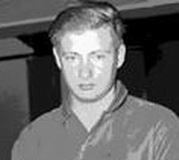 Victor Ernest Hoffman
Mass murderer · Canada · 1967
Victor Ernest Hoffman (born 1946; died May 21, 2004) was found not guilty by re…
9 victims
Victor Ernest Hoffman
Mass murderer · Canada · 1967
Victor Ernest Hoffman (born 1946; died May 21, 2004) was found not guilty by re…
9 victims
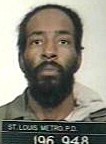 Vernon Brown
Serial killer · USA · 1980
Vernon Brown · October 24, 1986 — Nine-year-old Janet Perkins left Cole School…
5 victims
Vernon Brown
Serial killer · USA · 1980
Vernon Brown · October 24, 1986 — Nine-year-old Janet Perkins left Cole School…
5 victims
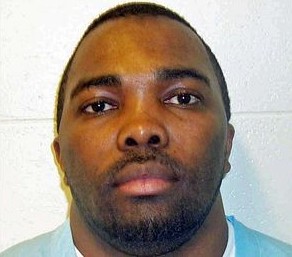 Edward Nathaniel Bell
Murderer · USA · 1999
Defendant: Edward Nathaniel Bell (male, Black; Jamaican national). · Victim: Sg…
1 victim
Edward Nathaniel Bell
Murderer · USA · 1999
Defendant: Edward Nathaniel Bell (male, Black; Jamaican national). · Victim: Sg…
1 victim
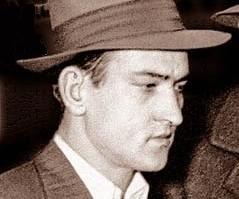 George Joseph Cvek
Murderer · USA · 1941
George Joseph Cvek was 23 when detectives identified him from a fingerprint. Ca…
1 victim
George Joseph Cvek
Murderer · USA · 1941
George Joseph Cvek was 23 when detectives identified him from a fingerprint. Ca…
1 victim
 Cynthia Pugh
Murderer · USA · 1983
Cynthia Pugh was convicted in 1984 of murdering her boss and lover, Manlius bus…
1 victim
Cynthia Pugh
Murderer · USA · 1983
Cynthia Pugh was convicted in 1984 of murdering her boss and lover, Manlius bus…
1 victim
 Charles Milton
Murderer · USA · 1977
Charles Milton was convicted of capital murder by a Fort Worth, Texas jury and…
1 victim
Charles Milton
Murderer · USA · 1977
Charles Milton was convicted of capital murder by a Fort Worth, Texas jury and…
1 victim
 Dorsie Lee Johnson
Murderer · USA · 1986
Dorsie Lee Johnson, Jr. was convicted in the death of Jack Huddleston, 53, a co…
1 victim
Dorsie Lee Johnson
Murderer · USA · 1986
Dorsie Lee Johnson, Jr. was convicted in the death of Jack Huddleston, 53, a co…
1 victim
- Gender
- male
- Country
- Canada
- Location
- Mannville, Alberta, Canada
- Date of birth
- 1906
- Age at first offence
- 22
- Characteristics
- parricide
- Victim profile
- His mother, Eunice; his brother, Fred, and two farm hands, Gabriel Grombey and Wasyl Rozak
- Method of murder
- Shooting (.303 Lee Enfield rifle)
- Date(s) of murder
- July 9, 1928
- Years active
- 1928
- Date of arrest
- —
- Status
-
Executed
Executed by hanging at Fort Saskatchewan Prison on April 24, 1929
Case record
People
- Vernon Elwood Booher was the accused.
- Mrs. Rose Booher was Vernon Booher’s mother and was killed.
- Henry Booher was Vernon Booher’s father and was mentioned as present on the farm at the time of the killing.
- Fred Booher was Vernon Booher’s elder brother and was killed.
- Vernon Booher’s younger son was mentioned as being at the farm with Henry Booher.
- Two farm labourers (hired hands) were killed.
- Dr. Adolph Langsner was an Austrian psychiatrist and medium who attended an inquest.
- Detective Jim Leslie was mentioned as arriving to take charge of the case.
- Inspector James Hancock was mentioned as head of the Bureau of Criminal Investigation at Edmonton.
- Constable Fred Olsen was mentioned as going to the scene immediately after the call.
Background
Vernon Booher killed his mother and brother, and also killed two farm labourers, on their farm near Mannville, Alberta, in July 1928. Vernon Booher reported the killings to the police. Police later described the wealthy Booher family as living on the farm along with their hired hands. On the evening of July 8, 1928, the Royal Canadian Mounted Police received a panicky telephone call from Dr. Harley Heaslip reporting a mass murder on a farm some 5 mi outside of Mannville, Alberta, where the Booher family lived along with their hired hands.
The offence
On the evening of July 8, 1928, the police found the body of Mrs. Rose Booher slumped over the dining room table. She had been shot in the back of the head. In the kitchen lay the body of her elder son, Fred, shot three times in the face. An inspection of the bunkhouse and barn turned up two more corpses, hired hands who could conceivably have heard the first shots and seen the killer. It was said that Mrs. Booher was killed while picking stems from a batch of strawberries.
The police explanation described that Mrs. Booher was the first victim because she would hardly have gone on hulling strawberries if she had heard her son being murdered in the next room. The police explanation stated that clearly, Fred had heard a shot and had come to the door to investigate, where the killer shot him. The police explanation stated that then the killer marched outside and eliminated the two hired hands so that they could never tell what, if anything, they had heard or seen.
Henry Booher and Vernon Booher had spent the afternoon working separately on different parts of the farm. The two daughters in the family had been in town. The two male Boohers had not paid attention to the shots because they were common in the country, especially just then when foxes were on the prowl.
Investigation
Constable Fred Olsen went to the scene immediately and found Mrs. Rose Booher’s body. The police arrived the next day to take charge of the case, under Inspector James Hancock and Detective Jim Leslie. It was stated that nothing had been stolen. The investigation was described as confirming the murderer was neither a stranger nor an intruder because Mrs. Booher had been killed while picking stems from strawberries. It was also said that the fact that the killer had hunted out the men in the barn and bunkhouse confirmed this.
The murder weapon was not found initially, but it was identified as a .303 Lee Enfield rifle. Such a weapon had been reported stolen from the home of a neighboring farmer, Charles Stevenson. It was stated that the killer knew his way about the Stevenson home because the weapon was always hidden in a closet.
Police inquiries unearthed that Vernon Booher had recently expressed hatred for his mother because she had broken up his romance with a local girl. Vernon Booher was taken into custody but refused to make a statement. Without the murder weapon, police had no case.
With the investigation still stymied after several weeks, Inspector Hancock brought in a Vienna-born mind reader who was demonstrating his art in Vancouver. Maximilian Langsner was described as a Vienna-born mind reader who had studied psychology with Freud in Vienna and later had gone to India, where he researched the way yogis attempted to control the mind. It was described that the human mind under stress produces signals that another trained mind can learn to pick up. Newspaper accounts of his career were described as telling of the aid he had given European police in solving crimes, including assistance to Berlin police in the recovery of stolen jewels by sitting facing the suspect until he got a signal telling him where the jewels were hidden. It was also described that Langsner had recently duplicated this feat in a similar case in Vancouver.
The police invited an Austrian psychiatrist, Dr. Adolph Langsner, who claimed to be able to read people’s brainwaves. Dr. Langsner sat outside Booher’s cell for an hour. Langsner told police he believed Booher was the murderer and reported that the murder weapon could be found hidden in a clump of long grass and brush just west of the farmhouse. Acting on the psychic’s tip, police found the .303 rifle near the house among long grass and brush. It was stated that Langsner was able to provide further information that helped solve the crime.
It was also stated that a neighbor had reported that Vernon Booher’s .303 rifle and a box of shells had been stolen the day before the murders. It was said that while the murder weapon could not be found initially, the police did discover a spent cartridge from a .303 rifle at the murder scene. It was stated that Booher did not own this type of weapon.
Arrest
Vernon Booher was taken into custody.
Trial
Vernon Booher confessed after the discovery of the rifle. It was stated that Booher confessed telling police he had snuck out of church the week before and taken the rifle from his neighbor’s home. It was stated that Booher said he was upset with his mother when she refused to support his desire to marry a local girl. Another account described that when confronted with the rifle Vernon Booher broke down and confessed as his tearful father and sisters watched, that he had only meant to shoot his mother, and that when his brother Fred rushed into the house Vernon knew he had to kill him too. It was stated that Vernon expressed remorse only for the death of his brother and shrugged off the murder of the handymen as merely part of a necessary cover-up.
It was stated that Booher’s confession was ultimately not allowed as evidence in his trial. His conviction was later quashed on technical objections and a new trial ordered. He was convicted again at the second trial when a further confession was revealed.
A quote attributed to Langsner was included in the record: "The rifle is unimportant. He is guilty. He admitted it to me."
Another quote attributed to Langsner included a statement as he described the prisoner: "escape his own thoughts".
Sentencing
Vernon Booher was hanged for quadruple murder on Apr. 26, 1929. He was executed at Fort Saskatchewan Gaol. It was also stated that he was hanged at Fort Saskatchewan Prison on Wednesday, April 24th, 1929.
Appeals
His conviction was quashed on technical objections and a new trial was ordered.
Outcome
Vernon Booher was executed by hanging at Fort Saskatchewan Prison on April 24, 1929. The hanging was described as for quadruple murder.
Aftermath
Maximilian Langsner left Vancouver shortly thereafter to spend the next several years conducting psychic research among the Eskimos. He was last heard of in 1939 as he prepared to launch a tour of the Middle East.
Spotted an error, or have more information about this case?