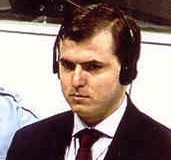
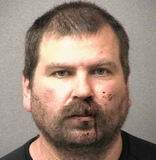
Esad Landzo
Murderer Dr. Wouter Basson
Murderer · 1992
Wouter Basson (born July 6, 1950) was a South African cardiologist and the form…
230 victims
Dr. Wouter Basson
Murderer · 1992
Wouter Basson (born July 6, 1950) was a South African cardiologist and the form…
230 victims
 Ershad Sikder
Murderer · Bangladesh · 1990
Ershad Sikder was an influential political figure in the south-western city of…
30 victims
Ershad Sikder
Murderer · Bangladesh · 1990
Ershad Sikder was an influential political figure in the south-western city of…
30 victims
 Brian Kevin Rosenfeld
Murderer · USA · 1985
Brian Kevin Rosenfeld Brian Kevin Rosenfeld was sentenced to three concurrent l…
23 victims
Brian Kevin Rosenfeld
Murderer · USA · 1985
Brian Kevin Rosenfeld Brian Kevin Rosenfeld was sentenced to three concurrent l…
23 victims
 Russell Ellwood
Murderer · USA · 1991
Russell Ellwood was a former taxi driver. Authorities suspected him of killing…
20 victims
Russell Ellwood
Murderer · USA · 1991
Russell Ellwood was a former taxi driver. Authorities suspected him of killing…
20 victims
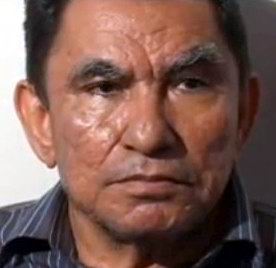 Anisio Ferreira de Sousa
Murderer · Brazil · 1989
September 4, 2003 — Anísio Ferreira de Sousa was sentenced to 77 years in priso…
19 victims
Anisio Ferreira de Sousa
Murderer · Brazil · 1989
September 4, 2003 — Anísio Ferreira de Sousa was sentenced to 77 years in priso…
19 victims
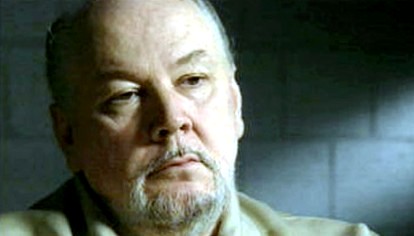 Richard Kuklinski
Serial killer · USA · 1949
Richard “Iceman” Kuklinski was sentenced to life in prison in 1988. He died in…
100 victims
Richard Kuklinski
Serial killer · USA · 1949
Richard “Iceman” Kuklinski was sentenced to life in prison in 1988. He died in…
100 victims
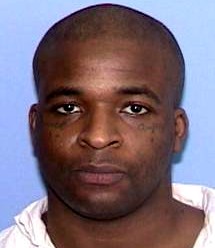 Demetrius Wayne Smith
Murderer · USA · 2005
Demetrius Wayne Smith (also listed as Demetrius Dewayne Smith) was sentenced to…
2 victims
Demetrius Wayne Smith
Murderer · USA · 2005
Demetrius Wayne Smith (also listed as Demetrius Dewayne Smith) was sentenced to…
2 victims
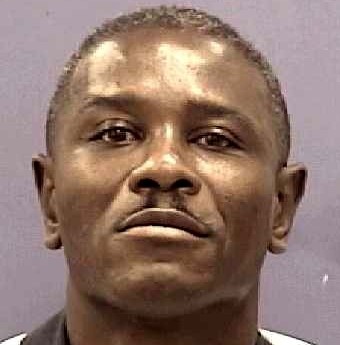 Marcus Wellons
Murderer · USA · 1989
Marcus A. Wellons was convicted of the malice murder and rape of 15-year-old In…
1 victim
Marcus Wellons
Murderer · USA · 1989
Marcus A. Wellons was convicted of the malice murder and rape of 15-year-old In…
1 victim
 Hubert Pilcik
Serial killer · Czech Republic · 1948
Hubert Pilčík (October 14, 1891 - September 9, 1951) was a Czechoslovak serial…
5 victims
Hubert Pilcik
Serial killer · Czech Republic · 1948
Hubert Pilčík (October 14, 1891 - September 9, 1951) was a Czechoslovak serial…
5 victims
- Gender
- male
- Country
- Bosnia
- Location
- Celibici, Bosnia
- Date of birth
- March 7, 1973
- Age at first offence
- 19
- Characteristics
- rape, torture
- Victim profile
- Men and women (prisoners)
- Method of murder
- ???
- Date(s) of murder
- 1992
- Years active
- 1992
- Date of arrest
- May 2, 1996
- Status
-
Imprisoned
Sentenced to 15 years imprisonment by the International Criminal Tribunal for the former Yugoslavia (ICTY) on November 16, 1998
Case record: Esad Landzo
Background
Esad Landzo was born on 7 March 1973. During the war, he was a guard at the Celebici prison camp from around May 1992 until December 1992. Celibici (spelled as Celibici in the case summary) was a village in the Konjic municipality of central Bosnia. Konjic was of strategic interest because it was the site of an arms and munitions factory and because it was an important communications link between Mostar and Sarajevo.
Before the war, the municipality had a population of around 45’000 inhabitants, of which 55% were Muslims, 26% Croats, and 15% Serbs.
On 25 June 1991, Slovenia and Croatia declared their independence from Yugoslavia. Fighting broke out during the summer of 1991 in Croatia between the Yugoslav’s People’s Army (JNA) and the Croatian armed forces. As the war in Croatia became protracted, it became probable that Bosnia-Herzegovina would also declare itself independent from the Federal Socialist Republic of Yugoslavia (FSRY). The Serb Democratic Party of Bosnia-Herzegovina (SDS), realising that it could not keep Bosnia-Herzegovina within the FSRY, created a distinct Serb entity within the boundaries of Bosnia-Herzegovina.
On 9 January 1992, the Serb Republic of Bosnia-Herzegovina was proclaimed and subsequently given the new designation of Republika Srpska on 12 August 1992. On 1 March 1992, the Croatian and Muslim populations declared their independence from Bosnia-Herzegovina.
From end May 1992, armed forces made up of Bosnian Muslims and Bosnian Croats attacked and seized control of certain villages in the municipality of Konjic and its surroundings, which were populated in the majority by Bosnian Serbs. The attackers expelled the Serb residents by force from their houses and held them in detention centres.
The majority of the men and some of the women were marched off to camps previously held by the JNA in Celibici. At these camps, prisoners were murdered, tortured, subjected to sexual violence, beaten up, and, in general terms, subjected to cruel and inhumane treatment. The majority of the detainees were imprisoned at Celibici from around May 1992 until about October 1992, although some detainees were held until December 1992.
The offence
Esad Landzo took advantage of his position as camp guard to mete out ill treatment to the detainees. He abused his position by committing murder and by practicing torture and cruel treatment.
Investigation and legal procedure
Esad Landzo was arrested by the authorities of Bosnia-Herzegovina on 2 May 1996. He was transferred to the International Criminal Tribunal for the former Yugoslavia (ICTY) on 13 June 1996. He appeared before the court for the first time on 18 June 1996 and pleaded not guilty to 24 counts.
Trial
On 16 November 1998, the First Trial Chamber found him guilty on 17 counts and sentenced him to 15 years in prison on the basis of his individual responsibility (Art. 7 § 1 ICTY Statute) for:
- Violations of the laws and customs of war (Art. 3 ICTY Statute): murder, cruel treatment, torture and pillage;
- Serious breaches of the 1949 Geneva Conventions (Art. 2 ICTY Statute): wilful murder, torture, wilfully causing intense suffering or of inflicting serious bodily injury, and inhumane treatment.
Appeals
On 20 February 2001, the Appeals Chamber threw out the charges related to the violations of the laws and customs of war (Art. 3 ICTY Statute) on the grounds that these were cumulative convictions (Art. 2 ICTY Statute and Art. 3 ICTY Statute). In effect, if the offence is one and the same, it cannot be judged on the basis of two different articles. In the case in point, the accused should have only been judged with respect to the single Art. 2 of the Statute of the ICTY. Since this rectification could have an influence over the length of the sentence, the case was sent back to the First Trial Chamber for further review.
On 9 October 2001, Esad Landzo’s sentence was reviewed and maintained at 15 years imprisonment.
On 8 April 2003, the Appeals Chamber rejected his appeal against this conviction.
Sentencing
On 16 November 1998, Esad Landzo was sentenced to 15 years in prison. The disposition described in the case summary stated “15 years on three murder counts, 1998.”
Outcome
Esad Landzo was transferred to Finland on 9 July 2003 to serve out the rest of his sentence.
Other details
The case summary described his position as “Guard at the Celebici prison camp.” The case summary included the following labels: “SEX: M,” “RACE: W,” “TYPE: S,” and “MOTIVE: PC-extremist.” The case summary also listed “MO: Raped/killed Serbs in concentration camp.”
Spotted an error, or have more information about this case?