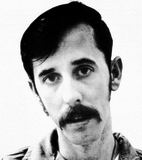
Troy Leon Gregg
Murderer Ervil LeBaron
Murderer · USA · 1972
Ervil Morrell LeBaron (1925 to August 16, 1981) was the leader of a polygamous…
35 victims
Ervil LeBaron
Murderer · USA · 1972
Ervil Morrell LeBaron (1925 to August 16, 1981) was the leader of a polygamous…
35 victims
 Marvin Gray
Murderer · USA · 1975
Marvin Gray was convicted killer who claimed responsibility for 23 slayings and…
23 victims
Marvin Gray
Murderer · USA · 1975
Marvin Gray was convicted killer who claimed responsibility for 23 slayings and…
23 victims
 Yahweh ben Yahweh
Murderer · USA · 1980
Yahweh ben Yahweh was born and legally named Hulon Mitchell Jr. (October 27, 19…
23 victims
Yahweh ben Yahweh
Murderer · USA · 1980
Yahweh ben Yahweh was born and legally named Hulon Mitchell Jr. (October 27, 19…
23 victims
 Charles Manson
Murderer · USA · 1969
Charles Milles Manson (born November 12, 1934) was an American criminal and mus…
9 victims
Charles Manson
Murderer · USA · 1969
Charles Milles Manson (born November 12, 1934) was an American criminal and mus…
9 victims
 Sharee Miller
Murderer · USA · 1999
Sharee Paulette Miller was an American woman who was accused of plotting the mu…
1 victim
Sharee Miller
Murderer · USA · 1999
Sharee Paulette Miller was an American woman who was accused of plotting the mu…
1 victim
 Bobby James Moore
Murderer · USA · 1980
Defendant: Bobby James Moore Victim: Jim McCarble The federal habeas corpus rel…
1 victim
Bobby James Moore
Murderer · USA · 1980
Defendant: Bobby James Moore Victim: Jim McCarble The federal habeas corpus rel…
1 victim
 David Simelane
Serial killer · Swaziland · 2000
David Simelane — accused; serial killer convicted of murder. · Judge Jacobus An…
28 victims
David Simelane
Serial killer · Swaziland · 2000
David Simelane — accused; serial killer convicted of murder. · Judge Jacobus An…
28 victims
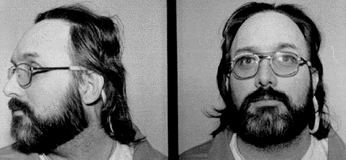 John Albert Taylor
Murderer · USA · 1988
John Albert Taylor (c. 1960) was executed by firing squad in Utah on January 26…
1 victim
John Albert Taylor
Murderer · USA · 1988
John Albert Taylor (c. 1960) was executed by firing squad in Utah on January 26…
1 victim
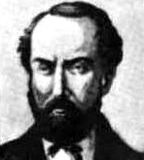 Henry Wirz
Murderer · USA · 1864
Henry Wirz (also known as Heinrich Hartmann Wirz) (November 25, 1823 – November…
11 victims
Henry Wirz
Murderer · USA · 1864
Henry Wirz (also known as Heinrich Hartmann Wirz) (November 25, 1823 – November…
11 victims
 Tony Roach
Murderer · USA · 1998
Tony Roach was convicted of capital murder and was sentenced to death. He was e…
1 victim
Tony Roach
Murderer · USA · 1998
Tony Roach was convicted of capital murder and was sentenced to death. He was e…
1 victim
- Gender
- male
- Country
- USA
- Location
- Gwinnett County, Georgia, USA
- Date of birth
- 1953
- Age at first offence
- 20
- Characteristics
- robbery, hitchhiking
- Victim profile
- Fred Edward Simmons and Bob Durwood Moore
- Method of murder
- Shooting (.25-caliber automatic pistol)
- Date(s) of murder
- November 21, 1973
- Years active
- 1973
- Date of arrest
- 3 days after
- Status
-
Sentenced to death
Sentenced to death; escape attempt in July 1980; died the following night in a bar fight in North Carolina
Name and identity
Troy Leon Gregg (age 25) was the appellant in Gregg v. Georgia and was also described as Gregg. Gregg was identified as (1953 - July 29, 1980) in the case material.
Procedural history and legal outcome
Gregg was convicted of having murdered Fred Edward Simmons and Bob Durwood Moore, who had given him and another man a ride when they were hitchhiking. The crime occurred on 21 November 1973.
In Gregg v. Georgia, the Supreme Court held that the State of Georgia could constitutionally put Gregg to death.
Gregg never made it to the electric chair. He escaped from prison in July, 1980, the night before his set date for execution, but died the following night in a bar fight in North Carolina.
The case was described as being before this court on appeal and mandatory review of the death sentences imposed on each of the four counts charging these crimes.
Background
On Wednesday morning, November 21, 1973, Gregg (age 25) and a traveling companion Floyd Ralford ("Sam") Allen (age 16) were hitchhiking north in Florida. They had only $8 between them when they were given a ride by Fred Edward Simmons and Bob Durwood ("Tex") Moore.
Their automobile broke down about two hundred forty miles north of Miami on the Florida Turnpike. A Florida State Highway Patrolman accompanied Simmons and Moore to an automobile dealer where Simmons purchased a 1960 red and white Pontiac. Thereafter, Simmons and Moore again picked up Gregg and Allen and resumed their journey northward.
En route, Simmons and Moore were seen in possession of large sums of money. At the intersection of I-10 and I-75 in north Florida, another hitchhiker, Dennis Weaver, was picked up. Weaver rode with the group until he got out at the intersection of I-85 and Highway 23 (North Druid Hills Road) in Atlanta, Georgia, at approximately 11:00 p.m. that evening.
Gregg drove during the time Weaver was in the car while Simmons and Moore did considerable drinking. No fighting words were exchanged by any of the men while Weaver was present.
The offence
The state presented evidence intended to prove guilt as follows.
At the intersection of Georgia Highway 20 and I-85 in Gwinnett County, Georgia, the group stopped for a rest stop and Simmons and Moore got out. Gregg turned around and told Allen to get out, "we're going to rob them".
Allen stated to a police detective in the appellant's presence as follows: that Gregg lay up on the car with a gun in his hand to get good aim and as Simmons and Moore were coming back up the bank he fired three shots; that one of the men fell and the other staggered; that Gregg then circled around the back of the car and approached the two men, both of whom were then lying in a drainage ditch; that Gregg placed the gun to one's head and pulled the trigger, then went quickly to the other one and placed the gun at his head and pulled the trigger again; that he took their money and whatever contents were in their pockets; and that he then told Allen to get in the car and they drove away.
The bodies of Simmons and Moore were found in the drainage ditch.
A State Crime Laboratory medical examiner stated that death was caused by gunshot wounds, that Simmons had been shot in the right corner of the right eye in the region of the temple and Moore had been shot once in the right cheek of the face and once in the rear of his head.
Investigation
On Friday morning, November 23, 1973, Dennis Weaver went to an Atlanta restaurant for breakfast. While there he noticed an article on the front page of an Atlanta newspaper that led him to call the Gwinnett County Police Department. Weaver told them he thought Gregg and Allen were going to Asheville, North Carolina.
In response to a bulletin from Gwinnett County authorities, the Asheville Police apprehended Gregg driving Simmons' 1960 Pontiac at about 3:00 p.m. November 24, 1973. With him in the car were Allen and three other persons.
A .25-caliber automatic pistol was found in Gregg's pocket. He also had approximately $107 in cash.
Ballistics tests subsequently established that bullets from the gun in Gregg's pocket caused the death of Simmons and Moore.
Weaver accompanied police officers to Asheville where he identified the automobile in which he had ridden with Gregg and the two victims, and headbands worn by Gregg and Allen. When asked if that was how it happened, Weaver responded, "Yes, it was."
In rebuttal of defense evidence, the state established that when asked by an Asheville detective why he did it, Gregg replied: "By God, I wanted them dead."
The state also presented evidence that while Gregg was awaiting trial, he wrote a letter to Allen, requesting that he testify as outlined in the letter, which accorded with Gregg's trial testimony.
Arrest
Weaver was involved in leading authorities to Gregg's whereabouts, telling the Gwinnett County Police Department that he thought Gregg and Allen were going to Asheville, North Carolina. Asheville Police apprehended Gregg driving Simmons' 1960 Pontiac at about 3:00 p.m. November 24, 1973, with Allen and three other persons in the car. A .25-caliber automatic pistol was found in Gregg's pocket, and Gregg had approximately $107 in cash.
Trial
The case was described as being before the Supreme Court on appeal and mandatory review of the death sentences imposed on each of the four counts charging these crimes.
Gregg was tried and convicted in the Superior Court of Gwinnett County for the murders and armed robberies of Fred Edward Simmons and Bob Durwood ("Tex") Moore. The case was said to be before this court on appeal and mandatory review of the death sentences imposed on each of the four counts charging these crimes.
It was stated that Gregg v. the State involved Murder, with the Gwinnett Superior Court and Judge Merritt, and that GRICE, Chief Justice, was involved.
Sentencing
Gregg received death sentences imposed on each of the four counts charging these crimes. The Supreme Court upheld the death sentence after its decision in Furman v. Georgia invalidated all previously enacted death penalty laws in the United States. The Supreme Court held that Georgia could constitutionally put Gregg to death.
Appeals and further judicial consideration
The Supreme Court decision described in the case material was Gregg v. Georgia, which held that Georgia could constitutionally put Gregg to death.
The case was described as being before the court on appeal and mandatory review of the death sentences imposed on each of the four counts charging these crimes.
Outcome
Gregg was sentenced to death.
Other details: defence and trial testimony
Gregg testified that he and Allen were given a ride by Simmons and Moore. He stated that throughout the trip Simmons and Moore were drinking beer or whiskey.
Gregg testified about the altercation and his shooting as follows: "Fred hit me on the left jaw and knocked me in the drainage ditch and I got back up and asked him to leave me alone and he hit me the second time and knocked meback into the drainage ditch and when I come out of the drainage ditch the second time he came at me. I don't know what he had in his hand, it could have been a knife or pipe, I don't know what it was, but when he came at me the second time I shot him."
Gregg stated that he was very scared; he left because he was scared and drove the car up I-85 until they got to Howard Johnson's and stayed all night. He testified that he did not mean to kill either one of the victims and shot them to protect himself.
He testified that he had over a hundred dollars on him by virtue of a cab driver he bumped into repaying money owed him. He denied writing some of the words in the letter of instruction written to Allen while both were in jail. Gregg testified that the new clothing and equipment in his possession when he was apprehended were either bought by Allen, found in the motel room, or already owned by him.
Timeline
- 21 November 1973 — Gregg (age 25) and Floyd Ralford ("Sam") Allen (age 16) were hitchhiking north in Florida and were given a ride by Fred Edward Simmons and Bob Durwood ("Tex") Moore.
- Approx. 11:00 p.m. (same evening as Weaver rode with the group) — Dennis Weaver got out at the intersection of I-85 and Highway 23 (North Druid Hills Road) in Atlanta, Georgia.
- 23 November 1973 (Friday morning) — Dennis Weaver went to an Atlanta restaurant for breakfast, called the Gwinnett County Police Department after seeing an article, and said he thought Gregg and Allen were going to Asheville, North Carolina.
- About 3:00 p.m. (24 November 1973) — Asheville Police apprehended Gregg driving Simmons' 1960 Pontiac with Allen and three other persons in the car; a .25-caliber automatic pistol was found in Gregg's pocket and Gregg had approximately $107 in cash.
- July 1980 — Gregg escaped from prison the night before his set date for execution.
- July 29, 1980 — Gregg died the following night in a bar fight in North Carolina.

Spotted an error, or have more information about this case?