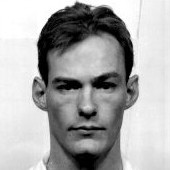
Richard Drinkard
Murderer Brian Kevin Rosenfeld
Murderer · USA · 1985
Brian Kevin Rosenfeld Brian Kevin Rosenfeld was sentenced to three concurrent l…
23 victims
Brian Kevin Rosenfeld
Murderer · USA · 1985
Brian Kevin Rosenfeld Brian Kevin Rosenfeld was sentenced to three concurrent l…
23 victims
 Marvin Gray
Murderer · USA · 1975
Marvin Gray was convicted killer who claimed responsibility for 23 slayings and…
23 victims
Marvin Gray
Murderer · USA · 1975
Marvin Gray was convicted killer who claimed responsibility for 23 slayings and…
23 victims
 Yahweh ben Yahweh
Murderer · USA · 1980
Yahweh ben Yahweh was born and legally named Hulon Mitchell Jr. (October 27, 19…
23 victims
Yahweh ben Yahweh
Murderer · USA · 1980
Yahweh ben Yahweh was born and legally named Hulon Mitchell Jr. (October 27, 19…
23 victims
 Russell Ellwood
Murderer · USA · 1991
Russell Ellwood was a former taxi driver. Authorities suspected him of killing…
20 victims
Russell Ellwood
Murderer · USA · 1991
Russell Ellwood was a former taxi driver. Authorities suspected him of killing…
20 victims
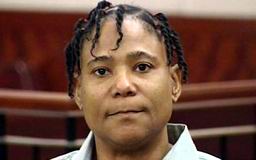 Mona Nelson
Murderer · USA · 2010
Mona Nelson was sentenced to life in prison without parole on August 27, 2013.…
1 victim
Mona Nelson
Murderer · USA · 2010
Mona Nelson was sentenced to life in prison without parole on August 27, 2013.…
1 victim
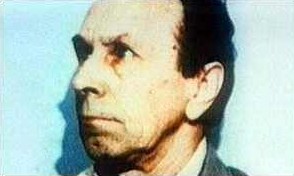 Sidney Cooke
Murderer · United Kingdom · 1985
Sidney Cooke was sentenced for the manslaughter of Jason Swift to 19 years in p…
1 victim
Sidney Cooke
Murderer · United Kingdom · 1985
Sidney Cooke was sentenced for the manslaughter of Jason Swift to 19 years in p…
1 victim
 Barbara Stager
Murderer · USA · 1988
Barbara Stager (born October 30, 1948) was an American woman convicted in 1989…
2 victims
Barbara Stager
Murderer · USA · 1988
Barbara Stager (born October 30, 1948) was an American woman convicted in 1989…
2 victims
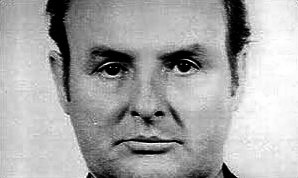 Roy Fontaine
Serial killer · United Kingdom · 1977
17 June 1924 — Archibald Thompson Hall was born in Glasgow. · 1941 — He receive…
5 victims
Roy Fontaine
Serial killer · United Kingdom · 1977
17 June 1924 — Archibald Thompson Hall was born in Glasgow. · 1941 — He receive…
5 victims
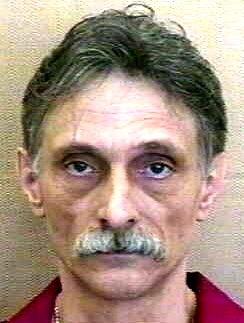 Kenneth Lee Boyd
Murderer · USA · 1988
Kenneth Lee Boyd was convicted of the murders of Thomas Dillard Curry and Julie…
2 victims
Kenneth Lee Boyd
Murderer · USA · 1988
Kenneth Lee Boyd was convicted of the murders of Thomas Dillard Curry and Julie…
2 victims
- Gender
- male
- Country
- USA
- Location
- Harris County, Texas, USA
- Date of birth
- J uly 11, 1957
- Age at first offence
- 28
- Characteristics
- armed robbery, robbery, murder for hire
- Victim profile
- Lou Ann Anthony, 44; her sister, LaDean Hendrix, 47; and Hendrix's boyfriend, Jerry Mullens, 43
- Method of murder
- Beating witha claw hammer
- Date(s) of murder
- November 15, 1985
- Years active
- 1985
- Date of arrest
- 5 days after
- Status
-
Executed
Executed by lethal injection in Texas on May 19, 1997
Case overview
Richard Gerry Drinkard was convicted in Texas of capital murder in the deaths of Louann Anthony, Ladeen Hendrix, and Jerry Mullins. Drinkard used a claw hammer to murder Lou Ann Anthony, 44; her sister LaDean Hendrix, 47; and Hendrix's boyfriend, Jerry Mullens, 43. Hendrix and Mullens were staying at Anthony's Spring Branch-area apartment.
Drinkard was sentenced to death.
At his execution, Drinkard declined to make a last statement.
Timeline
- Nov. 15, 1985 — Drinkard used a claw hammer to murder Lou Ann Anthony, 44; LaDean Hendrix, 47; and Jerry Mullens, 43.
- 1989 — A Texas jury convicted Drinkard of capital murder in the deaths of Louann Anthony, Ladeen Hendrix, and Jerry Mullins; the Texas Court of Criminal Appeals affirmed the conviction in Drinkard v. State, 776 S.W.2d 181.
- September 1994 — Drinkard applied for a certificate of probable cause (CPC) in the federal appellate court; the request was carried with the appeal.
- October 7, 1996 — The federal appellate decision was issued in Richard Gerry Drinkard, Petitioner-Appellant, v. Gary L. Johnson, Director, Texas Department of Criminal Justice, Institutional Division, Respondent-Appellee, No. 94-20563.
- May 19, 1997 — Drinkard was executed by lethal injection in Texas.
The offence
On Nov. 15, 1985, Drinkard used a claw hammer to murder Lou Ann Anthony, 44; Lou Ann Anthony's sister LaDean Hendrix, 47; and Hendrix's boyfriend, Jerry Mullens, 43.
The three victims were murdered in Ms. Anthony's home. All three victims received circular head wounds, consistent with wounds inflicted by the head of a carpenter's hammer. In addition, Anthony was stabbed three times in the chest; Hendrix was stabbed several times in the back and abdomen; and Mullins was stabbed fifteen times in the back.
Investigation and arrest
The provided material did not include investigation or arrest details beyond the trial and appellate proceedings.
Trial
A Texas jury convicted Drinkard of capital murder in the deaths of Louann Anthony, Ladeen Hendrix, and Jerry Mullins.
Evidence of Drinkard's intoxication at the time of the murders was presented at both the guilt and the sentencing phases of his trial.
Guilt/innocence phase jury instruction
Pursuant to § 8.04(a) of the Texas Penal Code, the trial court instructed the jury: "Voluntary intoxication does not constitute a defense to the commission of a crime." The jury returned a guilty verdict.
Punishment phase jury instructions
At the close of the sentencing phase, the trial court submitted two special issues to the jury.
The trial court gave the following general instruction concerning the two statutory special issues:
[I]n determining each of these Special Issues, you may take into consideration all of the evidence submitted to you in the full trial of the case, that is, all of the evidence submitted to you in the first part of this case wherein you were called upon to determine the guilt or innocence of the defendant, and all of the evidence, if any, admitted before you in the second part of the trial wherein you are called upon to determine the answers to Special Issues hereby submitted to you.
Over Drinkard's objection, the trial court also gave the following special instruction after the general instruction:
Evidence of temporary insanity caused by intoxication may be introduced by the defendant in mitigation of the penalty attached to the offense for which he is being tried. Intoxication means disturbance of mental or physical capacity resulting from the introduction of any substance into the body. Temporary insanity caused by intoxication means that the defendant's mental capacity was so disturbed from the introduction of the substance into the body that the defendant did not know that his conduct was wrong. Therefore, if you find that the defendant at the time of the commission of the offense for which he is on trial was temporarily insane as a result of intoxication, then you may take such condition into consideration in mitigation of penalty attached for the offense for which the defendant is being tried.
The jury answered both special issues affirmatively, and the trial court sentenced Drinkard to death.
Sentencing
The trial court sentenced Drinkard to death after the jury answered both special issues affirmatively.
Appeals
Direct appeal (Texas)
On direct appeal, the Texas Court of Criminal Appeals affirmed the conviction in Drinkard v. State, 776 S.W.2d 181 (Tex.Crim.App.1989).
Drinkard did not petition the United States Supreme Court for writ of certiorari.
Federal habeas corpus and CPC/COA proceedings
After being denied habeas relief by the Texas Court of Criminal Appeals, Drinkard filed a federal habeas petition, along with a motion to stay his execution.
The district court granted the motion to stay and ordered the state to respond to Drinkard's petition. After Drinkard filed an amended federal petition for habeas relief, the state filed a motion for summary judgment, and Drinkard filed a motion for partial summary judgment. The district court granted the state's motion for summary judgment, denied Drinkard's motion for partial summary judgment, and vacated the stay.
Drinkard filed a notice of appeal and a motion for a CPC to appeal the district court's denial of his petition. The district court denied the motion. Drinkard applied for a CPC with the federal appellate court in September 1994, which was carried with this appeal.
The federal appellate court granted an emergency motion for stay of execution in December 1995.
The appellate decision addressed Drinkard’s request for a certificate of probable cause (CPC) to appeal denial of his habeas petition. The court construed his application for CPC as an application for a certificate of appealability (COA) under 28 U.S.C. 2253, as amended by section 102 of the Antiterrorism and Effective Death Penalty Act of 1996 (AEDPA). The court granted the COA because Drinkard had made a substantial showing of the denial of a constitutional right.
The central issue addressed by the appellate court was whether a special instruction addressing temporary insanity caused by intoxication, which was given during the sentencing phase of Drinkard's trial under section 8.04(b) of the Texas Penal Code, unconstitutionally prevented the jury from considering mitigating evidence of intoxication that did not rise to the level of temporary insanity.
The court concluded that the special instruction did not have such an effect. It affirmed the district court’s denial of habeas relief.
Admission of intoxication and challenged instruction
The appellate decision stated that a Texas jury convicted Drinkard of capital murder in the deaths of Louann Anthony, Ladeen Hendrix, and Jerry Mullins, and that evidence of Drinkard's intoxication at the time of the murders was presented at both the guilt and the sentencing phases of his trial.
At the close of the sentencing phase, the trial court submitted two special issues to the jury, with the challenged special instruction given over Drinkard's objection.
Outcome under the appellate court majority
The appellate court held:
- The standard for granting a COA under AEDPA was the same as the Barefoot standard for granting a CPC.
- The special instruction on temporary insanity caused by intoxication given under § 8.04 of the Texas Penal Code did not violate Drinkard's Eighth Amendment rights by placing mitigating evidence of non-insane intoxication beyond the effective reach of the jury.
- It vacated its earlier stay of execution.
The opinion concluded: COA GRANTED, Judgment AFFIRMED, and Stay VACATED.
Dissent
Emilio M. Garza, Circuit Judge, dissented, stating that he respectfully disagreed with the majority’s analysis and conclusion that the § 8.04(b) instruction did not violate the Eighth Amendment.
The dissent stated that, at the guilt-innocence phase, pursuant to § 8.04(a), the trial court instructed the jury: "Voluntary intoxication does not constitute a defense to the commission of a crime." The dissent stated that the jury returned a guilty verdict.
The dissent also stated that, at the punishment phase, pursuant to § 8.04(b), the trial court instructed the jury: "[I]f you find that the defendant at the time of the commission of the offense for which he is on trial was temporarily insane as a result of intoxication, then you may take such condition into consideration in mitigation of penalty attached for the offense for which you are being tried." The dissent stated that the jurors returned affirmative answers to both special issues and the trial court imposed a sentence of death.
Outcome
Drinkard was executed by lethal injection in Texas on May 19, 1997.
Drinkard declined to make a last statement.
Aftermath
The provided material included a detailed description of the execution process in Texas, including family members and witnesses observing through a partition and the use of a one-way window from behind which a lethal blend of chemicals was sent into Drinkard's arm. It also included a timeline of logged events on the day of execution, listing:
- "2:45 A.M. -- accepted breakfast tray of pancakes, grits, prunes, peanut butter and milk"
- "3:15-3:45 A.M. -- Sitting on bunk writing"
The material stated that some men request cigarettes, liquor or bubble gum and that such substances were refused because they were not permitted under prison policy, and it included an example: "In 1990, James Smith asked for dirt. That was refused; he ate yogurt instead."
Other details
Personal details
Drinkard was 39 at the time referenced in the case summary. The summary listed his education level as "High school graduate or GED."
Participants and relationships referenced in execution account
At the execution, the husband, son and daughter of Mrs. Hendrix filed into a closet-size room; the sister of Mr. Mullens joined them; Drinkard's mother, his former wife, two of his sisters and a family friend walked into another room.
The warden was Morris Jones, who gave the order for lethal injection after Drinkard said he had no final words at 6:11 P.M.
A person described as an unidentified executioner sent the lethal blend of chemicals into Drinkard's arm via a button press. Doris Percell, Mr. Mullens’s sister, cried.
Spotted an error, or have more information about this case?