
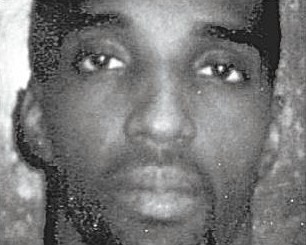
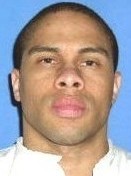
Robert Duckett
Murderer Brian Kevin Rosenfeld
Murderer · USA · 1985
Brian Kevin Rosenfeld Brian Kevin Rosenfeld was sentenced to three concurrent l…
23 victims
Brian Kevin Rosenfeld
Murderer · USA · 1985
Brian Kevin Rosenfeld Brian Kevin Rosenfeld was sentenced to three concurrent l…
23 victims
 Yahweh ben Yahweh
Murderer · USA · 1980
Yahweh ben Yahweh was born and legally named Hulon Mitchell Jr. (October 27, 19…
23 victims
Yahweh ben Yahweh
Murderer · USA · 1980
Yahweh ben Yahweh was born and legally named Hulon Mitchell Jr. (October 27, 19…
23 victims
 Russell Ellwood
Murderer · USA · 1991
Russell Ellwood was a former taxi driver. Authorities suspected him of killing…
20 victims
Russell Ellwood
Murderer · USA · 1991
Russell Ellwood was a former taxi driver. Authorities suspected him of killing…
20 victims
 Robert Martines Perez
Murderer · USA · 1994
Name: Robert Martines Perez · Other name used in proceedings: Robert Martinez P…
15 victims
Robert Martines Perez
Murderer · USA · 1994
Name: Robert Martines Perez · Other name used in proceedings: Robert Martinez P…
15 victims
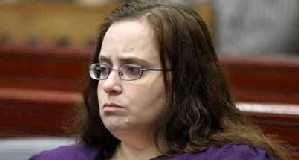 Carolyn Riley
Murderer · USA · 2006
Carolyn Riley was convicted in Plymouth County Superior Court of second-degree…
1 victim
Carolyn Riley
Murderer · USA · 2006
Carolyn Riley was convicted in Plymouth County Superior Court of second-degree…
1 victim
 Rachael Mullenix
Homicide · USA · 2006
Defendant: Rachael Scarlett Mullenix (also referred to as Rachael Mullenix), 16…
1 victim
Rachael Mullenix
Homicide · USA · 2006
Defendant: Rachael Scarlett Mullenix (also referred to as Rachael Mullenix), 16…
1 victim
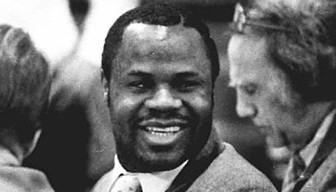 Larry Davis
Murderer · USA · 1986
Larry Davis (May 28, 1966 - February 20, 2008) changed his name to Adam Abdul-H…
6 victims
Larry Davis
Murderer · USA · 1986
Larry Davis (May 28, 1966 - February 20, 2008) changed his name to Adam Abdul-H…
6 victims
 Bongani Vilakati
Mass murderer · South Africa · 2000
Bongani Vilakati was implicated in killings that involved multiple victims disc…
6 victims
Bongani Vilakati
Mass murderer · South Africa · 2000
Bongani Vilakati was implicated in killings that involved multiple victims disc…
6 victims
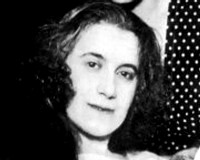 Martha Marek
Serial killer · Austria · 1932
Martha Lowenstein Marek was guillotined in Vienna on December 6, 1938. Martha M…
4 victims
Martha Marek
Serial killer · Austria · 1932
Martha Lowenstein Marek was guillotined in Vienna on December 6, 1938. Martha M…
4 victims
- Gender
- male
- Country
- USA
- Location
- Oklahoma City, Oklahoma, USA
- Date of birth
- July 1, 1964
- Age at first offence
- 24
- Characteristics
- fugitive, robbery
- Victim profile
- John Howard (male, 53)
- Method of murder
- Beating with a fireplace poker and a wooden ashtray stand
- Date(s) of murder
- October 18, 1988
- Years active
- 1988
- Date of arrest
- November 1, 1988
- Status
-
Executed
Executed by lethal injection in Oklahoma on July 8, 2003
Case information
- Defendant: Robert Don Duckett
- Age at execution: 39
- Victim: John E. Howard, 53
- Victim’s relationship to defendant: Howard shared an apartment with Duckett.
Timeline
- October 1988 — John E. Howard was killed in the apartment they shared in Oklahoma City.
- October 1988 — Howard’s body was found in his Oklahoma City apartment.
- October 18, 1988 — John Howard was found dead in his apartment; he had been severely beaten with a fireplace poker and the wooden stand of an ashtray.
- October 19, 1988 — The murder occurred (as stated by prosecutors in multiple parts of the record).
- 1987 — Duckett escaped from prison while serving time for robbery and beating.
- November 1, 1988 — Robert Duckett was arrested in Clear Creek, Arizona, while driving John Howard’s car.
- September 4, 2002 — The United States Court of Appeals for the Tenth Circuit decision in Duckett v. Mullin.
- April 28, 2003 — The United States Supreme Court denied Duckett’s final appeal.
- May 30, 2003 — The Oklahoma Court of Criminal Appeals set July 8 as the execution date for Duckett.
- July 7, 2003 — Duckett was scheduled to become the 11th Oklahoma inmate executed that year.
- July 8, 2003 — Duckett was executed by lethal injection; he was pronounced dead at 6:16 p.m. in Oklahoma, in the state prison.
- July 8, 2003 (execution chamber) — Chemicals began to flow into Duckett’s body at about the time of execution; Reuters reported he died two minutes after receiving the lethal dose.
The offence
John E. Howard was beaten to death in his Oklahoma City apartment. Duckett used a fireplace poker and the wooden stand of an ashtray, and Howard’s hands and feet were bound with wire from a hanger/coat hanger. The record described blood stains and spatters throughout the apartment, and injuries including:
- numerous skull fractures,
- a ruptured and punctured left eye,
- a broken ankle,
- injuries described as including being struck at least 19 separate times.
The record reported that keys, Howard’s car, and over $200 were missing from the convenience store where Howard was a manager, and bank bags taken from the store were later found in the car.
Investigation and arrest
A few weeks prior to the killing, John Howard picked up Duckett hitchhiking on an Oklahoma City highway/interstate in Oklahoma City. Howard befriended Duckett, helped him obtain employment at the State Fair, and later offered Duckett work around the gas station and convenience store Howard managed. Howard offered Duckett a place to stay in the apartment they shared.
Duckett was an escapee who had been serving time for robbery and beating and escaped in 1987. During questioning by Oklahoma authorities, Duckett admitted that he and Howard had a fight and that they exchanged blows (described as five or six blows in one account). Duckett said when he left, Howard was “on his feet and breathing.” Duckett told lawmen that he bound Howard’s hands and feet to keep Howard from coming after him, and he said he was afraid Howard would call the police.
Duckett also told investigators that he had been gang-raped in prison, and that he and Howard got into a fight after Howard made a homosexual pass toward him. At trial and in later review, there were also references to suggestions that Duckett and Howard were lovers.
After the murder, Duckett stole Howard’s car and fled to Arizona. He was arrested on November 1, 1988, in Clear Creek, Arizona, while driving Howard’s car. The record stated that Duckett switched the license plates on Howard’s car with plates from another vehicle in the parking lot of Howard’s apartment complex. The trunk contained a blood-stained jacket and Levis and bank bags from Howard’s convenience store.
Trial
Duckett was charged, tried, and convicted in the District Court, Oklahoma County, of:
- Murder in the First Degree,
- Concealing Stolen Property,
- Larceny of an Automobile.
The record included the case number CRF-88-6248 and listed the sentencing jury’s findings of aggravating circumstances. A Bill of Particulars sought the death penalty.
Aggravating circumstances found
The jury found evidence of five aggravating circumstances:
- Duckett was previously convicted of a violent felony.
- The murder was especially heinous, atrocious or cruel.
- The murder was committed for the purpose of avoiding arrest or prosecution / for the purpose of avoiding or preventing a lawful arrest or prosecution.
- The murder was committed while Duckett was serving a sentence of imprisonment.
- Duckett constituted a continuing threat to society.
The jury set punishment at death, and the record noted that lesser-count sentences were set at 25 years and 10 years imprisonment, respectively, and that the trial court sentenced accordingly with the sentences on the lesser counts to run concurrently.
Defence and contested issues
The record described a defence strategy centered on PTSD/temporary insanity associated with post-traumatic stress disorder after a prison rape. The record also described that the defence alleged Howard made a pass at Duckett and that Duckett suffered from post-traumatic stress disorder after a prison rape. In the federal appeal materials, the record described Duckett’s claims that trial counsel failed to investigate and present mitigating evidence related to sexual abuse by a family member and substance impairment due to drug addiction.
Prosecutorial comments and alleged errors
The record described appeals focusing on prosecutor comments, including statements heard during voir dire:
- When defense counsel asked: “Do you think that it's possible that there are other reasons [besides trying to hide something] the Defendant might not want to take the stand?” District Attorney Robert Macy said aloud: “Like two prior convictions.”
- Defense counsel asked another prospective juror: “And, you think [an] insanity defense is a copout?” District Attorney Robert Macy allegedly said: “you bet.”
The federal review materials included additional examples of comments:
- ADA Brad Miller characterized a defence expert testifying about PTSD as “clinician, essentially a counselor. He is not trained as a scholar or a statistician, apparently he's not a very good test interpreter.”
- Miller asked: “Is that a thorough evaluation? Is that an impartial evaluation? Is that an evaluation by someone for someone because they're getting paid?”
- District Attorney Macy stated: “robberies are committed every day for a lot less than a car, robberies in which killings are involved.”
- Macy stated: “The evidence says he's guilty. Don 't you be a party to turning a cold-blooded murderer loose.”
- Macy stated: “Anytime I say or Mr. Miller says `I think,' it's unintentional. We do not view our — we do not express our opinions. Anything that I state, anything Mr. Miller states is the position of the State of Oklahoma based on the evidence in this case.”
- Miller referred to “this Johnny-come-lately insanity defense” and stated: “Now insanity. That's his only way out of here,” and said: “at the time they gave [ Duckett ] enough evidence, enough hard evidence, to show that he didn't have any choice but to come up with something else, some other excuse.... He had only one choice. He had to come up with an excuse, excuse was insanity.”
- During closing arguments related to lesser-included offences, Miller made statements including: “Now, the Judge has given you lesser-included instructions on homicide offenses. The law requires this.” and “you'll see that just one reading will allow their summary dismissal from this case.” and “Again, ladies and gentlemen, as I said, one reading of those Instructions, I submit to you, will allow you to summarily dismiss these [lesser included] crimes.” and “You have a lot [of] extra law, like I just said, that you have to look through [w]hat the law requires.”
- Macy stated to the jury: “Ladies and gentlemen, is [ Duckett ] a threat to society? Don 't you bet your lives on it.”
- Macy asked: “Is that justice? Is that your concept of justice? How do Jayme and Tom and John's son go visit him?”
The record also included a statement attributed to Macy:
- “The evidence says he's guilty.
Sentencing
The jury unanimously recommended the death penalty for the murder conviction. In July 1989, the trial judge accepted the recommendation and sentenced Duckett to death. The record additionally stated that the trial court sentenced the lesser counts, and that the lesser counts ran concurrently.
The record described that the jury found the five aggravating circumstances outweighed the mitigation evidence presented at trial.
Appeals and post-conviction proceedings
Oklahoma Court of Criminal Appeals direct appeal
In Duckett v. State, 919 P.2d 7 (Okl. Crim. 1995) (Direct Appeal), the Court of Criminal Appeals:
- affirmed the judgment and the sentence of death,
- held that no reversal or modification of the sentence was warranted.
The record reported that the appellate court:
- found several errors,
- but concluded none, singly or cumulatively, warranted reversal or sentence modification,
United States Court of Appeals (habeas corpus appeal)
The record included Duckett v. Mullin, Warden, 306 F.3d 982, decided by the United States Court of Appeals for the Tenth Circuit. The court:
- granted a certificate of appealability with respect to five claims of legal error, including prosecutorial misconduct, ineffective assistance in presenting mitigating evidence, issues with funds for an expert witness, admission of a videotape, and the “murder to avoid arrest” aggravating circumstance,
- concluded Duckett was not entitled to habeas relief on any claims,
- affirmed.
Oklahoma execution date proceedings
The record included an Oklahoma Attorney General news release describing the Oklahoma Court of Criminal Appeals setting the execution date for July 8 after the United States Supreme Court denied Duckett’s final appeal on April 28.
Outcome
Duckett was executed by lethal injection in Oklahoma on July 8, 2003, in the state prison. Reuters reported he died two minutes after receiving the lethal dose at 6:16 p.m. His execution was witnessed by his lawyer, a friend, and four members of Howard’s family members. The record reported Duckett became the 11th convicted killer put to death in Oklahoma that year.
Last words
The record included the following statements attributed to Duckett:
- “I just want to apologize and hope my family forgives me,”
- “I love them very much, and I hope they never forget that. Let's go.”
- “Let's go,” (reported shortly before death by a corrections spokesman).
Aftermath
A Reuters item also described the number of inmates executed since Oklahoma resumed executions in 1990 and mentioned other scheduled execution dates for other death row inmates. The record also included the reported last meal of pizza, a chili dog and ice cream.
Spotted an error, or have more information about this case?