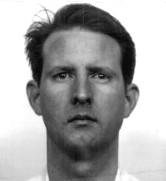
Markham Duff-Smith
Murderer Ervil LeBaron
Murderer · USA · 1972
Ervil Morrell LeBaron (1925 to August 16, 1981) was the leader of a polygamous…
35 victims
Ervil LeBaron
Murderer · USA · 1972
Ervil Morrell LeBaron (1925 to August 16, 1981) was the leader of a polygamous…
35 victims
 Marvin Gray
Murderer · USA · 1975
Marvin Gray was convicted killer who claimed responsibility for 23 slayings and…
23 victims
Marvin Gray
Murderer · USA · 1975
Marvin Gray was convicted killer who claimed responsibility for 23 slayings and…
23 victims
 Yahweh ben Yahweh
Murderer · USA · 1980
Yahweh ben Yahweh was born and legally named Hulon Mitchell Jr. (October 27, 19…
23 victims
Yahweh ben Yahweh
Murderer · USA · 1980
Yahweh ben Yahweh was born and legally named Hulon Mitchell Jr. (October 27, 19…
23 victims
 Charles Manson
Murderer · USA · 1969
Charles Milles Manson (born November 12, 1934) was an American criminal and mus…
9 victims
Charles Manson
Murderer · USA · 1969
Charles Milles Manson (born November 12, 1934) was an American criminal and mus…
9 victims
 Dieter Riechmann
Murderer · USA · 1987
Dieter Riechmann (born 05/17/44) was tried in the Eleventh Judicial Circuit, Da…
1 victim
Dieter Riechmann
Murderer · USA · 1987
Dieter Riechmann (born 05/17/44) was tried in the Eleventh Judicial Circuit, Da…
1 victim
 John Jerry Jancar
Homicide · USA · 1983
John Jerry Jancar was a 17-year-old high school student when he was convicted i…
2 victims
John Jerry Jancar
Homicide · USA · 1983
John Jerry Jancar was a 17-year-old high school student when he was convicted i…
2 victims
 James Harrison
Murderer · USA · 1989
James P. Harrison was sentenced to death on December 14, 1991. On January 17, 1…
3 victims
James Harrison
Murderer · USA · 1989
James P. Harrison was sentenced to death on December 14, 1991. On January 17, 1…
3 victims
 Anthony Darrell Hines
Murderer · USA · 1985
Anthony Darrell Hines was tried in the Supreme Court of Tennessee (State of Ten…
1 victim
Anthony Darrell Hines
Murderer · USA · 1985
Anthony Darrell Hines was tried in the Supreme Court of Tennessee (State of Ten…
1 victim
 Keith Faure
Murderer · Australia · 1976
Keith George Faure was born in June 1951. He was an Australian career criminal…
4 victims
Keith Faure
Murderer · Australia · 1976
Keith George Faure was born in June 1951. He was an Australian career criminal…
4 victims
 Jeremy Gross
Murderer · USA · 1998
Jeremy Gross was convicted of murder, felony murder, conspiracy to commit robbe…
1 victim
Jeremy Gross
Murderer · USA · 1998
Jeremy Gross was convicted of murder, felony murder, conspiracy to commit robbe…
1 victim
- Gender
- male
- Country
- USA
- Location
- Harris County, Texas, USA
- Date of birth
- January 14, 1947
- Age at first offence
- 24
- Characteristics
- murder for hire, financial gain
- Victim profile
- His adoptive mother, Gertrude Duff-Smith Zabolio ; his adoptive sister, Diana Wanstrath ; her husband, John ; and their 14-month-old son, Kevin
- Method of murder
- Strangulation / Shooting
- Date(s) of murder
- 1971 / 1975
- Years active
- 1971–1975
- Date of arrest
- —
- Status
-
Executed
Executed by lethal injection in Texas on June 29, 1993
Case information
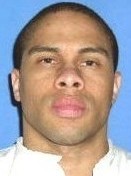
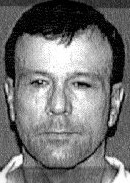
Name: Markham Duff-Smith Age: 46 Education level: Some college
Timeline
- October 15, 1975 — Gertrude Zabolio, Markham Duff-Smith’s adopted mother, was murdered in her home.
- 1975 (late summer) — Walter Waldhauser told Paul MacDonald that a friend named “Duff” needed an estate cleared up to accelerate receipt of his inheritance.
- Wednesday, October 15, 1975 — Janecka and MacDonald staked out the Zabolio home; Gertrude Zabolio was lured inside, after which Janecka was in the home for several hours before strangling her.
- 1979 — Duff-Smith’s inheritance from his mother was squandered, and he hired Waldhauser and Janecka to murder the Wanstrath family so he could inherit his sister’s estate.
- June 18, 1993 — A judge ordered a warrant to bring Duff-Smith to Houston for a conference that could delay his scheduled execution; this appeal was denied.
- June 28, 1993 — The Fifth Circuit denied a certificate of probable cause and denied a motion for a stay of execution.
- June 29, 1993 — Duff-Smith was executed by lethal injection in Texas.
Background
Markham Duff-Smith was a Texas prisoner sentenced to death for the capital murder of his adoptive mother, Gertrude Zabolio.
Gertrude Zabolio was murdered in her home on October 15, 1975. According to the prosecution, Duff-Smith solicited Walter Waldhauser to kill her and his stepfather, Dow Zabolio. Waldhauser solicited Paul MacDonald, who hired Allen Wayne Janecka. Janecka killed Gertrude Zabolio by strangulation.
Duff-Smith was described as a spendthrift who lived beyond his means. During the period preceding his mother’s murder, he had several arguments with her over requests for money, and he told several persons that he wished her dead. Duff-Smith acted on this desire and determined to secure the murder of both his mother and stepfather. Dow Zabolio was included because Duff-Smith speculated that his stepfather might delay the final distribution of his mother’s estate.
The scheme also involved other family members. In 1979, Duff-Smith was accused of arranging murder-for-hire killings of his adoptive sister, Diana Wanstrath; her husband, John Wanstrath; and their 14-month-old son, Kevin Wanstrath. Duff-Smith was indicted but never tried in those killings. The Wanstrath family deaths were initially ruled a double murder-suicide: Diana Wanstrath was ruled to have murdered her husband and son before committing suicide.
Donald Wayne Chaline worked with Duff-Smith at Prudential Insurance Company in 1975. Chaline met with a homicide detective and reported what Duff-Smith had told him.
After the murder of Zabolio, Duff-Smith had squandered his inheritance and sought to kill the Wanstrath family so he could inherit his sister’s estate.
The offence
Capital murder of Gertrude Zabolio
MacDonald testified that during the late summer of 1975, Waldhauser told MacDonald that a friend named “Duff” needed an estate cleared up in order to accelerate receipt of his inheritance. When MacDonald stated that he was not willing to commit murder, Waldhauser asked him to use his bail bond connections to find someone willing to do so. Waldhauser later called to ask whether MacDonald had located a hit man. Janecka was present, and MacDonald asked whether Janecka knew of anyone available for murder for hire; Janecka replied that he would take the job.
MacDonald and Janecka contracted to perform the killings for $10,000—$6,500 for Janecka and $3,500 for MacDonald, with a small amount of this money provided up front. Waldhauser supplied MacDonald with details about the intended victims, including the fact that on each Wednesday night they ate dinner at a nearby cafeteria.
On Wednesday, October 15, 1975, Janecka and MacDonald staked out the Zabolio home. Janecka entered the home to await Gertrude Zabolio’s return when she left alone to go to the cafeteria. Janecka then spent several hours in the Zabolio home with Mrs. Zabolio, ostensibly waiting for her husband to return from work.
MacDonald’s testimony included that Janecka told him that Mrs. Zabolio resignedly accepted her imminent death and was not surprised when Janecka revealed that her son was behind the plan. Eventually Janecka strangled the victim with her pantyhose, leaving behind two purported suicide notes, as well as a “practice” pantyhose tied into a loop, much like the one used in the strangulation.
During the period leading up to and following the murder, MacDonald met with Waldhauser and Duff-Smith to discuss the murder. MacDonald brought Mrs. Zabolio’s driver’s license, which Janecka had given him, as proof of the murder. The license was accepted by Duff-Smith without comment. At that same meeting Duff-Smith complained that only one-half of the contract had been completed and informed MacDonald that no more money would be paid to Janecka until Dow Zabolio had also been killed.
After a few months, Janecka grew impatient and threatened MacDonald. MacDonald told Waldhauser about Janecka’s threats. No money was forthcoming, and Waldhauser gave MacDonald Duff-Smith’s unlisted phone number so that MacDonald could “shake things up a bit.” When MacDonald told Duff-Smith about Janecka’s threats, Duff-Smith agreed to “get it taken care of.” Shortly thereafter, Janecka received full payment from Waldhauser.
Remuneration and special issues
Duff-Smith was convicted of murdering Gertrude Zabolio for remuneration, namely, for half of the proceeds of her $190,000 estate. The jury returned affirmative findings to the two special issues under Article 37.071(b), V.A.C.C.P., and punishment was assessed at death.
The conviction and death sentence were affirmed by the Texas Court of Criminal Appeals.
Investigation
The police were eventually alerted of the murder conspiracy by Donald Wayne Chaline. Chaline worked with Duff-Smith at Prudential Insurance Company in 1975. Chaline said that he met with the homicide detective investigating the Wanstrath killings and reported what Duff-Smith had told him.
For three years, Chaline said he did not tell police because he felt implicated.
In 1979, Chaline read about the deaths by gunshot of Duff-Smith’s sister, Diana Wanstrath; her husband, John Wanstrath; and their 14-month-old child, Kevin Wanstrath.
The homicide investigation led to a determination that the threads connected Waldhauser, then Janecka, and finally Duff-Smith.
Arrest
Duff-Smith was brought before the court for a conference intended to see if he could testify for Janecka in his murder trial for Kevin Wanstrath.
A judge ordered a warrant to bring Duff-Smith to Houston for the conference on June 18, 1993; this conference was intended to delay execution by 30 to 60 days, but the appeal was denied.
Trial
Trial counsel and representation
At trial, Duff-Smith was represented by attorneys Victor Blaine and Candelario Elizondo.
Witnesses and defense theory
During his case-in-chief, Duff-Smith first presented perjured testimony of two witnesses. The third witness defense counsel called was Jerry Sol Eickenhorst.
Eickenhorst testified at trial that Duff-Smith’s entire defense—that he was being framed by MacDonald and Waldhauser—was a perjurious concoction by Duff-Smith. Eickenhorst testified that Duff-Smith had suborned perjury by various inmates and had concocted a false story that Waldhauser and MacDonald had murdered Mrs. Zabolio and were attempting to place the blame on him to avoid the death penalty.
Eickenhorst provided handwritten notes made by Duff-Smith outlining the perjurious scheme, and Duff-Smith conceded that the handwriting was his.
Voir dire and jury selection
Duff-Smith alleged that venire members Sarah Nagler and Harold Boyd were improperly excused by the trial court in violation of Adams v. Texas and Witherspoon v. Illinois. He contended that the voir dire responses did not indicate that they were opposed to the death penalty so as to interfere with their duties as jurors and that they should not have been excused.
In the trial, counsel did not object to the exclusion of either prospective juror as required by Texas contemporaneous objection rule.
Capital murder for remuneration
Duff-Smith was convicted of murdering Gertrude Zabolio for remuneration for half of the proceeds of her $190,000 estate.
Sentencing
Punishment was assessed at death after the jury returned affirmative findings to two special issues under Article 37.071(b), V.A.C.C.P.
Execution was scheduled for January 10, 1986.
Appeals
Texas Court of Criminal Appeals
The Texas Court of Criminal Appeals affirmed Duff-Smith’s conviction and death sentence.
State habeas proceedings
When Duff-Smith filed a petition for habeas relief in state court, a stay was issued. After an evidentiary hearing, the trial court entered findings of fact and conclusions of law refusing all relief.
The Texas Court of Criminal Appeals denied Duff-Smith’s habeas application, and the trial court reset the execution for October 8, 1987.
Federal habeas proceedings (first and later appeals)
Duff-Smith filed his first federal habeas petition in September 1987 and a stay of execution was granted.
Duff-Smith raised 11 claims in the federal habeas proceedings, including those later discussed on appeal.
An evidentiary hearing was conducted, and the magistrate judge entered a report recommending denial. The district court adopted the recommendation, entered an order denying the writ of habeas corpus, vacated the stay of execution, and denied a certificate of probable cause.
Duff-Smith filed a notice of appeal considered a request for a certificate of probable cause, raising ten claims:
- Substitute counsel was not given adequate time to prepare habeas claims.
- Two prospective jurors were improperly removed.
- In violation of a discovery order, the prosecution failed to reveal the existence of the handwritten script outlining the perjurious defense theory.
- Witness Eickenhorst was an undercover agent for the state who improperly solicited admissions after Duff-Smith’s right to counsel had attached.
- Eickenhorst affirmatively deceived defense counsel.
- The state offered Eickenhorst undisclosed benefits and inducements.
- Subpoenas of material witnesses were quashed.
- He was denied effective assistance of counsel.
- The evidence was insufficient to sustain a conviction of capital murder for remuneration.
- Unadjudicated criminal conduct was introduced during punishment.
The Fifth Circuit affirmed denial of habeas relief in Duff-Smith v. Collins, 973 F.2d 1175 (Sept. 17, 1992), with rehearing denied on Nov. 13, 1992.
Outcome
Certificate of probable cause and stay of execution
On June 28, 1993, Duff-Smith applied to the Fifth Circuit for a certificate of probable cause to appeal and concurrently sought a stay of execution. The Fifth Circuit denied both the motion for CPC and the motion for stay of execution. A certificate of probable cause was described as a jurisdictional prerequisite for consideration.
The Fifth Circuit also stated that it was Duff-Smith’s second habeas appeal, with the earlier habeas appeal having been considered and denied in Duff-Smith v. Collins, 973 F.2d 1175 (reh’g denied, Nov. 13, 1992).
Execution
Duff-Smith was executed by lethal injection in Texas on June 29, 1993.
His last statement was: “I am the sinner of all sinners. I was responsible for the ’75 and ’79 cases. My trial was not just; it was not fair; they lied against me. I love all of those on Death Row, and I will always hold them in my hands. Those who stood by me, I will always love you. Jim and Judy Peterson and Chaplain Lopez, I thank you for staying by my side.”
Other details
Murder-for-hire scheme involving family members
Duff-Smith was described as having devised a plan to murder his adoptive mother and collect from her estate, and he was described as having sought to have murders arranged for his adoptive sister, her husband, and their 14-month-old son so he could collect inheritance.
The Wanstrath killings were connected to the overall scheme as murder-for-hire killings that Duff-Smith was indicted on but never tried in those cases.
Donald Wayne Chaline and letters from inmates
The police conspiracy was alerted by Donald Wayne Chaline, who said he felt implicated for three years.
Defense counsel was contacted by inmates in letters offering to testify in Duff-Smith’s favor; there was no indication that defense counsel knew of the perjurious nature of the defense theory.
Subornation and handwritten script
Eickenhorst testified that Duff-Smith suborned perjury by various inmates and had concocted a false story to avoid the death penalty. Handwritten notes made by Duff-Smith outlining the perjurious scheme were provided by Eickenhorst, and Duff-Smith conceded the handwriting was his.
Supreme Court actions
Late Monday before the execution, the Supreme Court unanimously refused to block Duff-Smith’s execution.
Petition and conference intended to delay execution
A judge ordered a warrant on June 18, 1993 to bring Duff-Smith to Houston for a conference intended to see if Duff-Smith could testify for Janecka in his murder trial for Kevin Wanstrath, with an intended delay of 30 to 60 days; the appeal was denied.
Quotations attributed to family and reporters
Dow Zabolio Jr., stepson of Gertrude Zabolio, said: “Markham was raised with the right standards, but not with a lot of love,”
Dow Zabolio Jr. also said: “By most accounts, Duff-Smith should have never landed in prison, let alone death row. Adopted at the age of two weeks, his River Oaks upbringing, and private school education should have been a blueprint for success,”
A quotation describing Duff-Smith’s last condition included: “For a man who once opened his own insurance firm, took lavish cruises, drove a Mercedes and filled his closet with expensive suits, it was a long slide to the cold, stainless steel gurney where he lay wearing his humble prison whites—not monogrammed like the expensive shirts he once wore, but indelibly stamped with his prison number: 694,”
Spotted an error, or have more information about this case?