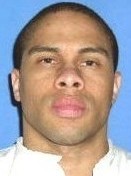
Marion Dudley
Mass murderer Gameel Al-Batouti
Mass murderer · USA · 1999
Gameel Al-Batouti (also rendered “Gamil ElBatouty” or “El Batouty” in U.S. offi…
216 victims
Gameel Al-Batouti
Mass murderer · USA · 1999
Gameel Al-Batouti (also rendered “Gamil ElBatouty” or “El Batouty” in U.S. offi…
216 victims
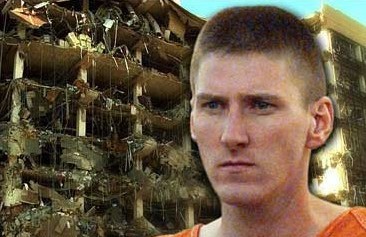 Timothy McVeigh
Mass murderer · USA · 1995
Timothy James McVeigh (April 23, 1968 – June 11, 2001) was a United States Army…
168 victims
Timothy McVeigh
Mass murderer · USA · 1995
Timothy James McVeigh (April 23, 1968 – June 11, 2001) was a United States Army…
168 victims
 Julio Gonzalez
Mass murderer · USA · 1990
Julio Gonzalez was sentenced to 174 twenty-five-year sentences (a total of 4,35…
87 victims
Julio Gonzalez
Mass murderer · USA · 1990
Julio Gonzalez was sentenced to 174 twenty-five-year sentences (a total of 4,35…
87 victims
 David Burke
Mass murderer · USA · 1987
David Augustus Burke (May 18, 1952–December 7, 1987) was an employee of USAir,…
43 victims
David Burke
Mass murderer · USA · 1987
David Augustus Burke (May 18, 1952–December 7, 1987) was an employee of USAir,…
43 victims
 George Jo Hennard
Mass murderer · USA · 1991
George Jo Hennard carried out a mass killing at a Luby’s Cafeteria in Killeen,…
23 victims
George Jo Hennard
Mass murderer · USA · 1991
George Jo Hennard carried out a mass killing at a Luby’s Cafeteria in Killeen,…
23 victims
 David Lee Powell
Murderer · USA · 1978
David Lee Powell was executed by lethal injection in Texas on June 15, 2010. He…
1 victim
David Lee Powell
Murderer · USA · 1978
David Lee Powell was executed by lethal injection in Texas on June 15, 2010. He…
1 victim
 Danilo Restivo
Murderer · United Kingdom · 1993
Danilo Restivo was born in Sicily in April 1972. He later lived in Potenza, Ita…
2 victims
Danilo Restivo
Murderer · United Kingdom · 1993
Danilo Restivo was born in Sicily in April 1972. He later lived in Potenza, Ita…
2 victims
 Lyndon Mosley
Homicide · USA · 1997
Defendant: Lyndon Mosley (also identified as Lyndon Dechard Mosley) · Case name…
1 victim
Lyndon Mosley
Homicide · USA · 1997
Defendant: Lyndon Mosley (also identified as Lyndon Dechard Mosley) · Case name…
1 victim
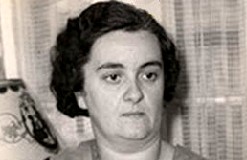 Mary Frances Creighton
Murderer · USA · 1923
Mary Frances Creighton (c. 1898 - July 16, 1936) was a housewife and was execut…
3 victims
Mary Frances Creighton
Murderer · USA · 1923
Mary Frances Creighton (c. 1898 - July 16, 1936) was a housewife and was execut…
3 victims
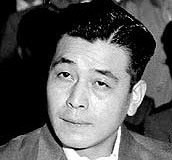 Masaru Okunishi
Mass murderer · Japan · 1961
Masaru Okunishi was a farmer from Kuzuo, a remote mountain village in Nabari ci…
5 victims
Masaru Okunishi
Mass murderer · Japan · 1961
Masaru Okunishi was a farmer from Kuzuo, a remote mountain village in Nabari ci…
5 victims
- Gender
- male
- Country
- USA
- Location
- Harris County, Texas, USA
- Date of birth
- May 13, 1972
- Age at first offence
- 20
- Characteristics
- drugs, robbery
- Victim profile
- Jose Tovar, Jessica Quinones, Frank Farias, and Audrey Brown
- Method of murder
- Shooting
- Date(s) of murder
- June 20, 1992
- Years active
- 1992
- Date of arrest
- August 12, 1992
- Status
-
Executed
Executed by lethal injection in Texas on January 25, 2006
Case record: Marion Butler Dudley
Timeline
- June 20, 1992 — Marion Butler Dudley and three men drove from Tuscaloosa, Alabama, to Houston; Dudley and another man asked for three kilograms of cocaine at the Tovar residence; later, Dudley and two men returned, tied up six people in the home, and all six were shot in the head.
- January 1991 — Dudley was pulled over for having an expired license tag; an officer located a .38 caliber pistol after Dudley was observed reaching toward the front seat floorboard.
- December 1991 — Dudley’s capital murder conviction and sentence of death were upheld by the Texas Court of Criminal Appeals (as referenced in later material).
- January 25, 2006 — Dudley was executed by lethal injection in Texas; he did not respond when asked by a warden if he had any final statement and was pronounced dead at 6:16 p.m. CST.
- May 4, 2001 — Dudley filed a skeletal federal petition for writ of habeas corpus in the federal district court.
- July 20, 2001 — Dudley filed a supplemental federal habeas petition.
- September 25, 2002 — The district court denied Dudley’s petition for federal habeas relief.
- June 5, 2003 — Dudley filed an application for Certificate of Appealability (“COA”).
- October 10, 2003 — The 5th U.S. Circuit Court of Appeals denied Dudley’s application for COA.
- Jan. 10, 2006 — Dudley filed a successive state habeas writ in the Texas Court of Criminal Appeals; it denied the writ ten days later.
- Jan. 23, 2006 — Dudley filed a petition for writ of certiorari in the U.S. Supreme Court.
- Jan. 24 — The Supreme Court declined to intervene.
- June 1997 — The Texas Court of Criminal Appeals affirmed Dudley’s conviction and sentence on direct appeal.
- April 20, 1992 — A Tuscaloosa sheriff’s department deputy testified that Dudley participated in a home invasion-type robbery.
- 2 1/2 weeks after the shootings — Dudley and Tony Dunson were arrested in Fayetteville, N.C.
- On 12 August 1992 — Dudley and Dunson were arrested in North Carolina while hiding in a mobile home, and had $30,000 in cash on them at the time of their capture.
- After the state habeas petition was filed, and after independent review — The Texas Court of Criminal Appeals adopted the state habeas court’s findings and conclusions and denied relief.
- Two years after the filing of his first state habeas petition — Dudley filed a supplemental state habeas writ alleging two additional claims for relief; the Texas Court of Criminal Appeals dismissed the petition as an abuse of the writ.
Background
Marion Butler Dudley was scheduled to be executed after 6 p.m. Wednesday, January 25, 2006. He was sentenced to death for capital murder connected to the June 20, 1992 deaths of four people who were shot at a southwest Houston residence. He was a Tuscaloosa, Alabama native and lived in Tuscaloosa, Alabama, while he occasionally traveled to Houston to buy drugs.
Dudley stated that he was not at the Tovar house the night of June 20, 1992, when six people were shot, four of them fatally. He was described as carrying out drug purchases and as part of a ring that shuttled drugs from Texas to his home state.
At execution, prison officials said Dudley was not combative; officers carried him to the chamber after he refused to leave a death house cell voluntarily. When asked by a warden if he had any final statement, Dudley did not respond, kept his eyes closed, and never turned his head toward witnesses in the chamber.
Marion Dudley did not make a last statement at his execution. He was pronounced dead at 6:16 p.m. CST.
The offence
Drug purchase and return to the residence
Marion Butler Dudley, who lived in Tuscaloosa, Alabama, occasionally traveled to Houston to buy drugs from Rachel and Jose Tovar. On June 20, 1992, Dudley and three men drove from Tuscaloosa to Houston. After arriving, Dudley and one of the men went to the Tovar residence and asked for three kilograms of cocaine. Rachel Tovar told the men she did not have the cocaine and asked them to come back later. Dudley and the other man returned a few hours later and the Tovars showed them a kilogram of cocaine. The men were told more cocaine could be obtained, so the pair left.
At dusk, Dudley and two men returned and tied up the Tovars and four other people in the home. All six were shot in the head. Four of the victims died.
Victims and survivors
The dead included:
- Jose Tovar
- Jessica Quinones
- Frank Farias
- Audrey Brown
The two survivors identified Dudley as one of their attackers:
- Rachel Tovar
- Nicholas Cortes (also referred to as Nicholas Cortez)
The victims were bound with towels or strips of sheets, hands tied behind their backs, and nooses around their necks. Rachel Tovar managed to crawl to a neighbor’s house for help and called police. Quinones died before the police arrived. Brown died later at a hospital.
Additional names and disputed characterization of motive
The procedural and narrative material associated Dudley’s case with a drug-deal context and described the drug buy as a ruse in the sense that prosecutors claimed the true intention was to eliminate the Tovars from a drug operation, seeing them as unnecessary middlemen. Dudley denied being at the Tovar home when the murders occurred.
A witness statement was described regarding Dudley speaking to Jose Tovar immediately before the six were shot:
"You stupid Mexican, I never did like you."
A statement attributed to Rachel Tovar included:
"You stupid (expletive), don't you go into labor on me."
Names of other individuals connected to the killings
Besides Dudley, Arthur “Squirt” Brown was convicted of capital murder and sentenced to death; he remained on death row. Tony Dunson received a life sentence.
Investigation
Evidence presented at trial included testimony about incidents prior to the Houston murders, including:
- Dudley was pulled over in January 1991 for having an expired license tag; he was observed reaching toward the front seat floorboard where an officer located a .38 caliber pistol.
- Dudley had been arrested by Tuscaloosa police officers for possession of crack cocaine and had given a false identity upon that arrest.
- Several police officers with the Tuscaloosa Police Department testified that Dudley’s reputation for being a peaceful and law abiding person was bad.
- A felony conviction in Alabama for possession of marijuana was presented.
- Dudley attempted to escape when the officer arrested him.
- Witnesses testified about an incident in which Dudley and a friend, after arguing over the cost of cocaine which Dudley was selling, drove through a neighborhood exchanging gunfire between their automobiles.
- The superintendent for the Tuscaloosa Board of Education testified that as a juvenile Dudley was expelled from school because he was involved in an altercation in which another student was stabbed.
- Cecil Hopkins, Dudley’s Tuscaloosa County Juvenile Probation Officer, testified that Dudley was placed on probation for a second-degree felony of receiving stolen property, that his probation was revoked for violating curfew, and that he incurred further violations for burglary of a vehicle, first-degree assault, and another offense of receiving stolen property.
- Harry McRae, a Tuscaloosa Sheriff’s Department deputy, testified that Dudley participated in a home invasion-type robbery on April 20, 1992, two months prior to the 1992 capital murders in Houston.
Other narrative material stated that police said the three men previously had been at the Tovar house to buy drugs and knew drugs and money were there.
Arrest
Dudley and Tony Dunson were arrested in Fayetteville, N.C., about 2 1/2 weeks after the shootings. Another account stated that on 12 August 1992, Dudley and Dunson were arrested in North Carolina while hiding in a mobile home, and they had $30,000 in cash on them at the time of their capture. Brown was arrested later in Tuscaloosa.
Trial
At trial, the State produced evidence of Dudley’s prior arrest for crack cocaine and false identity upon arrest, a felony conviction in Alabama for possession of marijuana, and the expired license tag stop in January 1991 with the recovered .38 caliber pistol.
The two survivors identified Dudley as one of the attackers during testimony.
A jury convicted Dudley of capital murder and sentenced him to death.
Sentencing
Dudley was sentenced to death for capital murder related to the deaths of four people who were shot at the Tovar residence on June 20, 1992.
Appeals
After Dudley’s capital murder conviction and sentence of death were affirmed by the Texas Court of Criminal Appeals on direct appeal, Dudley filed an application for writ of habeas corpus in state court raising eleven claims of constitutional error.
The state habeas court issued findings of fact and conclusions of law and recommended that relief be denied. After independent review, the Texas Court of Criminal Appeals adopted those findings and conclusions and denied relief.
Two years after the filing of his first state habeas petition, Dudley filed a supplemental state habeas writ alleging two additional claims for relief. The Texas Court of Criminal Appeals dismissed the petition as an abuse of the writ under the Texas Code of Criminal Procedure.
Dudley filed a skeletal federal petition for writ of habeas corpus on May 4, 2001, and filed a supplemental petition on July 20, 2001. On September 25, 2002, the district court denied Dudley’s petition for federal habeas relief in rulings supported by procedural and substantive law.
Dudley filed an application for COA on June 5, 2003. The 5th U.S. Circuit Court of Appeals denied the application on October 10, 2003.
On Jan. 10, 2006, Dudley filed a successive state habeas writ in the Texas Court of Criminal Appeals, which denied it ten days later. On Jan. 23, 2006, Dudley filed a petition for writ of certiorari in the U.S. Supreme Court, and on Jan. 24 the Supreme Court declined to intervene.
A published per curiam decision addressed Dudley’s request for a COA to appeal the district court’s dismissal of his 28 U.S.C. § 2254 claim. The decision stated that the application was DENIED. It described the claims for which Dudley sought a COA as including:
- that the trial court erred in replacing his original counsel;
- that his trial counsel did not provide effective assistance by failing to investigate and present mitigating evidence;
- that the evidence supporting his death penalty sentence was constitutionally insufficient.
The decision included quotations of legal standards used for COA issuance and cited:
- 28 U.S.C. § 2253(c)(2)
- Slack v. McDaniel, 529 U.S. 473, 484
- Miller-El v. Cockrell, 537 U.S. 322, 123 S.Ct. 1029, 1032, 154 L.Ed.2d 931
- Coleman v. Thompson, 501 U.S. 722, 748 and 753
- Wainwright v. Torna, 455 U.S. 586, 102 S.Ct. 1300, 71 L.Ed.2d 475
- Murray v. Giarratano, 492 U.S. 1, 10, 109 S.Ct. 2765, 106 L.Ed.2d 1
- Martinez v. Johnson, 255 F.3d 229, 238, 239, 240-41
The decision included the following verbatim quotations:
if the applicant has made a substantial showing of the denial of a constitutional right.
jurists of reason could debate whether ··· the petition should have been resolved in a different manner····
Where a plain procedural bar is present and the district court is correct to invoke it to dispose of the case, a reasonable jurist could not conclude either that the district court erred in dismissing the petition or that the petitioner should be allowed to proceed further.
requires an overview of the claims in the habeas petition and a general assessment of their merits.
This threshold inquiry does not require full consideration of the factual or legal bases adduced in support of the claims.
The issuance of a COA is not pro forma or a matter of course, and the petitioner must still show that the claim is debateable. Id. at 1040.
A state procedural default of any federal claim will bar federal habeas unless the petitioner demonstrates cause and actual prejudice.
Attorney ignorance or inadvertence is not ‘cause’ because the attorney is the petitioner's agent when acting, or failing to act, in furtherance of the litigation····
Furthermore, there is no constitutional right to an attorney in post-conviction proceedings, therefore a petitioner cannot claim constitutionally ineffective counsel in such proceedings.
Unexhausted claims are procedurally barred, but a federal habeas petitioner can overcome this procedural bar by “demonstrat[ing] cause for the defaults and actual prejudice.”
first present those claims to the state court and must exhaust state remedies.
Martinez held “ineffective assistance of habeas counsel cannot provide cause for a procedural default.”
Without a showing of cause, a state procedural default of a federal claim acts to bar federal habeas.
Outcome
Marion Butler Dudley was executed by lethal injection in Texas on January 25, 2006. CST.
Aftermath
Prison officials and witnesses were described regarding the execution.
Rachel Tovar was described as being granted permission to watch Dudley die the day before the execution. In that account, Rachel Tovar was quoted:
"I just feel I need to be there for my family, for loved ones that are gone, so they can be at ease," she said. It also included: "I always ask, "Am I ever gonna be happy again?'"

Spotted an error, or have more information about this case?