Delroy Edwards
Murderer Brian Kevin Rosenfeld
Murderer · USA · 1985
Brian Kevin Rosenfeld Brian Kevin Rosenfeld was sentenced to three concurrent l…
23 victims
Brian Kevin Rosenfeld
Murderer · USA · 1985
Brian Kevin Rosenfeld Brian Kevin Rosenfeld was sentenced to three concurrent l…
23 victims
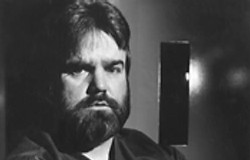 Marvin Gray
Murderer · USA · 1975
Marvin Gray was convicted killer who claimed responsibility for 23 slayings and…
23 victims
Marvin Gray
Murderer · USA · 1975
Marvin Gray was convicted killer who claimed responsibility for 23 slayings and…
23 victims
 Yahweh ben Yahweh
Murderer · USA · 1980
Yahweh ben Yahweh was born and legally named Hulon Mitchell Jr. (October 27, 19…
23 victims
Yahweh ben Yahweh
Murderer · USA · 1980
Yahweh ben Yahweh was born and legally named Hulon Mitchell Jr. (October 27, 19…
23 victims
 Russell Ellwood
Murderer · USA · 1991
Russell Ellwood was a former taxi driver. Authorities suspected him of killing…
20 victims
Russell Ellwood
Murderer · USA · 1991
Russell Ellwood was a former taxi driver. Authorities suspected him of killing…
20 victims
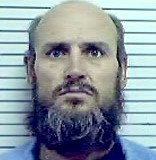 William Scott Smith
Serial killer · USA · 1982
William Scott Smith was a high school dropout and an unemployed fry cook. In 19…
3 victims
William Scott Smith
Serial killer · USA · 1982
William Scott Smith was a high school dropout and an unemployed fry cook. In 19…
3 victims
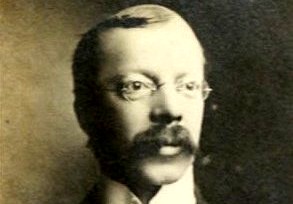 Dr. Hawley Harvey Crippen
Murderer · United Kingdom · 1910
Hawley Harvey Crippen (11 September 1862 – 23 November 1910), usually known as…
1 victim
Dr. Hawley Harvey Crippen
Murderer · United Kingdom · 1910
Hawley Harvey Crippen (11 September 1862 – 23 November 1910), usually known as…
1 victim
 Kristen Gilbert
Serial killer · USA · 1995
Kristen Gilbert (born November 13, 1967 as Kristen Strickland in Fall River, Ma…
4 victims
Kristen Gilbert
Serial killer · USA · 1995
Kristen Gilbert (born November 13, 1967 as Kristen Strickland in Fall River, Ma…
4 victims
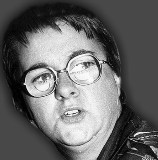 Carol Bundy
Murderer · USA · 1980
Carol Bundy was an American serial killer. She was known as Carol M. Bundy and…
2 victims
Carol Bundy
Murderer · USA · 1980
Carol Bundy was an American serial killer. She was known as Carol M. Bundy and…
2 victims
 George Marecek
Murderer · USA · 1991
George Marecek was convicted of second-degree murder following a 2001 six-day t…
1 victim
George Marecek
Murderer · USA · 1991
George Marecek was convicted of second-degree murder following a 2001 six-day t…
1 victim
 Troisville Sykes
Homicide · USA · 1883
Troisville Sykes. Kate Townsend was Troisville Sykes’s mistress. She owned a ho…
1 victim
Troisville Sykes
Homicide · USA · 1883
Troisville Sykes. Kate Townsend was Troisville Sykes’s mistress. She owned a ho…
1 victim
- Gender
- male
- Country
- USA
- Location
- New York/Washington, D.C./Maryland/Pennsylvania, USA
- Date of birth
- 1959
- Age at first offence
- 26
- Characteristics
- drug dealer, gang
- Victim profile
- Men (rival dealers and employees)
- Method of murder
- Shooting - Beating with baseball bat
- Date(s) of murder
- 1985 - 1988
- Years active
- 1985–1988
- Date of arrest
- March 9, 1988
- Status
-
Life imprisonment
Sentenced to seven consecutive life terms in Federal prison; not eligible for parole under the sentence; also received a $1 million fine on December 1, 1989
Case record: Delroy Edwards
Background
Delroy (Uzi) Edwards grew up in the shantytowns of Kingston, Jamaica. In 1980, at the age of 20, he went to work as a street enforcer for the Jamaica Labor Party of Edward Seaga. Seaga had been in a bitter election duel with the People’s National Party headed by Michael Manley, and each side formed armed gangs to intimidate the other. The gangs killed 800 people by election day. After Seaga’s victory, Seaga launched a crackdown, and many gang members headed for the United States, including Delroy Edwards.
Edwards slipped into Brooklyn on a tourist visa. He made his way into marijuana business, selling nickel bags out of a neighborhood storefront. At the beginning of 1985, Edwards learned to make crack and soon sold little else. He worked out of two “flagship” spots in Brooklyn: one, a two-story house, and the other, an abandoned brownstone near a housing project. Enough money from poor customers paying $5 bills enabled Edwards to buy a $150,000 home on Long Island and to pay for it in cash.
Edwards then looked to expand his business into markets outside New York. In Washington, Baltimore and Philadelphia, for example, crack was just beginning to catch on. Local dealers would travel to New York, buy ounces of cocaine, convert it into crack, and sell it for three or four times the New York street price. In the fall of 1986, Edwards traveled to Washington and set up shop; by the following spring his lieutenants had established businesses in Philadelphia and Baltimore.
At its peak, Edwards’s organization, known as the Rankers, employed 50 workers and made up to $100,000 a day. The Rankers later disintegrated, and there were described as being many other groups like the Rankers running crack.
Edwards was nicknamed “Uzi” for his taste in weapons. In Brooklyn, he was described as a Jamaican who lived in Brooklyn and was the first dealer to sell crack in the Bedford-Stuyvesant area in 1985. Law-enforcement authorities said he received his nickname because he sometimes concealed an Uzi submachine gun under a trench coat.
The offence
Edwards’s organization, the Rankers, was described as being among the largest and most violent drug rings in Brooklyn. Edwards was described as having been responsible for 6 murders, 17 assaults, a kidnapping, a maiming, and other crimes. He was also described as having been pathologically violent, and the narrative described shootings and beatings of people who crossed him or were suspected of stealing from him.
The narrative described one incident involving a 16-year-old worker who was suspected of cheating. He was beaten unconscious with bats, scalded with boiling water, and suspended by a chain from the ceiling until he died.
In addition to the narrative violence described in the case summary, the separate case outcome narrative described that, at trial, prosecutors depicted Edwards as a “coldhearted, brutal, vicious killer” who dealt harshly with rival dealers and employees he suspected of stealing from him, and that he was often responsible for the deaths or injuries of innocent people “who happened to be in the wrong place at the wrong time.”
Investigation
At the time of sentencing, the prosecutors John Gleeson and Jonny J. Frank depicted Edwards as a “coldhearted, brutal, vicious killer” who dealt harshly with rival dealers and employees he suspected of stealing from him. They also depicted Edwards as often responsible for the deaths or injuries of innocent people “who happened to be in the wrong place at the wrong time.”
Trial
Edwards was convicted on 42 counts.
A court-appointed lawyer, David Gordon, appeared for Edwards. Prosecutors John Gleeson and Jonny J. Frank presented the case at the trial last summer.
Sentencing
On December 1, 1989, Edwards was sentenced in Federal District Court. The court imposed seven consecutive life terms in Federal prison.
Judge Raymond J. Dearie sentenced Edwards. As Edwards stood in Federal District Court with his hands clasped and his head slightly bowed, Judge Dearie said he wished the sentencing could have been on a Brooklyn street so young people could “see what this fast-lane life style has to offer.”
After a plea from Edwards’s court-appointed lawyer David Gordon to impose a sentence offering Edwards hope “down the road,” Judge Dearie said: “I hope he finds a way to make something of his life. But I believe in my heart that the theme of this proceeding has to be, ‘Thou shall not kill.’”
The sentence called for 15 years in prison besides the life sentences, and a $1 million fine. Under the sentence, Edwards was not eligible for parole.
Edwards wore a gray business suit and said nothing at sentencing. Judge Dearie said Edwards had intelligence, street smarts and leadership qualities and could have made something of his life. Instead, the judge said, Edwards chose “this joy ride, this flashy come-and-get-me life style” that left in its trail many victims. Judge Dearie added that, in a sense, Edwards was one of his own victims and that, as he pursued his illicit career, he “became one of the pioneers of the crack trade.”
Before imposing sentence, prosecutors John Gleeson told the court: “He’s been convicted of the most serious drug offenses. It’s the whole smorgasboard of crimes that can be brought in this context. No country deserves the risk of his ever being on the streets.”
At the time of sentencing, Edwards had been in jail since March 1988 and still faced a state murder charge in a homicide in 1987.
Appeals
No appeals were described.
Outcome
Edwards was sentenced to seven consecutive life terms in Federal prison on December 1, 1989. He was not eligible for parole under the sentence. He received a $1 million fine. The sentence also included 15 years in prison besides the life sentences.
Other details
Edwards was described as the leader of one of Brooklyn’s largest and most violent drug rings. His organization was known as the Rankers, and he named his political gang and drug posse the Renkers, saying: “It means stinky” and “Its like the smell when you piss against a wall.”
The narrative described that Edwards’s organization cleared as much as fifty thousand dollars on a good day, with a cut rate price on crack described as “two-vials-for-the-price-of-one.”
The narrative described a plan to put Norman Allwood to death and included quotations attributed to Conroy Green and others. Conroy Green, one of the Renkers members, was quoted as saying: “They say it takes more heart to beat somebody than to stab or shoot them,” and “I guess it is easier to pull the trigger of a gun.”
The narrative described Kenneth Manning getting vexed and pouring scalding hot water on Allwood. Kenneth Manning was quoted as laughing and asking: “Oh you not dead yet?” The narrative then said Allwood “died sometime during the night.”
The narrative also stated that Edwards had been described as a gang and drug lord and referenced the Renkers as a gang and drug posse.
The narrative included a quote from John A. O’Brien, an agent with the Bureau of Alcohol, Tobacco and Firearms (B.A.T.F.), stating: “They’re very good businessmen,” “They follow the law of supply and demand. When they see that a vial of crack selling for $5 in New York will get $15 in Kansas City, they’ll move in,” and “New York is their ‘training school,’ like going to Wharton. They’ll take a guy doing a good job in Harlem and send him to open an office in the Midwest.”
The narrative further described market practices in which a posse sales rep would rent a motel room, conduct a market survey, and then rent an apartment or get a single female to lend him one in return for crack.
Spotted an error, or have more information about this case?