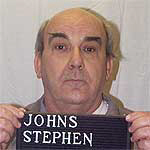
Stephen Johns
Murderer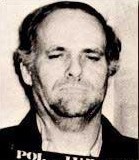 Ervil LeBaron
Murderer · USA · 1972
Ervil Morrell LeBaron (1925 to August 16, 1981) was the leader of a polygamous…
35 victims
Ervil LeBaron
Murderer · USA · 1972
Ervil Morrell LeBaron (1925 to August 16, 1981) was the leader of a polygamous…
35 victims
 Brian Kevin Rosenfeld
Murderer · USA · 1985
Brian Kevin Rosenfeld Brian Kevin Rosenfeld was sentenced to three concurrent l…
23 victims
Brian Kevin Rosenfeld
Murderer · USA · 1985
Brian Kevin Rosenfeld Brian Kevin Rosenfeld was sentenced to three concurrent l…
23 victims
 Marvin Gray
Murderer · USA · 1975
Marvin Gray was convicted killer who claimed responsibility for 23 slayings and…
23 victims
Marvin Gray
Murderer · USA · 1975
Marvin Gray was convicted killer who claimed responsibility for 23 slayings and…
23 victims
 Yahweh ben Yahweh
Murderer · USA · 1980
Yahweh ben Yahweh was born and legally named Hulon Mitchell Jr. (October 27, 19…
23 victims
Yahweh ben Yahweh
Murderer · USA · 1980
Yahweh ben Yahweh was born and legally named Hulon Mitchell Jr. (October 27, 19…
23 victims
 Russell Ellwood
Murderer · USA · 1991
Russell Ellwood was a former taxi driver. Authorities suspected him of killing…
20 victims
Russell Ellwood
Murderer · USA · 1991
Russell Ellwood was a former taxi driver. Authorities suspected him of killing…
20 victims
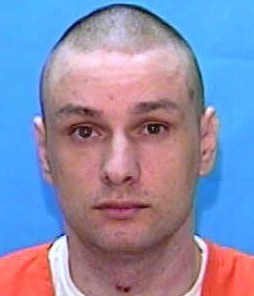 Jason James Mahn
Murderer · USA · 1993
Jason James Mahn. Jason James Mahn’s parents divorced in Wisconsin in 1974 when…
2 victims
Jason James Mahn
Murderer · USA · 1993
Jason James Mahn. Jason James Mahn’s parents divorced in Wisconsin in 1974 when…
2 victims
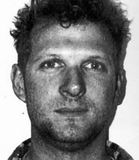 Leslie Alfred Camilleri
Murderer · Australia · 1997
Leslie Alfred Camilleri was convicted in Victoria for the abduction, rape and m…
2 victims
Leslie Alfred Camilleri
Murderer · Australia · 1997
Leslie Alfred Camilleri was convicted in Victoria for the abduction, rape and m…
2 victims
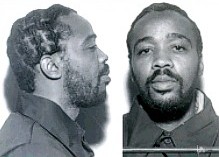 Murray Hooper
Murderer · USA · 1980
Defendant: Murray Hooper Victim: Patrick Redmond Victim: Helen Phelps Victim: M…
Murray Hooper
Murderer · USA · 1980
Defendant: Murray Hooper Victim: Patrick Redmond Victim: Helen Phelps Victim: M…
- Gender
- male
- Country
- USA
- Location
- St. Louis, Missouri, USA
- Date of birth
- September 26, 1946
- Age at first offence
- 36
- Characteristics
- robbery
- Victim profile
- Donald Voepel, 17 (gas station attendant)
- Method of murder
- Shooting
- Date(s) of murder
- February 18, 1982
- Years active
- 1982
- Date of arrest
- Next day
- Status
-
Executed
Executed by lethal injection in Missouri on October 24, 2001
Case information
Name: Stephen Johns Other names in case: Steve Johns; Stephen K. Johns; Stephen K. Johns Victim: Donald Voepel, Jr. (seventeen-year-old gas station attendant; also identified as seventeen-year-old attendant) Co-offender: Robert Wishon Other people mentioned: David Smith; Linda Klund; Albert Keener; Timothy Cunningham; John Fougere; Margie Johns; Stephen’s brother; Edward L. Filippine; Richard S. Arnold; Wollman; BEAM; Roger L. Wollman; Judge Kelly; John Fougere; Michael Bowersox
Timeline
- February 18, 1982 — Stephen Johns and Robert Wishon robbed an Onyx gas station in the City of St. Louis and shot and killed Donald Voepel, Jr.
- February 19, 1982 — Johns was arrested.
- 1982 (date in summary text not specified) — Johns was charged by indictment for Capital Murder.
- October 18 (year not specified) — Johns’ trial in the Circuit Court of the City of St. Louis City began.
- October 22 (year not specified) — The jury recommended Johns be sentenced to death.
- January 7, 1983 — The Circuit Court of St. Louis sentenced Johns to death.
- October 9, 1984 — The Missouri Supreme Court affirmed Johns’ conviction and sentence.
- March 4, 1985 — The United States Supreme Court denied certiorari review.
- March 20 (year not specified) — Johns filed a motion for post-conviction relief in the Circuit Court of the City of St. Louis.
- November 20, 1986 — The Circuit Court denied the motion for post-conviction relief.
- November 3, 1987 — The Missouri Court of Appeals affirmed the denial of post-conviction relief.
- June 6, 1988 — The U.S. Supreme Court denied certiorari review.
- June 23 (year not specified) — Johns filed petition for writ of habeas corpus in the U.S. District Court for the E. D. of Missouri.
- July 10, 1996 — The U.S. District Court denied the petition for the writ of habeas corpus.
- February 8, 2000 — The Eighth U.S. Court of Appeals affirmed the denial of habeas relief.
- December 4 (year not specified) — The U.S. Supreme Court declined discretionary review.
- December 14 (year not specified) — The State requested an execution date from the Missouri Supreme Court.
- September 24, 2001 — The Missouri Supreme Court set October 24, 2001, as Johns’ execution date.
- October 24, 2001 — Johns was executed by lethal injection in Missouri.
Background
Stephen K. Johns told David Smith in January of 1982 that he wanted to rob the Onyx gas station in St. Louis, Missouri, and that he “never left any witnesses.” Johns told Linda Klund, an acquaintance of some four and one-half years’ standing, that he planned to rob the station and asked her to drive the getaway car; she agreed to do so. In the weeks preceding the murder, Johns discussed his plan for robbing the station with acquaintances.
The offence
On the evening of February 18, 1982, the Onyx Gas Station in the City of St. Louis was robbed of approximately $248. A customer who stopped at the station shortly before 8 p.m. discovered the body of the seventeen-year-old attendant, Donald Voepel, Jr., lying face down in a storage room with bullet wounds in the back of his head.
The medical examiner testified that there were three bullet holes—each within one inch of each other—behind the victim’s right ear, and that each was fired from close range. The autopsy revealed a bruise on top of the victim’s head. One bullet was fired from a distance of less than six inches from the victim’s head.
In January of 1982, Johns planned to rob the Onyx gas station in St. Louis, Missouri, and told David Smith that he “never left any witnesses.” On the morning of February 18, 1982, Johns called Klund and told her that “he was going to do it that evening.” Later that day, Johns purchased fifteen .32 caliber bullets at a sporting goods store. That evening, Klund picked up Johns and his friend Robert Wishon. Klund noticed Johns was carrying a small handgun. After reviewing the getaway route with Johns, Klund parked the car up the street from the Onyx station and Johns and Wishon went inside. They stole $248 in cash and shot the attendant in the back of the head three times at point-blank range. When they returned to the vehicle, Johns told Klund that they “didn't get as much money as they thought they were going to get.” As they drove away, Johns and Wishon threw the money bag onto the highway. When Klund dropped Johns off, he gave her the gun and told her to keep it for him in case he was caught. Johns told Klund he asked her to take a bag containing the gun and bullets so he would not have it in case he was picked up. During the robbery, Johns and accomplice Robert Wishon were robbing the gasoline station. Johns shot Voepel three times in the back of the head while Voepel lay on the floor of a storage room.
Investigation
The police searched Johns’s residence that night and discovered handwritten surveillance information about the gas station. Johns did not return home after learning the police were searching for him; he called Klund and learned the police were searching for him. He told Klund to dispose of the gun and went to the home of a friend, Albert Keener.
Johns told Keener that he and Wishon robbed the station and that “he himself shot the kid in the head three times.” The next day, February 19, Keener told the police where Johns was and that he had confessed to the robbery and murder. Shortly thereafter, Klund confessed her role in the robbery and turned over the gun. Forensics experts determined the gun was the .32 caliber revolver used to commit the murder. Klund showed police the escape route and led them to the discarded money bag.
In a separate habeas corpus issue, Johns argued that the State deprived him of due process under Brady v. Maryland by failing to disclose before trial that Albert Keener received a monetary reward from the gas station owner for testifying against Johns. Johns claimed the jury instruction issue involved deliberation and also raised issues about suppressed material evidence and ineffective assistance at the penalty phase.
Arrest
Johns was arrested on February 19.
Trial
Johns was charged with robbery and capital murder. Klund pleaded guilty to robbery. Wishon pleaded guilty to second-degree murder. The jury found Johns guilty of capital murder and sentenced him to death.
At trial, the state submitted the case to the jury on the basis of accomplice liability. Jury instruction number five provided:
If you find and believe from the evidence beyond a reasonable doubt: first, that on or about February 18, 1982, in the City of St. Louis, State of Missouri, the defendant or Robert Wishon caused the death of Donald Voepel, Jr., by shooting him; and second, that the defendant or Robert Wishon intended to take the life of Donald Voepel, Jr.; and third, that the defendant or Robert Wishon knew that he was practically certain to cause the death of Donald Voepel, Jr.; and fourth, that the defendant or Robert Wishon considered taking the life of Donald Voepel, Jr., and reflected upon this matter coolly and fully before doing so, then you are instructed that the offense of capital murder has occurred, and if you further find and believe from the evidence beyond a reasonable doubt: fifth, that with the purpose of promoting or furthering the commission of capital murder, the defendant acted together with or aided or encouraged Robert Wishon in committing that offense, then you will find the defendant guilty of capital murder. Jury Instr. No. 5, Appellant's Br. at Add. 102.
During the habeas appeal, Johns argued that the instruction violated the Eighth, Sixth, and Fourteenth Amendments because it did not require the jury to find that he personally deliberated on the murder. The habeas panel considered that deliberation was an element of capital murder under Missouri law when Johns was tried and convicted, and reviewed Missouri law on whether the jury instructions required explicit deliberation language.
Johns also argued on habeas that prosecutors suppressed evidence about a monetary reward to Albert Keener. Johns also argued that his penalty-phase counsel was ineffective for failing to introduce mitigating evidence.
Sentencing
The jury imposed the death sentence. The Circuit Court of St.
Appeals
Direct appeal
On direct appeal, the Missouri Supreme Court affirmed Johns’s conviction and sentence. The decision was cited as State v. Johns, 679 S.W.2d 253 (Mo. 1984) (en banc), cert. denied, 470 U.S. 1034 (1985). Johns’s petition for state postconviction relief was denied and affirmed on appeal. The decisions were cited as 741 S.W.2d 771 (Mo. Ct. App. 1987), cert. denied, 486 U.S. 1046 (1988).
Federal habeas and Eighth Circuit appeal
Johns filed this petition for a writ of habeas corpus in federal district court in June of 1988. The district court denied the petition in July of 1996, and the appeal followed.
The U.S. Court of Appeals for the Eighth Circuit considered certificate of appealability issues:
- whether the jury instruction on deliberation constituted reversible error;
- whether the government deprived Johns of due process by suppressing material evidence;
- whether Johns received ineffective assistance of counsel at the penalty phase;
- whether an execution more than fifteen years after conviction constitutes cruel and unusual punishment.
The Eighth Circuit affirmed the district court’s denial of Johns’s 28 U.S.C. § 2254 petition.
Johns also raised a procedural argument regarding issuance of a certificate of appealability rather than a certificate of probable cause, referencing Lindh v. Murphy.
A section of the decision also included a dissent by Richard S. Arnold, Circuit Judge, discussing State v. O'Brien and State v. Ervin and arguing the death sentence was arbitrary and unjust.
Outcome
Stephen K. Johns was executed by lethal injection in Missouri on October 24, 2001. He was put to death early on Wednesday, with the execution reported as occurring at 12:03 a.m. At the execution, his mother and brother looked on. Stephen Johns was described as having died at Potosi Correctional Center, and the report identified a prison spokesman as John Fougere.
The Reuters report stated that Johns “was the seventh person put to death in Missouri this year and the 53rd since the state resumed capital punishment in 1989.” The report also stated that he had been on death row since January 1983.
The Eighth Circuit decision stated that it “affirm[ed]” the dismissal of Johns’s habeas corpus petition.
Aftermath
After spending years on death row, Stephen Johns issued a last statement maintaining his innocence:
Missouri and its agents have killed innocent men in the past. I guess they think it's just part of doing business. I have, over the past many years, heard many 'last words' of those killed by the State and it's citizens. They range from "I'm sorry" to "kiss my fat ass." If the State and its citizens kill me, I would say that I do not forgive those whose lies led to my conviction. I do not forgive the jurists who exercised their considerable intellect to deny me justified legal redress. I do not forgive those State functionaries, who act as 'good Germans' to kill me. I am innocent, but was not given the tools at trial, or on appeal, to make my innocence into a legal reality. /s/ Stephen K. Johns
A separate statement in the provided material described protests during the execution period, and it referred to mourning for Donald Voepel, Jr.
The provided material also stated that Stephen Johns was scheduled to be executed by the state of Missouri on October 24th, 2001, and it listed “Stephen Johns Scheduled Execution Date and Time: 10/24/01 1:01 am.”
The provided material included a condolence address for Margie Johns: Margie Johns, 3131 Iowa, Apt. 102, St. Louis MO 63118.
Other details
Johns was described as having filed a series of appeals after being found guilty of the 1982 murder of 17-year-old Don Voepel. Wishon, the accomplice, pleaded guilty to second-degree murder in 1983 and was paroled in 2001. One passage stated Wishon was paroled in 2001, while another passage stated Wishon was paroled in August (without specifying the year in that sentence). The provided material stated that the Missouri Supreme Court admitted that either Stephen Johns or his accomplice could have been the triggerman, and that it was never conclusively determined. A principal witness against Johns was described as the only one who claimed Johns had told him he shot the gas station attendant, and the material stated the witness was financially rewarded upon conviction. The material stated that the defense and the jury were denied this information as it was deemed not “material” evidence in the case. The material stated that Stephen Johns’s attorney, later disbarred, presented no mitigating evidence against capital punishment.
The Eighth Circuit panel described the evidence of deliberation as including planning and statements, purchase of ammunition, possession of the gun before the killing, presence at the murder, giving the gun to Klund immediately thereafter, and Johns’s admission to Keener that he had shot Voepel three times. The Eighth Circuit also addressed Johns’s Brady claim regarding an alleged monetary reward to Albert Keener and concluded there was no Brady violation. The Eighth Circuit also addressed ineffective assistance of counsel at the penalty phase and concluded Johns was not entitled to relief, stating counsel interviewed Johns’s mother and father and planned to call them as character witnesses, but Johns instructed counsel not to present any mitigation evidence and particularly insisted his mother not be called.
The dissent stated that State v. Johns had been overruled by name and that State v. O'Brien and State v. Ervin affected the case.

Spotted an error, or have more information about this case?