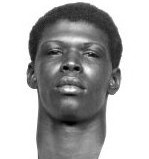
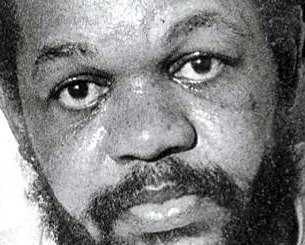
Michael Wayne Evans
Murderer Brian Kevin Rosenfeld
Murderer · USA · 1985
Brian Kevin Rosenfeld Brian Kevin Rosenfeld was sentenced to three concurrent l…
23 victims
Brian Kevin Rosenfeld
Murderer · USA · 1985
Brian Kevin Rosenfeld Brian Kevin Rosenfeld was sentenced to three concurrent l…
23 victims
 Yahweh ben Yahweh
Murderer · USA · 1980
Yahweh ben Yahweh was born and legally named Hulon Mitchell Jr. (October 27, 19…
23 victims
Yahweh ben Yahweh
Murderer · USA · 1980
Yahweh ben Yahweh was born and legally named Hulon Mitchell Jr. (October 27, 19…
23 victims
 Russell Ellwood
Murderer · USA · 1991
Russell Ellwood was a former taxi driver. Authorities suspected him of killing…
20 victims
Russell Ellwood
Murderer · USA · 1991
Russell Ellwood was a former taxi driver. Authorities suspected him of killing…
20 victims
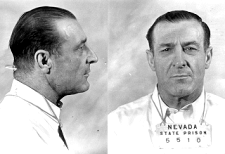 Eugene Leo Gambetta
Murderer · USA · 1948
Eugene Leo Gambetta Eugene Leo Gambetta was executed in Nevada State Prison on…
1 victim
Eugene Leo Gambetta
Murderer · USA · 1948
Eugene Leo Gambetta Eugene Leo Gambetta was executed in Nevada State Prison on…
1 victim
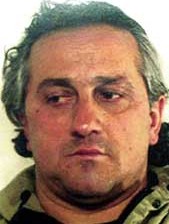 Maurizio Minghella
Serial killer · Italy · 1978
Maurizio Minghella was born in Genova on 16 luglio 1958. He lived in the Bolzan…
9 victims
Maurizio Minghella
Serial killer · Italy · 1978
Maurizio Minghella was born in Genova on 16 luglio 1958. He lived in the Bolzan…
9 victims
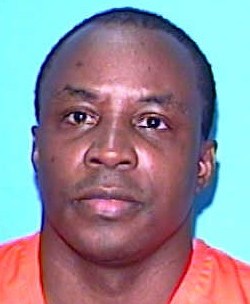 Kenneth Watson
Murderer · USA · 1988
Kenneth Watson was born on 02/23/63. He was tried in the Eleventh Judicial Circ…
1 victim
Kenneth Watson
Murderer · USA · 1988
Kenneth Watson was born on 02/23/63. He was tried in the Eleventh Judicial Circ…
1 victim
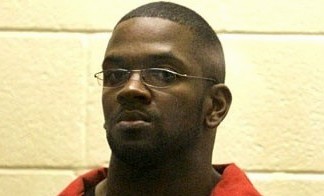 Bobby Lee Cutts
Murderer · USA · 2007
Bobby Lee Cutts, Jr. was a police officer in the Canton, Ohio Police Department…
1 victim
Bobby Lee Cutts
Murderer · USA · 2007
Bobby Lee Cutts, Jr. was a police officer in the Canton, Ohio Police Department…
1 victim
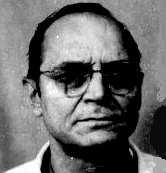 Robert Excell White
Spree killer · USA · 1974
Robert Excell White was executed by lethal injection in Texas on March 30, 1999…
4 victims
Robert Excell White
Spree killer · USA · 1974
Robert Excell White was executed by lethal injection in Texas on March 30, 1999…
4 victims
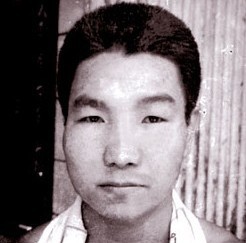 Iwao Hakamada
Mass murderer · Japan · 1966
Iwao Hakamada (袴田巖) was a Japanese professional boxer. Hakamada was born on Mar…
4 victims
Iwao Hakamada
Mass murderer · Japan · 1966
Iwao Hakamada (袴田巖) was a Japanese professional boxer. Hakamada was born on Mar…
4 victims
- Gender
- male
- Country
- USA
- Location
- Dallas County, Texas, USA
- Date of birth
- November 13, 1956
- Age at first offence
- 31
- Characteristics
- robbery
- Victim profile
- Elvira Guerrero, 36 , and her fiancé, Mario Alvarado Garza , a Mexican national
- Method of murder
- Shooting ( .22 caliber pistol)
- Date(s) of murder
- June 26, 1987
- Years active
- 1987
- Date of arrest
- J uly 11, 1987
- Status
-
Executed
Executed by lethal injection in Texas on December 4, 1986
Case record
Overview
Michael Wayne Evans was executed by lethal injection in Texas on December 4, 1986. He was identified as the offender with the number #608. His last statement was: “I want to say I’m sorry for the things I’ve done and I hope I’m forgiven. I don’t hold nothing against no one – Everyone has treated me well and I know it’s not easy for them – That’s all, I’m sorry. Michael Wayne EVANS”.
The killings involved Elvira Guerrero and Mario Garza. Guerrero loved the piano and children and dedicated her life to her church, where she met her fiancé, Mario Garza, a Mexican national. The killings occurred after Guerrero and Garza walked through a park one Sunday after dropping off the last child after church. June 26 was supposed to be a joyful time with celebrating Garza’s baptism, but it became cheerless when the attackers mugged and murdered the couple.
Guerrero was shot twice with a .22 caliber. Garza was shot five times. Guerrero reached out to her killer and said he would be forgiven. Evans retaliated by gouging her eyes out and slashing her face “to get her to quit talking.” Guerrero’s killer also had an accomplice, Earl Stanley Smith.
The attackers loaded the lifeless bodies into Guerrero’s car and drove them to a hay field in Oak Cliff on Tracy and Givendale Streets to dump the bodies. Evans and Smith took a total amount of $52.00 from the couple, a watch, and the car. Evans gave the watch to his girlfriend and kept the car for personal transportation.
The bodies of Guerrero and Garza were not found until four days later.
People
- Michael Wayne Evans — offender
- Elvira Guerrero — victim
- Mario Garza — victim
- Earl Stanley Smith — accomplice
- Elvira Guerrero’s fiancé, Mario Garza — victim (Mexican national)
- Juanita Ingram — Evans’ girlfriend
- Stanley Robinson — Evans’ cousin
- Guerrero’s brother-in-law — person who spotted the stolen car
- Belinda Key — apartment resident; pistol was said to belong to Evans
- Joseph — boyfriend of Belinda Key; helped clean the car’s blood
- Algerita Andy — Evans’ sister (affidavit attached to a habeas petition)
Background
Guerrero dedicated her life to her church, where she met her fiancé, Mario Garza, a Mexican national. Life could not seem to be more perfect for Guerrero until she and Garza walked through a park one Sunday after dropping off the last child after church.
The offence
Evans and his accomplice robbed and murdered Elvira Guerrero and Mario Garza. Guerrero was shot twice with a .22 caliber, and Garza was shot five times.
Guerrero reached out to her killer and told him he would be forgiven. Evans retaliated by gouging her eyes out and slashing her face “to get her to quit talking.”
Evans and Smith loaded the lifeless bodies into Guerrero’s car and drove them to a hay field in Oak Cliff on Tracy and Givendale Streets to dump the bodies. Evans and Smith took a total amount of $52.00, a watch, and the car. Evans gave the watch to his girlfriend and kept the car for his personal transportation.
The bodies were not found until four days later.
Investigation
Police found the decomposed bodies of a man and a woman on June 30, 1977, covered with bushes and leaves in a field in south Dallas. Both bodies had been shot several times. Police found near the bodies a cylinder pin or ejection rod from a .22 caliber pistol.
The woman’s body was identified as Elvira Guerrero. She had last been seen leaving evening church services in her car on June 26, with $40 in church offering money. A .22 caliber bullet was removed from her body.
The man’s body was determined to be Mario Alvarado Garza, who accompanied Guerrero to the church services.
On July 11, 1977, police noticed Guerrero’s automobile parked in an apartment complex area in Dallas. Residents were questioned about its ownership and were told that it may have belonged to Belinda Key, whose apartment was about 15 feet from where the car was parked. Police entered the apartment with Key’s consent, and Evans fled unnoticed out a back window.
Police recovered, from a dresser drawer in a bedroom, a .22 caliber revolver (of a type commonly called a “Saturday Night Special”) with its ejection rod missing. Key stated that the pistol belonged to Evans. A palm print was taken from Guerrero’s car and was subsequently identified as belonging to Evans.
Evans returned to the apartment within a few hours. Evans was arrested at 4:30 p.m. on July 11. A Dallas police officer gave Evans Miranda warnings immediately. Evans was removed to Dallas police headquarters where, before questioning, he was again administered Miranda warnings. Evans stated that he understood the warnings and that he wanted to talk. He spoke with police officers for about two hours and implicated Stanley Earl Smith in the slayings.
Police went with Evans to the housing project where Smith lived, intending to drive to the home of a justice of the peace for arraignment. While driving to the justice of the peace’s home, and in response to further police questioning by different officers, Evans told police that he would show them where the keys to Guerrero’s car had been thrown, in shrubs near a school. Police searched the area but did not find the keys.
Evans was then taken to the justice of the peace, who administered Miranda warnings for a third time in less than six hours. Evans was brought back to the police station at 10:15 p.m., where police asked if he remembered the warnings. After a little over one hour of further questioning, Evans made a written statement admitting having robbed Guerrero and Garza while assigning primary responsibility for the slayings to Smith.
The next day, July 12, police again searched for the car keys where Evans had said he had thrown them. Although they were unsuccessful, a member of a maintenance crew trimming the shrubs found a set of keys and turned them over to police. The keys fit Guerrero’s car. Later on July 12, police resumed questioning Evans after again giving Miranda warnings. Evans admitted participating in the robbery and murder of David Lee Potts about two weeks before the killing of Guerrero, but stated Smith had actually killed Potts.
On July 14, 1977, police removed Evans from jail and transferred him to the police station. During the transfer, one officer told Evans his July 11 statement was not believable. Evans responded that officers should “give him some time and he would think about it.” Later that day, while at the jail, Evans initiated a conversation with police and said he wanted to make another statement. Police twice provided Miranda warnings, after which Evans confessed to having killed Potts in a robbery on June 15, 1977. After another Miranda warning—the seventh within three days—Evans confessed in a written statement to having killed Guerrero.
At no point in the interrogation process from the time of his arrest did Evans request an attorney.
Arrest
Evans was arrested at 4:30 p.m. on July 11. He was given Miranda warnings immediately by a Dallas police officer. He was administered Miranda warnings again at Dallas police headquarters before questioning.
Statements
Last statement
“I want to say I’m sorry for the things I’ve done and I hope I’m forgiven. Michael Wayne EVANS”
Evans’ oral and written statements to police
Evans’ July 11, 1977 statement was: “On 6/26/77, Earl Smith Picked me up on N. Bennett. I was at school shooting a basketball. Earl said "Mickey I've got a hustle for us." There was a man and a woman in the back seat. Earl was holding a pistol on them. I got in the front seat and drove where Earl told me to. I parked by a little Church on the corner. Earl told them to get out. He took them a short distance and shot them. I heard about five shots. Earl got back in the car and gave me two $10 bills. I drove off. We went to Belinda Key's apt on Bennett Street. Earl told me not to say anything or he would have something done to me. I drove the car around until the brakes went out. One day about a week ago I was driving the car with Earl and my girl friend Juanita. Earl had a friend with him. He noticed somebody following us. He told me to let him get out. They got out but the Mexican kept following me. I drove S. on the highway to Houston and lost him in South Dallas. Then I drove back to N. Dallas and let Juanita out at her house. While I was driving where Earl told me to I knew he was going to rob them. [fn4] Testimony indicated that "jacked" means robbed.”
Evans’ July 14 statement regarding the Guerrero slaying was: “On June 26, 1977 at about 6:00 p.m., I was at Belinda's house at 1612 N. Bennett St. Earl Smith came over and wanted me to go with him to get some money. I told him I would go and I got my pistol out of the dresser drawer. I checked the pistol and it was loaded with six .22 bullets. I've had this pistol about two months. I stole the pistol out of the Cole Apartments where I saw a couple of people moving. I waited for them to drive off with a load of furniture, then I went inside the apartment and got the pistol off of a shelf in a bedroom. I also took some champagne glasses from the apartment. Earl and I started walking toward a park near Ross Avenue. When we got to the park, we saw a brown and black Pontiac Firebird parked on the side street by the park. A Mexican woman was sitting in the driver's seat and a Mexican man was sitting in the front seat next to her. They were just talking. We walked by the car and looked it over. Earl had my pistol and I had a hook-blade knife. We walked back to the car and Earl stuck the pistol in the lady's face and I pulled the knife on the dude. Earl told the lady that we wanted to get out of this part of the town. The lady offered to take us and Earl told her that we'd take ourselves. Earl told the lady to get into the back seat and I got into the back seat with her. Earl started driving the car and the dude was in the front seat. The dude started jabbering in Spanish and Earl told him to shut up. The lady asked us if we wanted their money. Earl told her that all we wanted was a ride across town. The lady handed me an envelope with about $40.00 in it. I took the money and put it in my pocket. The dude handed Earl his wallet and Earl put the money out of the wallet into his (Earl's) pocket. I think it was about $12.00. Earl drove across town to a big field. Earl parked the car by a big tree. Earl gave me the gun. As soon as the car stopped moving, the Mexican lady said, "you don't have to kill us, we won't tell anybody." Earl looked back at me and said, "you know what it is." I then shot the Mexican lady two or three times. The woman fell over in the seat and the dude jumped out of the car and started running. I handed Earl the pistol and Earl started running after the dude. Earl shot one time at the dude but I think he missed. A few seconds passed and I heard two more shots. I couldn't see Earl or the dude. About this time, the lady took my hand in hers and I realized she was still alive. She was holding my hand and looking into my eyes. Then she said, "God help him, God, help him." I took my hook-blade knife out of my pocket. I cut the lady from the bottom of her chin to her hairline above her forehead. Then the lady said, "God forgive him." I cut the lady two more times in the face. I think I cut her eyes. I was trying to get her to quit talking. All of a sudden the lady turned loose of my hand and quit breathing. I sat there in the car looking at the woman until Earl opened the car door. Earl told me to help him drag the lady out of the car. We dragged the woman over in some bushes. We covered the lady up with some bushes. Then Earl went over to the dude who was laying on the ground dead. Earl took the dude's shoes off. Earl had already covered the man up. Earl got the knife from me and went back to the man. I think Earl was cutting the man. We tried to straighten the grass up so it wouldn't look like a car had been there. We started driving up to a church and Earl said the rod was missing out of the pistol. We parked the car and started looking for it but couldn't find it. Earl said it must have fallen out of the pistol when he shot the dude. We drove the car back to Belinda's house and went inside and got some rags to clean the blood out of the car. Joseph, a boyfriend of Belinda's, helped Earl and I clean the blood out of the car. The next day Belinda gave me some pills. I took four of the pills and got high. I told Belinda that Earl and I had killed the Mexicans and that we had their car. Earl was in the bedroom laying across the bed. My girlfriend and I went to the store and got some beer. When we got back, Belinda and Earl were in bed making love. Juanita and I sat on the sofa and drank beer and smoked weed until about midnight. Then Juanita went home and I went to sleep. I drove the car everyday and I took Earl to work in the car. We kept the car until the police came and got it.”
Evans also made statements to others after returning to Key’s apartment. At about midnight on June 27, Evans returned to Key’s apartment with blood on his hands and clothing. On June 27, a companion of Key helped Evans clean “blood and flesh” from the inside of Guerrero’s car and brought it back to the Key apartment complex. Key asked Evans where he got the car, and Evans responded that he and Smith “had jacked [fn4] some people and hit them in the head and tied them up and covered them with bushes.” Evans told his girlfriend Juanita Ingram that he killed some Mexicans and gave her a watch from “the Mexican lady that he had killed.” Finally, Evans told his cousin Stanley Robinson that he took the car from a couple that he had killed.
Trial
The jury returned a verdict of capital murder and sentenced Evans to death.
At trial, the State introduced evidence that at about midnight on June 27 Evans returned to Key’s apartment with blood on his hands and clothing. The companion of Key helped Evans clean “blood and flesh” from the inside of Guerrero’s car and brought it back to the apartment complex.
Defense and prosecution evidence described Evans’ confessions and physical evidence. The prosecution did not call Smith in its case-in-chief.
Witnesses and evidentiary issues
The defense called Earl Stanley Smith as a witness during the defense’s case-in-chief at the guilt/innocence phase, against counsel’s advice. The trial judge warned Evans at length that Smith “may give testimony injurious to the defendant's case.”
On cross-examination, Smith testified that Evans shot both Guerrero and Garza and cut Guerrero’s throat, and that Evans tried to convince him to testify falsely.
Defense counsel attempted to impeach Smith through evidence that Smith had already pled guilty to the Guerrero, Garza, and Potts murders and received a life sentence, and through evidence of eight prior unrelated convictions of Smith.
The trial court had granted the State’s motion in limine to prevent such impeachment, finding that under Tex.Code Crim.P. Ann. art. 38.28, a party may not impeach his own witness “merely by offering evidence of the witness' bad character.”
Evans challenged the trial court’s refusal to allow “mitigating evidence” at the punishment phase. Evans attempted to introduce evidence that he had earlier pled guilty to the killing of Potts and received a life sentence. The court rejected the contention, stating in part that Evans “gives no reasons” to explain relevance.
Evans also challenged the refusal to allow evidence at the punishment phase that Smith received a life sentence for his role in the murders. The Texas Court of Criminal Appeals stated: “[e]ach defendant should be judged by his own conduct and participation and by his own circumstances.”
Sentencing
After the first conviction and death sentence were reversed, Evans was retried and again convicted and sentenced to death.
District Judge Barefoot Sanders in Dallas and the 5th U.S. Circuit Court of Appeals in New Orleans and the U.S. Supreme Court denied Evans’ appeals.
In the federal habeas proceedings, the jury’s findings supported the death sentence, including findings that Evans acted deliberately, that he would be a continuing threat to society, and that the killing was not reasonable in light of provocation.
Appeals
The Texas Court of Criminal Appeals reversed the judgment and remanded for a new trial because certain prospective jurors were improperly excused in light of Adams v. Texas, 448 U.S. 38. Evans v. State, 614 S.W.2d 414 (Tex.Crim.App. 1980) (en banc).
After retrial, Evans was again convicted and sentenced to death. The conviction was affirmed on direct appeal. Evans v. State, 656 S.W.2d 65 (Tex.Crim.App. 1983) (en banc), cert. denied, 465 U.S. 1109.
Evans filed a petition for writ of habeas corpus in the state convicting court, which was denied in August 1984. He filed a second state petition immediately thereafter, which was also denied.
The instant federal petition was prepared with the assistance of counsel who represented Evans at trial and was filed on October 10, 1984. The magistrate recommended that the petition be dismissed without a hearing. The district judge adopted that recommendation, but granted Evans a certificate of probable cause to appeal.
In May 1983, a rehearing was denied.
Defense argued that jury selection was not fair due to lack of representation of African and Mexican-Americans, and also argued that Evans was insane and unjustly accused because he was black. Both arguments were rejected by the courts.
The 5th Circuit federal appeals decisions included the holding that Evans did not prove his trial suffered from federal constitutional infirmities and affirmed the dismissal of the petition for a writ of habeas corpus, vacating a stay of execution. The stay of execution previously entered in the case was vacated.
Supreme Court petition and denial
Evans filed a petition for a writ of certiorari in the United States Supreme Court on July 26, 1986. The Supreme Court denied the petition for certiorari on October 20, 1986.
Later habeas applications and rulings
Evans filed a second application for habeas relief in the state trial court on November 24, 1986 and moved for a stay of execution. He claimed he was presently insane and unable to comprehend the nature of the penalty, invoking Ford v. Wainwright, and he also claimed unconstitutionally discriminatory administration of “capital murder laws” in Texas, referencing McCleskey v. Kemp and Hitchcock v. Wainwright.
In an order dated November 26, 1986, the state trial court denied Evans’ request for habeas relief and his application for a stay of execution. The court adopted proposed findings of fact and conclusions of law from the State. The court found “there has been no evidence offered to support his claim of insanity or to require an evidentiary hearing” and adopted that Evans had no defects in his faculties, understood what he was tried for, understood the purpose of his punishment and the impending fate, and had sufficient understanding to convey facts to his attorneys.
The Texas Court of Criminal Appeals denied all relief requested in the application and denied the request for a stay of execution on December 2, 1986.
On December 2, 1986, Evans filed a second petition for federal habeas relief and moved for a stay of execution in the federal district court. The district court denied the stay of execution, dismissed the petition for a writ of habeas corpus, and denied a certificate of probable cause to appeal that it deemed to have been sought.
On December 3, 1986, Evans filed a notice of appeal and an application for a stay of execution. The federal court denied applications for a certificate of probable cause and for a stay of execution. It concluded that Evans did not make a substantial showing of the denial of a federal right and that his insanity claim was not supported by the affidavit in a manner creating a fact question within Ford v. Wainwright. It also held that the McCleskey claim, even in light of the grant of certiorari in McCleskey, did not qualify for relief under the applicable standards.
Outcome
Evans’ execution proceeded. He was pronounced dead at 12:21 a.m. (no date given in the record text for the pronouncement).
Timeline
- June 26, 1977 — Elvira Guerrero left evening church services in her car with $40 in church offering money; the killing occurred after church and after Guerrero and Garza walked through a park.
- June 27, 1977 — Evans returned to Belinda Key’s apartment with blood on his hands and clothing; a companion helped clean “blood and flesh” from the inside of Guerrero’s car.
- June 30, 1977 — Decomposed bodies of Elvira Guerrero and Mario Alvarado Garza were found in a field in south Dallas; both had been shot several times.
- July 11, 1977 — Police noticed Guerrero’s automobile parked in an apartment complex area in Dallas; Evans fled out a back window; Evans was arrested at 4:30 p.m.; Miranda warnings were given and Evans implicated Stanley Earl Smith.
- July 12, 1977 — Police searched for keys to Guerrero’s car based on Evans’ directions; maintenance crew found a set of keys that fit Guerrero’s car; Evans admitted involvement in the robbery and murder of David Lee Potts.
- July 14, 1977 — Evans was transferred from jail to police station; Evans confessed to killing David Lee Potts and later confessed in a written statement to having killed Guerrero.
- October 10, 1984 — Evans’ federal petition for a writ of habeas corpus was filed.
- June 4, 1986 — Federal court affirmed dismissal of the habeas petition and vacated the stay of execution.
- July 26, 1986 — Evans filed a petition for certiorari in the United States Supreme Court.
- October 20, 1986 — The Supreme Court denied Evans’ petition for certiorari.
- November 24, 1986 — Evans filed his second state habeas application and moved for a stay of execution.
- November 26, 1986 — The state trial court denied habeas relief and denied the request for a stay of execution.
- December 2, 1986 — The Texas Court of Criminal Appeals denied all relief and denied a stay; Evans filed a second federal habeas petition and moved for a stay.
- December 3, 1986 — Evans filed notice of appeal and an application for a stay of execution in the federal court.
- December 4, 1986 — Evans was executed by lethal injection in Texas.
Other details
Defense argued that jury selection was not fair due to lack of representation of African and Mexican-Americans; all motions were overruled at the trial level. The Texas Court of Criminal Appeals threw out the conviction and death sentence in May 1981 because of errors in jury selection.
Guerrero’s sister had only seen Evans once, at the trial, and described him as “young, black, and thin. He didn’t look sorry or scared. Expressionless.”
The district judge and federal courts denied Evans’ appeals, and the prosecution relied on Evans’ confessions and physical evidence.
Evans declined his last meal and did not ask for any visitors.
The record contains a federal case caption identifying procedural posture: Michael Wayne Evans, Petitioner-Appellant, v. O.L. Mccotter, Director, Texas Department of Corrections, Respondent-Appellee, No. 85-1665. It also contains another federal case caption: Michael Wayne Evans, Petitioner-Appellant, v. O.L. 86-1849.
Spotted an error, or have more information about this case?