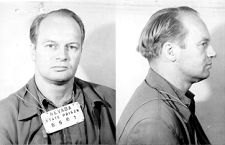
Clayton Fouquette
Murderer George Sitts
Murderer · USA · 1945
George Sitts was executed by the State of South Dakota on April 8, 1947 for the…
3 victims
George Sitts
Murderer · USA · 1945
George Sitts was executed by the State of South Dakota on April 8, 1947 for the…
3 victims
 Joseph Medley
Murderer · USA · 1940
Joseph Medley was a male White person identified as being associated with robbe…
3 victims
Joseph Medley
Murderer · USA · 1940
Joseph Medley was a male White person identified as being associated with robbe…
3 victims
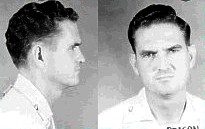 Lester Edward Bartholomew
Murderer · USA · 1955
Lester Edward Bartholomew was charged in Arizona with murder in the Superior Co…
3 victims
Lester Edward Bartholomew
Murderer · USA · 1955
Lester Edward Bartholomew was charged in Arizona with murder in the Superior Co…
3 victims
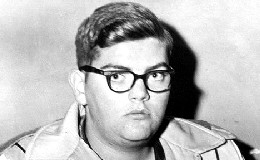 Lowell Lee Andrews
Murderer · USA · 1958
Name: Lowell Lee Andrews Date of execution: November 30, 1962 Status: Executed…
3 victims
Lowell Lee Andrews
Murderer · USA · 1958
Name: Lowell Lee Andrews Date of execution: November 30, 1962 Status: Executed…
3 victims
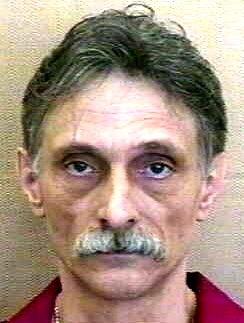 Kenneth Lee Boyd
Murderer · USA · 1988
Kenneth Lee Boyd was convicted of the murders of Thomas Dillard Curry and Julie…
2 victims
Kenneth Lee Boyd
Murderer · USA · 1988
Kenneth Lee Boyd was convicted of the murders of Thomas Dillard Curry and Julie…
2 victims
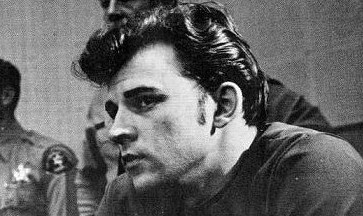 Paul Ferguson
Murderer · USA · 1968
Paul Ferguson was sentenced to life imprisonment in 1969 and was paroled less t…
1 victim
Paul Ferguson
Murderer · USA · 1968
Paul Ferguson was sentenced to life imprisonment in 1969 and was paroled less t…
1 victim
 Ponchai Wilkerson
Murderer · USA · 1990
Ponchai Wilkerson was executed by lethal injection in Texas on March 14, 2000.…
1 victim
Ponchai Wilkerson
Murderer · USA · 1990
Ponchai Wilkerson was executed by lethal injection in Texas on March 14, 2000.…
1 victim
 William Oliver Reese
Murderer · Japan · 2006
William Oliver Reese William Oliver Reese was a US Navy airman assigned to the…
1 victim
William Oliver Reese
Murderer · Japan · 2006
William Oliver Reese William Oliver Reese was a US Navy airman assigned to the…
1 victim
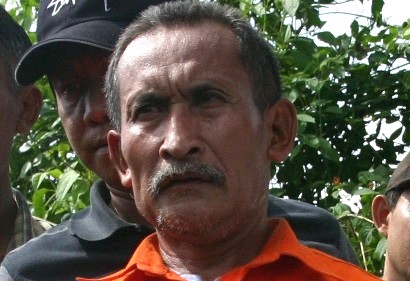 Baekuni
Serial killer · Indonesia · 2010
Baekuni was a street vendor who sheltered street children at a rented house. He…
14 victims
Baekuni
Serial killer · Indonesia · 2010
Baekuni was a street vendor who sheltered street children at a rented house. He…
14 victims
 Claude Howard Jones
Murderer · USA · 1976
Claude Howard Jones was a Harris County native who refused to speak with report…
3 victims
Claude Howard Jones
Murderer · USA · 1976
Claude Howard Jones was a Harris County native who refused to speak with report…
3 victims
- Gender
- male
- Country
- USA
- Location
- Boulder City, Clark County, Nevada, USA
- Date of birth
- 1913
- Age at first offence
- 35
- Characteristics
- —
- Victim profile
- Donald Brown ( University of Nevada student )
- Method of murder
- Shooting
- Date(s) of murder
- August 19, 1948
- Years active
- 1948
- Date of arrest
- —
- Status
-
Executed
Executed by asphyxiation-gas in Nevada on April 13, 1953
Case information
- Defendant: Clayton Octave Fouquette
- Occupation (at death): Plumber
- Age (at death): 40
- Birthplace (native of): Foley, Minnesota
- Place of custody: Nevada State Prison (including custody of the warden)
Timeline
- August 19, 1948 — Clayton Octave Fouquette was convicted of the crime of murder in the first degree, with punishment fixed at death (as referenced in the habeas corpus proceedings concerning the alleged crime date).
- November 20, 1948 — Fouquette was convicted in the Eighth judicial district court of the State of Nevada, in and for the county of Clark, of the crime of murder in the first degree; punishment was fixed at death.
- November 24, 1948 — Fouquette, through his attorney, moved for a new trial on several grounds; the motion was denied; he was sentenced to death and placed in the custody of the warden of the state prison.
- August 10, 1950 — The Supreme Court of Nevada affirmed the judgment and order of the trial court and directed the district court to make the proper order for carrying into effect by the warden of the state prison.
- November 16, 1950 — Fouquette’s petition for rehearing was denied.
- December 18, 1950 — The Supreme Court of Nevada stayed the judgment of execution pending petition for a writ of certiorari to the United States Supreme Court.
- December 28, 1950 — Fouquette was resentenced to die.
- May 14, 1951 — The petition for a writ of certiorari to the United States Supreme Court was denied.
- June 11, 1951 — A petition for a writ of habeas corpus was issued.
- June 18, 1951 — The warrant of execution ordered execution within the limits of the state prison on this date; Fouquette filed a habeas corpus petition in this court prior to this execution date.
- June 29, 1951 — Fouquette was brought into court for a full hearing; he was represented by his attorney, John W. Bonner, Esq.
- July 5, 1951 — Ex Parte Fouquette was decided by the Supreme Court of Nevada; the proceeding was dismissed and Fouquette was remanded to the custody of the warden of the state prison.
- April 13, 1953 — Clayton Octave Fouquette was executed by asphyxiation-gas in Nevada.
Background
Clayton Octave Fouquette was a native of Foley, Minnesota. At the time of his death he was 40 years old. His occupation was listed as plumber.
The offence
Fouquette was convicted of killing University of Nevada student Donald Brown in a botched robbery attempt in Boulder City, Nevada. The crime took place in southern Nevada at a service station on August 19, 1948.
Investigation
The case record in the habeas corpus proceeding discussed confessions admitted as evidence, including an allegation that certain confessions were not legally admissible as voluntary confessions.
Trial
On November 20, 1948, Fouquette was convicted in the Eighth judicial district court of the State of Nevada, in and for the county of Clark, of the crime of murder in the first degree; the punishment was fixed at death.
On November 24, 1948, Fouquette moved for a new trial upon several grounds. The motion was denied, and he was sentenced to death and placed in the custody of the warden of the state prison.
Appeals
Fouquette appealed from the judgment and from the order denying his motion for a new trial. The Supreme Court of Nevada made an order suspending the execution of the judgment and sentence until the determination of the appeal.
On August 10, 1950, the Supreme Court affirmed the judgment and directed the district court to make the proper order for the carrying into effect by the warden of the state prison of the judgment.
Fouquette filed a petition for rehearing, which was denied on November 16, 1950. The Supreme Court filed its opinion in each instance.
Fouquette was resentenced to die on December 28, 1950.
On December 18, 1950, the Supreme Court stayed the judgment of execution pending a petition for a writ of certiorari to the United States Supreme Court.
On May 14, 1951, the petition for a writ of certiorari was denied.
Sentencing
After the denial of the motion for a new trial, Fouquette was sentenced to death and placed in the custody of the warden of the state prison.
After the Supreme Court proceedings, Fouquette was resentenced to die on December 28, 1950.
After the Supreme Court denial of certiorari, the trial court issued a warrant of execution and ordered the warden to execute the judgment and sentence of death within the limits of the state prison on June 18, 1951.
Appeals (habeas corpus)
Fouquette filed in the Supreme Court of Nevada a petition for a writ of habeas corpus, which was issued on June 11, 1951.
In his petition, Fouquette alleged that he was unlawfully sentenced, imprisoned, detained, and restrained of his liberty in the Nevada State Prison in Ormsby County, Nevada, by Arthur Bernard, the warden thereof.
He alleged illegality on grounds that his sentence, confinement, and restraint were illegal, unlawful, and in violation of rights guaranteed by statutes of Nevada and article I, section 8 of the Nevada constitution, and contrary to rights guaranteed by section 1 of the fourteenth amendment to the United States constitution.
He also alleged illegality on grounds that he was insane on August 19, 1948, the date of the alleged crime.
He further alleged it was impossible for him to have a fair trial in Clark County, Nevada, due to prejudice and adverse publicity as disclosed by the record.
He additionally alleged that certain confessions admitted as evidence were not legally admissible as voluntary confessions.
The respondent warden filed his return to the writ and brought Fouquette into court on June 29, 1951. A full hearing was held, during which Fouquette was represented by his attorney, John W. Bonner, Esq. The matter was submitted to the Supreme Court of Nevada for decision.
Fouquette filed points and authorities raising three substantial questions:
- Was Fouquette insane on August 19, 1948, the date of the alleged crime?
- Was it possible for Fouquette to have had a fair trial in Clark County, Nevada, in view of prejudice and adverse publicity as disclosed by the record?
- Were the confessions legally admissible as voluntary confessions?
These matters were determined adversely to the contentions of Fouquette at the trial, the motion for a new trial, the appeal and affirmance in the Supreme Court of Nevada, and the denial of his petition for rehearing.
Outcome
From an examination of the record in the habeas corpus proceeding, the Supreme Court stated that the judgment of conviction was regular upon its face.
The Court stated:
"A habeas corpus is not a writ of error. It cannot be used to authorize the exercise of appellate jurisdiction. On a habeas corpus the judgment of an inferior court cannot be disregarded. We can only look at the record to see whether a judgment exists [68 Nev. 362, Page 365] , and have no power to say whether it is right or wrong. It is conclusively presumed to be right until reversed; and when the imprisonment is under process, valid on its face, it will be deemed prima facie legal, and if the petitioner fails to show a want of jurisdiction in the magistrate or court whence it emanated, his body must be remanded to custody."
The Supreme Court dismissed the habeas corpus proceeding and remanded Fouquette to the custody of the warden of the state prison.
The Court indicated that Badt, C. J., and Merrill, J., concur.
Aftermath
Clayton Octave Fouquette was executed by asphyxiation-gas in Nevada on April 13, 1953 at the Nevada State Prison.
Other details
- The Supreme Court decision was Ex Parte Fouquette, Supreme Court of Nevada, July 5, 1951.
- In the habeas corpus proceedings, W. T. Mathews was listed as Attorney General; Geo. P. Annand, Robert L. McDonald, and Thos. A. Foley, Deputy Attorneys General, of Carson City, and Roger D. Foley, District Attorney, Clark County, were listed for respondent state.
- The judgment discussed in the habeas corpus decision referred to Ex Parte Winston, 9 Nev. 71, and citations including State v. Fouquette, 67 Nev. 505, 221 P.2d 404.
- The warden identified in the habeas corpus petition was Arthur Bernard.
- The habeas corpus hearing was held on June 29, 1951.
- Execution was ordered in the warrant for June 18, 1951, before the habeas corpus disposition dated July 5, 1951.
Spotted an error, or have more information about this case?