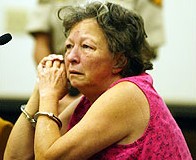
Carol Carr
Homicide Andrea Yates
Homicide · USA · 2001
Andrea Pia Yates (born Andrea Pia Kennedy on July 2, 1964) was a former Houston…
5 victims
Andrea Yates
Homicide · USA · 2001
Andrea Pia Yates (born Andrea Pia Kennedy on July 2, 1964) was a former Houston…
5 victims
 Coleen Thompson
Homicide · USA · 2002
Coleen Thompson was a former intensive care nurse at Shady Grove Adventist Hosp…
5 victims
Coleen Thompson
Homicide · USA · 2002
Coleen Thompson was a former intensive care nurse at Shady Grove Adventist Hosp…
5 victims
 Christine Paolilla
Homicide · USA · 2003
Christine Marie Paolilla was an American woman born on Long Island, New York on…
4 victims
Christine Paolilla
Homicide · USA · 2003
Christine Marie Paolilla was an American woman born on Long Island, New York on…
4 victims
 Melissa Marvin
Homicide · USA · 1999
Melissa Lynn Marvin was a 29-year-old waitress and amateur surfer at the time o…
4 victims
Melissa Marvin
Homicide · USA · 1999
Melissa Lynn Marvin was a 29-year-old waitress and amateur surfer at the time o…
4 victims
 Erin Caffey
Homicide · USA · 2008
Erin Caffey (juvenile daughter of Terry Caffey and Penny Caffey; charged in con…
3 victims
Erin Caffey
Homicide · USA · 2008
Erin Caffey (juvenile daughter of Terry Caffey and Penny Caffey; charged in con…
3 victims
 Lashaun Harris
Homicide · USA · 2005
Oct. 19, 2005 — A jury trial later concerned the drownings of three young sons…
3 victims
Lashaun Harris
Homicide · USA · 2005
Oct. 19, 2005 — A jury trial later concerned the drownings of three young sons…
3 victims
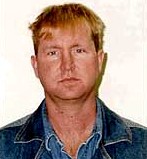 Martin Allen Johnson
Murderer · USA · 1998
Martin Allen Johnson (defendant) · Heather Fay Fraser, 15 (victim) · 1997 — Pol…
1 victim
Martin Allen Johnson
Murderer · USA · 1998
Martin Allen Johnson (defendant) · Heather Fay Fraser, 15 (victim) · 1997 — Pol…
1 victim
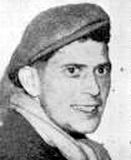 Thomas Harries
Murderer · United Kingdom · 1953
Thomas Ronald Lewis Harries was executed by hanging at Swansea Prison on April…
2 victims
Thomas Harries
Murderer · United Kingdom · 1953
Thomas Ronald Lewis Harries was executed by hanging at Swansea Prison on April…
2 victims
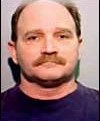 Gregory Allen Bowen
Murderer · USA · 1985
December 25, 2001 — Gregory Allen Bowen and his friend Mike Colby left Crescent…
3 victims
Gregory Allen Bowen
Murderer · USA · 1985
December 25, 2001 — Gregory Allen Bowen and his friend Mike Colby left Crescent…
3 victims
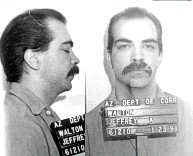 Jeffrey Alan Walton
Murderer · USA · 1986
Jeffrey Alan Walton was sentenced to death for the first-degree murder of Thoma…
1 victim
Jeffrey Alan Walton
Murderer · USA · 1986
Jeffrey Alan Walton was sentenced to death for the first-degree murder of Thoma…
1 victim
- Gender
- female
- Country
- USA
- Location
- Spalding County, Georgia, USA
- Date of birth
- 1939
- Age at first offence
- 63
- Characteristics
- —
- Victim profile
- Her two sons, Andy Byron Scott, 41, and Michael Randy Scott, 42
- Method of murder
- Shooting ( .25-caliber handgun)
- Date(s) of murder
- June 8, 2002
- Years active
- 2002
- Date of arrest
- Same day
- Status
-
Died in custody
Released on parole in March 2004 after pleading guilty to assisted suicide and being sentenced to 5 years in prison in January 2003
Case overview
Carol Carr was an American woman from the state of Georgia. She killed both of her adult sons in June 2002 because they were suffering from Huntington’s disease.
Her sons were Randy Scott and Andy Scott, both in the advanced stages of the disease, and they died of a single gunshot wound to the head. After the shootings, Carr calmly walked to the lobby and waited for police. When questioned by police on the night of the shooting, Carr told them that she did not want them to suffer anymore.
Carr pleaded guilty to assisted suicide. In January 2003, she was sentenced to 5 years in prison. She was released on parole in March 2004.
Timeline
- June 8, 2002 — Carol Carr shot and killed Randy Scott and Andy Scott in the room they shared at a Georgia nursing home in Griffin.
- January 2003 — Carol Carr pleaded guilty to assisted suicide and was sentenced to 5 years in prison.
- March 2004 — Carol Carr was released on parole.
Background
Carol Carr was the mother of two adult sons, Randy Scott and Andy Scott, who had Huntington’s disease. Her remaining son was James Scott, who also suffered from Huntington’s disease and was described as being in the early stages at the time of reporting.
Carol Carr’s husband, Hoyt Scott, died in 1995 after a long struggle with Huntington’s disease. The account described that Huntington’s disease first appeared in her husband’s mother, and that it was passed to a daughter (Roslyn) who died of it and to the two sons who later included Hoyt Scott. Another son, George Scott, was described as having committed suicide after learning he had the disease.
Family members and reporting described that Huntington’s disease left those affected unable to move, swallow, talk, or think, and that it eroded their ability to perform basic functions. Reporting also stated that the disease had no effective treatment or cure.
One narrative stated that Carr devoted most of her adult life to caring for Hoyt Scott, a factory worker, for more than two decades as the disease left him unable to move, swallow, talk, or think. When she could no longer do those things by herself, she placed their oldest sons, Randy and Andy, in a nursing home.
Relatives described that Carr was consumed by guilt for having brought her sons into the world, and that she had already lost hope. A witness described that Carr repeatedly said, “I’m so sorry, I’m so sorry,” as a judge read the two murder charges against her.
The offence
On June 8, 2002, Carr killed both Randy Scott and Andy Scott while they were in a nursing home bed in the room they shared in the town of Griffin. Both men died of a single gunshot wound to the head.
Police questioning included statements that Carr repeatedly told police she shot her sons because she did not want them to suffer any more. When questioned, she also stated that she shot her sons in order to end their suffering.
A reporter’s account described that Carr shot her sons in the head with a “.25-caliber handgun.” Another account described that the bodies were shot and then that she waited in the nursing home lobby to be arrested.
A lead detective on the case classified the murders as a “mercy killing.” James Scott agreed with that characterization. James Scott also described that Carr “gave it her all taking care of them even while they were in a nursing home,” including changing their bed linen and giving them drinks.
James Scott described the experience of watching his brothers suffer and stated: “I sat there and watched them with bed sores.” He also stated: “It’s just a miserable way to live. They couldn’t talk. They couldn’t communicate with each other. They would mumble.”
James Scott additionally stated: “My father died from it -- a long, agonizing death, years and years of just sitting in the bed dying, and they were doing it, too,” and described their living will discussions in family probate court proceedings in Clayton County in 1995.
Investigation and charges
Carr was charged with two counts of malice murder in the death of her two adult sons. She was also reported as facing felony murder and malice murder charges, and the case was described as involving Georgia’s law that prohibits aiding in a suicide.
A police investigator, Lt. Joe Estenes, said: “At this time, it looks like her motive was a mercy killing.”
Reporting described that Huntington’s disease had left her sons helpless; they were unable to walk, feed themselves, or even think clearly. It was also described that the nursing home’s care made matters worse according to family statements, and that James Scott was critical of the quality of their care.
Arrest and custody
Carr was in custody in the Spalding County Jail and was described as being held without bond since her arrest.
Trial and plea
Carr pleaded guilty to assisted suicide in a plea agreement entered in Spalding County Courthouse.
The plea resulted in prosecutors dropping murder charges against Carr in exchange for her guilty plea to a lesser charge. The prosecution also withdrew the murder charges after the plea agreement.
A comment by Carr’s lawyer Lee Sexton was quoted after a court session: “She believes she was 100% right -- it was her duty. But legally, she knew it violated the law.”
Lee Sexton also said Carr “could not bring herself to walk into that courtroom and say 'I murdered my children.' All she did was keep a promise to them to end their suffering,” and said Carr was “overjoyed” to reach a plea agreement.
Sentencing
Carr was sentenced to 5 years in prison in January 2003 for assisted suicide.
One account described that she received five years in prison on one count and five years of probation on the second count. Another account described she was sentenced to 5 years in prison.
Parole and conditions
Carr was released on parole in March 2004 after serving 21 months of her five-year prison sentence.
The parole board mandated that if Carr’s surviving son, James, should become ill with Huntington’s disease, Carr would be prohibited from serving as his primary caregiver.
The parole board also required that Carr receive mental-health counseling during her period of supervision.
A parole board member, Mike Light, made a statement quoted as: “Carol Carr has punished herself more than the prison system will ever be able to punish her.”
Carr’s attorney, Lee Sexton, said Carr received the news of her parole Tuesday from the warden of Metro State Prison and quoted: “she was very thankful that the board saw fit to release her short of the sentence imposed by the judge.”
One account said Carr was being held in Metro State Prison in Atlanta and that she was interviewed by parole board member Mike Light in January.
James Scott was quoted after learning of his mother’s parole, saying: “glad they voted to let her go. It’s been a long time and everybody’s happy about it. The news is just sinking in.”
Outcome
Carr’s murder charges were ended through her guilty plea to assisted suicide, and she served 21 months before being released on parole in March 2004.
Other details
- Carol Carr was born in 1939.
- She was described as being 63 at the time she entered her plea and 64 in another account. She was also reported as 65 in a parole-related account.
- Her sons’ reported ages included Randy Scott, 42, and Andy Scott, 41, and another report described their ages as 42 and 41 in connection with the plea.
- One account described that Carr shot her sons in the head and neck area.
- Reporting quoted: “I see no evidence of malice aforethought. I see only love.” The quote was attributed to Virgil Brown.
- Spalding County District Attorney William T. McBroom described the plea and trial considerations and said: “You have a woman that never has done any kind of criminal act. She's 64 and has health problems. But she's killed two people. You can't condone that and let her go.”
- A quoted criticism of the decision to prosecute came from Brown University Professor Jacob Appel, who described the decision as: “raises both ignorance and cruelty to new heights.”
- One quoted statement by Lt. Joe Estenes was: “At this time, it looks like her motive was a mercy killing,” and it was used in connection with the classification of her motive.
- Carr was described as having been held without bail since her arrest.
- Another reported statement included: “I hated her for killing my brother,” attributed to Susan Caldwell, and additional quotations from Susan Caldwell described her testimony and feelings about her mother’s actions.


Spotted an error, or have more information about this case?