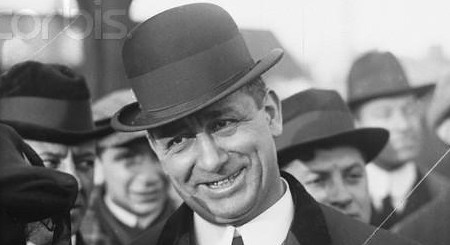
Charles Becker
Murderer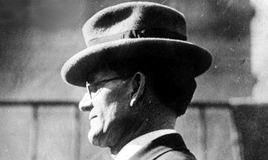 William Hale
Murderer · USA · 1921
Name: William Hale · Known as: the so-called "King of the Osage Hills" · Occupa…
24 victims
William Hale
Murderer · USA · 1921
Name: William Hale · Known as: the so-called "King of the Osage Hills" · Occupa…
24 victims
 John S. Williams
Murderer · USA · 1910
John S. Williams was convicted of murder and sentenced to life imprisonment on…
18 victims
John S. Williams
Murderer · USA · 1910
John S. Williams was convicted of murder and sentenced to life imprisonment on…
18 victims
 Edward Adams
Murderer · USA · 1920
Edward J. "Eddie" Adams was born in 1887 on a farm in Hutchinson, Kansas as W.J…
7 victims
Edward Adams
Murderer · USA · 1920
Edward J. "Eddie" Adams was born in 1887 on a farm in Hutchinson, Kansas as W.J…
7 victims
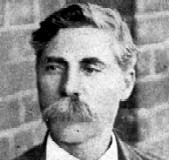 Floyd Allen
Murderer · USA · 1912
Floyd Allen (July 5, 1856 – March 28, 1913) was an American landowner and patri…
5 victims
Floyd Allen
Murderer · USA · 1912
Floyd Allen (July 5, 1856 – March 28, 1913) was an American landowner and patri…
5 victims
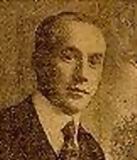 Carl Otto Wanderer
Murderer · USA · 1920
Carl Otto Wanderer (1887–1921) was described as a murderer known for what becam…
2 victims
Carl Otto Wanderer
Murderer · USA · 1920
Carl Otto Wanderer (1887–1921) was described as a murderer known for what becam…
2 victims
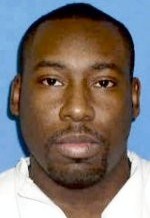 Frederick Patrick McWilliams
Murderer · USA · 1996
Frederick Patrick McWilliams McWilliams was executed by lethal injection in Tex…
1 victim
Frederick Patrick McWilliams
Murderer · USA · 1996
Frederick Patrick McWilliams McWilliams was executed by lethal injection in Tex…
1 victim
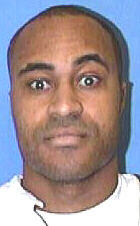 Demarco McCullum
Murderer · USA · 1994
Demarco Markeith McCullum was executed by lethal injection in Texas on November…
1 victim
Demarco McCullum
Murderer · USA · 1994
Demarco Markeith McCullum was executed by lethal injection in Texas on November…
1 victim
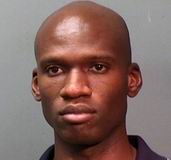 Aaron Alexis
Mass murderer · USA · 2013
Aaron Alexis was a lone gunman who carried out a mass shooting at the headquart…
12 victims
Aaron Alexis
Mass murderer · USA · 2013
Aaron Alexis was a lone gunman who carried out a mass shooting at the headquart…
12 victims
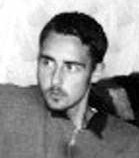 Dragoslav Petkovic
Homicide · Bosnia-Herzegovina · 2002
29 April 2002 — 17-year-old Dragoslav Petkovic opened fire with a handgun short…
1 victim
Dragoslav Petkovic
Homicide · Bosnia-Herzegovina · 2002
29 April 2002 — 17-year-old Dragoslav Petkovic opened fire with a handgun short…
1 victim
- Gender
- male
- Country
- USA
- Location
- New York City, New York, USA
- Date of birth
- July 26, 1870
- Age at first offence
- 42
- Characteristics
- murder for hire, police officer, torture
- Victim profile
- Manhattan gambler, Herman Rosenthal
- Method of murder
- Shooting
- Date(s) of murder
- July 15, 1912
- Years active
- 1912
- Date of arrest
- J uly 29, 1912
- Status
-
Executed
Executed by electrocution at Sing Sing prison on July 30, 1915
Status
Charles Becker was executed by electrocution at Sing Sing prison on July 30, 1915.
Timeline
- 1890 — Charles Becker arrived in New York.
- November 1893 — Charles Becker joined the Police Department (NYPD).
- Fall 1896 — Charles Becker arrested Ruby Young on Broadway.
- 1902 — Charles Becker was one of the leaders of a patrolman's reform movement agitating for the Three Platoon System.
- 1903 — Charles Becker was one of the leaders of a patrolman's reform movement agitating for the introduction of the Three Platoon System.
- 1906 — Charles Becker was seconded to a special unit working out of police headquarters to probe alleged corruption of Police Inspector Max Schmittberger.
- 1911 — Rhinelander Waldo became Police Commissioner and had Becker appointed as head of one of the city's three anti-vice Strong Arm Squads.
- July 1912 — Charles Becker was named in the New York World as one of three corrupt policemen involved in the case of Herman Rosenthal.
- Two days after — Herman Rosenthal was shot dead outside the New York Hotel Metropole by a car containing several gunmen.
- 29 July 1912 — Charles Becker was approached at the precinct's closing hour by special detectives from the District Attorney's Office and placed under arrest.
- October 1912 — Charles Becker was tried and convicted of first degree murder.
- February 24, 1914 — The conviction was overturned and a new trial was ordered.
- May 6, 1914 — Becker's new trial began.
- May 22, 1914 — Charles Becker was found guilty of murder again.
- July 16, 1914 — Charles Becker was sentenced to die and was taken back to Sing Sing.
- April 13, 1914 — Dago Frank, Whitey Lewis, Lefty Louie and Gyp the Blood had a last meeting with their loved ones.
- November 1914 — Charles Whitman was elected Governor of the State of New York.
- July 24, 1915 — The New Republic published criticism of clemency being decided by Governor Whitman.
- July 30, 1915 — Charles Becker was executed by electrocution at Sing Sing prison.
- August 2, 1915 — Charles Becker was interred at Woodlawn Cemetery, The Bronx.
- July 26, 1870 — Charles Becker was born.
- July 30, 1915 — Charles Becker died.
Other details
Charles Becker was a 42 year old police Lieutenant who was involved in the criminal underworld in New York.
Charles Becker was born in the village of Callicoon Center, Sullivan County, New York. A separate biography in the material stated he was born to a German-American family in the village of Calicoon Center, Sullivan County, New York.
Charles Becker arrived in New York in 1890 and joined the Police Department (NYPD) in November 1893. The material described him as a New York police officer in the 1890s and 1910s who was tried, convicted and executed for ordering the murder of a Manhattan gambler, Herman Rosenthal.
Early life and background
The material stated that Charles Becker arrived in New York City in 1890 and went to work as a bouncer in a German beer hall just off the Bowery before joining the New York City Police Department in November 1893.
Charles Becker first came to public notice in the fall of 1896 when he arrested a prostitute named Ruby Young on Broadway. Ruby Young was stated to be in the company of Stephen Crane when she appeared in court the next day to refute Becker's allegations against her. In an additional biography section, Ruby Young was described as having the alias Dora Clark, and the arrest was described as occurring when Young was in the company of two chorus girls and Stephen Crane. The material described the incident as leading to support for Becker by New York City Police Commissioner Theodore Roosevelt and said Roosevelt felt Crane behaved in a “despicable manner” in defending a prostitute.
The material stated that in 1902 and 1903 Becker was one of the leaders of a patrolman's reform movement agitating for the introduction of the Three Platoon System, which would have reduced the number of hours the beat policeman was expected to work.
Reform movement and police assignments
The material stated that in 1906 Charles Becker was seconded to a special unit working out of police headquarters to probe the alleged corruption of Police Inspector Max Schmittberger. It said Schmittberger had been widely hated within the NYPD since giving detailed testimony to the 1894 Lexow Committee investigating police corruption in New York. It also stated that, as a result of Becker's work, Schmittberger subsequently stood trial.
The material stated that Deputy Police Commissioner Rhinelander Waldo was satisfied with Becker’s work and, when Waldo became Police Commissioner in 1911, he had Becker, by then a lieutenant, appointed as head of one of the city's three anti-vice Strong Arm Squads. A separate biography section described Waldo forming special squads to break up street gangs that ruled Lower Manhattan, and Becker being made commander of one of those teams, later expanded to include crackdowns of West Side gambling dens. In that section, Becker was described as using his squad as a rough-and-tumble strike force to shake down casino owners.
Criminal activities and alleged corruption
The material stated that Charles Becker used his position to extort substantial sums, later shown to total in excess of $100,000, from Manhattan brothels and gambling houses in exchange for immunity from police action. It further stated that percentages of the take were regularly delivered to politicians and other policemen.
The material stated that Becker's undoing was set in motion in the summer of 1912 when a low-level gambler named Hertman “Beansie” Rosenthal was given permission by State Sen. Big Tim Sullivan to open a new casino at 104 W. 45th St named the Hesper Club. It said Becker called on Rosenthal to lay down the groundwork for future payoffs and Rosenthal balked, saying it was Sullivan's territory and that no payments would be made to Zelig's men. It said Becker relented “for a while” but later reasserted himself when Sullivan became gravely ill.
The material described Becker sending Bald Jack Rose, described as a well-known gangster who had already killed several men, to station himself inside the Hesper club to skim 20 percent of the casino's take. It described Rosenthal then complaining to Tammany Hall politicians and saying he would not stand for such shoddy treatment by a renegade cop.
The material stated that Becker was receiving pressure from Police Commissioner Waldo to raid The Hesper due to complaints about the club. It said Becker raided the club and shut it down and assigned a uniform cop inside the Hesper day and night to ensure it remained closed.
The material stated that Becker hired Big Jack Zelig, a known murderer who took over part of the Monk Eastman gang after unknown killers gunned down Eastman outside a Manhattan bar. The material described Zelig’s use of men to make collection rounds and named Harry “Gyp the Blood” Horowitz, described as specializing in breaking a man’s back. It also named Zelig’s associated individuals: Lefty Louie, Dago Frank and Whitey Lewis.
Personality and family
The material stated that “although undeniably corrupt,” contemporaries testified that Charles Becker was also markedly intelligent, particularly by the standards prevalent within the NYPD at that time.
The material stated that Becker showed little interest in the after-hours drinking activities of his police colleagues and preferred to return home to help his wife, a special needs schoolteacher, mark her pupils' homework.
The material stated that on Death Row, he gained the respect of his fellow prisoners by reading aloud to them for hours at a time from newspapers and Western dime novels.
The material stated that Becker's only son, Howard P. Becker, later became Professor of Sociology at the University of Wisconsin–Madison. It also stated that a daughter, Charlotte Becker, was conceived shortly before his arrest, died in 1913 less than a day after her birth, and was buried alongside him at Woodlawn Cemetery.
A separate section stated that Becker's only son later became Professor of Sociology at the University of Wisconsin, and that “A daughter, Charlotte Becker” was conceived shortly before his arrest, died in 1913 less than a day after her birth, and was buried alongside him at Woodlawn Cemetery.
The offence
Herman Rosenthal owned a gambling joint in New York. The material stated that on 15 July 1912 Rosenthal was shot dead outside the New York Hotel Metropole by a car containing several gunmen. It described Rosenthal as a failed gambler who alleged his illegal businesses had been badly damaged by the rapacity of the city's corrupt police.
The material stated that Lt. Charles Becker was accused of ordering Rosenthal's murder, and that in the aftermath District Attorney Charles S. Whitman made no secret of his belief that the gangsters who killed Rosenthal had committed the murder at Becker's behest.
Witness and immunity
The material stated that Rosenthal’s key witness was left without, and that the District Attorney, Charles Whitman, offered immunity to anyone who would testify.
The material stated that a man called Jack Rose came forward and implicated Becker along with six others for the murder of Herman Rosenthal. It also stated that on the day Becker trial began, Big Jack Zelig was shot in the head and killed on a 13th St. trolley, and that his killer, Red Phil Davidson, was nabbed at the scene and told police he did it because of an old gambling debt.
Investigation and arrest
The material stated that Charles Becker was arrested on 29 July 1912.
The material described the investigation as involving witnesses who had noticed the license number of the getaway car and said it was traced to Boulevard Taxi Service at 2nd Avenue and 10th Street. It said records showed the car had been leased to Bald Jack Rose, Becker's collection man, and that the actual driver was William Shapiro, described as a small-time hood with minor connections to The Tenderloin underworld.
The material stated that investigators discovered that Bridgey Webber and Harry Vallon, described as former opium dealers from Chinatown, were seen hanging around the Metropole a few minutes before the shooting and that it was Vallon who sent the message inside the bar for Rosenthal.
It stated that Two days after being implicated in the killing, Bald Jack Rose surrendered to the D.A. Through Rose, the material said Whitman found out where Shapiro was hiding. It then stated that Shapiro denied any complicity in the killing, but that Whitman gave Rose, Webber, Vallon and Shapiro immunity in exchange for information.
It stated that Shapiro confessed and admitted that he drove the Packard that carried the killers to the Metropole. The material identified individuals Shapiro identified as being in the car: Louis “Lefty” Rosenberg, Frank “Dago Frank” Cirofici, Jacob “Whitey Lewis” Seidenschmer and Harry “Gyp the Blood” Horowitz. It stated they were rounded up by police and thrown into The Tombs.
The material stated that Vallon, Webber and Rose were locked up together in a separate part of The Tombs, allowing the three to develop one, rock-solid story.
Trial
The material stated that Becker was tried and convicted of first degree murder that fall after his arrest.
The material also stated that Becker’s trial judge was John Goff and that Goff was described as biased against the defendant.
Indictment and arraignment
The material stated that on July 29, 1912, based largely on a written statement by Bald Jack Rose, Lt. Charles Becker was indicted. Later that day it stated Becker was picked up at Bathgate Avenue Station in the Bronx where he was on duty. Brought into court for arraignment, he uttered two words: “Not Guilty!” and was whisked away before reporters could question him.
Trial testimony, including quotations
Bald Jack Rose sat in the witness chair on Oct. 12, 1912. The material stated Rose testified about Becker’s ties with the West Side underworld and included two quoted statements attributed to Rose about what Becker said:
- “He (Rosenthal) ought to be put off this earth. There is a fellow I would like to have croaked! Have him murdered! Cut his throat, dynamite him or anything!”
- “There is no danger to anybody that has any hand in the murder of Rosenthal. There can't be anything happen to anyone...and you know the feeling over at Police headquarters is so strong that the man or men that croak him would have a medal pinned on them!”
The material also quoted legal argument by defense counsel John F. McIntyre:
- “You can recognize what self-confessed murderers and perjurers will do when they realize their necks are about to go to the halters,”
It further included quoted defense claims in McIntyre’s argument:
- “They held several meetings to coordinate their story.”
- “the real murderers were Webber and Vallon, both of whom had been granted immunity by Whitman on condition they make Becker the fall guy.”
- “for Whitman had no evidence against Becker except the statements of these men.”
The material included a quote from Whitman’s assistant, Frank Moss, as a prosecutor’s summation:
- “Do not shirk that duty to render a verdict as you find it, but take the manly stand. If you think that it is proper to hold him accountable for this awful crime, in God's name, in the country's name, do your duty!”
Verdict and sentencing
After nearly four days of instruction, the case was given to the jury. The material stated Becker told nearby reporters: “I have no fear of the outcome.”
By midnight the jury reached a verdict, and the material said the jury foreman replied: “Guilty, your honor!”
The material stated that Becker was sentenced to death and included the judge’s words:
- “...you are hereby sentenced to the punishment of death...”
A quote about Becker’s demeanor was included:
- “The condemned man never lost his nerve for an instant throughout the day”
The material stated that Becker was sent to Sing Sing prison on the banks of the Hudson to await execution on Dec. 12, 1912, just six weeks after sentencing.
Appeals
The material stated that Becker's case was brought before the State Court of Appeals and that on February 24, 1914, the conviction was overturned and a new trial was ordered. It stated that the court cited Judge Goff’s shocking bias and said the judge was guilty of misconduct and made mistakes in Criminal Procedure Law.
Retrial
The material stated that Becker’s new trial began on May 6, 1914. It also stated the next trial began under Judge Samuel Seabury, described as having a reputation of being fair to both defense and prosecution. The material stated that Bourke Cockran handled the defense and that Whitman was the prosecuting attorney again.
The material stated that on May 22, 1914, Becker was found guilty of murder again and accepted the verdict without reaction.
A quote about the second verdict was included:
- “Hears Verdict of Guilty For the Second Time With Iron Composure!”
The material stated that Becker was sentenced to die on July 16, 1914, and taken back to Sing Sing. It also stated that more appeals were filed and the execution was postponed.
Execution
The material stated that under state law, a death sentence could be commuted to life by a stroke of the Governor's pen. It described Charles Whitman as the Governor and as the former prosecutor.
The material stated that the execution had been reset for July 30, 1915.
Public appeals for clemency and Becker’s letter
The material stated that Becker’s defense attorney, Cockran, tried a last-ditch effort to bring the case before the State Supreme Court and that it failed.
The material stated that thousands of letters and telegrams were sent into Whitman's chambers urging clemency.
The material stated that Becker wrote a letter to Whitman and included the quote:
- “I am innocent as you of having murdered Herman Rosenthal or having counseled, procured or aided his murder or having any knowledge of that dreadful crime.”
The material stated that on July 30, 1915, Helen Becker visited the Governor's office to plead for her husband's life. It included the New York Times headline:
- “Begs Governor in Vain for Life, Embraces Doomed Man At Midnight!”
Electrocution details and last words
The material stated that at 5:30 a.m. on July 30, 1915, Becker, dressed in black, his trousers slit up the sides, walked down death row, and was hastily strapped into the electric chair.
Becker’s last words were included:
- “Into thy hands O Lord, I commend my spirit!”
The material described the electrocution as requiring multiple jolts because the voltage needed to kill him had been misjudged, with workmen called to adjust the straps and the execution becoming a nightmare, and that the third jolt finally killed him. The material stated it took eight minutes and that it was faithfully recorded by newsmen assigned to witness the execution.
Outcome
Charles Becker was electrocuted at Sing Sing prison on July 30, 1915. He was interred at Woodlawn Cemetery, The Bronx, on August 2, 1915.
The material described him as the first American police officer to receive the death penalty for murder. It also stated that the scandal that surrounded his arrest, conviction, and execution was one of the most important in Progressive Era New York.
Associations and related names mentioned in the material
- Herman Rosenthal (victim; Manhattan gambler; gambling joint owner)
- Charles Whitman (District Attorney; later State governor)
- Jack Rose (implicated Becker; called forward)
- Bald Jack Rose (several references)
- John Goff (trial judge; described as biased)
- John F. McIntyre (defense counsel)
- Frank Moss (prosecutor's assistant)
- Samuel Seabury (judge in retrial)
- Bourke Cockran (defense in retrial)
- Rhinelander Waldo (Police Commissioner)
- Max Schmittberger (Police Inspector)
- Theodore Roosevelt (Police Commissioner; described as supporting Becker)
- Ruby Young (prostitute; arrested by Becker; alias Dora Clark mentioned)
- Stephen Crane (writer; involved in Ruby Young’s court appearance)
- Red Phil Davidson (killed Big Jack Zelig; named)
- William Shapiro (driver of Packard; named)
- Bridgey Webber (arrested; former opium dealer mentioned)
- Harry Vallon (arrested; former opium dealer mentioned)
- Louis “Lefty” Rosenberg, Frank “Dago Frank” Cirofici, Jacob “Whitey Lewis” Seidenschmer, Harry “Gyp the Blood” Horowitz (identified in the confession; named)
- Helen Becker (pleaded for his life)
- Howard P. Becker (son)
- Charlotte Becker (daughter; died in 1913)
Disputed claims and later controversy included in the material
The material stated that several later authors, including Henry Klein (1927) and Andy Logan (1970), suggested Becker was wrongly convicted.
It also described a theory attributed to later authors (including Henry Klein in 1927) that Becker and fellow officers had stood back and allowed “the street” to “take care of” Rosenthal, with District Attorney Whitman manipulating evidence to implicate Becker for political ambitions. (The material did not include quotation marks around “the street” and “take care of.”)
Publications and literary works mentioned in the material
- Michael Bookman, “God's Rat: Jewish Mafia on the Lower East Side” (subject of the Becker-Rosenthal murder)
- F. Scott Fitzgerald, “The Great Gatsby” (mob boss Meyer Wolfsheim described a thinly fictionalized version of the murder)
- Henry Klein (1927), “Sacrificed: The Story of Police Lieut. Charles Becker”
- Andy Logan (1970), “Against The Evidence: The Becker-Rosenthal Affair”
- David Pietrusza (2003), “Rothstein: The Life, Times and Murder of the Criminal Genius Who Fixed the 1919 World Series” (contains a detailed chapter on the Becker-Rosenthal case)
- Cohen, Stanley (2006), “The Execution of Officer Becker; The Murder of a Gambler, the Trial of a Cop, and the Birth of Organized Crime.”
- Dash, Mike (2007), “Satan's Circus: Murder, Vice, Police Corruption and New York's Trial of the Century”
Spotted an error, or have more information about this case?