
Darrell Ferguson
Murderer Russell Ellwood
Murderer · USA · 1991
Russell Ellwood was a former taxi driver. Authorities suspected him of killing…
20 victims
Russell Ellwood
Murderer · USA · 1991
Russell Ellwood was a former taxi driver. Authorities suspected him of killing…
20 victims
 Robert Martines Perez
Murderer · USA · 1994
Name: Robert Martines Perez · Other name used in proceedings: Robert Martinez P…
15 victims
Robert Martines Perez
Murderer · USA · 1994
Name: Robert Martines Perez · Other name used in proceedings: Robert Martinez P…
15 victims
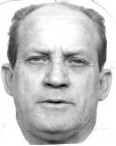 Billy Frank Vickers
Murderer · USA · 1993
Billy Frank Vickers Vickers was executed by lethal injection in Texas on Januar…
14 victims
Billy Frank Vickers
Murderer · USA · 1993
Billy Frank Vickers Vickers was executed by lethal injection in Texas on Januar…
14 victims
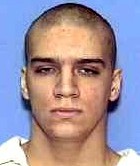 Mark Sam Arthur
Homicide · USA · 1996
Mark Sam Arthur was a juvenile at the time of the offence and was later sentenc…
1 victim
Mark Sam Arthur
Homicide · USA · 1996
Mark Sam Arthur was a juvenile at the time of the offence and was later sentenc…
1 victim
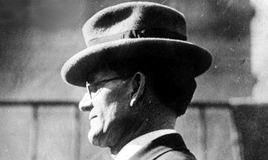 William Hale
Murderer · USA · 1921
Name: William Hale · Known as: the so-called "King of the Osage Hills" · Occupa…
24 victims
William Hale
Murderer · USA · 1921
Name: William Hale · Known as: the so-called "King of the Osage Hills" · Occupa…
24 victims
 Antuan Bronshtein
Murderer · USA · 1991
Antuan Bronshtein Antuan Bronshtein was born in the Soviet Union (Moldova) in K…
2 victims
Antuan Bronshtein
Murderer · USA · 1991
Antuan Bronshtein Antuan Bronshtein was born in the Soviet Union (Moldova) in K…
2 victims
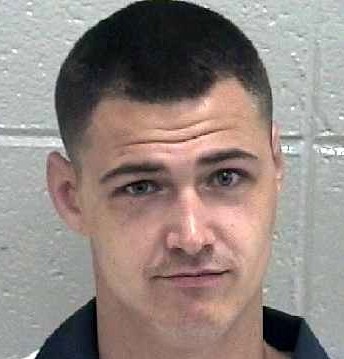 James Allyson Lee
Murderer · USA · 1994
James Allyson Lee was 22 years old at the time he was sentenced to death on Jun…
1 victim
James Allyson Lee
Murderer · USA · 1994
James Allyson Lee was 22 years old at the time he was sentenced to death on Jun…
1 victim
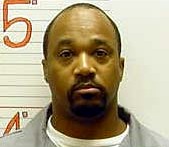 Andre Cole
Murderer · USA · 1998
Andre Cole and his wife, Terri Cole (Terri), divorced in 1995 after eleven year…
1 victim
Andre Cole
Murderer · USA · 1998
Andre Cole and his wife, Terri Cole (Terri), divorced in 1995 after eleven year…
1 victim
 Susan Eubanks
Murderer · USA · 1996
Susan Dianne Eubanks, also referred to as Susan Eubanks, was convicted by a jur…
4 victims
Susan Eubanks
Murderer · USA · 1996
Susan Dianne Eubanks, also referred to as Susan Eubanks, was convicted by a jur…
4 victims
- Gender
- male
- Country
- USA
- Location
- Montgomery County, Ohio, USA
- Date of birth
- January 30, 1978
- Age at first offence
- 23
- Characteristics
- burglary, robbery, rape, drug addict, murder for hire
- Victim profile
- Thomas King, 61 (disabled) / Arlie Fugate, 68, and his wife, Mae, 69
- Method of murder
- St abbing with knife
- Date(s) of murder
- December 25-26, 2001
- Years active
- 2001
- Date of arrest
- December 28, 2001
- Status
-
Executed
Executed by lethal injection on August 8, 2006 in Ohio
Darrell Ferguson
Status
Ferguson was executed by lethal injection on August 8, 2006 in Ohio.
Timeline
- December 21, 2001 — Ferguson received a two-day pass from a drug treatment program ordered after a burglary conviction.
- December 23, 2001 — Ferguson’s pass expired; he did not return to Talbert House.
- December 23, 2001 — Ferguson broke into the Dayton apartment of James Nicholson and William Ferrell, knocked Nicholson to the ground, removed Nicholson’s wallet from his pants pocket, took cash, and warned them that if they called the police he would return and kill them.
- December 25, 2001 — Ferguson attacked and killed 61-year-old Thomas S. King, Sr. at King’s home in east Dayton, repeatedly stabbing him with a kitchen knife and kicking and stomping him with steel-toed boots; Ferguson stole a 13-inch television, a 19-inch television, and a stereo “boom box” and fled.
- December 26, 2001 — Ferguson went to the home of 68-year-old Arlie Fugate and 69-year-old Mae Fugate in east Dayton; the Fugates let Ferguson inside after Ferguson asked to use their bathroom; after Ferguson came out, he took a knife from the kitchen and attacked both; Ferguson repeatedly stabbed, stomped, and kicked both of them with his boots; he stole Mae’s wedding ring and other jewelry, Arlie’s wedding band, and loose change kept in jars and jugs.
- December 27, 2001 — Ferguson asked Jeffrey Fleming Jr. for a ride; Fleming drove him to another Dayton location; Fleming noticed blood on Ferguson’s jeans and Ferguson told him the blood was from a fight.
- December 27, 2001 — Ferguson traded several stolen items to Vicki Miller for crack cocaine; Miller identified Ferguson from a photo array.
- December 27, 2001 — Ferguson went to the Dayton home of Ricky Webb, where Webb, Dwayne Abney, and Willie Townsend watched news coverage of the murders; Ferguson said that he had killed the victims at both locations.
- December 27, 2001 — Ferguson went to the Dayton home of Irma Hess, where he washed his pants to get the blood out; he remained there until he was arrested the next day.
- December 28, 2001 — Police obtained an arrest warrant for Ferguson for the Nicholson robbery and learned he was staying at the Hess home; detectives went to the Hess home, confirmed he was inside, entered, placed him under arrest, and took him to the police station.
- December 28, 2001 — Ferguson waived Miranda rights and provided a detailed account of the murders reflecting facts already described, and he gave a videotaped confession.
- January 3, 2003 — Ferguson wrote a letter to the prosecutor stating: “I committed all 3 murders[,] burglarys, [and] robberys.” and “I wish to get this over with as soon as possible. * * * I Darrell Wayne Ferguson wishes to seek the Death penalty.”
- January 7, 2003 — Ferguson wrote the trial judge stating: “hit [King] and beat hime to death and then stabbed hime. [He] took the t.v. and sold them.” and “ [I] club[b]ed [Mae] in the forehead with a metal and wooden candle stick holder. I beat her down untill she could not move. I beat arlie to death as well and then stabbed both of them.”
- March 31, 2003 — Ferguson appeared before a three-judge panel in Montgomery County Common Pleas Court and pleaded guilty.
- May 21, 2003 — Dr. Barbra A. Bergman completed a written report finding Ferguson competent to stand trial and competent to waive mitigation.
- August 8, 2006 — Ferguson was executed by lethal injection in Ohio.
- August 8, 2006 — Ferguson was pronounced dead at 10:21 a.m.
Background
Darrell Wayne “Gator” Ferguson (January 30, 1978 - August 8, 2006) was executed by the state of Ohio. He was described as the youngest inmate put to death in Ohio since 1962. He spent 2 years and 10 months on death row and waived all appeals after his 2003 conviction for three counts of aggravated murder. He had been convicted of burglary in July 1999 and sentenced to two years in prison.
In November 2001, while on postrelease control, Ferguson was ordered to complete a substance-abuse treatment program at Talbert House in Cincinnati. On December 20, 2001, he was granted a two-day pass to visit his mother at her Dayton home, effective from 9:00 a.m. on December 21 until 12:00 p.m. on December 23, when he was required to return to Talbert House. Ferguson went to his mother’s Dayton home but did not return to Talbert House when his pass expired.
Ferguson grew up in Dayton, frequently wandered the streets, and spent nights in warehouses and alleys.
The Ohio Supreme Court independently summarized Ferguson’s personal and social history for sentencing, stating he moved to Dayton when he was three or four years old; his parents never married; his father visited him a few times; his mother had boyfriends and married his stepfather when Ferguson was 17 or 18; his mother and most of her boyfriends used marijuana and alcohol; his stepfather worked for the city of Dayton; and Ferguson did not get along with his stepfather. The court also stated Ferguson had an older sister and an older brother, and another brother who committed suicide when Ferguson was 20.
During school, Ferguson was described as receiving As and Bs but being in the “developmentally handicapped (DH) class and was slow to learn.” During the tenth grade, Ferguson was expelled from Dunbar High School, and he stated the expulsion related to “positive results on a drug test.”
Ferguson reported two serious relationships with women. His first relationship began when he was 15 and lasted four years; he physically abused her and the relationship ended when he “just left” because he could not stand to be around her. He had a daughter from this relationship and had never had any contact with her. His second relationship began when he was 19 and lasted for two years; he stated the girlfriend left the relationship because she was afraid of him and she had seen the type of rage he was capable of. Ferguson stated that on one occasion he “threw his girlfriend's ex-boyfriend through the window of a bus and then left the scene.” He had a son during this relationship but had had no contact with the child since he was a baby, and he believed the son would benefit from a relationship with him and that if his son was with him he would not have committed the instant offenses.
Ferguson reported that after he left school he worked as a stripper and was a street fighter described as an illegal, “underground” enterprise; he stated he had “a trainer and a promoter” and was paid between eighty and one hundred thousand dollars per fight, pocketing forty thousand dollars, and that he engaged in ten to fifteen fights per year without being seriously hurt. He also stated he enjoyed jumping a freight train and riding somewhere. He said he was sometimes gone for four to six months at a time and always had money in his pocket.
The court stated Ferguson reported using toluene at age 16, steroids at age 17, and crack cocaine at age 20, that he became addicted to crack and used one to three ounces every three to four days, and that he sold crack cocaine to cover his expenses. He also stated he was “robbing the ‘dope boys'-beat them up and take it.”
Ferguson reported no juvenile criminal history, but he stated that at age 19 he was charged with numerous offenses including several assaults, carrying a concealed weapon, several thefts, grand theft, and child endangering, and that he was placed on probation for these offenses.
The Supreme Court stated that Ferguson had an IQ of 77 and had been enrolled in special education. It further stated personality testing showed significant elevations on the Mania, Antisocial Features, and Aggression scales; the antisocial features were described as “most prominent and markedly elevated,” and the profile indicated an individual who was typically unreliable and irresponsible. It also stated the aggression scale was “markedly elevated” and indicated explosive anger when frustrated, while Dr. Bergman found “no active symptoms of a major mental disorder” and diagnosed him with antisocial personality disorder.
Ferguson’s medical records showed treatment over several years for ADHD and treatment for “several psychiatric disorders, including bipolar disorder.” Dr. Mossman reported Ferguson had engaged in activities frequently associated with brain damage and had reasons to believe Ferguson had brain dysfunction.
The offence
Ferguson was convicted of, and sentenced to death for, aggravated murders of Thomas King, Arlie Fugate, and Mae Fugate. The murders occurred as part of a course of conduct after Ferguson broke detention by failing to return to Talbert House when his pass expired.
Nicholson robbery and break-in
Around 4:00 a.m. on December 23, 2001, Ferguson broke into the Dayton apartment of James Nicholson, a double amputee in a wheelchair, and William Ferrell. Once inside, Ferguson knocked Nicholson to the ground, removed Nicholson’s wallet from his pants pocket, and took cash. As he left, Ferguson warned Nicholson and Ferrell that if they called the police, he would return and kill them.
Thomas King murder and thefts
On December 25, 2001, Ferguson went to Thomas King’s home in east Dayton. King let Ferguson into the house after talking. Ferguson attacked King, repeatedly stabbed him with a kitchen knife, and kicked and stomped King with steel-toed boots. After the attack, Ferguson stole a 13-inch television, a 19-inch television, and a stereo “boom box” and fled. The court also stated Ferguson later confessed that he went to a Meijer's store to purchase some gold spray paint to “huff” by inhaling paint vapors.
The Supreme Court’s detailed facts stated that after the attack, Ferguson attempted suicide by trying “to put a bread bag over [his] face to go ahead and just do [himself] in because [he] knew what [he] did was wrong.”
Police later found two kitchen knives near King’s body; the wall near King’s body was heavily covered with blood spatter; a distinctive bloody footprint was found on King’s pants; similar bloody footprints were found on the carpet near his body; and the dining room had been rifled while the rest of the house showed no signs of being ransacked. Police determined a 19-inch television had been stolen from the dining room, a stereo “boom box” from the kitchen, and a 13-inch television from the bedroom.
Arlie and Mae Fugate murders and thefts
On the evening of December 26, 2001, Ferguson went to the east Dayton home of Arlie Fugate and Mae Fugate. He asked to use their bathroom and the Fugates let him inside. After Ferguson came out of the bathroom, he took a knife from the kitchen and attacked both. Ferguson repeatedly stabbed, stomped, and kicked both of them with his boots.
Following the attack, Ferguson stole Mae’s wedding ring and other jewelry, Arlie’s wedding band, and loose change kept in jars and jugs in the house, then left the house.
Police found the bodies next to each other in the living room. Arlie and Mae sustained multiple stab wounds and were badly beaten. The Supreme Court’s facts included that it appeared Arlie had been dragged by his shoulders to the position in the center of the room, and that Arlie’s pants and underwear were pulled down to his hips. A bloodstained kitchen knife was found near the bodies. Police found bloodstains near the front door, on living room furniture and carpeting, and on a dining room chair and carpeting, and a bloody foot impression on Arlie’s face. The living room was ransacked. Arlie’s wallet was next to his feet with contents scattered on the floor, and a fanny pack and Mae’s wallet were lying next to Arlie’s head; Mae’s wallet had been rifled through. Police learned that Mae’s rings and Arlie’s wedding band had been taken from their hands, and jugs and jars filled with coins were also missing from the home.
Items and recovery
After the murders, Ferguson traded stolen items with Vicki Miller for crack cocaine; police recovered the property from Miller’s residence in Dayton, from Miller’s father, and from a Dayton pawn shop. The 13-inch television was never recovered.
Investigation
Police dispatched around 8:00 p.m. on December 26 to the King home after a friend found King’s body. Police noticed the rear door to the house was ajar but found no signs of forced entry. Police observed multiple knife wounds and a severe beating to King’s face; two kitchen knives were found near King’s body; the wall was heavily covered with blood spatter; and footprints were found as described in the offence section.
On December 27, 2001, around noon, James Cornett, the Fugates’ son, discovered Arlie’s and Mae’s bodies on their living room floor, with the front door ajar and no forced entry signs.
As the investigation progressed, Ferguson was identified as the primary suspect. On December 28, police obtained an arrest warrant for Ferguson for the Nicholson robbery and learned Ferguson was staying at the Hess home.
At the police station on December 28, Det. Doyle Burke advised Ferguson of his Miranda rights, and Ferguson waived those rights. Ferguson provided a detailed account of the murders and gave a videotaped confession.
Forensic science included DNA testing by Denise K. Rankin. DNA testing of bloodstains on Ferguson’s boots included results that a bloodstain showed a “mixture where Arlie Fugate and Thomas King * * * are possible contributors,” and another stain showed “a mixture where Arlie Fugate is a possible contributor.” According to Rankin, probabilities were given for Caucasians, African Americans, Southeastern Hispanics, and Southwestern Hispanics for contribution to the mixed profile on the second stain. Ferguson is a Caucasian.
Daniel Lee Bibby, an expert in trace analysis, compared sole prints from Ferguson’s boots with bloody impressions found on the victims’ bodies and at the King and Fugate homes. Bibby concluded that an imprint left on Arlie’s face was consistent with Ferguson’s right boot heel; shoe impressions on carpet samples from King’s home were consistent with the tread pattern from Ferguson’s right boot; and impressions from “red-brown material” on King’s pants were similar to an element in the tread pattern of Ferguson’s boots.
Dr. Russell Uptegrove, Deputy Coroner for Montgomery County, performed or supervised autopsies of all three victims. The court’s facts included that Mae suffered numerous stab wounds and blunt-force injuries to the head and face, dying as a result of “multiple stab wounds of the back.” Arlie suffered numerous blunt-force facial injuries consistent with being kicked or stomped, and died from “[m]ultiple stab wounds of the chest.” King suffered numerous blunt-force injuries to the head consistent with being kicked or stomped with steel-toed boots and suffered six stab wounds in the chest caused by a single-edge knife. King died as a result of multiple sharp and blunt-force injuries.
Arrest
On December 28, police obtained an arrest warrant for Ferguson for the Nicholson robbery. Police learned Ferguson was staying at the Hess home. At 3:00 p.m. on December 28, detectives Gary Dunsky, Doyle Burke, and another uniformed police officer went to the Hess home. Irma Hess confirmed Ferguson was inside. Police entered, placed Ferguson under arrest, and took him to the police station.
At the station, Ferguson waived Miranda rights and provided a detailed account of the murders and gave a videotaped confession.
Trial
Indictment and charges
A grand jury indicted Ferguson on six counts of aggravated murder. Count 6 charged Ferguson with the aggravated murder of King while committing aggravated burglary, and Count 7 charged him with the aggravated murder of King while committing aggravated robbery. Count 11 charged Ferguson with the aggravated murder of Mae while committing aggravated burglary, and Count 12 charged him with the aggravated murder of Mae while committing aggravated robbery. Count 13 charged Ferguson with the aggravated murder of Arlie while committing aggravated burglary, and Count 14 charged him with the aggravated murder of Arlie while committing aggravated robbery.
The six counts of aggravated murder each contained five identical death-penalty specifications: murder to escape detection or apprehension, R.C. 2929.04(A)(3); murder while at large after breaking detention, R.C. 2929.04(A)(4); murder as a “course of conduct” in killing two or more people, R.C. 2929.04(A)(5); murder while committing or attempting to commit aggravated burglary, R.C. 2929.04(A)(7); and murder while committing or attempting to commit aggravated robbery, R.C. 2929.04(A)(7).
Ferguson was also indicted for escape in Count 1, aggravated burglary of Nicholson's residence in Count 2, robbery of Nicholson in Count 3, aggravated burglary of the King home in Count 4, and aggravated robbery of King in Count 5. Additionally, Ferguson was charged with aggravated burglary of the Fugate home in Count 8, aggravated robbery of Mae in Count 9, aggravated robbery of Arlie in Count 10, and evidence tampering in Count 15.
Guilty pleas, waiver, and court proceedings
Ferguson waived a jury trial and pleaded guilty to all counts and specifications. Ferguson waived the presentation of mitigating evidence.
After reviewing a court-ordered competency evaluation and questioning Ferguson about his decisions, the trial court ruled Ferguson was competent to stand trial and that he had knowingly, intelligently, and voluntarily waived his right to a jury trial. A three-judge panel accepted Ferguson’s guilty plea and found him guilty on all noncapital counts. The state presented evidence of Ferguson’s guilt on the capital counts under R.C. 2945.06 and Crim.R. 11(C)(3)(c). The panel found Ferguson guilty of all counts and specifications.
After finding Ferguson competent to waive mitigation, the three-judge panel sentenced Ferguson to death for the murders and to prison for the remaining offenses.
Competency evaluation
The trial court, sua sponte, ordered an evaluation to determine Ferguson’s “general competency and competency to waive mitigation.” The defense requested a psychiatrist be appointed as one examiner. On March 31, 2003, the trial court appointed Dr. Barbra A. Bergman, a clinical psychologist, to conduct a competency evaluation.
During April and May 2003, Dr. Bergman conducted Ferguson’s competency evaluation. On May 21, 2003, Dr.
The trial court denied the defense request for a psychiatrist as a second examiner and found Ferguson competent.
Dr. Bergman reported that Ferguson had been prescribed Depakote (a mood stabilizer), Effexor (an antidepressant), Ativan (to decrease agitation), and Risperdal (to control aggressive behavior). Ferguson told Dr. Bergman he had taken the medications for 14 months but refused to take them for the two and a half months he had been in jail. Ferguson told Dr. Bergman the medication resulted in “drooling, acid reflux, and ‘feeling bad.’” Ferguson also told Dr. Bergman “the doctors did not care about the side effects, because the medication kept him from ‘killing someone and going into black rages.’” Ferguson said that after stopping the medications he was “better able to focus, feels more motivated, and feels better about himself.”
Dr. Bergman conducted a mental-status examination and other psychological tests to evaluate Ferguson’s mental state, and she diagnosed him with an antisocial-personality disorder. The court’s facts included that when Ferguson was not taking his medication in jail, he displayed “no symptomatic behaviors” and “no active symptoms of a major mental disorder.”
Before accepting Ferguson’s request to waive a jury trial, the trial court questioned him about taking prescription medications and asked whether he was “under the influence of any alcohol, drugs, or medication that would impair-stand in the way of-[his] ability to understand [the court] here today and to think logically.” Ferguson answered, “No, sir.”
The three-judge panel also questioned Ferguson before accepting his guilty plea and asked whether he was “[Are] you[ ] under the influence of any alcohol, drug, or medication that would impair - meaning, stand in the way of - your ability to understand me or to think clearly[?] Any medication that you're on or is there anything that's blocking your ability to comprehend and dialogue with me here today?” Ferguson replied, “No, sir.”
Ferguson’s letters to the judge and prosecutor
Ferguson wrote letters describing his involvement and requesting death. The court preserved multiple statements verbatim from the letters, including:
- “I committed all 3 murders[,] burglarys, [and] robberys.” (Sic.)
- “I wish to get this over with as soon as possible. * * * I Darrell Wayne Ferguson wishes to seek the Death penalty.” (Sic.)
- “I hit [King] and beat hime to death and then stabbed hime. [He] took the t.v. and sold them.” (Sic.)
- “[I] club[b]ed [Mae] in the forehead with a metal and wooden candle stick holder. I beat arlie to death as well and then stabbed both of them.” (Sic.)
- “[W]hat is done is done and if i could bring them back i wouldn't. I have no Remorse for what i did.” (Sic.)
- “[I] * * * is asking you in my right state of mind would you please Find it in good will to give me the Death penalty.” (Sic.)
Allocution and trial statement
Before sentencing, Ferguson made a statement to the court. The court’s facts included the following verbatim statement (with emphasis and words preserved as provided):
“Today I stand before the Court to be judged and sentenced for the crimes of murders of Thomas S. King, Sr., Arlie Fugate, and Mae Fugate. I do understand that the victim's family and the friends of the victim's family as well as others wants justice served * * * on a platter to them for what I did * * * in December of 2001. * * *
“I, Darrell W. AKA Gator Ferguson, does not care if you're here to get justice served to you or not. I, Darrell W. AKA Gator Ferguson, does not care what you don't like about what I did to your loved ones. And I, Darrell W. AKA Gator Ferguson, does not care what you think about me, because who I am and what I am and * * * [I] will always remain that way.
“When I killed Thomas S. King, Sr., and Arlie Fugate and Mae Fugate, I did it intentionally, and the killings * * * were malicious and hideous acts just as I intended them to be. I took the satisfaction, Brenda King and James Cornett, of killing your loved ones with pleasure. And I enjoyed it. * * *
“I, Darrell W. Gator Ferguson, does not have no remorse for either side of the victim's family nor do I have no remorse for their slaughtered loved ones. I hate you and I hate you and I hate you.
“I pray that Thomas S. King, Sr., Arlie Fugate, and Mae Fugate are in hell right now in agonizing pain and torment. They shall never rest, only burn for eternity.
“Brenda King and James Cornett, if I had the power to bring your loved ones back, I, Darrell W. Gator Ferguson, would not bring them back. I will never show any remorse even on that day that I die.
“The only thing I want for Thomas S. King, Sr., Arlie Fugate, Mae Fugate, is to suffer, burn, and have agonizing pain in hell.
“I sit in my cell every day for the past 21 months and * * * asked myself over and over where was your Jesus * * * to save his poor, innocent lambs. Your God of false hope has vanished into nothingness. * * * And if you consider my god, lord Satan, a killer, then it is his blood that runs through my veins and fills my heart full of hideous acts and hatred.
“ * * * Let's just say that if I was to be freed to go back out in society, I'd pick up where I left off from and take the pleasure of causing destruction. I'm not afraid of death like some of you are.
“ * * * “I will pray night and day as I sit in prison in my own darkness that for every one of you who are here to see justice served that you and your precious loved ones are driving down the road and the * * * car blows up and kills every one of you. May death come over all of you.
“To my God, and to my family and friends, love. And to my enemies, death. Hail, lord Satan. Done.”
The court also described that Ferguson presented no mitigating evidence during the penalty phase.
Sentencing
The Supreme Court recorded that the aggravating circumstances included murder while under detention or while at large after having broken detention, R.C. 2929.04(A)(4); a “course of conduct” in killing two or more people, R.C. 2929.04(A)(5); and murder while committing or attempting to commit aggravated burglary, R.C. 2929.04(A)(7). The court stated that before the penalty phase, the three-judge panel merged two (A)(7) specifications and merged the (A)(3) escaping detection specification with the (A)(5) and (A)(7) specifications.
In weighing mitigation, the Supreme Court stated Ferguson presented no mitigating evidence during the penalty phase, but elected to make a statement in allocution. The court stated that the statutory mitigating factors were generally inapplicable, including R.C. 2929.04(B)(1), (B)(2), and (B)(6).
The court gave little weight to R.C. 2929.04(B)(4) because Ferguson was 23 years old at the time of the offenses. It found R.C. 2929.04(B)(5) inapplicable due to Ferguson’s prior burglary conviction. It found R.C. 2929.04(B)(3) not applicable because there was no evidence that Ferguson, by reason of a mental disease or defect, lacked substantial capacity to appreciate criminality or conform conduct to law.
Under the catchall provision R.C. 2929.04(B)(7), the court stated it gave weight to Ferguson’s history of mental health problems, including ADHD and treatment for bipolar disorder, as well as a possible neurological abnormality suggested by Dr. Mossman. The court also weighed in cooperation with police and guilty pleas. The court stated Ferguson expressed no remorse for his crimes, describing his allocution as graphic and concluding that Ferguson was a “remorseless, sadistic, and incorrigible killer.”
After weighing aggravating circumstances against mitigating factors, the court found aggravating circumstances outweighed mitigating factors beyond a reasonable doubt and affirmed the death sentences.
Appeals
Ferguson appealed his convictions and sentences as a matter of right.
The Supreme Court described Ferguson raising 16 propositions of law. It stated it found none meritorious and affirmed his convictions and sentences of death. It also stated it independently weighed aggravating circumstances against mitigating factors and compared Ferguson’s sentences to similar cases.
The Supreme Court’s holdings included:
- The licensed clinical psychologist was qualified to determine Ferguson’s competency to waive jury trial and to waive mitigation.
- The determination that Ferguson was competent to waive jury trial and waive mitigation before obtaining results of neuropsychological testing was not plain error.
- The psychologist’s determination of competency to waive jury trial and waive mitigation was not subject to greater scrutiny simply because Ferguson was actively seeking death.
- Ferguson was not entitled to reversal based on claims of ineffective assistance of counsel.
- A defendant represented by counsel did not have a constitutional right to file a pro se motion to waive oral argument.
- Evidence supported findings of aggravating circumstances for sentencing purposes.
- Aggravating circumstances outweighed mitigating circumstances beyond a reasonable doubt.
The Supreme Court also dismissed Ferguson’s pro se motion to waive oral argument and stated Ferguson’s pro se request lacked merit.
Outcome
Ferguson’s convictions and sentences of death were affirmed. The legal outcome was that Ferguson was executed by lethal injection on August 8, 2006 in Ohio.
Aftermath
Ferguson’s execution took place at the Southern Ohio Correctional Facility in Lucasville, Ohio. The court’s facts included that Ferguson made a final statement and that he was pronounced dead at 10:21 a.m.
Ferguson’s final words were: “Mom, Dad, I love you both. I love you a lot. I wish you all the best.”
While on the lethal-injection table, Ferguson was described as having his left arm extended palm up and extending his index and little fingers to make a sign known to some as il cornuto or the sign of the devil, holding that pose for several minutes before lapsing into unconsciousness.
He was described as previously saying he worshipped Satan.
A media advisory stated that execution credentials were to be accepted from media outlets, specifying fax and procedures, and stated the execution was scheduled for 10:00 a.m. on Wednesday, July 26, 2006, at the Southern Ohio Correctional Facility in Lucasville, Ohio. The media advisory also stated details on media center access, briefings, timing restrictions, and the provision of a written transcript of the inmate’s final statement after the briefing.
Spotted an error, or have more information about this case?