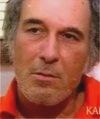
Billy Glaze
Serial killer Rodney Alcala
Serial killer · USA · 1977
Rodney James Alcala (born August 23, 1943) was also known as Rodrigo Jacques Al…
100 victims
Rodney Alcala
Serial killer · USA · 1977
Rodney James Alcala (born August 23, 1943) was also known as Rodrigo Jacques Al…
100 victims
 Glen Edward Rogers
Serial killer · USA · 1993
Glen Edward Rogers was a spree killer whose cross-country rampage in 1994-95 le…
70 victims
Glen Edward Rogers
Serial killer · USA · 1993
Glen Edward Rogers was a spree killer whose cross-country rampage in 1994-95 le…
70 victims
 Michael Swango
Serial killer · USA · 1981
Michael Swango (Joseph Michael Swango) was a physician and American serial kill…
60 victims
Michael Swango
Serial killer · USA · 1981
Michael Swango (Joseph Michael Swango) was a physician and American serial kill…
60 victims
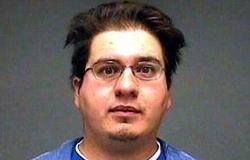 Efren Saldivar
Serial killer · USA · 1989
Efren Saldivar (born 30 September 1969) was an American serial killer who murde…
50 victims
Efren Saldivar
Serial killer · USA · 1989
Efren Saldivar (born 30 September 1969) was an American serial killer who murde…
50 victims
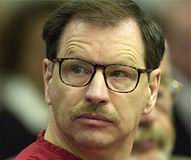 Gary Ridgway
Serial killer · USA · 1982
Gary Leon Ridgway Ridgway was born 18-February-1949 in Salt Lake City, UT. He w…
49 victims
Gary Ridgway
Serial killer · USA · 1982
Gary Leon Ridgway Ridgway was born 18-February-1949 in Salt Lake City, UT. He w…
49 victims
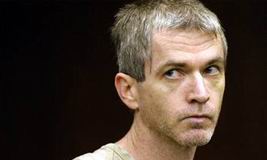 Charles Cullen
Serial killer · USA · 1984
Charles Cullen (born February 22, 1960) was a former nurse and the most prolifi…
45 victims
Charles Cullen
Serial killer · USA · 1984
Charles Cullen (born February 22, 1960) was a former nurse and the most prolifi…
45 victims
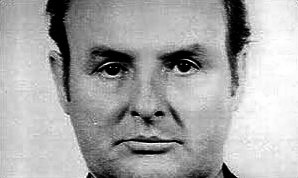 Roy Fontaine
Serial killer · United Kingdom · 1977
17 June 1924 — Archibald Thompson Hall was born in Glasgow. · 1941 — He receive…
5 victims
Roy Fontaine
Serial killer · United Kingdom · 1977
17 June 1924 — Archibald Thompson Hall was born in Glasgow. · 1941 — He receive…
5 victims
 Jean Lanfray
Homicide · Switzerland · 1905
Jean Lanfray (1873/74 – February 26, 1906) was a Swiss laborer. He was convicte…
3 victims
Jean Lanfray
Homicide · Switzerland · 1905
Jean Lanfray (1873/74 – February 26, 1906) was a Swiss laborer. He was convicte…
3 victims
 Velma Barfield
Serial killer · USA · 1969
Velma Barfield was executed by lethal injection in North Carolina on November 2…
7 victims
Velma Barfield
Serial killer · USA · 1969
Velma Barfield was executed by lethal injection in North Carolina on November 2…
7 victims
 Nazir Ahmad
Mass murderer · Pakistan · 2005
Nazir Ahmad, a 40-year-old Pakistani man, killed his three daughters and his st…
4 victims
Nazir Ahmad
Mass murderer · Pakistan · 2005
Nazir Ahmad, a 40-year-old Pakistani man, killed his three daughters and his st…
4 victims
 Charles Ray Crawford
Murderer · USA · 1993
Defendant: Charles Ray Crawford · Victim: Kristy Ray (also identified as Kristy…
1 victim
Charles Ray Crawford
Murderer · USA · 1993
Defendant: Charles Ray Crawford · Victim: Kristy Ray (also identified as Kristy…
1 victim
 Joseph Wesbecker
Mass murderer · USA · 1989
Joseph Wesbecker committed suicide by shooting himself on September 14, 1989, a…
8 victims
Joseph Wesbecker
Mass murderer · USA · 1989
Joseph Wesbecker committed suicide by shooting himself on September 14, 1989, a…
8 victims
- Gender
- male
- Country
- USA
- Location
- Minneapolis, Minnesotta, USA
- Date of birth
- J uly 13, 1944
- Age at first offence
- 42
- Characteristics
- rape, serial rapist, torture
- Victim profile
- Kathleen Bullman; Angeline Whitebird Sweet; and Angela Green (Native American women)
- Method of murder
- St abbing with knife
- Date(s) of murder
- 1986 - 1987
- Years active
- 1986–1987
- Date of arrest
- August 31, 1987
- Status
-
Life imprisonment
Sentenced to three consecutive terms of life imprisonment on February 14, 1989
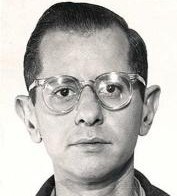
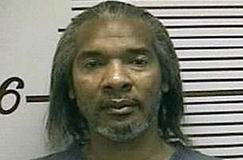
Case record: Billy Glaze
Background
Billy Richard Glaze (also known as “Jesse Sitting Crow”) was a serial killer who was convicted of killing three women and was under investigation for the murder of a fourth. He was a Native American who believed that all Native women should be raped and killed.
Glaze was suspected of the murders of at least 50 women in multiple states. He claimed he was innocent in interviews and made statements to police. In 1987, he stated to a former KARE 11 reporter, Bernie Grace, that he was innocent.
Glaze was incarcerated in a prison out of state since 1989.
The offence
Glaze was convicted of killing three Native American women in 1986 and 1987:
- Kathleen Bullman on July 27, 1986.
- Angeline Whitebird Sweet on April 12, 1987.
- Angela Green on April 29, 1987.
According to the Hennepin County Medical Examiner and Minneapolis police investigators, the three murders were committed by one individual. This conclusion was based on marked similarities among the victims and the crime scenes. The murders were close in time sequence. Each victim was a young adult Native American female mother of young children. Each victim was commonly alone on the streets at night, frequented the same type of bars, and suffered from alcoholism. Each murder occurred in a location frequented by transients. Each victim was bludgeoned and beaten about the head and face, and the mouth and face of each victim were focal points of trauma. Each victim had a stick thrust into her vagina at or near the time of death, and in each case, the stick was left in the vagina. None of the victims had any injury to their external genitalia. Each victim was left nude or almost nude, and each body was posed in a degrading manner.
During the investigation, Glaze was described as having made derogatory comments about Native American women and his desire to sexually assault them with sticks, knives and other objects. Several witnesses testified that they had seen Glaze with each victim shortly before she was killed.
In addition to the three convicted murders, Sharon Ann Lingor’s case was reopened for investigation. Investigators sought DNA comparisons between Glaze and evidence from Lingor’s slaying.
Investigation
Soon after Green’s murder, a Minneapolis police task force investigating the murders learned that a man later identified as Glaze might be a suspect.
Lois Morrison, Glaze’s girlfriend, told police that Glaze had left Minnesota and was now living in New Mexico. New Mexico authorities were notified of the investigation.
Investigators found similarities between Lingor’s killing and that of a 1987 murder for which Glaze was convicted, as well as two others. In the 1987 killing, the female victim was found near railroad tracks about a block from where Lingor was discovered. Lingor was also seen at Mr. Arts bar the night before her death, a bar that Glaze was known to frequent, according to the search warrant.
A search warrant filed by Minneapolis Police showed that Glaze boasted to Los Angeles investigators in 2004 that he was behind over 20 homicides.
DNA testing was scheduled to compare DNA taken from Sharon Ann Lingor’s murder scene with DNA associated with Glaze at the Bureau of Criminal Apprehension’s crime lab.
Arrest
Glaze was arrested in Albuquerque for an unrelated charge. He was returned to Minnesota on May 24, 1987 after New Mexico authorities were notified of the investigation.
Glaze voluntarily submitted hair, blood and saliva samples to investigators for testing on May 24, 1987.
Glaze was arrested August 31, 1987 while drunk driving, for a violation of his parole from a rape in 1974.
During the August 31, 1987 arrest, the arresting officers found a bloody shirt, crowbar and nightstick in his truck.
Hair samples from the crowbar were used to convict him of murder.
Trial
Charges
Glaze was charged with three counts of premeditated murder in the first degree and three counts of first degree murder during a sexual assault.
Evidence and witness testimony
The state presented significant evidence tying Glaze to the murders.
Several witnesses testified that Glaze frequently made derogatory comments about Native American women and his desire to sexually assault them with sticks, knives and other objects. Three witnesses testified that Glaze knew each of the victims and that they had seen Glaze with each victim shortly before she was killed.
- Leroy Hamblin testified that he saw Glaze murder Bullman on July 27, 1987.
- Kevin Broen testified that he saw Glaze near the scene of Green’s murder on April 29, 1987.
- Flint Burnside testified that he walked Green to a bar the night she was murdered and observed that she had rings on her fingers.
- Glaze gave Morrison a pearl ring that was identified as very similar to a ring that Green was believed to have been wearing at the time of her murder.
- Tennis shoe prints on the sand next to Green’s body were similar to shoes that Glaze had recently bought at K-Mart.
Statements and jail testimony
While in jail, Glaze reacted to the police chief’s remark that the murderer of the victims should be found and executed. Glaze told another inmate that he wanted to confess to the murders, but that he was afraid that he would be executed.
Another inmate testified that Glaze told him: “I can't believe I killed them. I killed them with my hands.”
Later, that same inmate wrote a note to Glaze telling him not to “let anyone know about your case like that.”
Glaze returned the note after he had written on it: “don't let anyone hear you, but not let anyone know, I killed them. I was mad at them.”
Verdict and conviction dates
On February 10, 1989, a jury convicted Glaze of:
- three counts of first degree murder during a sexual assault, and
- three counts of the lesser-included offense of second degree intentional murder.
Sentencing
Glaze was sentenced to three consecutive terms of life imprisonment on February 14, 1989.
Appeals
Glaze appealed his convictions following the Minnesota Supreme Court decision.
Minnesota Supreme Court
On March 16, 1990, the Minnesota Supreme Court affirmed his convictions.
Federal habeas corpus appeal
Glaze filed a writ of habeas corpus in the United States District Court for the District of Minnesota. The matter was referred to a magistrate judge.
On March 16, 1992, the district court adopted the magistrate judge’s recommendation and report and denied Glaze’s petition for a writ of habeas corpus.
Glaze then appealed to the United States Court of Appeals for the Eighth Circuit.
- Submitted: Oct. 16, 1992
- Decided: Feb. 25, 1993
In his appeal, Glaze argued that:
- the exclusion of exculpatory evidence denied him due process.
The appeal was denied, and the order of the district court was affirmed.
Specific habeas claims discussed
Glaze argued that, on three separate occasions during the trial, he was precluded from introducing evidence that the murders had been committed by a person or persons other than him. Glaze argued that the excluded evidence tended to show that Michael Cooper murdered Green. Glaze argued the excluded evidence showed that:
- Cooper wore a black baseball cap with a “Coors” logo that was similar to a cap found at the murder scene.
- Green had told others that Cooper had raped her at knife point six months prior to the murder and a knife was found at the murder scene.
- Green had given her sister a list of people she feared and Cooper was on the list.
The state argued that Glaze had not shown that the exclusion of the Cooper evidence rendered the entire trial fundamentally unfair. The court agreed. The Minnesota Supreme Court held that the Cooper evidence was admissible on the issue of the identity of the person who murdered Green and that it was harmless due to overwhelming evidence of Glaze’s guilt. The Minnesota Supreme Court also held that the Cooper evidence had not been completely excluded because the jury heard that Green had a pimp who wore a “Coors” cap and that a similar cap was found at the murder scene. The court noted that defense counsel’s closing statement told the jury that Green was afraid of someone.
Glaze also argued that he was denied due process because he was precluded from introducing into evidence a confession by another person that he had committed the murders. Kenneth Alexander, an inmate at the Minnesota Correctional Facility at Lino Lakes, called defense counsel. Alexander told defense counsel that in April of 1987, he had been “shooting dope” with a person named Kerry Haukw. Alexander said Haukw confessed to him that Haukw was the one the police were investigating in connection with the murders of the Native American women. Glaze argued that the confession by Haukw should have been admitted as a statement against interest if corroborated, and he contended the trial court violated his due process rights by not allowing him a continuance to locate prostitutes who would have testified that Haukw had previously placed gun barrels in their vaginas, in a manner similar to the objects found in the vaginas of the three victims.
The court held that exclusion of the statement did not infringe any constitutional right and did not violate Glaze’s due process rights.
Finally, Glaze argued that he was denied due process because he was precluded from presenting evidence of a statement by Phillip Foy, whose whereabouts were unknown at the time of trial, regarding a fight between Sweet and Joe Foster the night she was killed. Glaze argued that the fight was admissible under Hawkins as tending to prove that another person had a motive for murdering Sweet. The state argued it was hearsay. The court agreed.
Outcome
Glaze was convicted of three counts of first degree murder during a sexual assault and three counts of the lesser-included offense of second degree intentional murder. He was sentenced to three consecutive terms of life imprisonment.
Minneapolis police were investigating whether Glaze was linked to Sharon Ann Lingor’s murder. Lingor’s killing was a potential investigative lead, and Minneapolis detectives sought DNA comparisons between Glaze and evidence from the Lingor case.
Other details
Victims and related details
- Kathleen Bullman was murdered on July 27, 1986.
- Angeline Whitebird Sweet was murdered on April 12, 1987.
- Angela Green was murdered on April 29, 1987.
- Sharon Ann Lingor was killed on September 6, 1986 in Minneapolis. Investigators said she was found lying across the railroad tracks near 29th Street and Columbus Avenue S., and she had been stabbed repeatedly and sexually assaulted. Lingor was 37 years old.
Investigators said all the convicted victims were American Indian and were lured from bars.
Clyde Bellecourt
Twin Cities American Indian leader Clyde Bellecourt remembered community paranoia after the murders. He said he sat in the courtroom during part of Glaze’s trials. Glaze sent Bellecourt a letter after his conviction maintaining his innocence and asking for help. Bellecourt told 5 EYEWITNESS NEWS he never wrote back.
Bellecourt said: “The evidence that was presented and everything that was heard in the courtroom really pointed to him as a predator.”
Letter and interview statements
In an interview with Los Angeles Police Department investigators in 2004, Glaze admitted to committing more than 20 homicides and that he met many of his victims in bars.
In a prison interview with Bernie Grace in 1987, Glaze claimed he was innocent.
Glaze said: “They framed me because I ain't the serial killer.”
Glaze also said: “Give me a lie detector test or anything to prove I didn't do it.”
In 1996, Glaze said:
Other named individuals
- Walter W. Redman (Warden) was named as an appellee.
- Hubert H. Humphrey, III (Attorney General, State of Minnesota) was named as an appellee.
- Michael Cooper was named in arguments about excluded evidence related to Green.
- Kenneth Alexander was an inmate at the Minnesota Correctional Facility at Lino Lakes.
- Kerry Haukw was the person Alexander said confessed to him.
- Phillip Foy was the person whose statement was addressed in another evidentiary argument.
- Joe Foster was named in connection with an alleged fight involving Sweet.
Criminal justice case identifiers and timing (federal appeal)
Glaze, Appellant, v. Walter W. Redman, Warden, Delaware Correctional Center, Hubert H. Humphrey, III, Attorney General, State of Minnesota, Appellees, No. 92-1751, United States Court of Appeals, Eighth Circuit.
The district court cited Glaze v. Redman, No. 3-90-447, slip op. at 5 (D.Minn. Mar. 19, 1992) and the Minnesota Supreme Court citation was State v. Glaze, 452 N.W.2d 655 (Minn. 1990).
Disputed or contested matters in the appeal discussion
Glaze argued excluded evidence involved allegations about Michael Cooper murdering Green, allegations about Kerry Haukw’s confession, and allegations about a fight between Sweet and Joe Foster involving a statement by Phillip Foy.
Spotted an error, or have more information about this case?